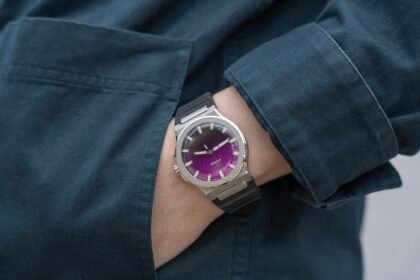

There are few watches that have achieved the cultural significance and lasting impact of the TAG Heuer Monaco. Making its official debut in 1969 and named after the Monaco Grand Prix, the Heuer Monaco was the first-ever water-resistant, square-cased wristwatch, and among the first chronographs with a self-winding movement. Down below, we’re breaking down the legacy and mystique of the design, from its silver screen appearances to its period of discontinuation, and its modern evolution, tracing key models, innovations, and avant-garde movement renditions that define the collection today.
[toc-section heading=”A Legacy of Sports Timing”]
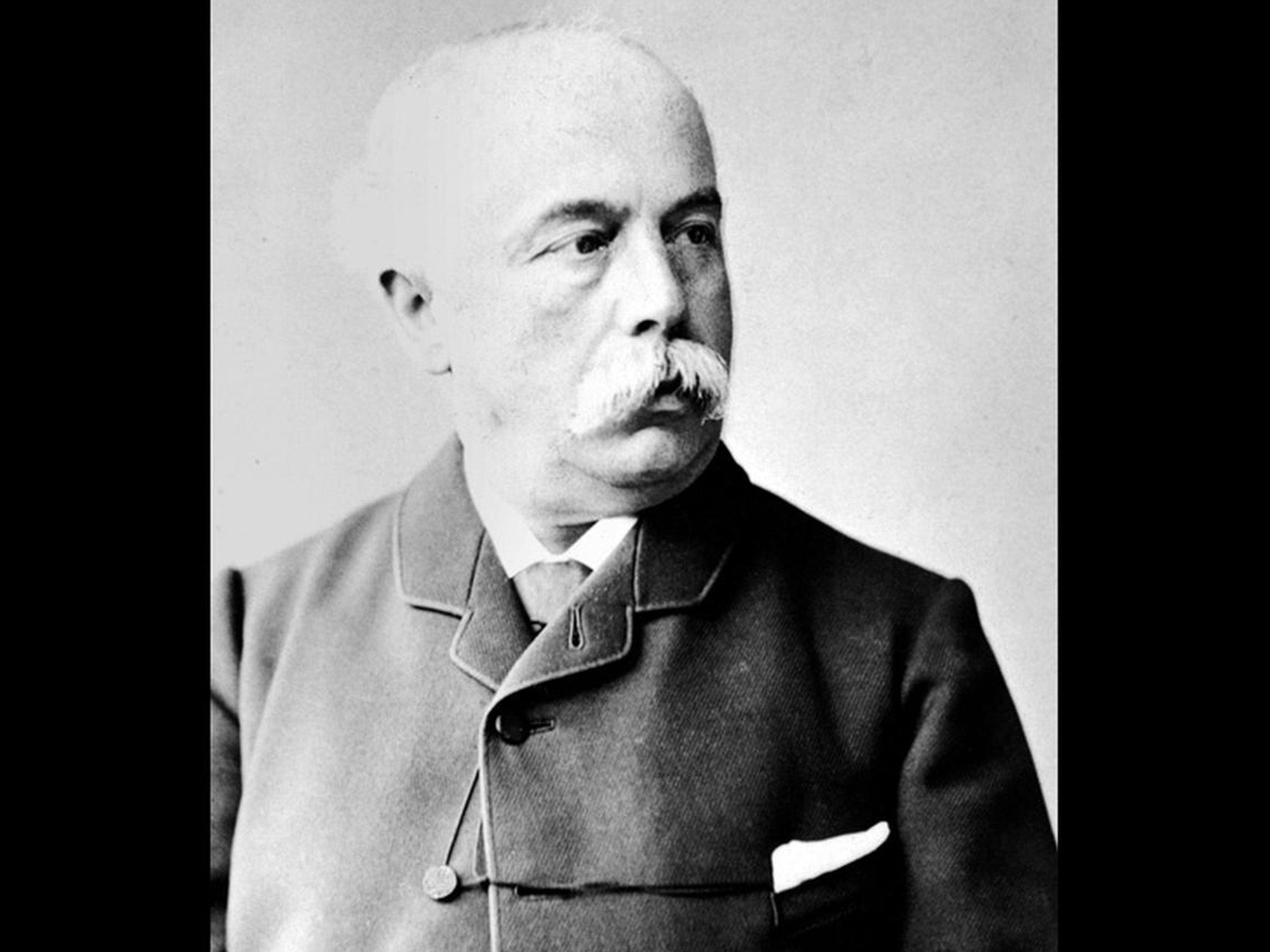
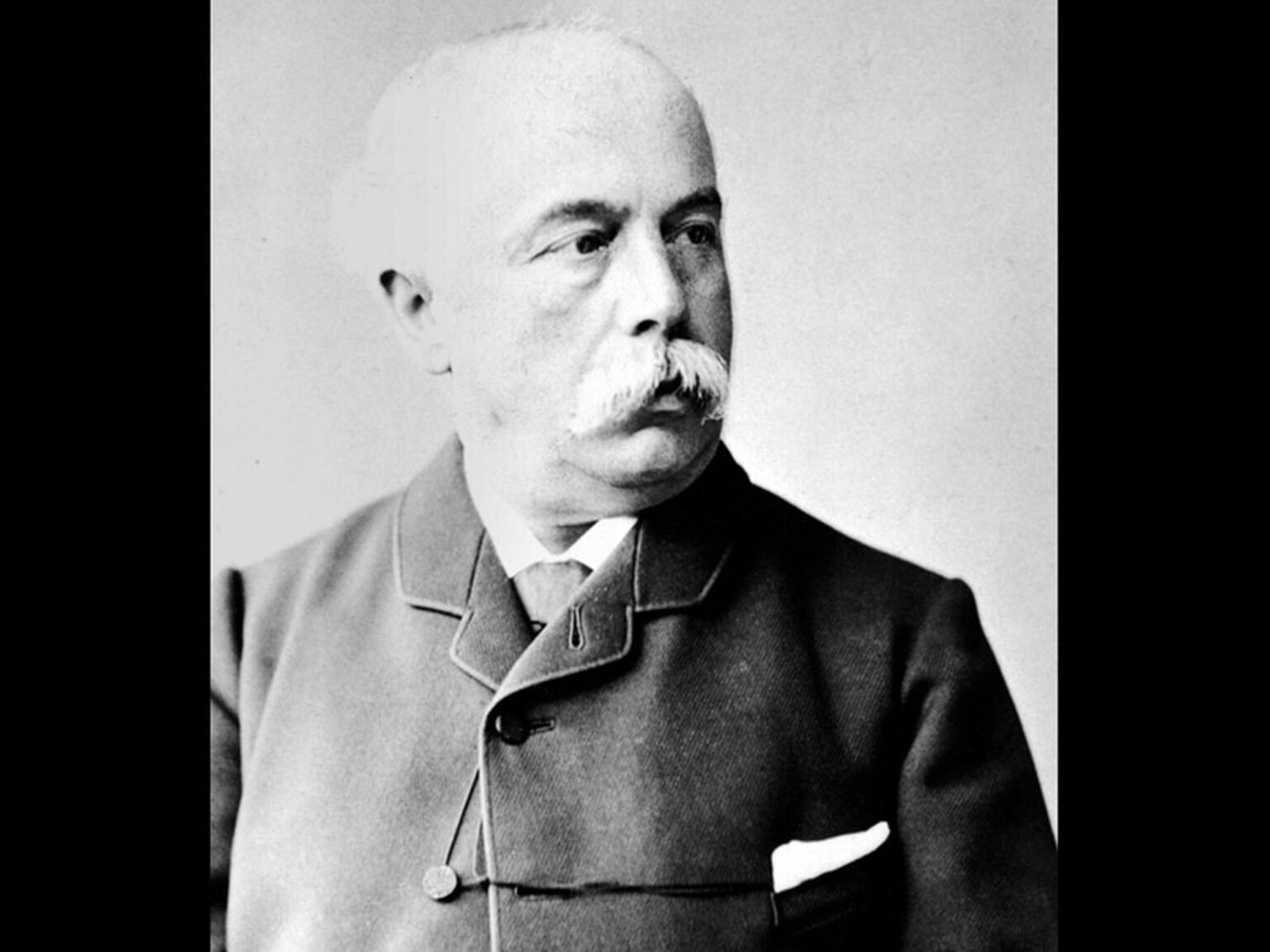
While it is well known today for its strong ties to motorsports timing, TAG Heuer, originally called Uhrenmanufaktur Heuer AG, has been associated with timing sporting events since its founding in 1860 — several decades before the invention of automobiles and long before anyone thought about racing them. From its earliest days, the company, established by Edouard Heuer (above) in Saint-Imier in the Swiss Jura, placed its emphasis on making hand-held and eventually dashboard-mounted chronograph timepieces, while also developing innovative technologies that would optimize their precision and efficiency. In 1869, Edouard Heuer invented and patented one of the first keyless winding systems, and he patented his first chronograph pocketwatch — at the time, used for recording horse and greyhound races — in 1882. Heuer’s most significant contribution to timekeeping came several years later: the oscillating pinion, patented in 1887. This device, which simplified the construction of chronograph calibers by decoupling the stopwatch mechanism from the timekeeping function, is still used commonly in movements today.

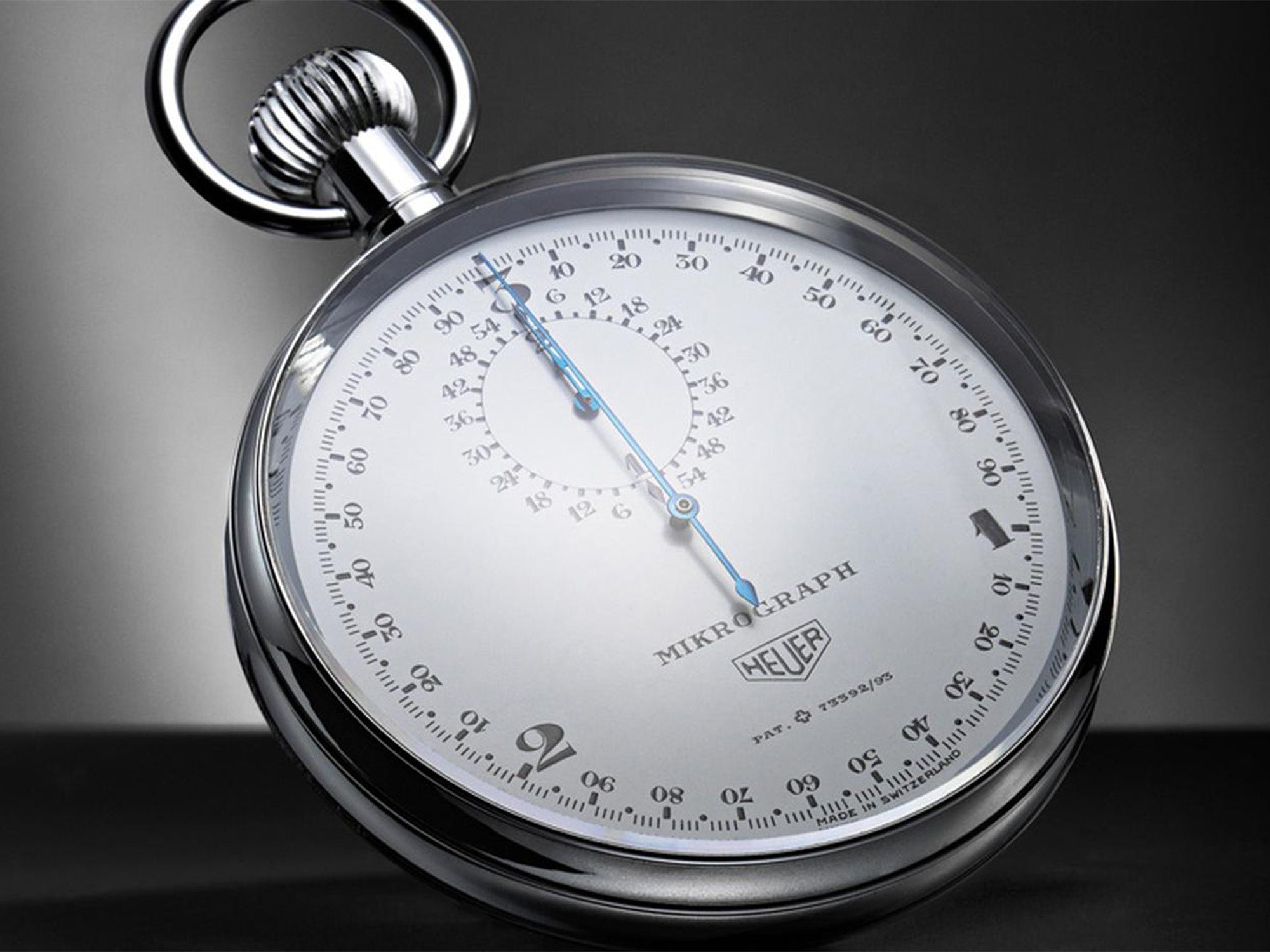
In 1911, just a few short years after Henry Ford’s Model T brought the promise of automobile travel to the masses, Heuer developed what is regarded as the first dashboard chronograph for cars and aircraft, the “Time of Trip” (above), whose clever dial arrangement paired two sets of hands, one to display the current time, the other to record the duration of a trip up to 12 hours. In 1914, with the popularity of wristwatches on the rise, the company released its first wrist-mounted chronograph (which, like many of its contemporaries, was a repurposed pocket watch with its single-pusher crown at 12 o’clock). Edouard’s son, Charles-Auguste Heuer, continued the quest for chronographic precision in 1916 with the invention of the Mikrograph (below), a hand-held stopwatch that was the first in the world able to measure elapsed times to 1/100-second. In 1920, the Heuer Mikrograph was the official timer of the Olympic Games in Antwerp.
In 1961, Edouard Heuer’s great grandson, Jack Heuer, took over the leadership of the family firm at the tender age of 28. An avid enthusiast of racing and motorsports, he ramped up the brand’s involvement in automobile racing and racing-driver sponsorships. The first iconic chronograph watch to spring from these collaborations was the Carrera in 1963, named after the treacherous and long-discontinued Carrera Panamericana road race; that watch, which I explore in depth here, became a go-to timepiece for racing drivers of that era. The second was the Monaco, named after the world-famous Monaco Grand Prix, which roared out of the gate in 1969 to eventually achieve its own impressive level of cultural significance. Still a tentpole presence in the modern TAG Heuer collection, the Monaco is one of those rare timepieces that remains a genuine milestone in not one but both vital areas of watchmaking: boldly innovative design and envelope-pushing technology.
[toc-section heading=”A Chronograph for the Automatic Era”]
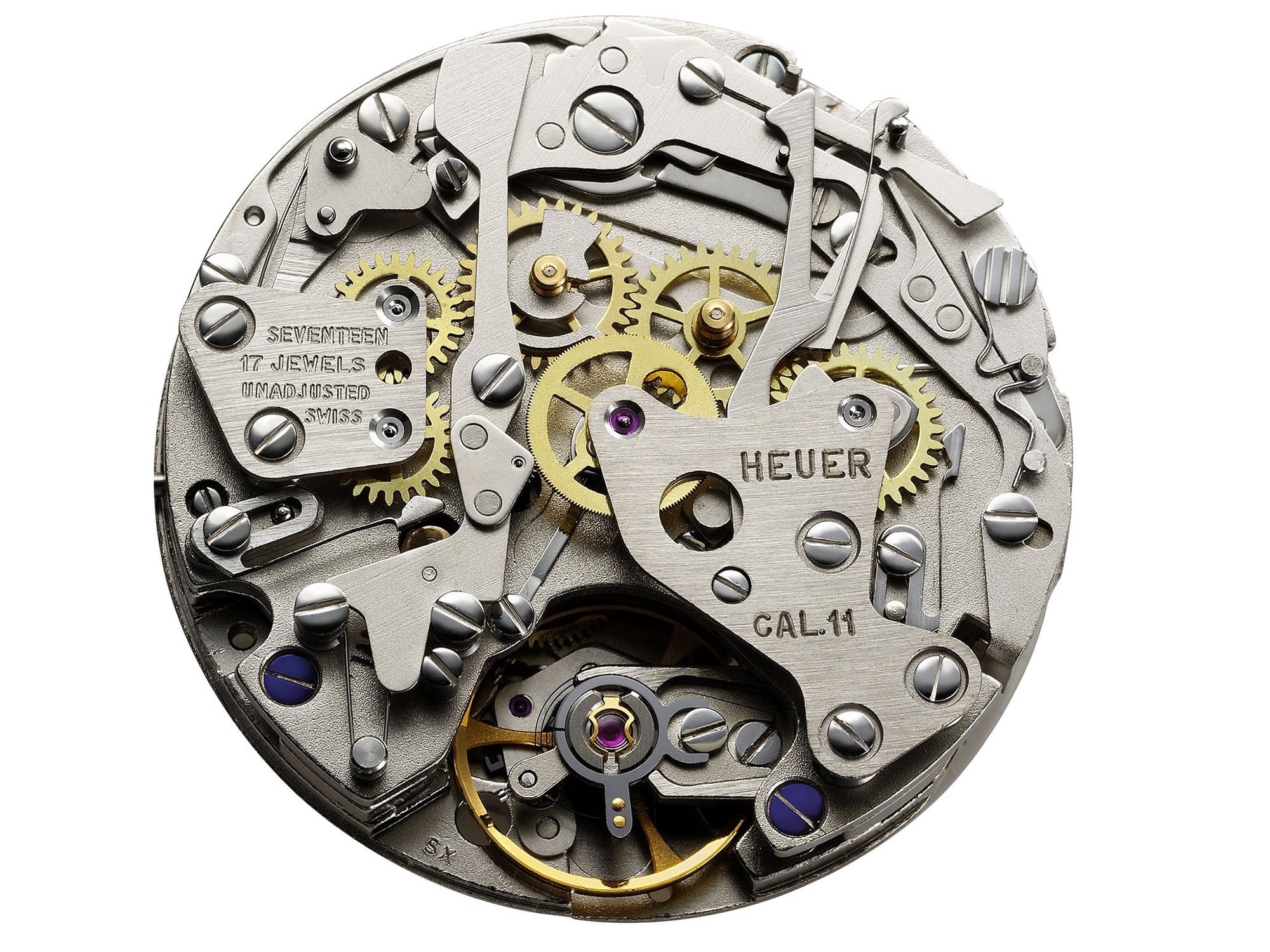
By the late 1960s, every chronograph wristwatch, including the Carrera and Heuer’s other influential model, the Autavia, were still using mechanical movements with manual winding. Self-winding (or automatic) movements had been a mainstay of simpler wristwatches since the 1920s, but no watchmaker had yet figured out how to make a self-winding movement that would also support a chronograph function. To that end, several watchmaking firms spent a great deal of capital and effort in pursuit of this elusive goal toward the end of the decade, foremost among them Zenith, Seiko, and a consortium of erstwhile competitors that included Breitling, Hamilton, Dubois-Depraz, and Heuer (which was at the time called Heuer-Leonidas, after a 1964 merger). Their efforts all bore fruit in 1969 — Zenith with its El Primero (explored in great depth here), Seiko with its historic Caliber 6139, and the consortium with the now-legendary Caliber 11 “Chrono-Matic.” Since Caliber 11 was developed jointly, each watchmaker that had contributed to its invention retained the right to use it in a watch. Both Breitling and Hamilton installed the movement in a series of “Chrono-Matic” models based on existing watches, and Heuer also deployed it in new versions of the Carrera and Autavia. But Heuer also built an entirely new racing-inspired timepiece around this technical innovation, one whose chassis was as revolutionary as its engine.

Yet another brainchild of the prolific and racing-obsessed Jack Heuer, the original Heuer Monaco, Ref. 1133 (above) debuted in that seminal year of 1969 as the first wristwatch with a square case that was also water-resistant to 100 meters. This milestone emerged from Heuer’s collaboration with the renowned Swiss casemaker Erwin Piquerez, which had recently patented the construction, anchored by a tension system in which a square capsule containing the movement was sealed by a rubber gasket and clamped to the inside of the monocoque case. Heuer acquired exclusive rights to the groundbreaking design, protecting it with a trademark.

The Monaco was also, of course, one of the very first chronograph watches to be equipped with a self-winding mechanical movement, the aforementioned Caliber 11. Notably, its chronograph pushers were placed on the right side of the case while the crown was positioned unconventionally on the left — an unusual, quirky arrangement necessitated by the architecture of Caliber 11. The distinctive design, with the crown situated on the less accessible side of the case for fingers to reach, also sent a visual message: if you wore this watch regularly, you didn’t need to bother with winding it.
The sunray blue dial was just as individualistic in its look, with the slightly rounded square shape of the 39mm steel case echoed in the geometrically oriented subdials, one at 3 o’clock for counting 30 elapsed chronograph minutes, the other at 9 o’clock for 12 elapsed hours. The hours, surrounding a circular minutes/seconds track, were primarily represented by horizontally oriented baton markers. The very first Caliber 11 models of the Monaco, which are the rarest and most valuable today, included “Chronomatic” text near the top of the dial and “Monaco” at the bottom, though this design was quickly abandoned in favor of the more familiar verbiage, with “Automatic Chronograph” at 6 o’clock and the “Monaco” name at 12.

Photo: Antiquorum
The first generation of Heuer Monaco watches, equipped with Caliber 11, sported mostly blue or gray dials, the former with contrasting blue subdials, the latter with tone-on-tone or black subdials. Heuer continued optimizing the model’s self-winding engine throughout its initial run, introducing the successor Caliber 12, with a higher beat rate, in 1971, and Caliber 15 in 1972, which replaced the 12-hour chrono counter with a running seconds indicator and which cost less to produce. The first watches with Caliber 15, starting with the Ref. 1533B, are recognizable both for the somewhat oddly placed (i.e., not quite parallel with the 3 o’clock subdial) small-seconds counter between 9 and 10 o’clock, and by the use of radiating baton hour markers — replacing their horizontally-oriented predecessors and aligned more with the shape of the minutes circle than with the contours of the square dial.

Photo: Christie’s
Also in 1972, Heuer introduced Monaco references that contained manually wound Valjoux 7736 movements. These models are recognizable for their more conventional pusher-and-crown design (all on the right side of the case) and their three-register dial layout (elapsed minutes at 3 o’clock, elapsed hours at 6, running seconds at 9).
[toc-section heading=”Monaco Meets McQueen”]

Just two years after its debut, the Heuer Monaco made its indelible mark on motorsport and cinematic history. Jack Heuer was not only a visionary when it came to ideating watches; he was also ahead of his time when it came to marketing them through sponsorship deals — specifically, with Formula 1 Racing and its high-profile drivers. One of these drivers was Switzerland’s Jo Siffert, who wore a Heuer-branded racing suit in his competitions (in an era when corporate branding in the sport was still in its infancy) and was recruited as a consultant and driving coach for legendary actor Steve McQueen for his role in the 1971 movie Le Mans. In the movie, the legendary “King of Cool” played a driver named Michael Delaney, a character partly inspired by Siffert himself, and drove a Porsche 917 race car, which initiated an ongoing partnership between TAG Heuer and Porsche AG that continues to this day.

McQueen, aiming to emulate Siffert’s style as closely as possible, famously wore not only the signature white overalls with the Heuer logo but also a blue-dialed Monaco Ref. 1333B watch, which was still fairly new to the market at the time of filming; Siffert himself had mostly worn an Autavia at that point. Reportedly, Jack Heuer himself saw to it that the Monaco was the only watch on set to be used in filming. While the movie itself was not a huge hit, it introduced audiences to the unusual, avant-garde style of the Monaco and forever associated the model with McQueen’s legendary, stylish image. The actor, who died in 1980, continues to appear in ads for the TAG Heuer Monaco in his racing regalia from the movie.

Despite this moment of pop culture prominence, the Monaco, like so many other Swiss-made mechanical watches in the 1970s, struggled to maintain its presence in a watch market that was increasingly being dominated by lower-priced quartz-powered watches, mostly from Japan and other Asian nations. (Quartz movements, somewhat ironically, were the other major innovation to come out of 1969, alongside automatic chronographs.) The Monaco was discontinued at some point in 1975, with the now-legendary, all-black-DLC-coated “Dark Lord” references (TAG Heuer’s recent re-edition pictured above) among the final models to roll off the assembly line. When the Monaco finally returned to the market decades later, the company that made it would be markedly different — in its ownership structure, its position in the industry, and even its name.
[toc-section heading=”From Heuer to TAG Heuer: Navigating a Crisis”]

Photo: Sotheby’s
In 1985, with quartz watches still pre-eminent throughout the industry, the Luxembourg-based Techniques d’Avant Garde (TAG) Group, a conglomerate that manufactured high-tech goods for industries like aviation and motorsports, acquired Heuer, ushering in a new era for the venerable Swiss firm. The corporate identity shifted from one based on technical innovation and precision timing to one built more around fashion, style, and mass-market appeal. The brand’s fondly remembered 1960s mechanical chronographs were out, and quartz-driven successors, like the Formula 1 and the 1000/2000/3000 series of high-tech sport watches were in. In 1998, however, the renamed TAG Heuer company rolled the dice on a nostalgia-fueled reissue of the “McQueen Monaco,” limited to 5,000 pieces and bearing the original “Heuer” logo on the dial. The positive consumer response to that release (Ref. CS2110, above, containing an ETA 2894-based movement) set the stage for a full-on return of the model several years later — but only after another major change in corporate ownership, management, and market strategy.

On the cusp of the 2000s, with the so-called “Quartz Crisis” winding down, LVMH, a luxury conglomerate built upon the merger of two world-famous luggage and beverage brands (Louis Vuitton and Moët Hennessy, respectively) decided to enter the re-emerging luxury watch business. In 1999, the Paris-based group bought TAG Heuer, along with Zenith, to establish its high-watchmaking branch, which would eventually also include Bulgari and Hublot. Two years later, LVMH management also lured Jack Heuer, who’d been forced out in 1982 by a previous acquisition, back to his great-grandfather’s company as Honorary Chairman. The return of the Monaco’s creator (above, wearing his other iconic creation, the Carrera) to a high-level consultancy position more or less ensured that the square-cased, racing-inspired chronograph would soon reclaim its role as a brand pillar in the 21st Century.

[toc-section heading=”A Vintage Icon Becomes a Modern Collection”]
Several other re-editions followed the 1998 release, each of them bearing the vintage Heuer logo. The black-dialed Ref. CW2111, released around 2001, was the first Monaco in the revived collection to bear the TAG Heuer logo, and its follow-up Ref. CW213 replicated the bright blue dial and white subdials of the “McQueen” version, albeit with the radial hour markers of later editions and the more modern case design, with pushers and crown all on the right. The floodgates now open for more interpretations of the Monaco, TAG Heuer subsequently introduced the first “Gulf” edition in 2005, whose white dial with orange-and-blue racing stripes paid homage to longtime racing sponsor Gulf Oil (the other iconic logo that McQueen sported in Le Mans). Other Gulf-branded special editions would follow, like the model above, released in 2022.

For the Monaco’s 40th anniversary in 2009, TAG Heuer unveiled the most technically ambitious version of the Monaco to date, the Monaco V4. One of several high-horology concept pieces the brand introduced during the aughts, its design was inspired by a Formula One engine, and used five micro-belts in a linear winding system, rather than a rotor, to transfer power from four barrels, in a V-shaped arrangement on the skeletonized movement’s dial side. The Monaco V4 was never mass-produced, appearing in only a handful of limited editions, but it was a harbinger of more avant-garde innovations in the Monaco line in subsequent years.

Also in that anniversary year came the Ref. CAW211A, another limited edition that re-created, for the first time in decades, the left-crown/right-pushers case design of the original “McQueen” model (courtesy of an ETA base caliber with special Dubois-Depraz module, which TAG Heuer anointed as its “modern” version of the legendary Caliber 11), along with an inscribed Jack Heuer signature in the caseback. This sold-out model gave way to the Ref. CAW211P (above), with the same Caliber 11 movement, case design, and dial, which joined the regular collection in 2015 and would enjoy a run of nearly five years before the next update.

TAG Heuer continued to outfit new Monaco references with its latter-day Caliber 11 movement (which eventually swapped its ETA base for one from Sellita, while maintaining the Dubois-Depraz module) for several years, including most notably the five colorful limited editions that landed throughout the year in 2019 for the Monaco’s momentous 50th anniversary. Each model, limited to 169 pieces, was designed to represent, and capture the style trends of, one decade in the watch’s lifespan: a deep green dial for the ‘70s, a fiery red one for the ‘80s (pictured above), a metallic silver for the ‘90s, a black-and-white “panda” for the 2000s, and a modernist dark charcoal for the 2010s. For these editions, again, TAG Heuer resurrected the vintage “Heuer” logo and the horizontal markers.

These special anniversary releases represented the swan song for the outsourced Caliber 11 inside the Monaco. At the tail end of them came the first Monaco to contain, for the first time, TAG Heuer’s in-house Caliber 02 movement, with an integrated column-wheel chronograph function (not a module) and an extensive 80-hour power reserve. The movement made its debut, appropriately, in another blue-dialed “McQueen” iteration, Ref. CBL211, which retained the 39mm square case that had been a staple since the beginning but also retained the more modern elements, like the radially oriented markers and the right-mounted crown and pushers.

The dial layout was also subtly different from the most recent predecessors, with white recessed subdials for elapsed minutes and hours at 3 and 9 o’clock, respectively, and an additional unbordered, crosshair-centered subdial at 6 o’clock, above the date window, for running seconds. Visually, at least from the front, the Caliber 02 Monaco editions did not differ substantially from the Caliber 11 models, but the evidence is clear from the former models’ sapphire casebacks, which showcase the larger, more decorated movement, with its blackened, skeletonized rotor.
[toc-section heading=”Racing to the Future: Split-Seconds and Evergraph”]

The Monaco turned 55 in 2024, and TAG Heuer celebrated the occasion with a version of the Monaco that achieved the model’s most elite level of chronograph complication yet. The Monaco Split-Seconds Chronograph (above) debuted an all-new movement, Caliber TH81-00, developed in a partnership between TAG Heuer and the specialists at Vaucher, which boasts the rare and exotic split-seconds function (aka a “rattrapante”), enabling the wearer to measure two concurrent timing events independently. For the first time since it famously arrived on the scene as a racetrack mainstay, a Monaco watch was capable of timing multiple laps of a race in quick succession. The avant-garde elements didn’t end with the mechanism: the famous square case was made of lightweight titanium, framing a sapphire dial that affords a view of the movement from the front, whose blued, arching bridges have a gradient surface achieved through an anodizing process. The 9 o’clock rattrapante pusher is made of colored titanium and matches the color of the split-seconds hand for an additional dash of color. Finally, in a first for the brand, the entire caseback is made from sapphire for an unobstructed view of the complex movement. TAG Heuer promised at the time that the Monaco Split-Seconds and its revolutionary movement were the harbingers of a renewed commitment to exploring greater horological complexity in future special editions, and the brand delivered on that promise just two years later.

The TAG Heuer Monaco Evergraph, whose high-profile launch occurred at Watches & Wonders 2026, features an ingenious, avant-garde new movement, the all-new Caliber TH800-00, which incorporates a unique, “compliant” chronograph mechanism that replaces virtually all of the levers and springs usually employed for the stop, start, and reset functions with two flexible bi-stable components developed through LIGA technology. TAG Heuer collaborated closely for several years, again with high-complication specialist Vaucher, to perfect the technology, which also incorporates TAG Heuer’s exclusive TH-Carbonspring oscillator, ultimately delivering the movement such attributes as a 5Hz frequency, a 70-hour power reserve, enhanced magnetic resistance, and COSC-certified precision. Visually, the movement’s inverted construction places elements like the barrel, gear train and escapement on the front side, visible through the openworked dial and its two symmetrical square subdials for running seconds and chronograph minutes.

The classic, square Monaco case, measuring 40mm and made of grade 5 titanium, has been redesigned for better ergonomics, with a tapered profile and sharp facets along the edges. The crown is placed unconventionally on the left side, a return to the offbeat design of the original Monaco and its Caliber 11 engine. Two variations are offered, one with blue accents calling to mind the famed “McQueen” model, the other combining black DLC coating on the case with red accents, evoking a classic auto-racing color palette. In yet another first for the Monaco family, Caliber TH80-00 is square-shaped to fit the iconic case, ensuring that — at least for now — The Monaco Evergraph will be the only model in the TAG Heuer portfolio to incorporate this revolutionary micro-technology.

While the Monaco Evergraph was the undisputed headliner of 2026’s releases, longtime fans of the model might have even been more excited about the year’s other big debut: the latest generation of the core Monaco chronograph, which boasts an entirely new in-house movement and a vintage-evocative design that brings it closer to the 1969 “McQueen” reference than any previous revamp. The case remains at 39mm, and incorporates sharper, angular edges and ergonomic curves reminiscent of the original case; in a nod to modernity (and to the evolution of materials in Formula One racing), the case itself is now made from grade 5 titanium rather than steel. A softly rounded central section in the caseback allows for perhaps the most comfortable wrist feel of any Monaco yet. Once again, the case’s fluted crown has been moved to the left side while the redesigned, pedal-like chrono pushers occupy the right flank.

The new Caliber TH20-11 (the “11” refers to the historic “Chrono-Matic” caliber) is based on the recently launched Caliber TH20-00 now used in the Monaco’s sibling, the Carrera. Both are based on the Heuer 02, but the TH20-11 is specifically re-engineered for the left-hand crown placement and for the classical, retro-inspired, two-register dial display (30-minute counter at 3, running seconds at 9, date at 6) that makes its return to the Monaco in these three new models — one in the inevitable “McQueen” blue, another in on-theme British Racing Green (pictured), and a third combining titanium and 18k rose gold in the case, with a predominantly black dial with gilt detailing. With this latest re-edition, one might even say that the first waterproof square watch has finally come full circle.
For more information on the current collection, you can visit the brand’s website here.