

I hail from the boyband era. NSYNC was not my first concert but my second, following the Spice Girls. However, the allure of the pop group seems to fade with age. By the time One Direction came around, I had graduated from college, and my musical tastes had shifted to bands like Vampire Weekend, The 1975, and Chvrches. Now, a decade since the quintet dismantled, the concept of an ensemble seems nearly obsolete in the age of Gen Z and Gen Alpha. So, perhaps Justin Timberlake and Harry Styles had the right idea to branch out on their own, become solo artists, and evolve not just musically but in other forms of self-expression.
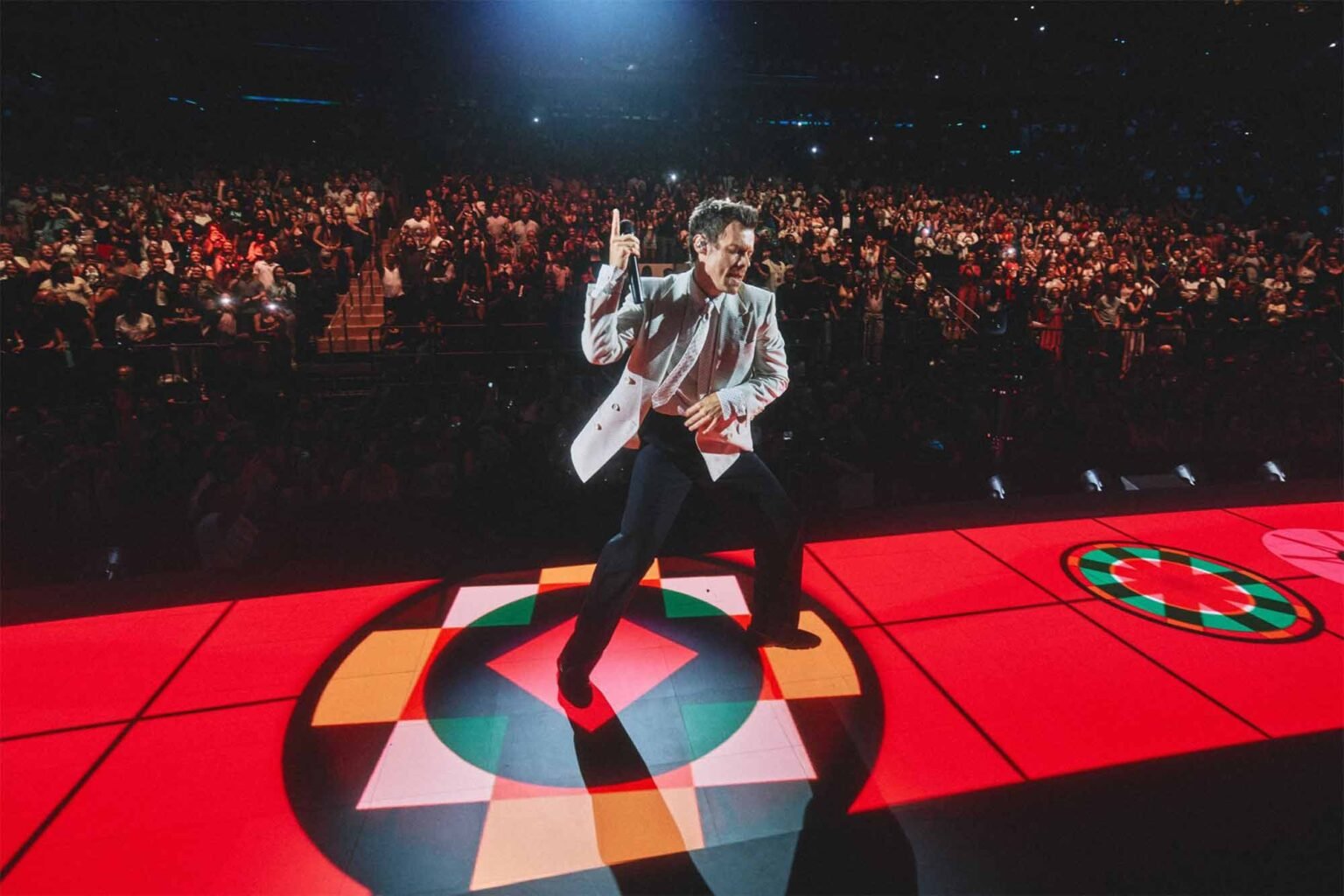
Circling back to first concerts, I recently took my 10-year-old niece to hers at Harry Styles’ Madison Square Garden residency. Like any good watch nerd, I immediately noticed a timepiece on his wrist during the show and could vaguely ID the model – something simple, classic, and square, perhaps a Cartier. Turns out I was right – I did a quick search, and the internet confirmed it was not just a Cartier but a vintage one at that – an 18-karat gold Tank Louis on a black leather strap to be exact.

If you’ve been unable to escape the Harry Styles fandom over the years, you’re well aware he’s known for his audacious, colorful, and flamboyant looks that defy gender norms – think glitter, pearls, and feather boas, literally – something you might pair with a watch from an independent like Moser or Studio Underd0g. Yet, at his New York City residency, his choice of watch was not the only thing that was simple and classic. His entire look was totally different – restrained and understated coupled with a more subdued color palette.
After the show, I couldn’t get the costuming and choice of watch out of my head, and I went down a rabbit hole, trying to make sense of what seemed to be a drastic shift in self-expression. I soon found a term the kids these days are calling corp-core (short for corporate core). Apparently, this is a new fashion trend that reimagines the traditional 9-5 business attire into something more everyday.
What’s even more fascinating to me is that the pivot to corp-core for this residency came from the brain of Styles’ longtime stylist whose name also happens to be Harry – Harry Lambert – a man who has been pivotal in growing the musician’s bold and gender-fluid wardrobe over the course of Styles’ career. I had to know more. So, I began researching Lambert more broadly and found that his approach often incorporates elements of contrast and nostalgia while challenging traditional menswear rules by mixing classic vintage pieces with more trendy modern ones from emerging designers, which we see in Styles’ costuming like Stefan Cooke, JW Anderson, and Talia Byre.

The spiral in my brain continued – I got to thinking about a question from someone in the Worn & Wound community on a recent Q&A episode of the podcast. The person identified themselves as a casual dresser, which they believed excluded them from being a dress watch kind of person – this begged the question, how could they incorporate a dress watch into this kind of lifestyle and personal style. The resounding answer from Zach Kazan, Taylor, and me was that these hard lines and delineations between dressy and sport (to put it in watch terms) have largely blurred. I didn’t know it at the time, but I think we were talking about corp-core or at least a similar line of thought.
This extends to broader fashion as well. Look at denim, which evolved from workwear into high fashion. Look at workplace dress codes, which have largely evolved from business attire to business casual. I think this corp-core movement is doing the same thing. It’s unbuttoning classic suiting (pun intended) in a fresh and carefree way. It’s transforming some of menswear’s most familiar silhouettes, like the suit, which bears centuries of associations. It’s uncovering new possibilities in garments that already carry cultural meaning. Isn’t this precisely what the industry is trying to do with traditional watchmaking? To retain the core principles and essence that have laid the foundation for this industry for hundreds of years but in a way that doesn’t take itself so incredibly seriously? In a way that makes us think and rethink about what a watch can be?
Let’s come back to Cartier as a case study. While the brand has plenty of traditional round models throughout the history of its catalog alongside totally abstract models like the Crash, Cartier has long been synonymous with the square case shape of the Tank. Something interesting about the Tank that (in my opinion) people don’t talk about enough is that since its inception in 1917 – nearly a century before the movement to define watches as gender neutral – it’s largely been treated as a unisex watch. Today, I would go so far as to say the Tank is one of the most popular watches among women. It’s no coincidence that Styles and Lambert chose this particular “simple and classic” model among all the relatively similar options out there – be it more quietly, it’s a perfect fit for the musician’s androgynous personal style.

Styles is not the first to bring renewed cultural relevance to the Tank beyond its broader significance in the watch industry. The model has been worn by many notable individuals over the years, but the one I’d like to draw particular attention to is Andy Warhol who in fact wore a nearly identical model to Styles: an 18-karat gold Tank Louis on a black alligator strap. Again, I feel this is no coincidence. Like Styles, Warhol was known for bold self-expression through his personal style with a notable mix of classic and avant-garde elements like pairing more traditional suiting with opulent so-called feminine accessories like diamond necklaces. Were he alive today, I think he might be a fan of corp-core.

So, if you’re still with me on this journey sparked by Harry Styles’ attire and wrist game during his latest residency, you may be wondering about the takeaway from all this. What comes to mind for me is one of the biggest concerns within the watch industry in the past few years: the anticipation of Millennials and later Gen Z beginning to hold the most spending power in the coming decades. As a Millennial, I’m acutely aware I’m part of the last generation to have experienced the so-called analog world before the internet, cell phones, social media, and so on. I understand why a literal analog industry would be unsettled about their fate being in the hands of digital age consumers.
If movements like corp-core continue to take shape in the zeitgeist thanks to pop-icons like Styles, I believe new generations will continue to think and rethink about what classic styling – from suiting to watchmaking – means to them in the particular place and time in which they’re living. I believe they will always have an opportunity to shape the way a model like the Tank is understood culturally – to give a familiar design new relevance.
The post Does Harry Styles’ Latest Corp-Core Costuming Tell Us Something About the Staying Power of Classic Watchmaking? appeared first on Worn & Wound.