

It felt inevitable. Just over six months after an F.P. Journe narrowly missed joining a certain historic list of wristwatches dominated by Patek Philippe and Rolex with the $10.75 million sale of Francis Ford Coppola’s personal FFC at Phillips New York (a record for the brand), one finally reached that rarified air. François-Paul Journe invented it. He made it. The market made it historic.
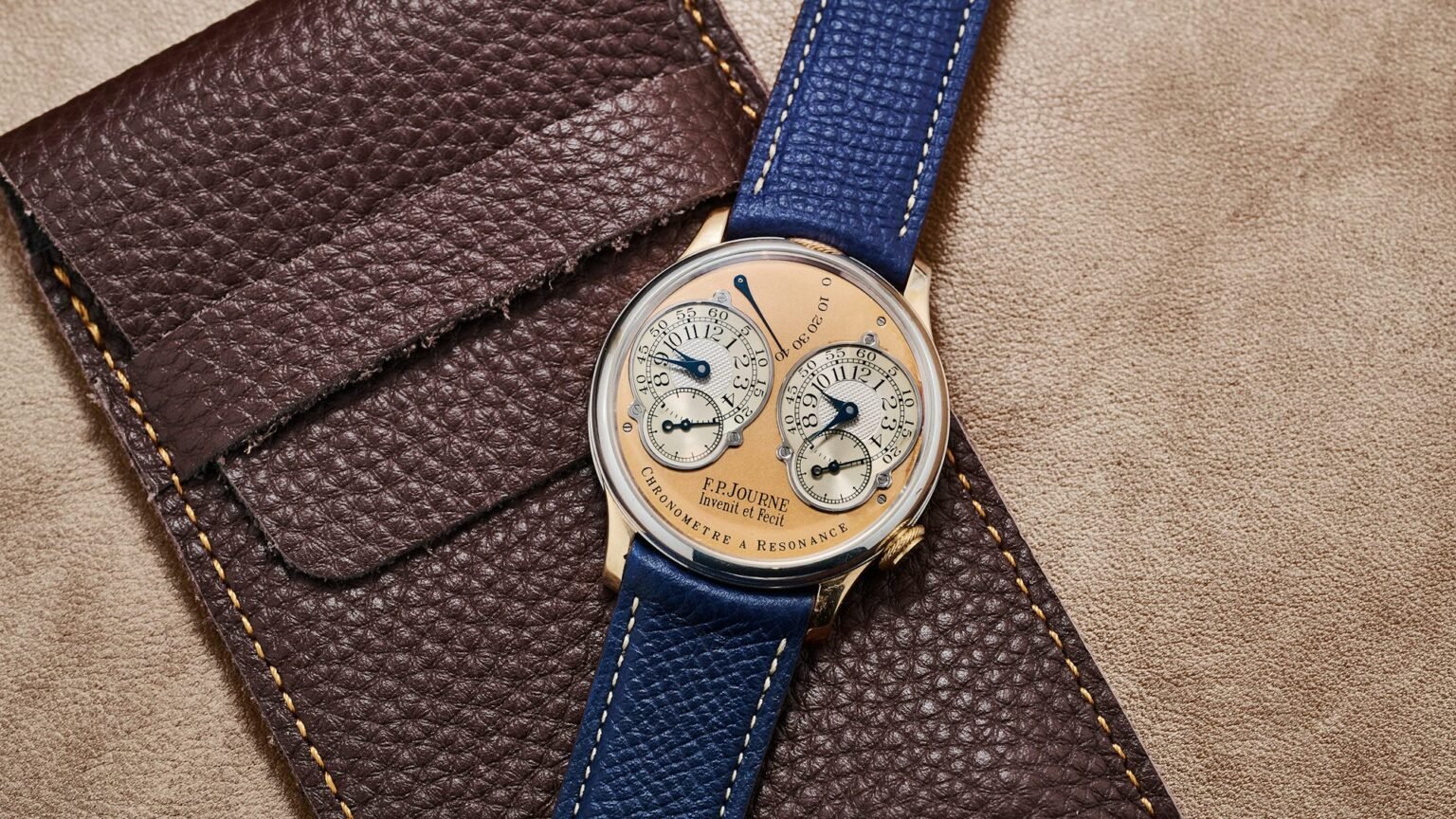
The F.P. Journe Souscription Chronomètre à Résonance no. 007 is now the fifth-most expensive wristwatch ever sold and the third-most expensive watch sold not for charity. Arguably Journe’s most important and emblematic model, a confluence of details made this example—which crossed the auction block on Saturday, June 13—the one to own, at least according to bidders. To the tune of almost $14 million, no less. In some ways, it seems the perfect cap to a wild shift in the market where, in less than a year, F.P. Journe has become more closely watched than other previously preferred blue-chip brands and references. And yet, the market is so hot that there were a number of remarkable results from the New York, Geneva, and Hong Kong auctions.

Not for nothing, but a Patek Philippe 5004 is now a $5 million watch, not only blowing out the previous non-charity record ($1.5 million for Michael Ovitz’s platinum example, which was sold last fall), but eclipsing the 5004T for OnlyWatch (which sold for $4 million, give or take, back in 2013). And the fresh-to-market pink gold, satin-cased Patek Philippe 1518 was just $8,000 shy of the $4 million mark, all in.
The F.P. Journe Souscription Chronomètre à Résonance no. 007, and Why It Sold for $13.922 Million
F.P. Journe’s Souscription Chronomètre à Résonance represents one of the earliest examples of Journe’s signature watch, combining two movements with separate balances into a single case and bringing them into perfect synchronization. The concept is centuries old, but Journe brought it to a wristwatch for the first time with a prototype in 1998 and a commercial piece in 2000. Twenty commercial pieces were part of the “Souscription” series offered to supporters who bought the first twenty of François-Paul’s wristwatches (a tourbillon). A bit of a wrinkle in the story is that the twenty watches weren’t actually the first Résonance wristwatches Journe made (he made Pre-Souscription examples as he refined the design, font, and other aesthetics), and Souscription pieces are not necessarily numbered in the order they were made.

Early acolytes of Journe were drawn in by his near-singular pursuit of chronometry and the implications of his implied lineage among some of the most important horologists of all time. Collectors were dogged in their pursuit of his watches, steely in the face of a market that didn’t much care for Journe for much of his 25-plus-year career, and in that, often resolutely incredulous of anyone who didn’t meet their fanaticism. The Résonance was emblematic of that struggle.

A Résonance “Pisa” in 2015, when it achieved a record for the reference of CHF 106,250. Photo by Ben Clymer.
While Journe collectors have always liked the model, it seems the market has only recently been strongly behind the Chronomètre à Résonance. Though hindsight is 20/20. It was news when a Souscription Résonance made $2.5 million in 2020. Five years prior, Ben was still unsure about Journe’s potential on the auction market. Eleven years ago, Ben said that “perhaps the most surprising result of the auction season” was a “Pisa” limited edition reference that sold for $114,000. “While the retail price of a new Resonance is in the 80s, secondhand pieces may be purchased in the high 40s through low 60s, depending on age and configuration,” said Ben. “I can only assume this is a record for a Resonance at auction, and while this watch is absolutely beautiful, I don’t think anyone expected a result quite so strong for this piece.” Past high-water marks seemed fair to those on the outside, but they missed what was coming.

Souscription Chronomètre a àRésonance no. 002, which sold for $4.3 million in November 2025.
There was, of course, Souscription Résonance no. 001, which sold for CHF 3,902,000 in 2021 (alongside the other first Souscription pieces). That price made some sense for a historically important model, but still felt eye-watering. Souscription Résonance no. 002, which sold at Phillips Geneva in November 2025 for about $4.3 million, doesn’t look like an impressive gain, but the configuration was less rare than the first (and didn’t bear that important “1” in the series).
A month later, in December, an example of the Résonance made in 2006 for Singaporean retailer Sincere, with a pink-gold case and a black mother-of-pearl dial, sold for $3,690,000 at Phillips New York. I know a collector who turned down that same watch for $1.3 million just a few months prior. Then, at Phillips’ spring Geneva sale, another example of a Chronomètre à Résonance for Italian retailer Pisa sold for $3 million, or about a 26x return since 2015. And that was just the start.
Of the Souscription series, five were cased in two-tone rose gold and platinum cases. Three were outfitted with silver dials (like Souscription no. 001), and two with rose-gold dials, as seen here. One of the three silver-dialed examples—Souscription no. 18—also sold at Phillips Geneva in May, for $6.29 million. However, of all his Souscription Résonance pieces, François-Paul Journe has said that the rose-gold two-tone dial is his favorite aesthetic. He owns the other example, which will be in his upcoming museum. In short, there’s only one of Journe’s favorites that will ever be on the market.

Photo courtesy Phillips.
On Saturday, a number of bidders quickly took Souscription Résonance no. 007 from its estimate “in excess of $1 million” into the mid-seven and low eight figures, before landing at an all-in price just above $13.9 million. Paul Boutros, Phillips Deputy Chairman and Head of Watches, Americas, said the market was acknowledging both Journe’s personal passion for this watch and the “once-in-a-generation” opportunity to acquire this example.

Chronomètre à Résonance “Souscription No. 18.” Photo courtesy of Phillips.
I wasn’t able to handle Souscription no. 18 before the auction in May, but on looks and in pictures alone, it was my favorite of the two. There’s a wonderful cleanliness to the silver dial, which has aged beautifully and, depending on how the light hits it, warms up with a nice patina. But the day before the New York auction, I was finally able to handle Souscription no. 007, and it’s the kind of watch with a shocking gravitas and yet surprising softness.

The aged, yellowed subdials, the brighter silver guilloché at their centers, the deep rosy quality of the dial, and the shockingly white brass movement encapsulate everything collectors imagine when they think of early F.P. Journe. In person, as in pictures, the dial lacks contrast, but that just makes it feel a bit hazy and ethereal, with a handmade, antique quality (even if the watch isn’t), and a halo of patina and wear around the watch’s name and the edge of the dial. The charming lack of perfection had a similar impact to what I felt handling the rose-gold, satin-finished Patek 1518 in the same auction, which just feels special in the hand, even when held at a distance or on the wrist. And yet, I didn’t get the sense that, for the second time in 7 months, I’d be handling one of the world’s most expensive wristwatches.

The bona fides are there, and the “why” is somewhat simple. If Journe says, “This is the best it gets, and you can’t have mine,” then you can see why people would want this one. However, the pool of collectors has certainly grown over the last year or two, with new, prominent billionaires entering the space. According to Phillips and dealers I’ve spoken to, there are also buyers shifting from the contemporary art market into watches.
“High-end watch collecting is attracting art collectors,” says Paul Boutros. “They love the concept of buying pieces with the maker’s name on the dial, and the maker is still alive today. So I do think that we are spreading across categories. This, of course, is a little bit of an educated model, but I think people quickly learn that the Résonance is something extraordinary.”
The question going into the auction was how far buyers were willing to go. A surprising distance, it seems; at least surprising to me. This is a watch that requires a relatively thoughtful understanding, which was able to reach such a massive result. If I had to guess, I’d say that it was less likely that a new entrant into watches was willing to pay nearly $14 million for a watch on their first, second, or even third outing. Instead, if I had to guess, the person who took home Souscription no. 007 was among the wealthiest in the top tier of collectors, knowledgeable but willing and able to adapt to getting over the mental hurdle of acknowledging that the old days of getting important Journes for cheap are long gone.
Other Journes Rode The Wave To Big Results
Before I get to the Journes, I think it’s worth highlighting that other independents did remarkably (maybe even surprisingly) well at Phillips New York. Everything Kari Voutilainen touched seemed to turn to gold. An early lot, the Voutilainen Vingt-8 Inverse in platinum, shocked folks in the room when it sold for $1.11 million, but it was almost forgotten by the time the F.P. Journe record was set. Another watch that Kari Voutilainen’s provenance (at least that’s what’s assumed) was this Urban Jürgensen prototype tourbillon minute repeater, which sold for $1.041 million. On day 2, a Voutilainen Observatoire sold for $1,041,400, and a Masterpiece Chronographe II sold for $1,841,500. And just a month or so after selling the first Roger Smith ref. 3 to come to market, Phillips bested the previous price, achieving around $1.2 million for the second ref. 3 on the market. I was in the room, and it almost felt like people were rooting for it to keep going, a sign that people really love Smith as a person and a watchmaker.

Photo courtesy Phillips.
The majority of the 17 F.P. Journe lots at Phillips continued to ride the wave of interest. A 38mm Octa Chronographe sold for $711,200, a 36mm brass movement Octa Divine sold for $533,400, and a platinum Élégante 40 (with diamonds) went for $355,600. Even more remarkable was a T30 selling for over $2 million. That price feels a bit insane for a watch that took over a year and a half to sell out of all 99 made (a huge number, frankly). A year ago, it was $890,000. Two years ago, it was $350,000. Oh, and those results were just from the first day.
Day 2 continued the momentum out of the gate, with an Octa Automatique Lune “Nacre” selling for $482,600. Three lots later, an Octa Chronographe “Swiss FineTiming” edition (which used to be a tougher sell amidst the special versions) cracked $2 million all-in. And yet, it was the Chronomètre Souverain from Swiss FineTiming that shocked me the most. The estimate was $100,000–200,000. The bidding? Started at $500,000.

This is what a nearly $2 million Chronomètre Souverain looks like. Photo courtesy Phillips.
When the dust settled, the final total was $1,968,500, which (in my honest opinion) defies logic for a watch made in eight examples. Are there eight people willing to spend $1 million plus on this watch? Either way, it was enough to beat the previous record for an FPJ CS, which stood at $1,482,000 for the watch gifted by François-Paul Journe to George Daniels. No matter, that was nearly forgotten by the next lot, which was the Tourbillon Souverain Anniversaire Hong Kong, number 1 of 5. This one is quite attractive, with a titanium case and ruthenium dial, and apparently, it was attractive to the tune of $4,355,000. In short, it was a busy weekend for Phillips.
Where The Records Stand, What They Mean, And Predicting The Market
Watch collecting isn’t about breaking records, but, for better or worse, each new record sure draws interest in the market. Earlier this week, the seller of Résonance no. 007 told me he found the rapidly rising prices for F.P. Journe hard to believe, as someone who has been buying from the brand since its early days. Some, myself included, have wondered whether these prices are divorced from reality. But not according to buyers.
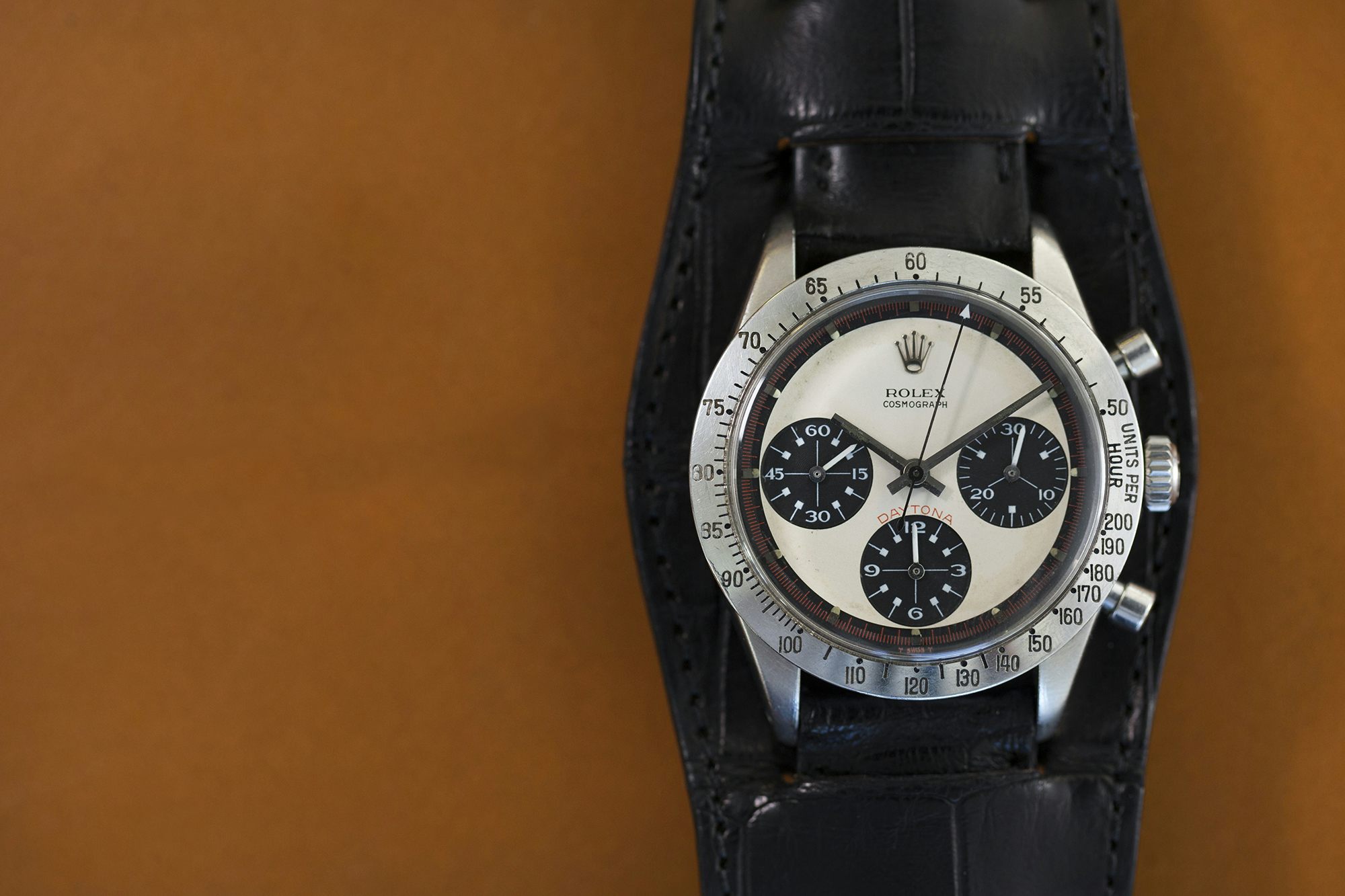
Paul Newman’s “Paul Newman” still holds the record for the highest price for a non-charity piece. Photo by Hodinkee.
Breaking the 2017 record for the Paul Newman Daytona felt impossible just a few years ago. Now, it seems like a foregone conclusion. The highest-end of peak collectible wristwatches have reached a whole new echelon of collecting in the last year. Many of the results have a trickle-down effect on the market, especially with F.P. Journe over the last year, which has reached new heights, even for his non-mechanical pieces. We’ve also seen more record-breaking results in the past 12 months than in the past few years, which potentially signals an overall shift in who is active in the market. Before we get to that speculation, let’s look at what’s been happening.

FFC’s FFC.
In addition to the recent record price set by Francis Ford Coppola’s FFC, the sale of a steel Patek 1518 for $17.6 million last fall (previously around $11.1 million in 2016) seemed to set off a domino effect on the “leader board,” so to speak. That sale bumped Prince Mohammed Tewfik‘s pink-on-pink 1518 (sold in 2021 for $9.57 million) out of the top five. Five years ago, the price reached for the Tewfik (a watch that many people called the best-of-the-best for pink-on-pink 1518s) was nearly unbelievable. Now it’s been eclipsed, and frequently in quick succession.

The record-breaking Patek 1518 in steel that was sold at Phillips in November 2025
Phillips Geneva broke the record for the most expensive Patek ref. 2523 with a cloisonné example selling for $10.245 million in May. Then they had another impressive result during their Spring Hong Kong sale. A pink gold first series Patek ref. 2499 sold for around $10.255 million, the most expensive wristwatch sold in Asia and a record for the reference. The current list stands as follows:
- Patek Philippe Grandmaster Chime Ref. 6300A-010: OnlyWatch — Nov 9, 2019 — CHF 31,000,000 (~$31.2 million)*
- Rolex Daytona “Paul Newman” ref. 6239 — Phillips (New York) — Oct 26, 2017 — $17,752,500
- Patek Philippe Ref. 6301A Only Watch — May 10, 2024 — CHF 15,700,000 ($17.3 million)*
- Patek Philippe ref. 1518 (Stainless Steel) — Phillips (Geneva) — Nov 8, 2025 — CHF 14.2 million ($17.6 million)
- F.P. Journe Souscription Chronomètre à Résonance no. 007 — Phillips (New York) — June 13, 2026 — $13.922 million
*Sold at Only Watch for charity.

Patek ref. 2523 in rose gold with Gobbi Milano signature. In 2019, this set the record for the most expensive watch ever sold in Asia at just shy of $9 million. Seen on the wrist of the owner in Singapore.
However, if you discount watches sold for charity (which many collectors do, since the sale can be written off as a donation), the list narrows to some even more impressive and historically important pieces. It also proves the power that Journe has had on the recent market, setting high-water marks back to back:
- Rolex Daytona “Paul Newman” ref. 6239 — Phillips (New York) — Oct 26, 2017 — $17,752,500
- Patek Philippe ref. 1518 (Stainless Steel) — Phillips (Geneva) — Nov 8, 2025 — CHF 14.2 million ($17.6 million)
- F.P. Journe Souscription Chronomètre à Résonance no. 007 — Phillips (New York) — June 13, 2026 — $13.922 million
- Patek Philippe ref. 1518 (Stainless Steel) — Phillips (Geneva) — Nov 12, 2016 — CHF 11,002,000 (~$11.1 million)
- F.P. Journe FFC from Francis Ford Coppola — Phillips (New York) — Dec 6, 2025 — $10.755 million
- Patek Philippe ref. 2499 (First Series, Pink Gold) — Phillips (Hong Kong) — May 29, 2026 — $10.255 million
- Patek Philippe ref. 2523 (Cloissoné map of South America) — Phillips (Geneva) — May 9, 2026 — $10.245 million
- Patek Philippe ref. 1518 (Pink-on-pink, Prince Mohammed Tewfik) — Sotheby’s (New York) — Dec 9, 2021 — $9.57 million
- Patek Philippe ref. 2523 (Pink Gold, Gobbi Milano Signature) — Christie’s (Hong Kong) — Nov 27, 2019 — $8.967 million
- Patek Philippe ref. 2523 (Cloissoné map of Eurasia) — Phillips (Geneva) — May 8, 2021 — $7.682 million
There are a few notable things to notice. First, five of the top ten record non-charity sales have happened in the last 217 days, give or take. That’s seven months of massive results. Both Boutros and the seller of Résonance no. 007 told me that there are two separate ways to look at these sales: collecting and markets. The seller specifically told me he looks at the auction market as, well, a market, just like the financial ones.
Over the last 217 days, global financial markets have experienced historic tech-driven bull runs, ongoing inflation fears, and a massive geopolitical shift due to tensions in the Middle East. The S&P 500 is up by roughly 12.3% year-to-date and hit record highs, though markets have seen some volatility and sector rotations following severe miss penalties in earnings. But one can naturally point to the financial markets and tech sectors as major factors. If you had insight into whether the Strait of Hormuz was going to be open or closed, or if Iran was going to be bombed on a given day, you could make a lot more money for watches that way, too.
“The market has grown beyond the people who have collected them for a long time, but there are longtime collectors who are also still acquiring,” says Boutros. “The market is bigger than people realize. So you do have existing collectors still acquiring, who’ve been collecting for maybe a decade or more. There are new collectors also acquiring. And there is, of course, a segment of long-time collectors who are just sitting on the sidelines.”

It’s been a bit of a joke among collectors in the room at Phillips and online that SpaceX’s IPO—in addition to creating the world’s first trillionaire—potentially dumped a bunch of cash into the pockets of many potential watch buyers who held SpaceX stock. Who knows, maybe Musk himself is going to try to supplant Mark Zuckerberg as the world’s most prominent billionaire (or trillionaire) watch collector. Whether that’s true is yet to be seen, but it sure seemed like a lot of people wanted to buy watches this weekend, at some pretty remarkable prices.
Then you may have noticed that the top seven results have all come from Phillips, which seems to have a strong grip on these kinds of record-breaking watches. I wouldn’t say that Sotheby’s or Christie’s wouldn’t be able to get back in the mix—not by any stretch. In fact, if we count pocket watches in the “top sales,” Sotheby’s beat the Eusasia 2523 with their sale of La Grosse Pièce for $7.736 million (though it falls out of the top 10 yet again because it’s knocked out by the Henry Graves Supercomplication). But sales like today’s give Phillips a lot of momentum, and I imagine sellers will be inclined to approach them first to sell future F.P. Journe, at the very least.
Final Thoughts
There were some other notable results outside of F.P. Journe at this weekend’s auctions, but as for the Journe boom that’s currently happening, it’s hard not to look at the situation as a potential Ouroboros—one record begets another until the market potentially eats itself and prices most people out. Among newer collectors of F.P. Journe, especially those in the tech sector or other high-net-worth individuals without much history with the brand, many likely see record growth (and the headlines around it) as a big green sign telling them “buy, buy, buy” in hopes that, as the memes say, “stonks only go up.” But as we saw with Bitcoin, which reached a $125,000 peak in October of last year, what goes up must come down. Bitcoin dipped below $60,000 a week ago. Even Paul Boutros is encouraging sellers to pump the brakes on expectations.
“That’s why we use conservative estimates,” Boutros said. “We really don’t know what the market is going to do. So even next season for those lots we will offer, we’re going to stick to our tried and true method of using conservative investments to not amplify, artificially, in any way, expectations. We’re going to just try to keep expectations grounded as best as we can, but the market is the market, and the market behaves beyond what any of us can control.”

There are still a number of very well-educated collectors with deep pockets who are so well-versed in the brand’s heritage that they understand things that few people in the company even know. At least those not named François-Paul Journe. Speaking to a few of them, I get the sense that they are willing to duke it out over pieces with esotericisms that I certainly only learn about after they sell for big sums. I am no Journe scholar, after all. A few of them may reach for pieces like the no. 007, if it makes sense in the moment.
And yet, while a number of bidders were convinced of the importance of Souscription Résonance no. 007 (which is undoubtedly important) and willing to go the distance to $14 million, there’s no denying it’s not the most important F.P. Journe wristwatch in private hands. Almost certainly, that would be “15/93,” the second wristwatch Journe ever made. Journe still owns his first, and this example from 1993, the 15th timepiece he ever made, represents the closest you can get to the origin of the F.P. Journe brand. When it sold for $8.36 million at Phillips Geneva in 2024, it was the most expensive watch by an independent in history. Now it’s been eclipsed. Twice.

“I wonder what 15/93 would go for today?” the seller of Souscription Résonance no. 007 asked me on Saturday. I told him I didn’t know, but I said that I assumed that tonight’s dinner with his friends was on him. Where was he going? “To get a slice of New York pizza.”