From the imposing astronomical clocks of Tudor England to the exquisite pendant watches of Victorian Britain, timekeeping has long been a symbol of power, prestige, and technological marvel within Europe’s royal courts. This new series explores the fascinating evolution of clocks and watches crafted specifically for royalty, tracing how these intricate masterpieces reflected the tastes, ambitions, and innovations of monarchs. Through the lens of craftsmanship, artistry, and historical significance, we reveal how these royal timepieces marked the passage of dynasties and empires.
Maria Theresa was the ruler of the Habsburg monarchy from 1740 until her death in 1780, and the only woman to hold the position in her own right. Though crowned as Archduchess of Austria and Queen of Hungary and Bohemia, her true authority came from willpower, reform, and image-making.
Maria Theresa ruled not as a king in disguise, but as a monarch in her own right, one who embraced both tradition and the flux of the Enlightenment. Horology, like art and music, became part of her sovereign language and a way to express her modernising ambitions and cultivated authority.
Maria Theresa was born in Vienna on the 13th of May 1717, the eldest daughter of Emperor Charles VI and Empress Elisabeth Christine of Brunswick-Wolfenbüttel. As a child of the Habsburg dynasty, she grew up in the Hofburg Palace (below) surrounded by the rituals and splendour of imperial court life. Although her father’s hopes for a male heir were never fulfilled, he worked to secure her right of succession through the ‘Pragmatic Sanction’ of 1713, a decree that would later become the foundation of her contested claim to the throne.
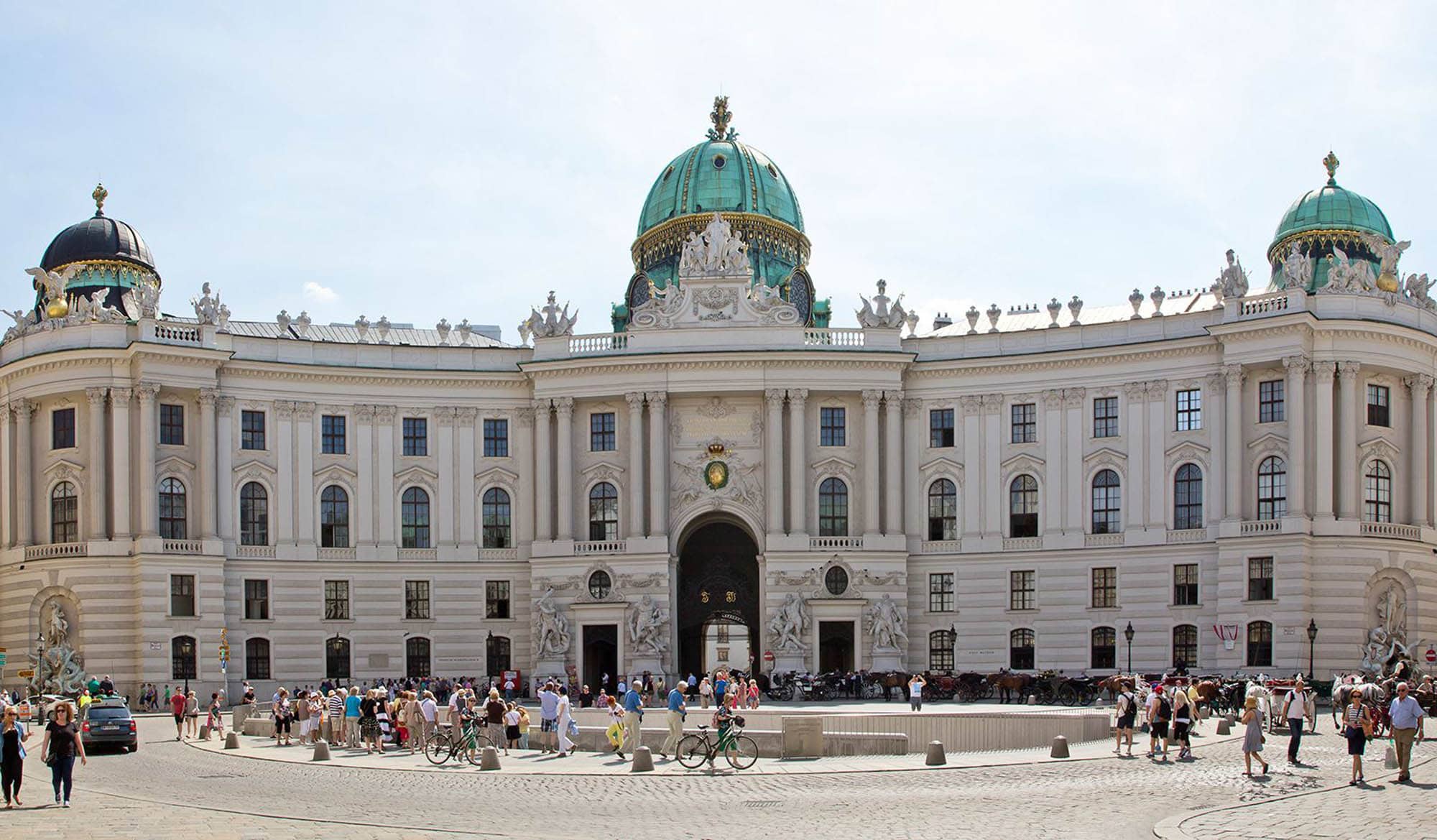
The Hofburg, former imperial palace in Vienna, Austria. © Mistervlad/ stock.adobe.com
Maria Theresa received an upbringing that emphasised piety, music, languages, and courtly manners rather than formal political training, reflecting contemporary expectations for imperial daughters. Nonetheless, her natural intelligence, strong will, and deep sense of duty would prepare her, often unexpectedly, for the immense responsibilities she inherited at the age of twenty-three.
Among her many passions, timekeeping held a special place. In an age when mechanical clocks and watches represented both technological innovation and artistic mastery, Maria Theresa cultivated a fascination with these intricate objects. They were more than practical instruments for her; they embodied the precision, order, and craftsmanship that resonated with her vision of governance and culture.
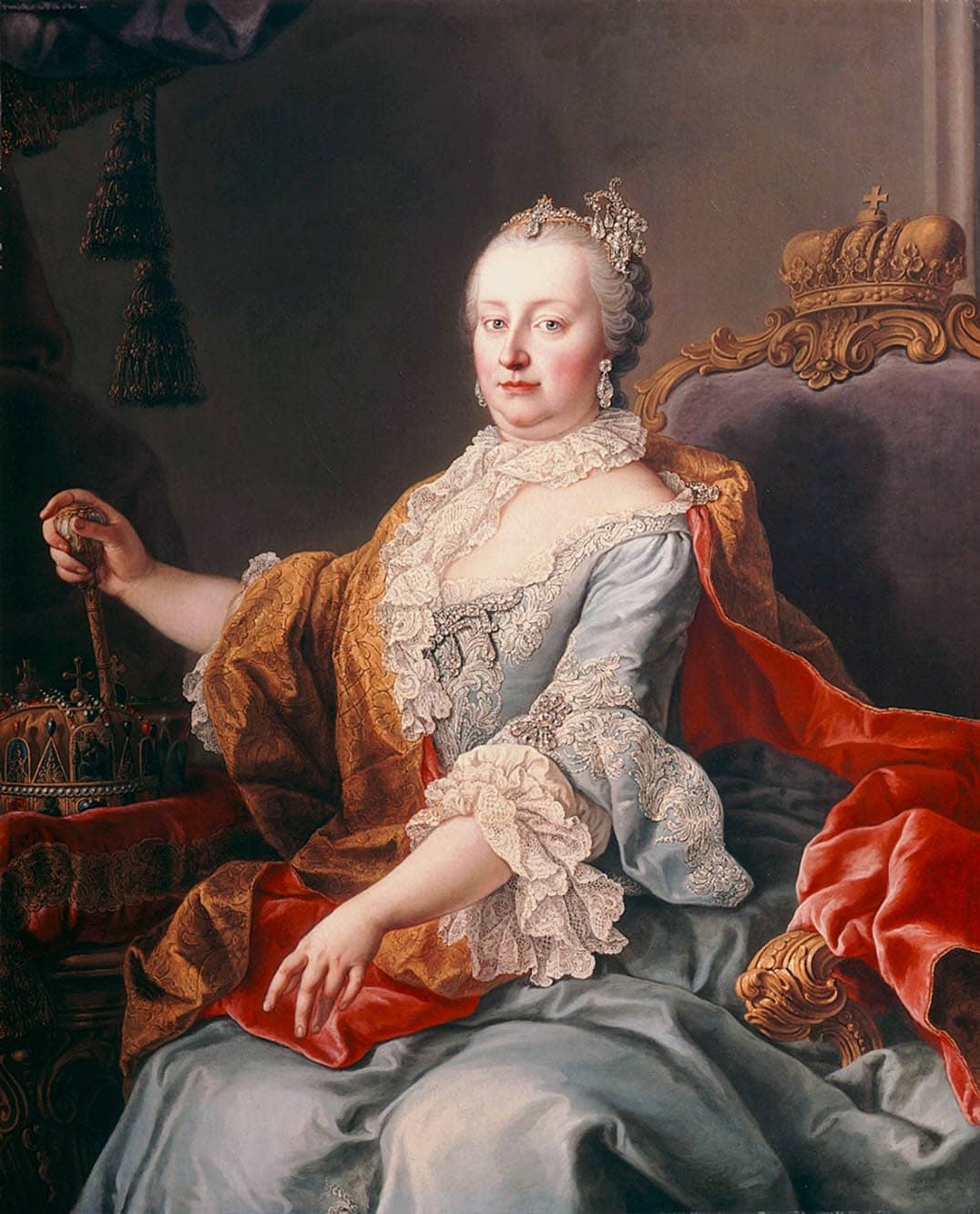
Empress Maria Theresa (1717-1780) by Martin van Meytens c.1759. Public Domain
The empress surrounded herself with exquisite examples of horology, often commissioning pieces that blended functionality with ornate artistry, and she encouraged the spread of clockmaking as part of the flourishing decorative arts at her court. Her appreciation of clocks and watches reflects not only her personal taste but also the Enlightenment spirit of her reign, where science, technology, and art were intertwined in the service of both beauty and progress.
A Royal Court of Automata and Mechanical Wonders
This impressive piece, known as the Miraculous Writing Machine, was presented to Empress Maria Theresa in Vienna in 1760. It was created by Friedrich von Knaus, a German clockmaker active as a court mechanic in Vienna at the height of the ‘century of writing’, a period when written correspondence linked scientists, rulers, scholars, and artists across Europe.
Writing itself was celebrated as both a practical tool and a cultural ideal. This machine represents the culmination of a series of increasingly complex devices made by Friedrich von Knaus, the Austrian court machinist, who also crafted similar works for figures such as King Louis XV of France and Duke Charles Alexander of Lorraine.
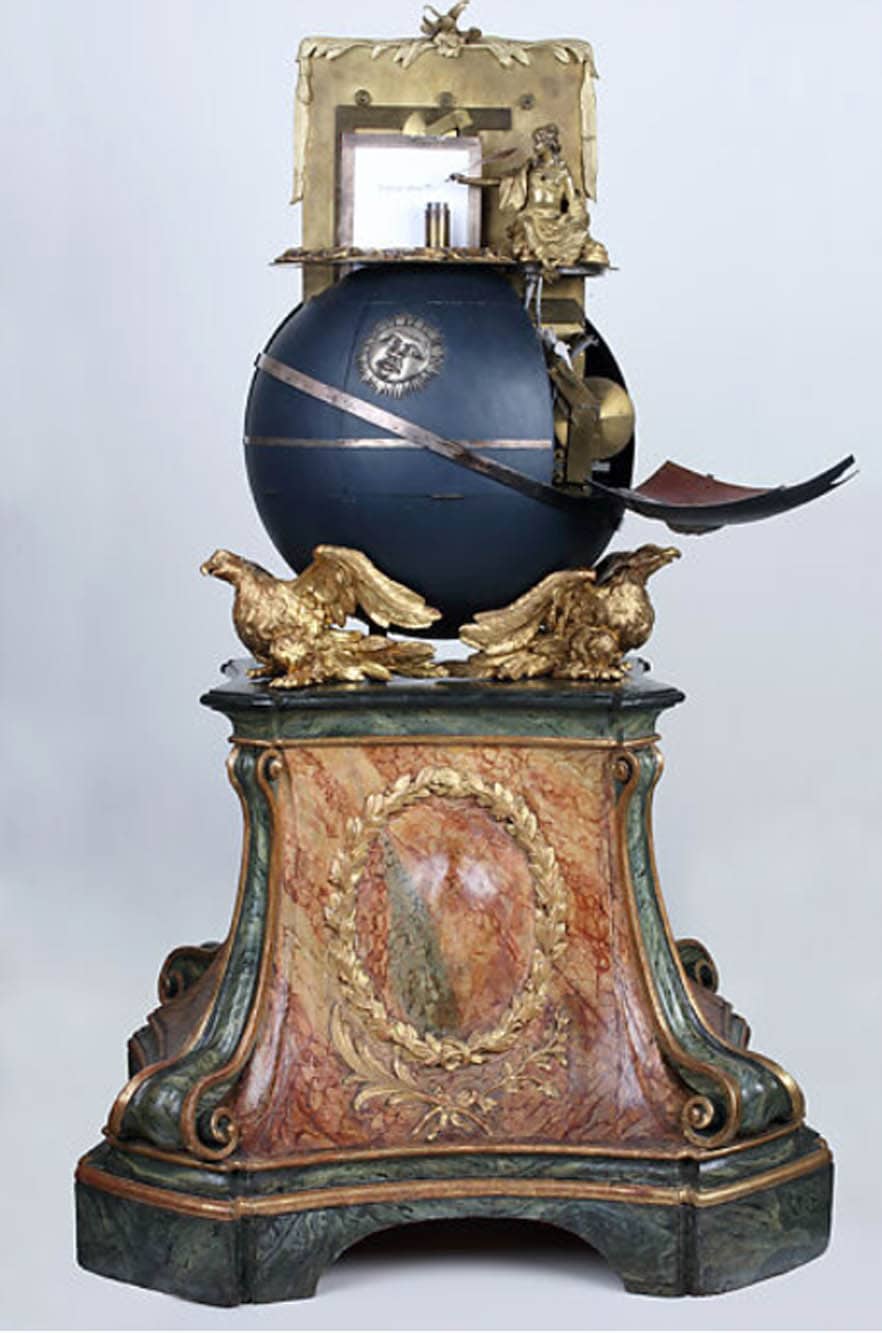
Miraculous Writing Machine Automaton by Friedrich von Knaus c.1760. Technisches Museum, Vienna
The automaton writes through the hand of a small, seated statuette, one of the earliest mechanical figures designed in human form to mimic the act of writing. Inside its spherical base, a system of clockwork, gears and pegs controls the figure’s movements with remarkable precision. Up to 107 words can be preprogrammed by adjusting the pegs on a rotating barrel, while a manual setting allows the figure to simulate writing from dictation, a technological innovation that foreshadowed the development of the typewriter.
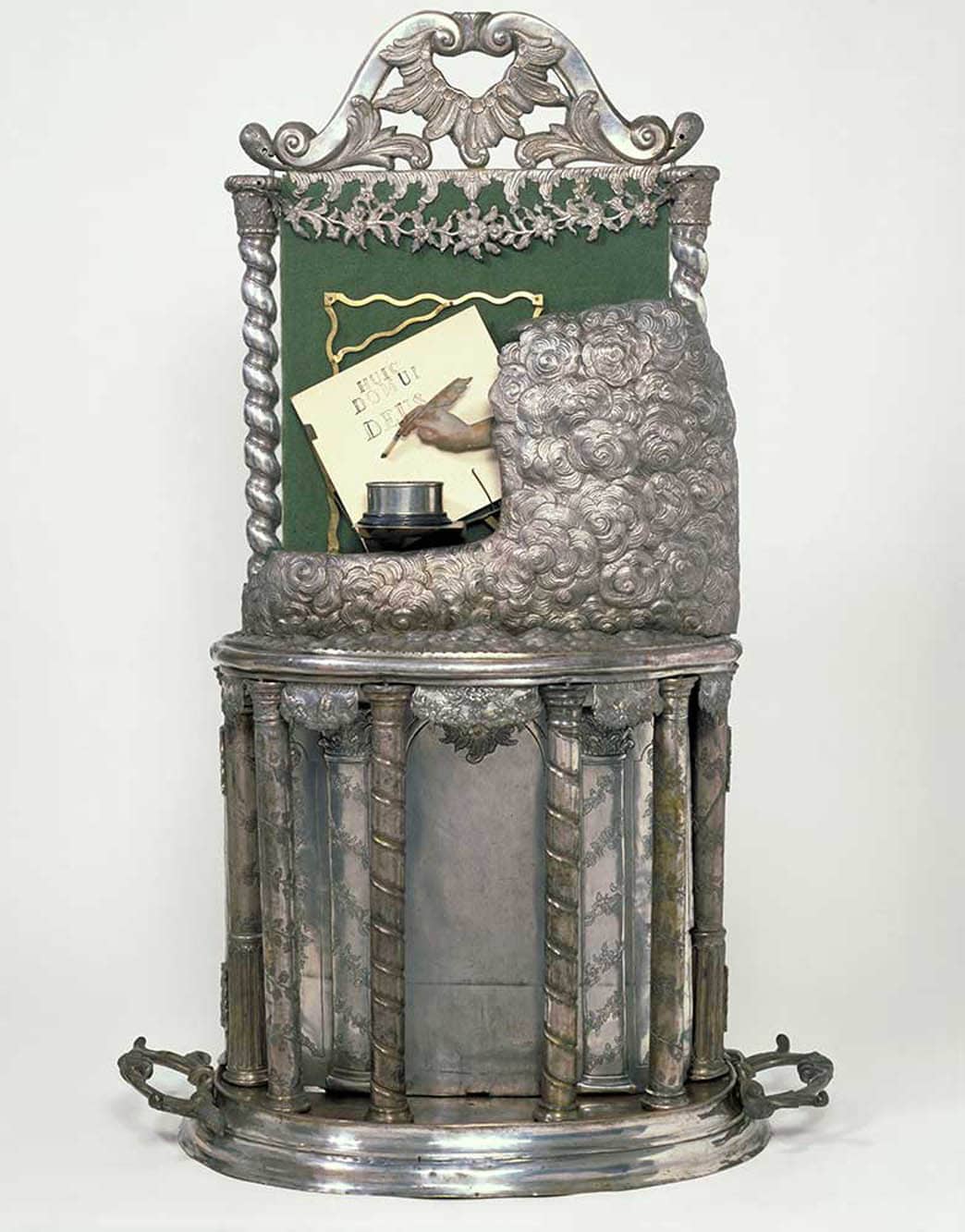
The Writing Hand by Friedrich von Knaus, Vienna, c.1764. Florence, Museo Galileo
The Writing Hand (above) is another automaton made by Friedric von Knauss. A clockwork mechanism moves the hand, which dips the pen into the inkwell and writes out a good luck wish on a card to be presented to the Lorraine family, to whom both automaton and book were offered as gifts from the royal family.
This book below, titled, Selbstschreibende Wundermaschinen was written by von Knaus in 1780. It is dedicated to the ‘marvellous automatic writing machines’, as the title reads. The book illustrates several mechanical devices, including ‘The Writing Hand’, made in 1764 and preserved today by the Museo Galileo.
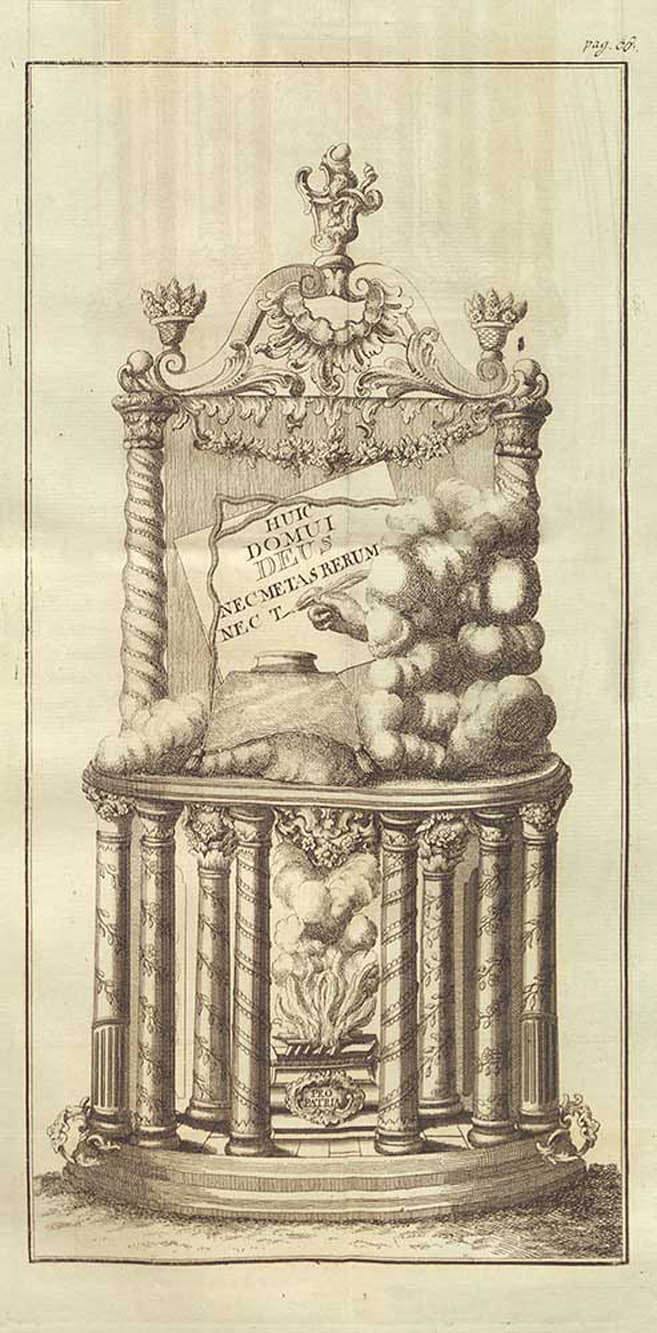
Selbstschreibende Wundermaschinen book by Friedrich von Knaus, Vienna, c.1780. Florence, Biblioteca del Museo Galileo
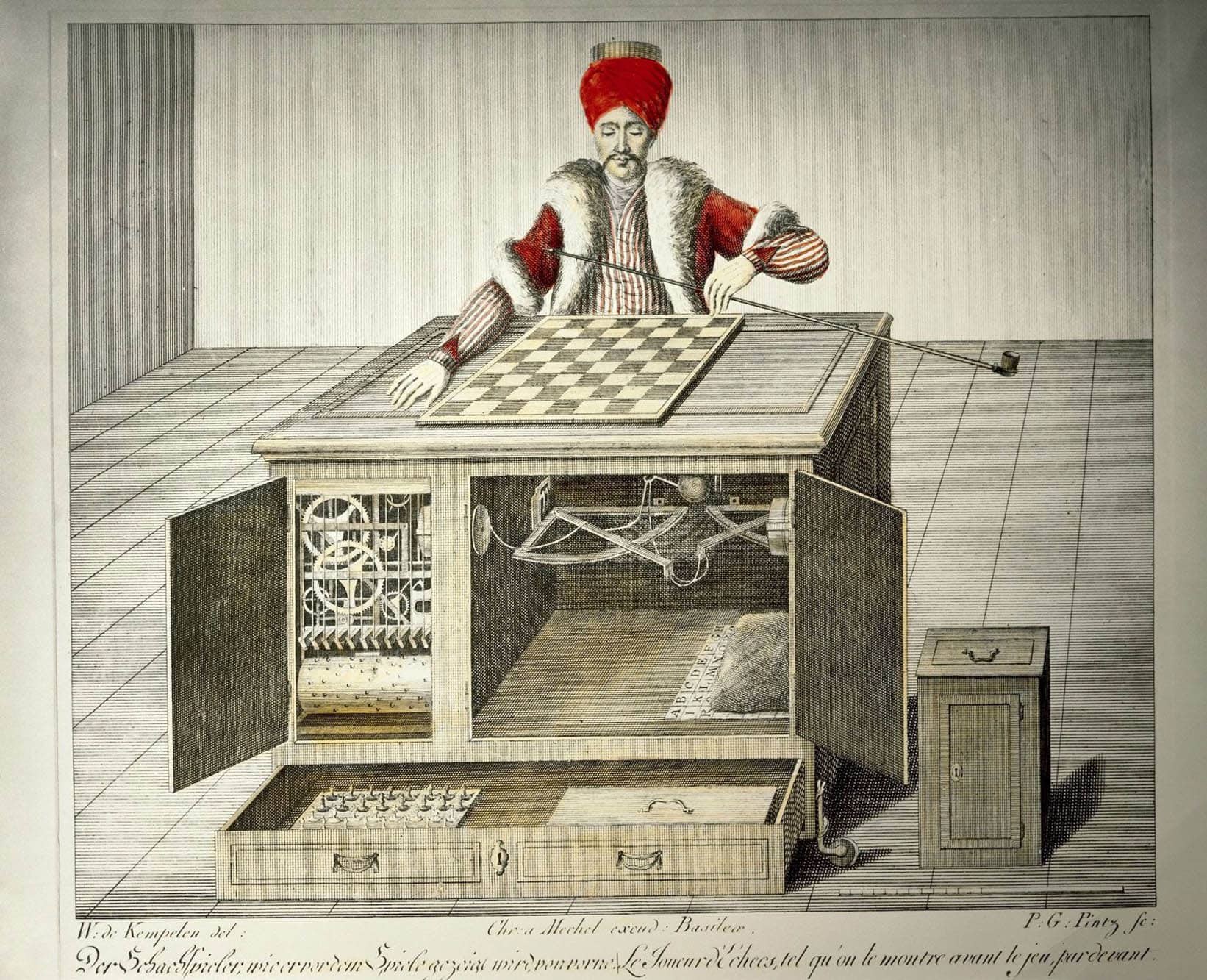
It must have been wonderful to see the amazing automatons in all their glory at the Empress’s Royal Court. None Moreso that the automaton, made by engineer Wolfgang von Kempelen known as the Mechanical Turk, which performed in front of Maria Theresa in 1770. It was a marvel and appeared to understand and play chess on its own. In reality, there was a chess player concealed inside the cabinet (see below), keeping track of the game on a miniature chessboard and controlling the Turk’s movements with levers.
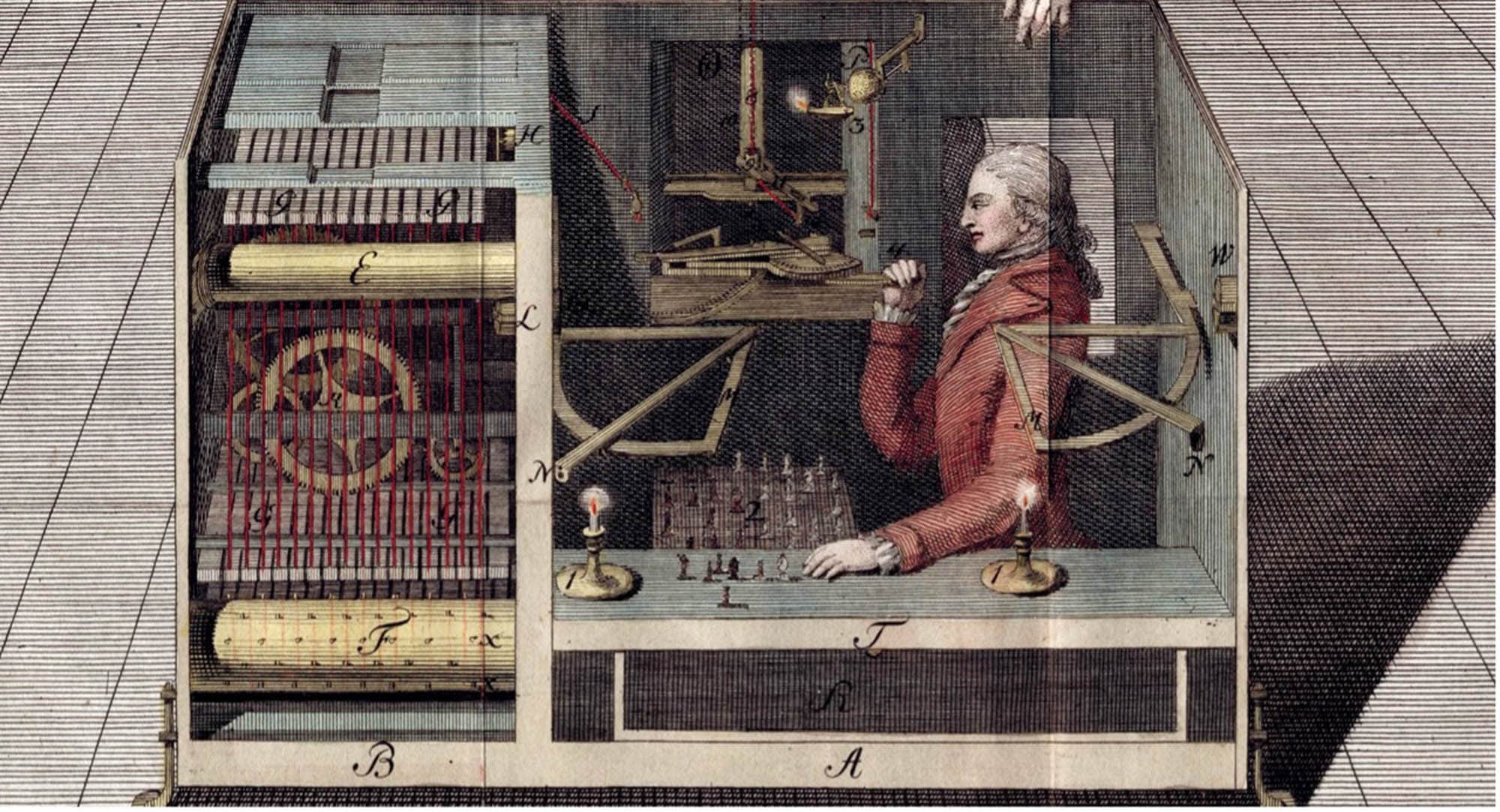
Inside The Mechanical Turk Automaton by Wolfgang von Kempelen c.1770. Public Domain
The Mechanical Turk toured Europe, playing against famous opponents like Napoleon Bonaparte and Benjamin Franklin generating widespread fascination and debate about human-like machines. The player inside moved the pieces using levers and springs, controlling the automaton through complex internal mechanisms, magnets, and a pantograph system.
Habsburg Palace Clocks and Institutional Collections
The magnificent Schönbrunn Palace & Hofburg house the main horological collections. Many of the 18th-century gilt-bronze and cabinet clocks, musical clocks and small automata still remain in the imperial state rooms and palace collections. These objects reflect Maria Theresa’s tastes and the court’s decorative programme. A good example being the musical clock below.
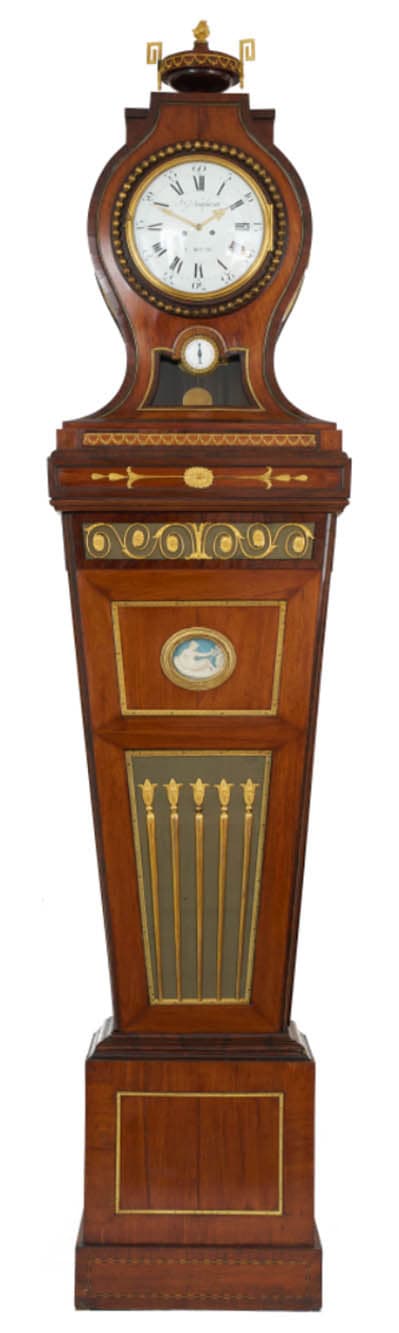
Flute Harp Clock by Johann Gottfried Kaufmann, Dresden, c.1790. CC BY 4.0, Foto- TimTom, Wien Museum
This stunning cabinet clock was made by Johann Gottfried Kaufmann, who was a German clockmaker, musical instrument maker and inventor of mechanical musical devices. He lived and trained as a clockmaker in Dresden and in doing so, learned how to repair mechanical musical pieces, which from 1772 became a focus of his own workshop. Before long, he built his own apparatuses capable of imitating the sounds of various orchestral instruments. In 1787, he succeeded in combining a flute with a harp: after the ruling Elector Friedrich August III purchased Kaufmann’s first ‘flute-harp clock’ in 1789, orders from other European princely courts soon followed.
The institution of the imperial court furniture depository dates to the 18th century. This was when the Imperial Furniture Collection (Möbelmuseum Wien) below, was founded by Maria Theresa to manage court furnishings; today it houses vast Habsburg furniture holdings — including clocks and decorative horology from the eighteenth century. The Court Furnishing Inspector, first appointed in 1747, was responsible for the care and transport of imperial furniture.
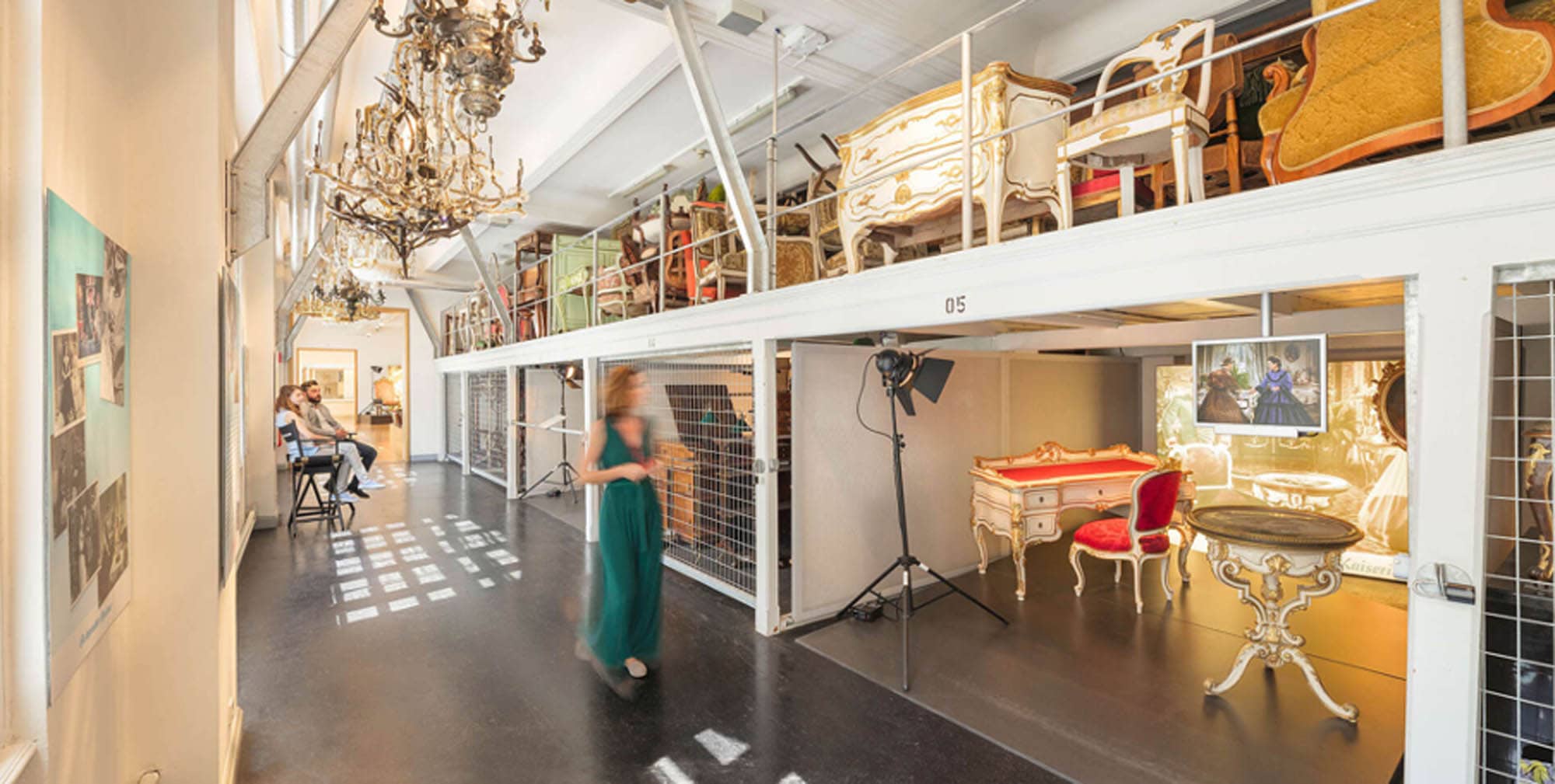
Imperial Furniture Collection depository founded by Maria Theresa
The most important task of the Court Furnishings Inspectors was organising the transport of furniture. The Viennese court moved its residence several times a year. In winter it resided at the Hofburg, followed by the “Sejour” (sojourn) at Schönbrunn and Laxenburg, with interludes for hunting, for example at Schloss Hof. These residences were not permanently furnished until the early 19th century and so the furnishings required by the imperial household had to move with the court.
The Imperial Treasury at the Hofburg Palace in Vienna, contains a valuable collection of the secular and ecclesiastical, including many important horological items by the leading makers of the time, like the outstanding example below by Swiss clock and instrument maker, Jobst Bürgi.
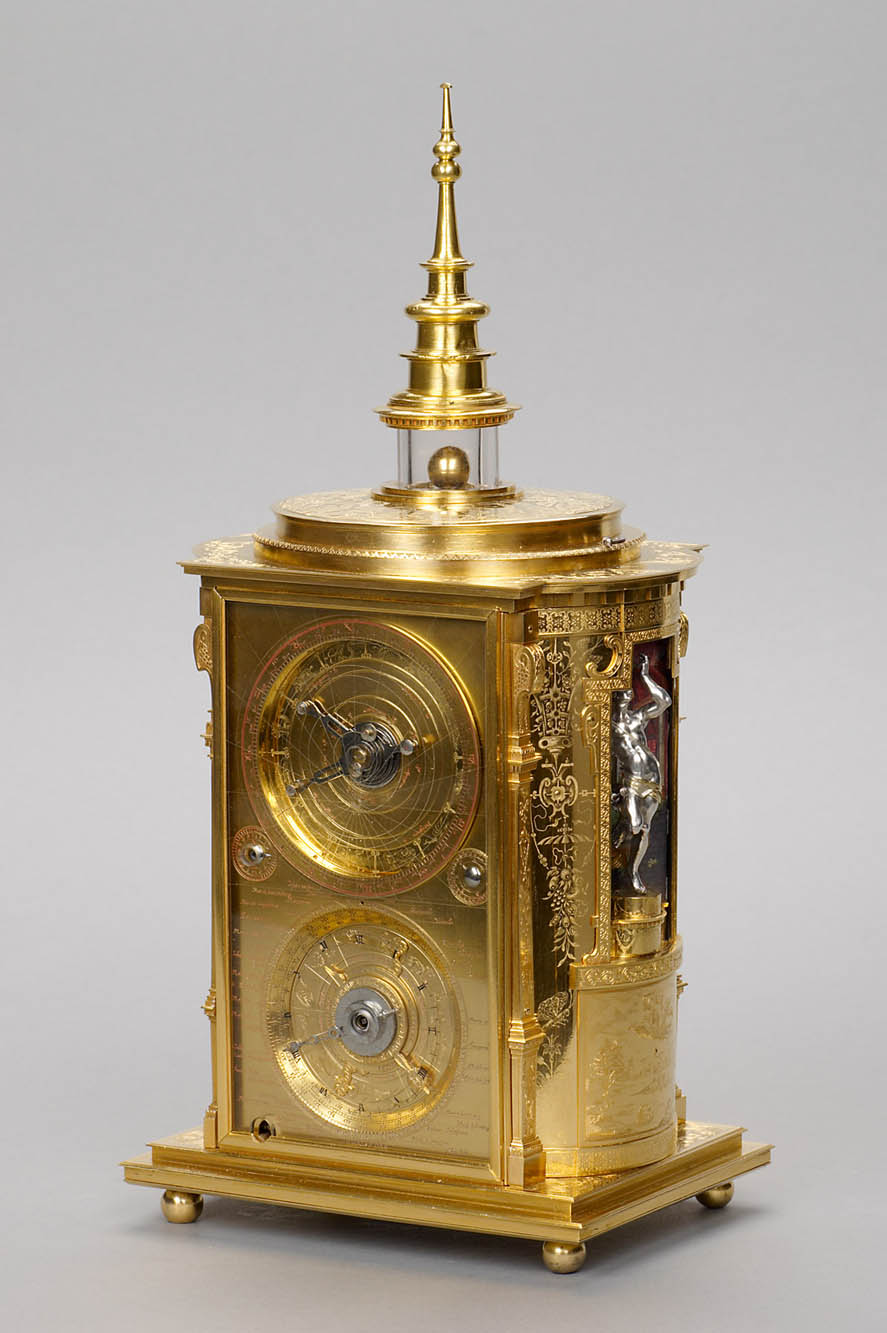
Viennese Planetary Clock, c.1605, Jobst Bürgi. Kunst Historisches Museum
The so-called Vienna Planetary Clock (above) is the first clock to feature a representation of the heliocentric planetary system, while the so-called Vienna Crystal Clock is the oldest surviving clock with a second’s display.
Other horological-related items on display from the Royal collection include scientific instruments, such as a cylindrical sundial and portraits showing clocks as a symbol of wealth and status as can be seen in the painting below of wealthy Venetian merchant Fabrizio Salvaresio by Titian.
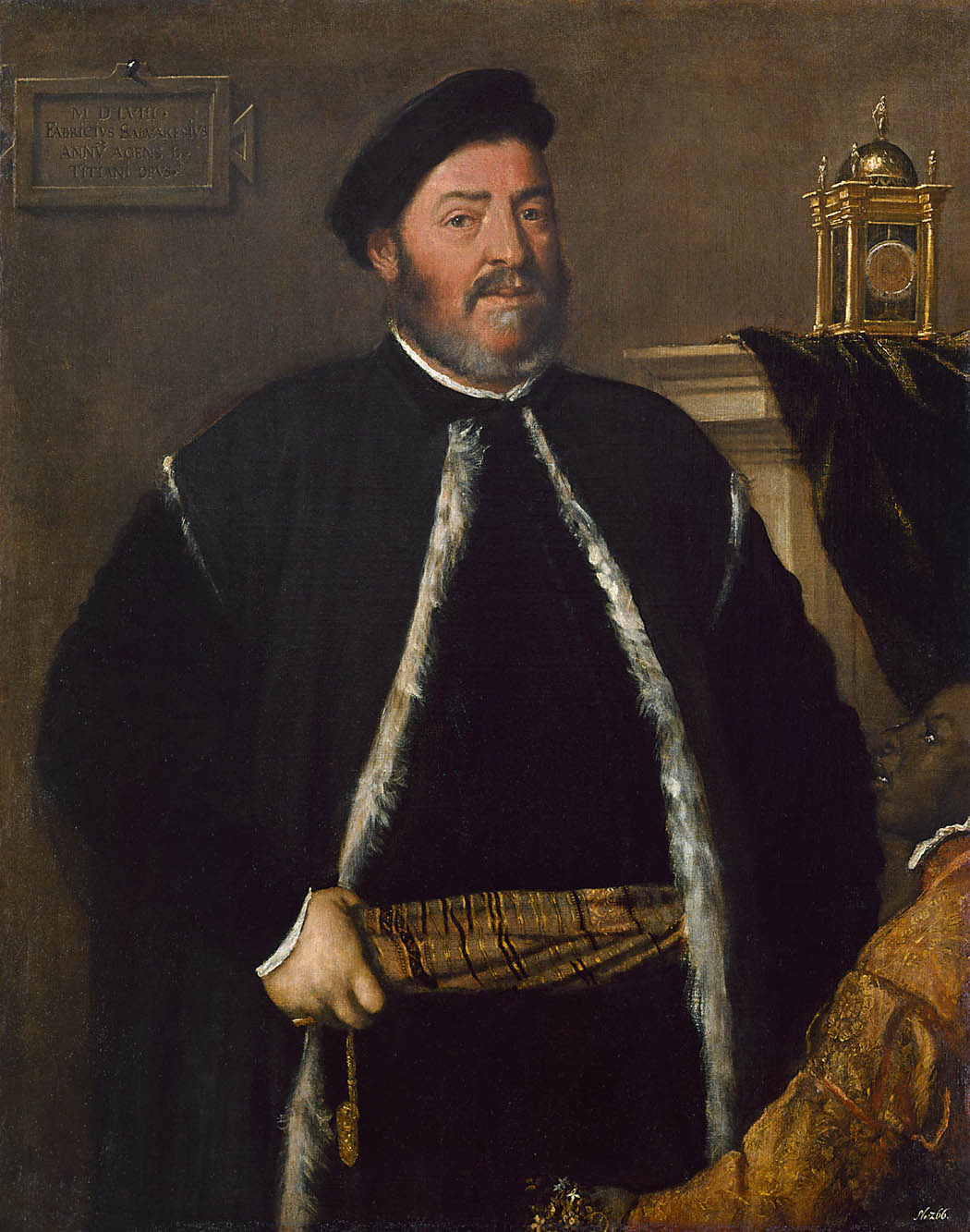
Portrait of Fabrizio Salvaresio, c.1558. Tiziano Vecellio, known as Titian. Kunst Historisches Museum
Salvaresio had both his own and Titian’s names, along with the date of creation 1558, proudly inscribed on the tabula ansata (tablet with handles) in the background of the painting. His somewhat vulgarly sprawling, self-assured demeanour, the fur-trimmed coat, silk sash, and the standing clock, repeated in several of Titian’s portraits and likely indicating elevated status, mark him as a wealthy merchant. The boy shown in profile at the lower right may allude to the slave trade in which Salvaresio was involved, among other ventures.
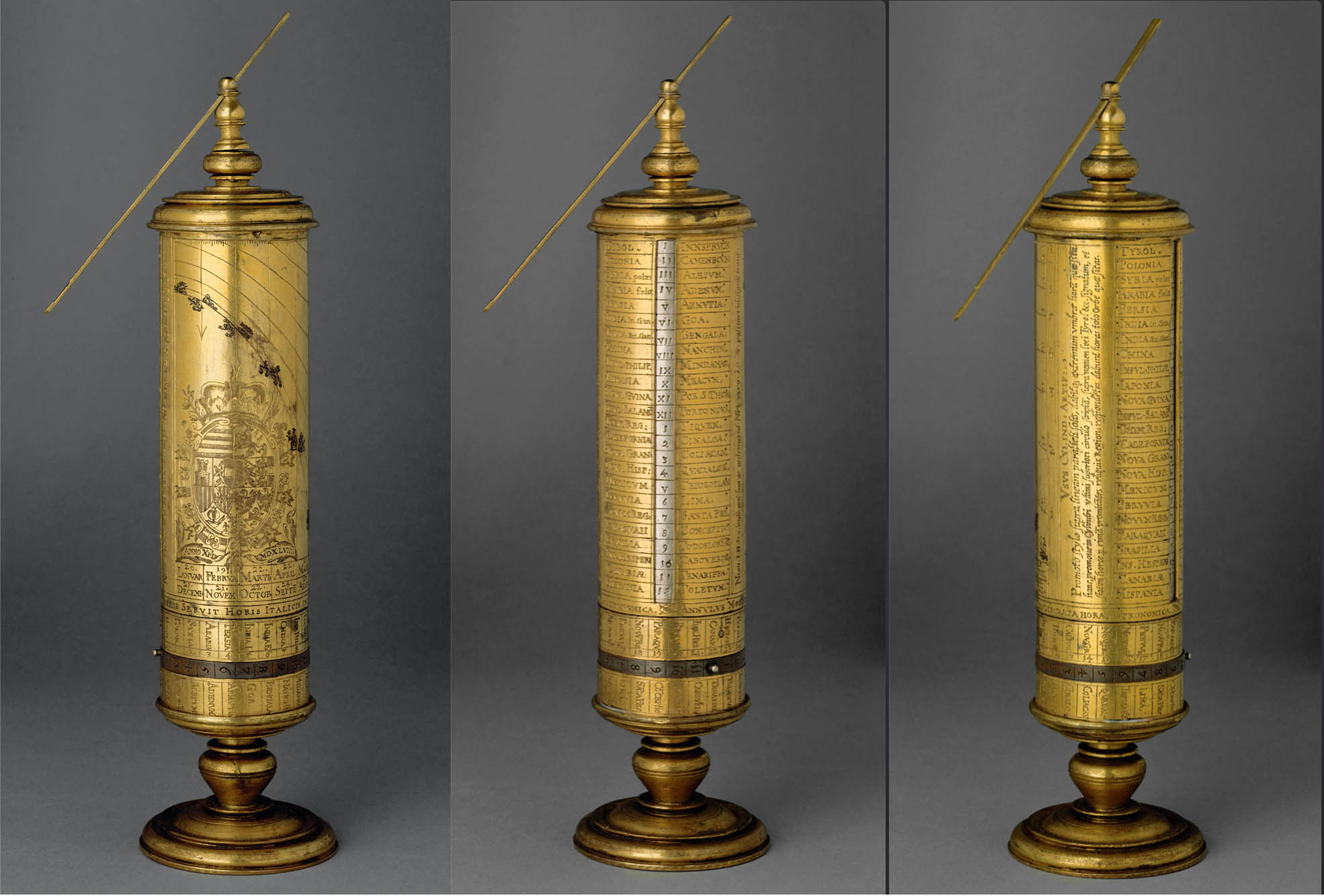
Cylindrical Sundial with the Arms of the Future Emperor Maximilian II dated 1548. Kunst Historisches Museum
An Empress Fascinated by Mechanical Precision
Under Maria Theresa’s patronage, Vienna emerged as a leading centre of horological innovation. Makers like Franz Josef Neuwirth and others developed bracket, mantel, and longcase clocks that rivalled those of Paris. Their work blended ornate Baroque decoration with emerging Neoclassical lines, suited to the empress’s taste for clarity and grace.
Clock workshops expanded across the empire, especially in Vienna, Prague, and Graz. Talented artisans were supported by imperial contracts and protected by guild laws that standardized craftsmanship and encouraged innovation.
Maria Theresa’s horological passion manifested most strikingly in the luxurious automata and artistic clocks populating her imperial palaces, reflecting both her personal refinement and Enlightenment-era fascination with mechanical precision. Her interest in clocks extended far beyond ornament. She reformed Austria’s educational, legal, and administrative systems—and accurate timekeeping was crucial to them all.
After her death, the practice of commissioning elaborate timepieces continued but in a reduced form under her successors, maintaining her legacy whilst signalling shifts in aesthetic and political priorities.
The post A Majestic Journey Through Clocks & Watches Made for Royalty: The Enlightened Empress – Maria Theresa and the Mechanics of Wonder appeared first on Worn & Wound.