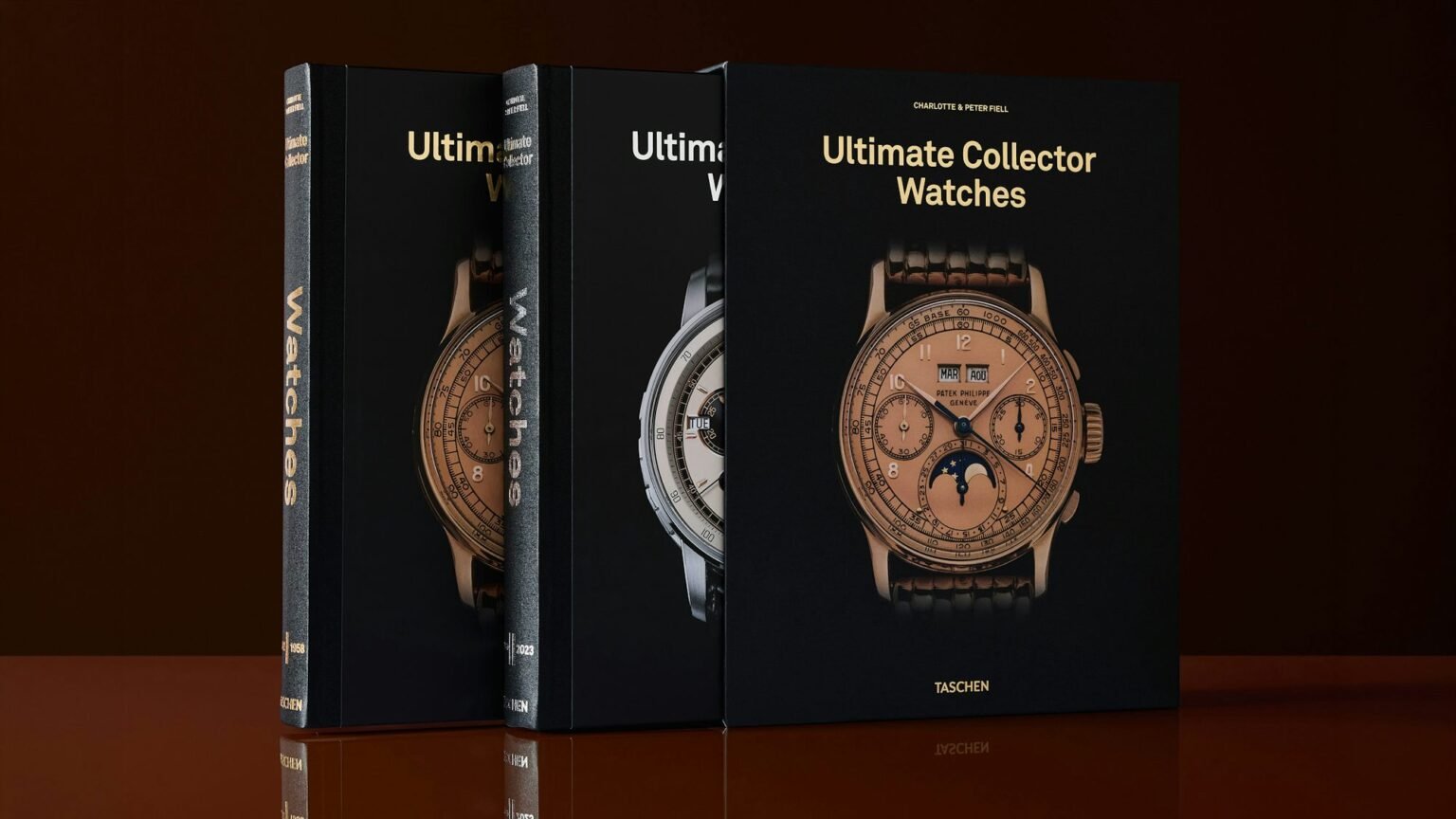


In two recent conversations, I repeated my frequently used adage: “I can’t collect the watches, so I collect the knowledge.” This was said when talking to two world-class collectors; one has one of the most complete collections of Patek Philippe split-second wristwatches, and the other has probably the most important collection of Lange, F.P. Journe, and historical watches in the world. Both of them said the same thing, which I’ll paraphrase. “I didn’t have the money to collect these watches until X years ago, but before that, I was learning.” That’s why I own a lot of books—even if I probably will never reach those heights—and I’m always looking for more. Knowledge means a lot.
Watch books often fall into two categories: either overly esoteric, with a ton of information, or overly broad, without a ton of information but with a lot of nice pictures. I have a bit of each, but I find myself returning to the former most often. You can glean a lot of information from books like AP’s “20th Century Complicated Watches” or Patek Philippe’s two-volume museum collection tomes, but you only need them once or twice a year. My books on Rolex Day-Dates or Khanjar Daytonas are awesome, but a bit less visited after the first pass. Dr. Helmut Crott’s “The Dial” is maybe the most important book on my shelf, but sometimes more information than I want to sit and mindlessly digest. Taschen’s new two-volume offering, “Ultimate Collectors Watches” by Charlotte and Peter Fiell, bridges the gap between scholarship, great photography, and insights from collectors in a way I don’t recall seeing in past watch books.

Full disclosure: I have one small photo in the book as part of our founder Ben Clymer’s interview, where he shares his perspective on collecting. I don’t really think that impacts the review (heck, we hear Ben’s perspectives on collecting for free all the time on Hodinkee), but I figured it’s worth a mention. The more important thing is how the book weaves between a historical and sometimes technical approach to what makes watches great, while contextualizing their importance (whether as horological objects, in pop culture, or as historical ones) to help explain why watch collecting has become what it is today.
That’s the benefit, I suppose, of splitting the book into two parts: the early era from 1891 to 1958, allowing these pieces to stand alone as vintage objects, and the later period from 1959 to the present. It’s actually pretty remarkable to see how things have changed across eras, even within a single book. The first volume alone is 463 pages and starts off remarkably strong with the esoteric Louis Brandt & Frère Minute Repeater conversion wristwatch. That gives you a sense that the book isn’t going to be as much fluff as you find in other offerings that stick to the hype to keep your attention.


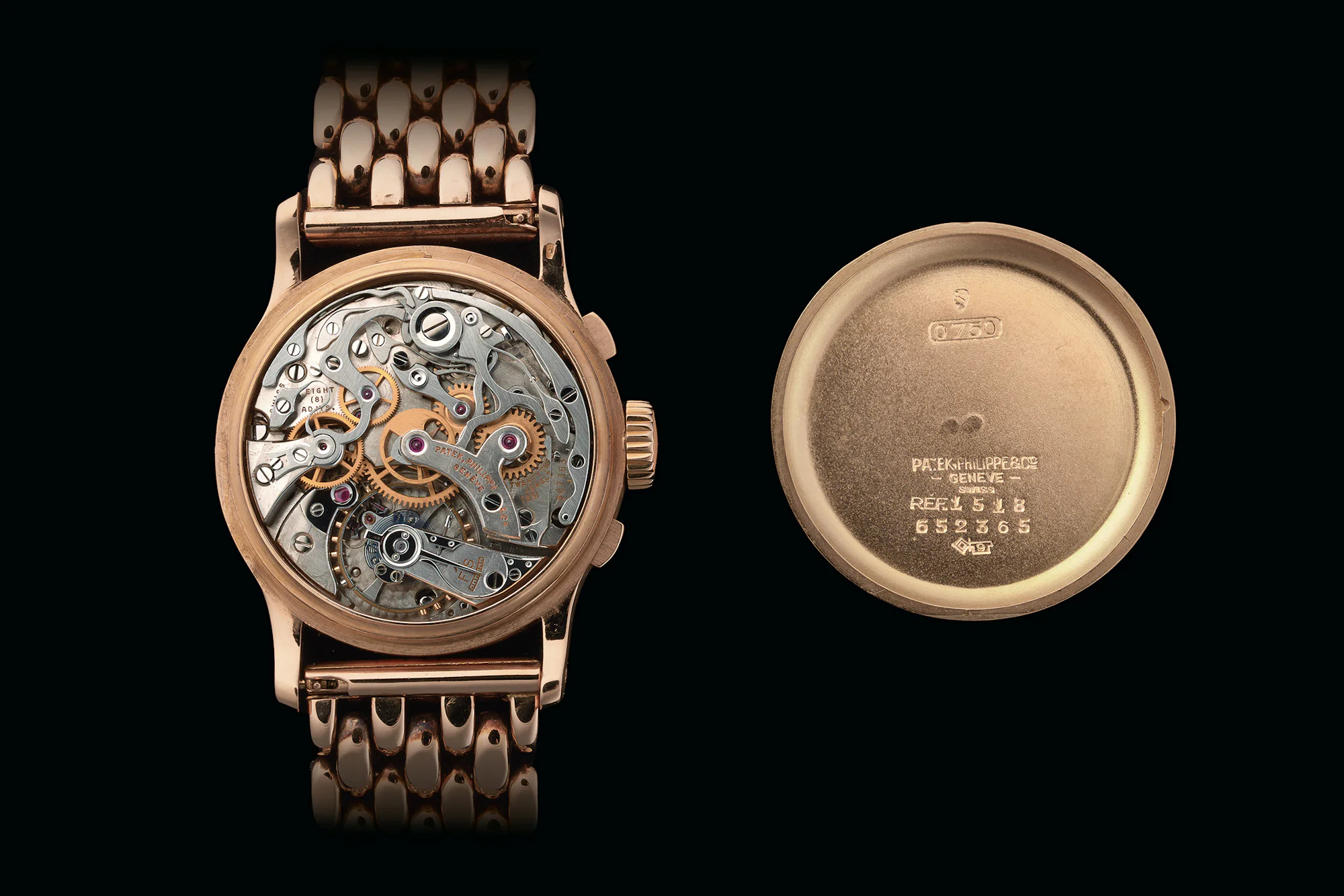
As you go on, you also notice that the photography is largely as good as the scholarly approach they’ve taken. I’m assuming here that they had to source a variety of photographers around the world (as it would have been a logistical headache otherwise), so some of the photos come off a bit darker or less strong than others, but only slightly. What’s more impressive is that they were able to convince the owners of these watches to allow them to photograph without caseback or dial, sometimes disassembling the watches to a pretty impressive degree, which then allows you to actually learn about the watches with a critical eye on your own.


That’s even more surprising when you realize that they were able to do so after finding some of the rarest watches in the world in the first place. The James Schulz Grand Complication, for instance (the first perpetual calendar minute repeating chronograph wristwatch), has been hidden away in a collection for a while and recently changed hands once again, privately. I got to see it in person, but wasn’t allowed to photograph it. They got to photograph the watch, see it on its original bracelet (which it was only recently reunited with), and show the movement. They got to show the J.B. Champion Patek chronometer (another watch that I think is a top-10 historic piece), with both dials swapped into the case, its bracelet, and photos of the movement and dial backs. This is important stuff for evaluating the watch, and not usually available to anyone but the top buyers.
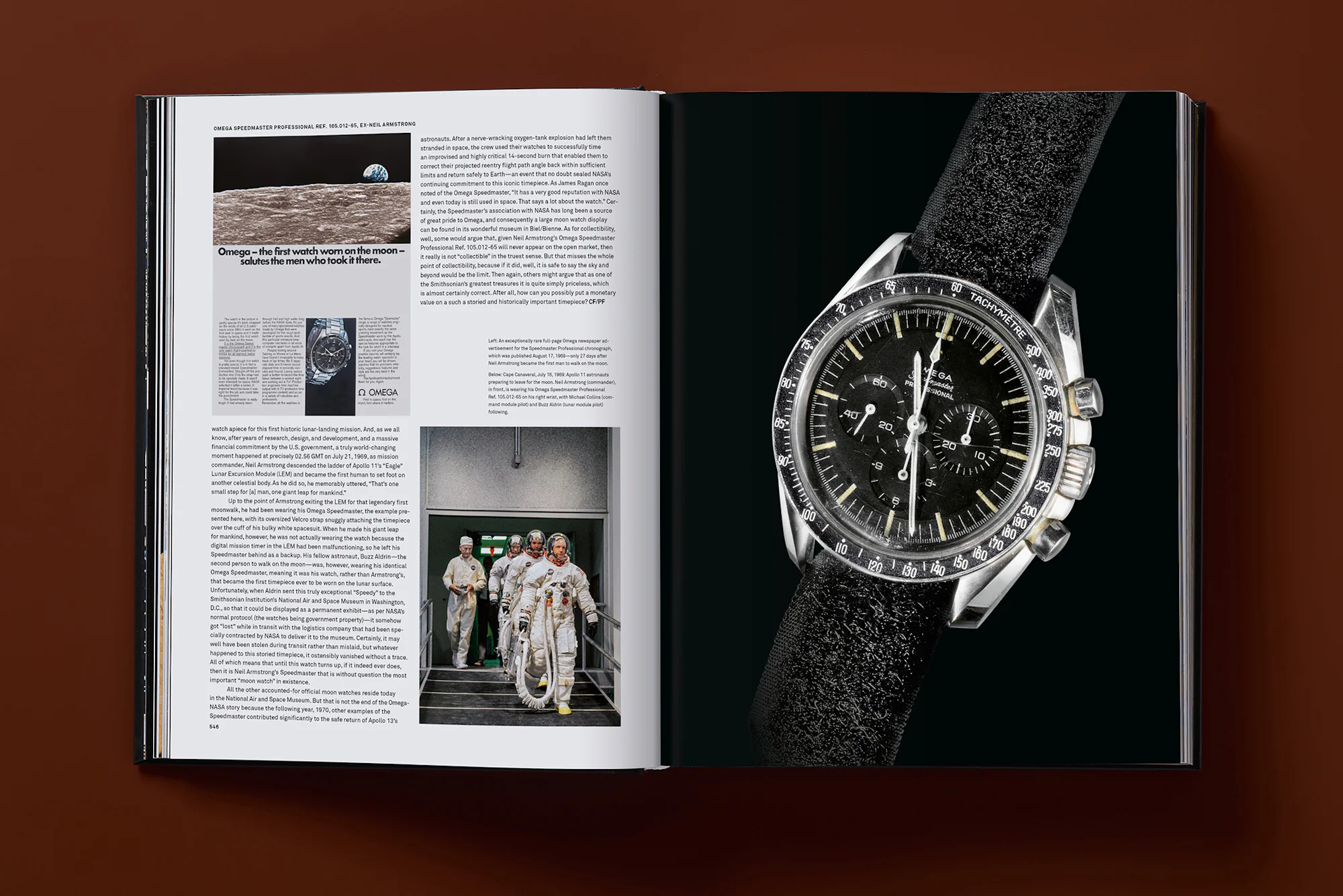
If that’s not enough, you’ve got Neil Armstrong’s Omega Speedmaster he wore on the Moon, photos of Paul Newman’s personal Rolex “Paul Newman” Daytona, and an incredible ref. 530 in steel, a pink-on-pink 1518 and doré dial 2499, and one of my favorites: a steel ref. 1436 split-second. And yet, by the end of the first book, we start trending toward more modern-feeling pieces, like a Vacheron Constantin ref. 4261 from 1951, an ultra-thin minute repeater that looks like it could have been made even a few years ago.


While Charlotte and Peter Fiell did a lot of work to get this book across the finish line and were a huge part of the text that was written, there are a number of other names involved in the research including Alexandre Ghotbi (from Phillips), Silas Walton (founder of A Collected Man and an encyclopedia on independent watchmaking), journalists Ming Liu and Robin Swithinbank, and others.
All deserve a lot of credit, as it’s a ton of text to produce, and the information available in the references is often incomplete or incorrect when it gets shared and reshared. Walton, Ghotbi, Patrick Getreide (of the OAK Collection), and Ben Clymer are among the few featured in the book as well.

I was actually more interested than anything in seeing how they’d handle the modern era of collecting, as there has been a lot of change and a lot of hype. There have also been many forgotten names. While I would have liked to see some of the more unusual suspects added (Christian Klings, Derek Pratt, etc.), the book takes a decade-by-decade approach, and the 1980s and 1990s would have likely dominated the volume.
There are some surprising but great inclusions, however, like the Seiko Quartz Astron (a super important but slightly less sexy part of watchmaking history), a unique quartz-powered Patek Nautilus ref. 3800, and a unique Gérald Genta Grande Sonnerie made for Prince of Brunei Jefri Bolkiah. There is, of course, the George Daniels Spring Case Tourbillon, as well as a number of Roger Smith and Daniels watches in the book, all with extensive historical background.

One of the last things I’ll say about the book is that it rightfully seems unafraid to point out that there can be some overlap between what many people consider hype and its actual importance. Yes, there are multiple watches by Rexhep Rexhepi in the book, from Akrivia to his eponymous brand, and the ceiling has yet to be seen for his watches.
Those are more easily digested by most watch lovers than Richard Mille, which you could say has opened the door to some of the biggest sea changes in watchmaking but is often dismissed as “hype.” The RM001, a sapphire 56-02, and the UP-01 all make an appearance. But so does a Lange Grand Complication and the Audemars Piguet RD#4, which is the cover of volume two. These largely get the same weight that F.P. Journe does in the book, which is more than fair.


One of the best parts is that “Ultimate Collector Watches” is $250, which feels like a bargain for the quality and amount of information in the two books. For context, people fight over a copy of Patrizzi’s “White Cartier” for $2,500 because it is viewed as the end-all reference for certain rare Cartier watches, and it hardly contains any information about the watches pictured. For someone like me, I think this book will get a lot more use for a fraction of the price.
For more on Taschen’s Ultimate Collector Watches, visit the publisher’s website. All photos courtesy Taschen.