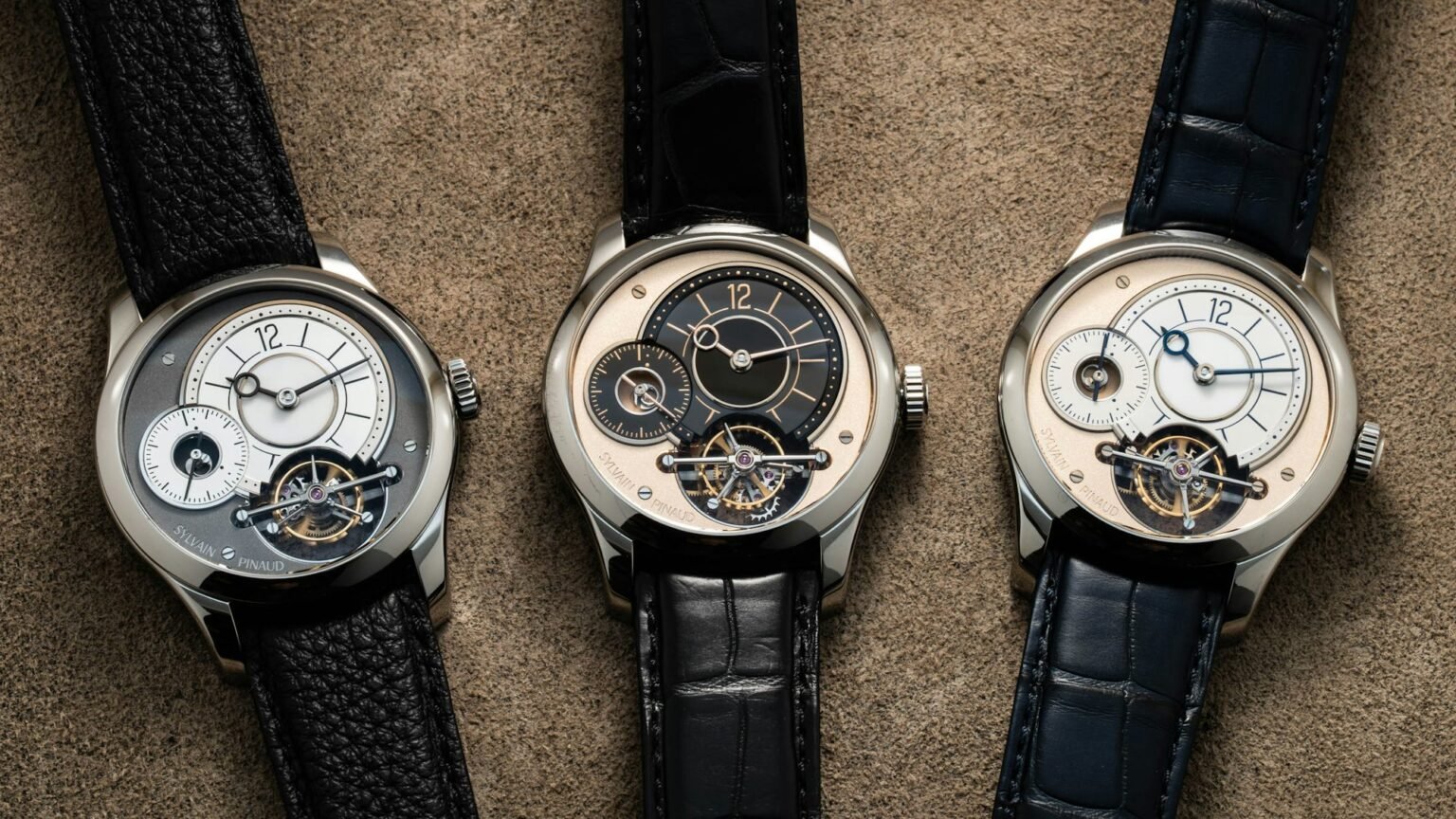


Earlier in April, right before the kickoff of Watches and Wonders, Swiss independent Sylvain Pinaud announced his third major creation since the founding of his workshop in 2018. First came his Monopoussoir Chronograph, then arguably the more recognizable time-only Origine series. This third entry in the collection is the pragmatically named Sylvain Pinaud Tourbillon—any guesses what complication this watch holds?
I kid, but the new watches are an absolute treat to see and handle in person. Even though the intense wave of new releases from dozens of brands in Geneva may have quickly steered the online conversation away from these new watches toward Jubilee dials and Nautilus desk clocks, these watches did not go unnoticed by collectors. Thirty of them, to be precise. The Sylvain Pinaud Tourbillon was announced in three limited editions of ten pieces each, priced at CHF 180,000, and all three variants sold out within days.

But before we get to the new watches, you might be asking what the situation is with the watchmaker these days, given that every decently well-known high-end independent watchmaker seems never to struggle with demand. That’s pretty much the case here, too. Long story short, Pinaud and his team of 8 produce around 25 watches per year, and the Origine series has been fully allocated through its planned run through 2027. Given the sell-out of the Tourbillon and the sunsetting of the Origine, it kind of sounds like there isn’t much to offer a prospective collector right now, though the brand has teased that an evolution of the Origine is in the works.
Whereas the Monopoussoir Chronograph and the Origine designs felt dramatically different from each other, the Tourbillon feels familiar, taking on the general look of the Origine. At a high level, the Tourbillon’s dial takes the asymmetrical layout Pinaud established for the Origine and plops in a tourbillon where the Origine’s large balance had sat. There’s a lot more to the new watch, of course, but from afar, many might not notice the difference until they take a few steps closer. With the three variations being produced in such limited numbers, I appreciate that the design serves as a twist on the Origine, rather than something entirely different.

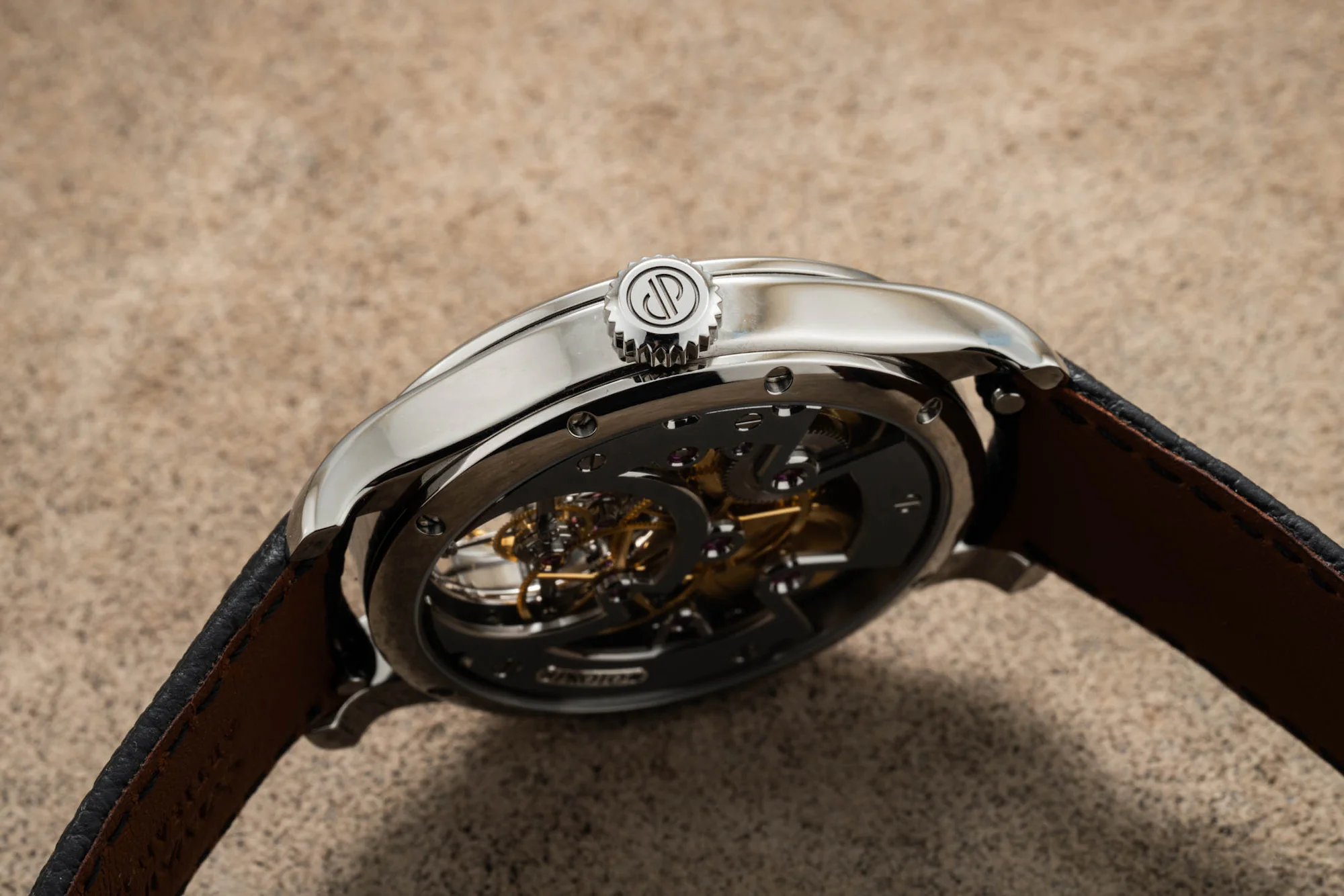
All three Tourbillon variations are made in white metals, with two platinum-cased versions and one in titanium. Despite the complexity of the new caliber, the 39mm case is 1 millimeter smaller in diameter than the Origine and imperceptibly 0.2mm thicker at 11.2mm tall.
In platinum, one reference comes with a white dial with a framed white opal center, while the black dial is paired with an onyx center. Both dials are surrounded by ample negative space in the form of the movement baseplate, plated in a pale shade of rose gold for the platinum versions and titanium for the titanium edition.
On the titanium edition, the silvered hours track surrounds a center in white agate. These three very quiet stone choices elevate the design not only metaphorically but literally, as the center stone section is so subtly raised from the surrounding hours track by a polished metal frame. Perhaps my favorite part of Pinaud’s slightly evolved dial is the different elevations of each element, all accented by parts made from black-polished steel. That center stone section, the hours ring around it, the thin minutes track, and the offset small seconds subdial all sit at different levels. It’s honestly something I didn’t notice until I was going through my macro photos, and certainly not something you’d spot if looking at the watch directly from the front. But I couldn’t help but keep going back to angled shots of the dial—once you spot this detail, you start noticing all of the striking chamfers on the different tracks, sections, and frames. It really is a gorgeously executed dial, and one that is actually mostly made in-house rather than through suppliers. While certain processes, such as PVD treatments and dial printing, are still handled by suppliers, the machining, most finishing, and assembly of the dials are done in Pinaud’s workshop.

With the additional visual interest of the tourbillon, I think Pinaud has done right by shifting his name away from the center of the main time dial and removing the “Hand Made” moniker, instead engraving the Sylvain Pinaud name along the periphery of the base movement plate. This is also possible due to the additional surface afforded by the Tourbillon versus the larger cutout for the oversized balance bridge of the Origine.
On the small-seconds subdial on the left, you might notice a cutout in the middle, where a heart-shaped component sits and rotates along with the seconds hand. That component foreshadows the experience of pulling out the crown, when a hammer pushes against that heart cam and forces it, along with the seconds hand, to reset back to zero. Yes, this is a wonderful complication to pair with the tourbillon, and one of those features that certainly propels this watch towards its asking price. It’s a feature I absolutely love seeing in high-end movement design, and one that actually contributes greatly to a watch’s function as a chronometer (aside from the lack of timing data for the caliber).

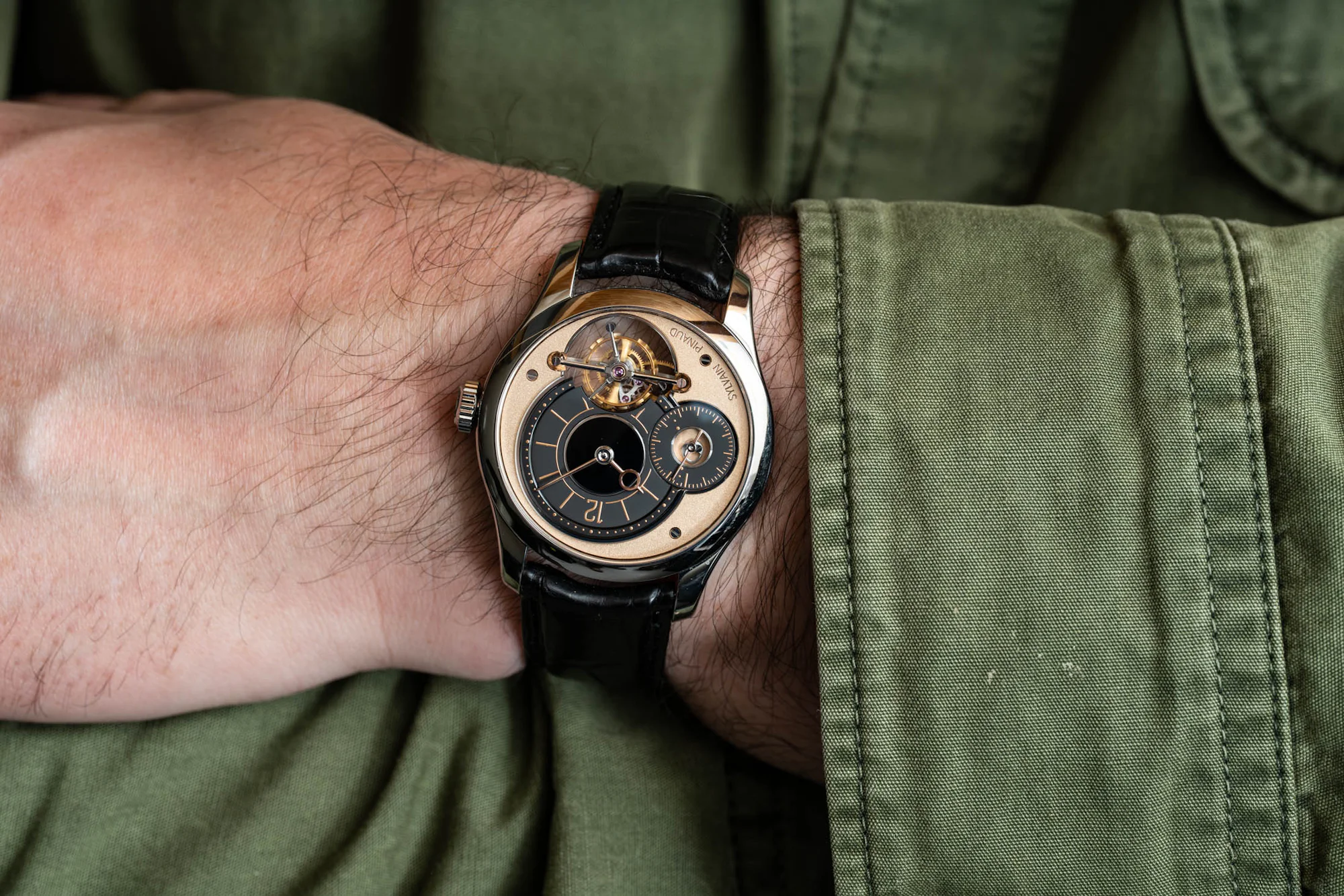

The zero-reset hammer at work.
Pinaud has opted to construct a 30-second tourbillon running at 3 Hz. This means that the tourbillon rotates quite quickly, aided by the use of titanium for the tourbillon cage itself. From the front, the different rotational speeds of the small seconds hand and the tourbillon cage make for a fun sight to watch, with a mechanical tension between the two elements that feels slightly whimsical in an otherwise very serious design. But surprisingly, despite the fast tourbillon and the variable-inertia balance working overtime, the power reserve of the Sylvain Pinaud Tourbillon yields an impressive 100 hours.
Turn the watch around, and you can see two series-linked barrels, exposed through what is surprisingly a very openworked bridge design compared to the time-only Origine. While the caliber of the Origine was well-finished, the architecture was rather stoic in its expression, whereas on the Tourbillon caliber, the dimensionality feels so much more exciting. The openworked layout, revealing the layers of components that link the barrel to the tourbillon, works so well because it echoes the more subtle layering of the dial on the front. The back bridge gives more edges and surface area to demonstrate the hand-done anglage by Pinaud’s workshop, and the end result is striking, especially as it contrasts with a frosted top surface on the bridges.
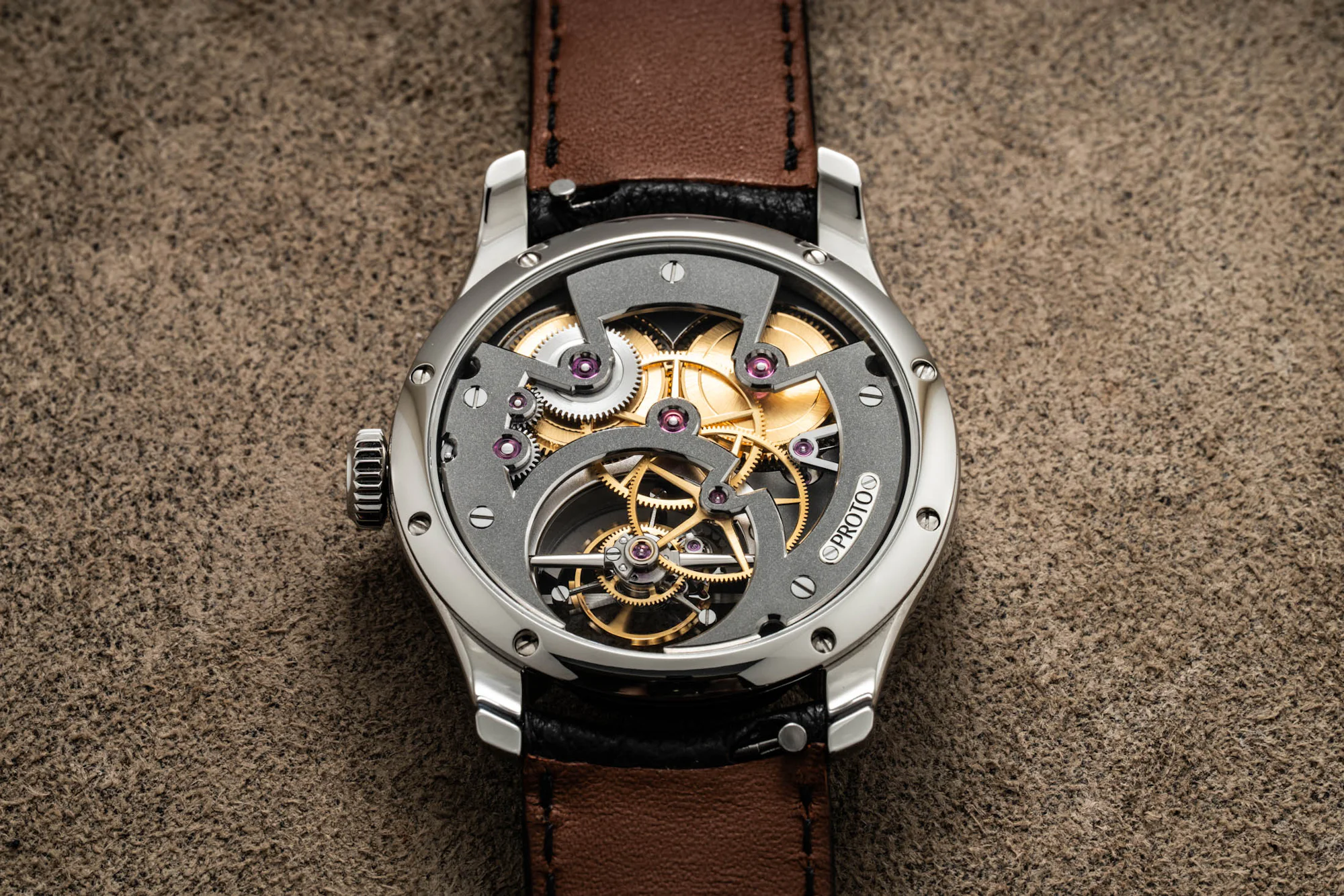
The titanium caliber for the titanium-cased reference.

A solid rose gold back bridge is paired with the gold-plated nickel-silver version of the movement on the platinum-cased references.
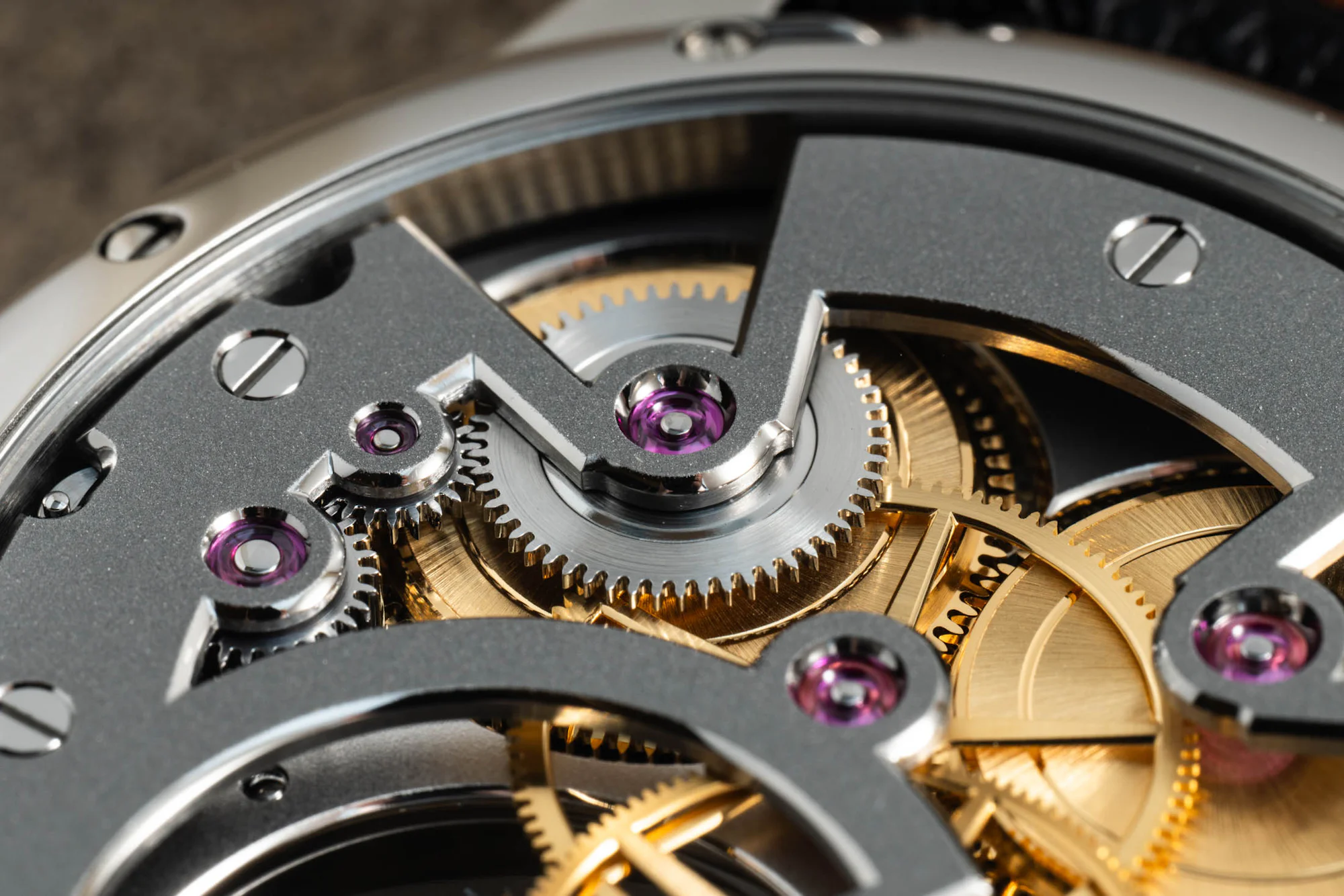
On the platinum models, the movement uses a solid rose gold back bridge to complement the rose gold plating of the mainplate, but I think it’s incredibly cool that Pinaud has opted to use titanium for the movement bridges to match the case material on the titanium reference. Certainly, it’s a more labor-intensive endeavor to finish these parts, but I think the end result is incredibly attractive. The frosted, dark grey of those bridges does well to frame the wonderfully finished wheels and barrel covers, which immediately jump out at you in their golden-hued glory.
Without hesitation, my favorite of the three is certainly the titanium-cased variant, in no small part due to the titanium bridge construction that looks just so damn good when framing the other components of the caliber. In this day and age, titanium still somehow feels like a novel material when it comes to movement construction, and aside from names like Romain Gauthier and David Candaux, I’m struggling to think of any other names in this category of watchmaking that are known to prominently use and finish the material for the caliber. But I can’t lie and say that if I were to spend a theoretical CHF 180,000—around $222,000—on a rather dressy watch, the heft of platinum might do a lot to draw me in. I know, I know. I give people a hard time when they just associate weight with luxury, but I suppose these clichés exist for a reason.


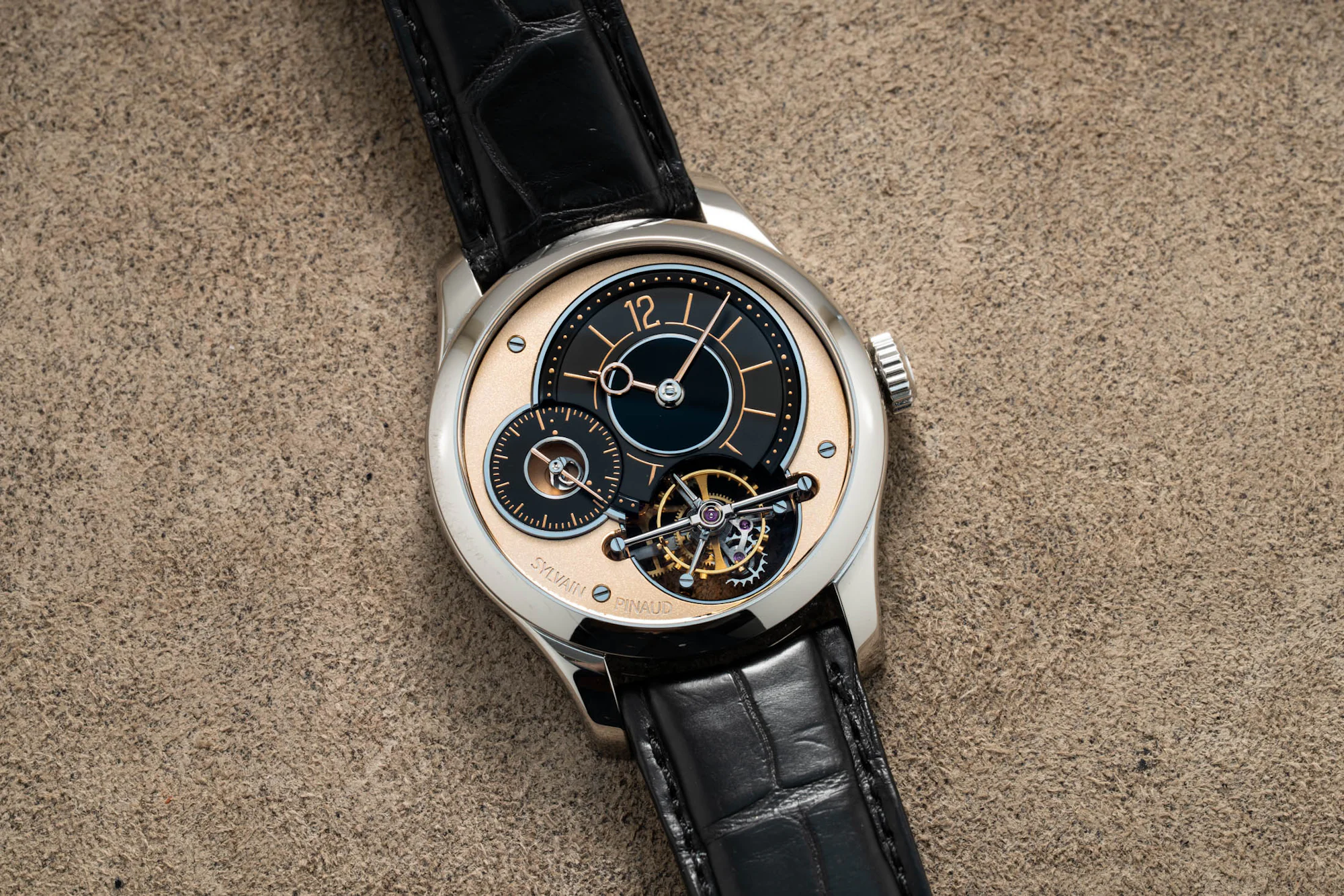
Regardless of which one you choose, Pinaud’s continued exploration of the aesthetic he developed a few years ago, paired with a healthy dose of complicated watchmaking, feels fresh even in the saturation of creations in the independent haute horlogerie space today. Now that his Origine series is coming to a close, and these 30 Tourbillons are all accounted for, I’m eager to see what’s next for the watchmaker.
For more, visit Sylvain Pinaud.