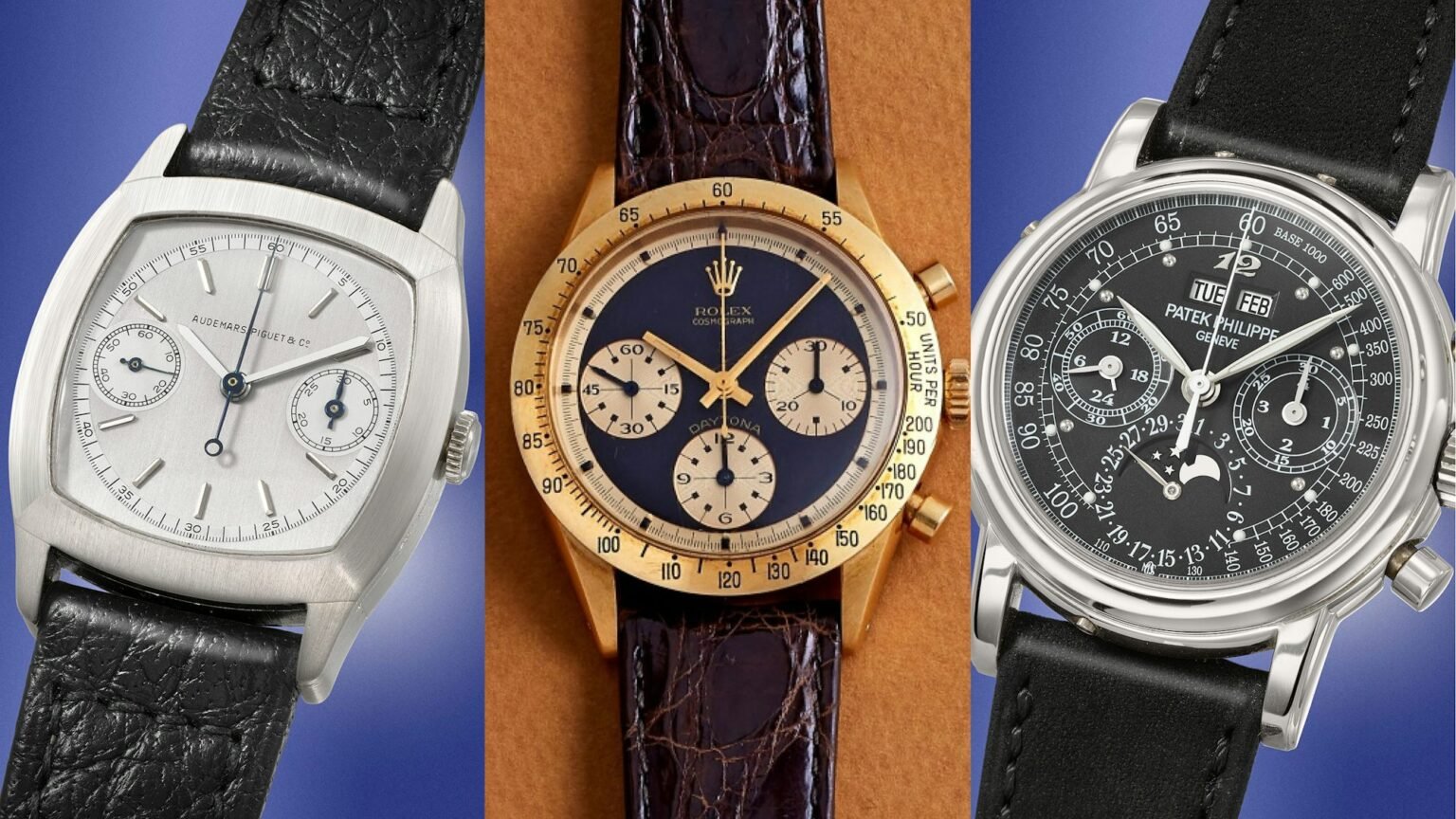

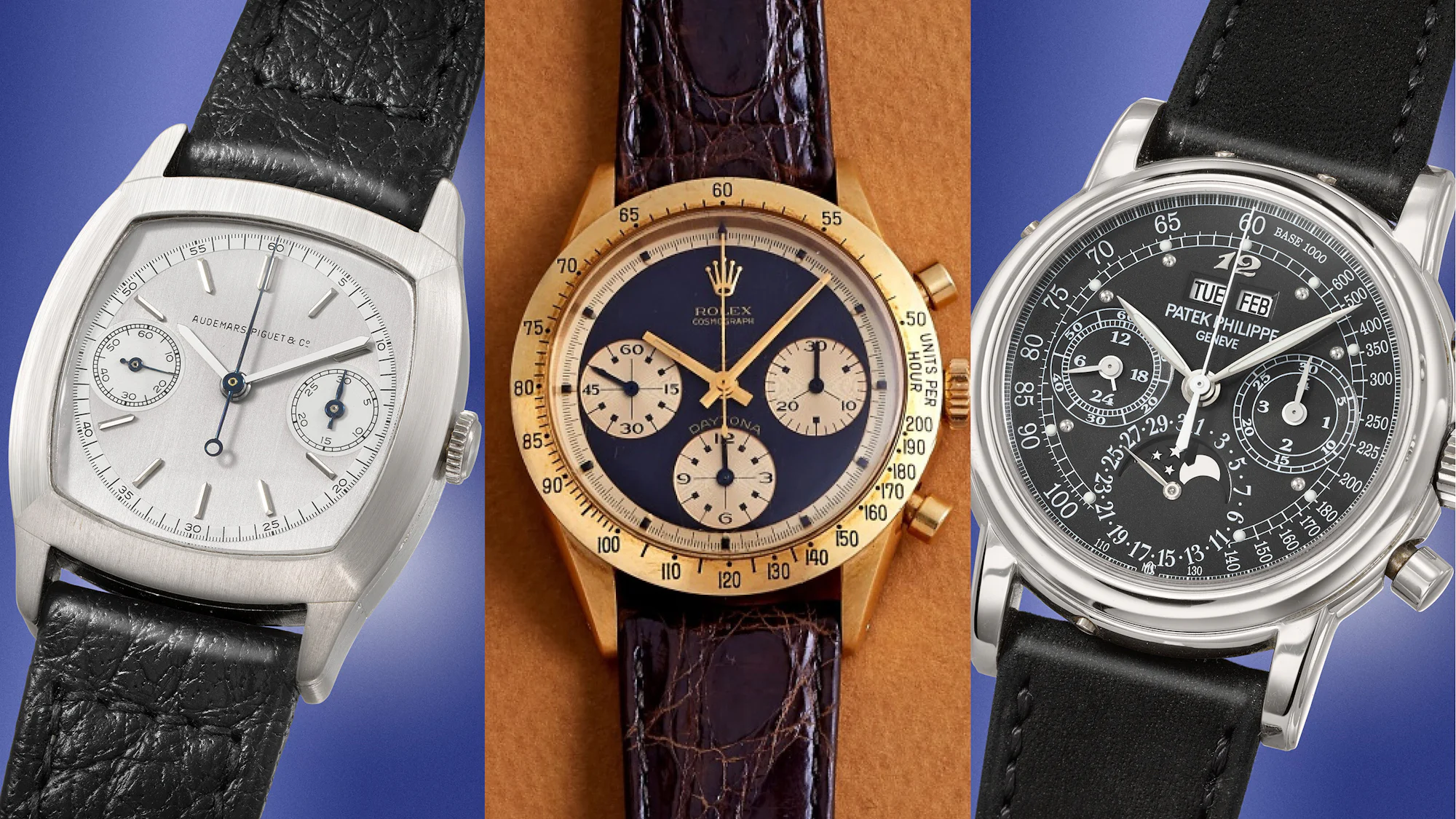
There’s no shortage of watches this auction season—more than 1,200 lots across the major houses—but volume isn’t really the story. At Christie’s and Sotheby’s, the focus feels different this time around, moving past the hype-driven pieces of the early 2020s and back to some genuinely compelling and surprising watches. Last week, we published part one of our preview—today, we’re finishing it up with part two.
Christie’s
I would argue that Christie’s always has one of the more subtle and yet impressive catalogs. There are some truly fantastic pieces here and, as always, we’ll start at the top.
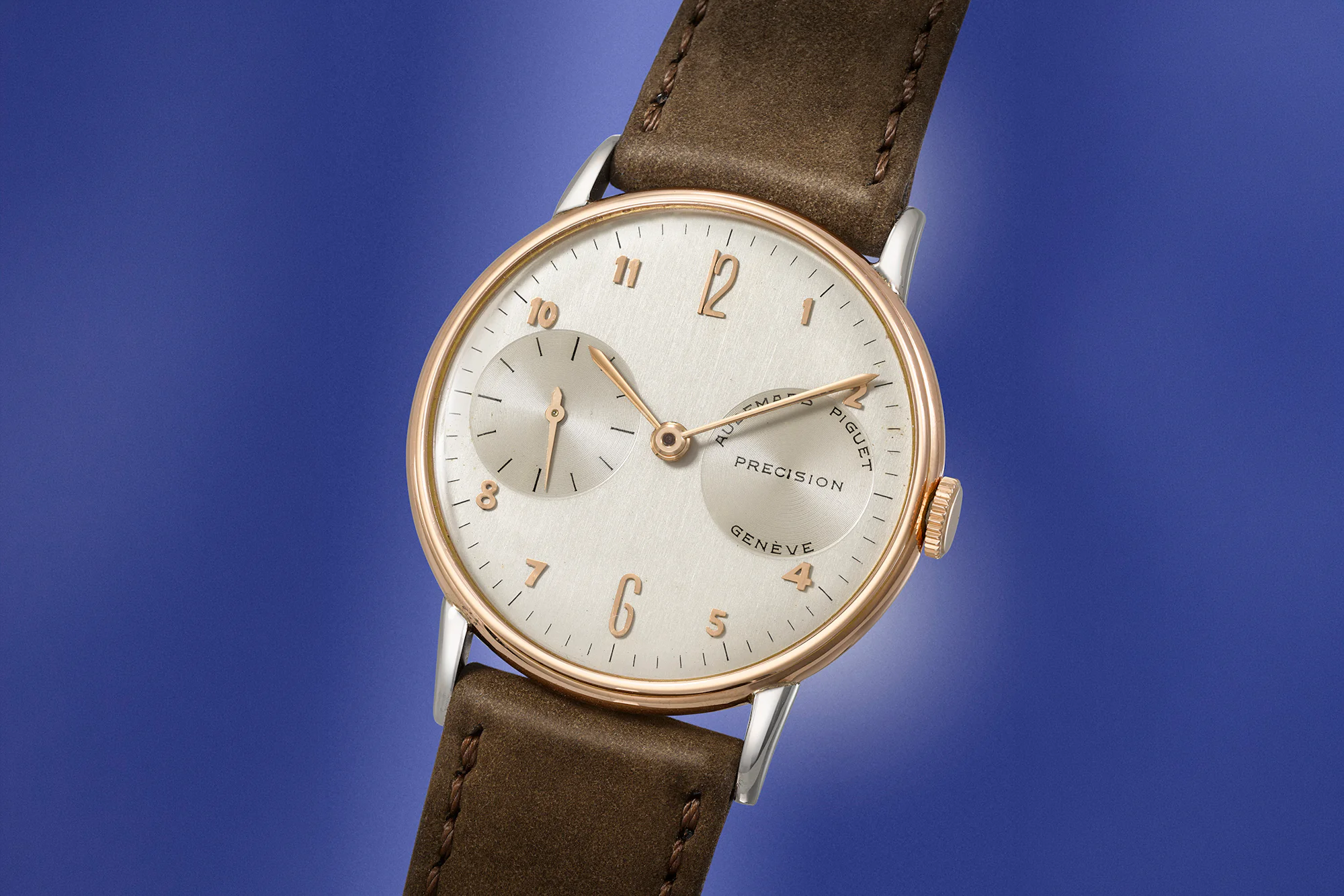
Lot 134, a unique and absolutely stunningly gorgeous (add all the superlatives you want) two-tone 14k pink gold and steel Audemars Piguet “Observatory-style” watch. Photo courtesy Christie’s.
If you’re looking for a watch that my friend and current “Bring a Loupe” writer Weston Cutter called an “immediate knee-weakener,” you need to sit down for this one. Lot 134 is a unique and absolutely stunningly gorgeous (add all the superlatives you want) two-tone 14k pink gold and steel Audemars Piguet “Observatory-style” watch. The watch is powered by a 13-ligne 13VZAS movement that was highly modified for precision as a time-only watch, with a large subsidiary seconds at 9 o’clock and a blank subdial at 3 o’clock. Bold numerals, bold design, it’s the kind of thing you dream about if you collect early watches, and the estimate is a hilarious CHF 50,000 to 100,000. It should go for way more.
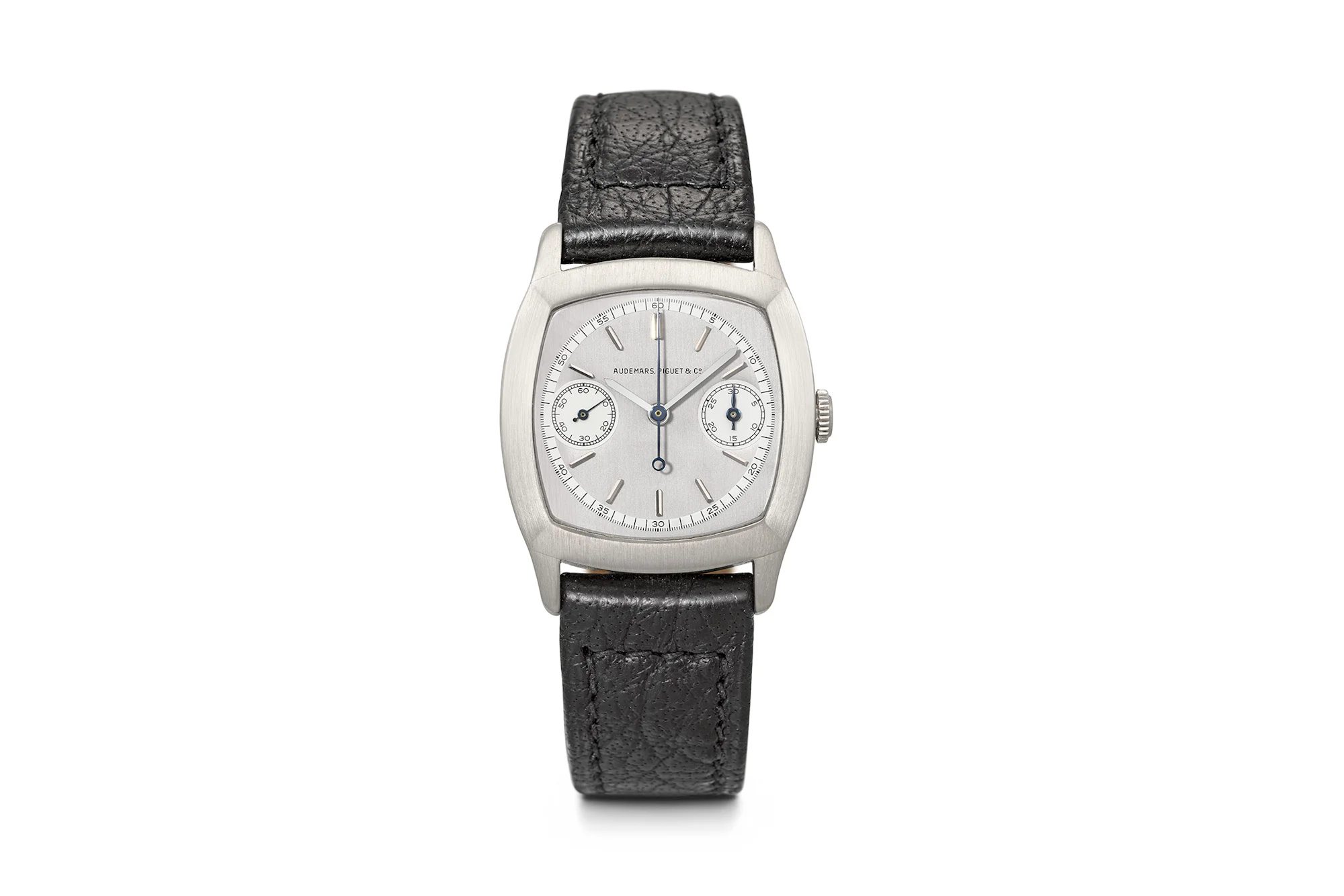
An Audemars Piguet platinum cushion-shaped single-button chronograph (Lot 59). Photo courtesy Christie’s.
But if that’s not enough, one of my top-three favorite chronographs this Geneva week is another unique Audemars Piguet, this time a platinum cushion-shaped single-button chronograph (Lot 59) and one of the first three AP chronograph wristwatches ever made. Only two of those first three are known to have survived. This has been restored by AP, but the provenance is clear and super interesting.
The watch belonged to Rabbi Max Schenk, former President of the New York Board of Rabbis. His son-in-law, Dr. Herbert Hechtman, later inherited it, who was a surgical oncologist at Brigham and Women’s Hospital and a full professor at Harvard Medical School. This is peak 1930s AP design, and the estimate is CHF 200,000 to 400,000, lower than I initially expected but fair given its restored condition and the esoteric, relatively small collector market for APs like this.
Lot 102, a Patek ref. 1436 split-second chronograph. Photo courtesy Christie’s.
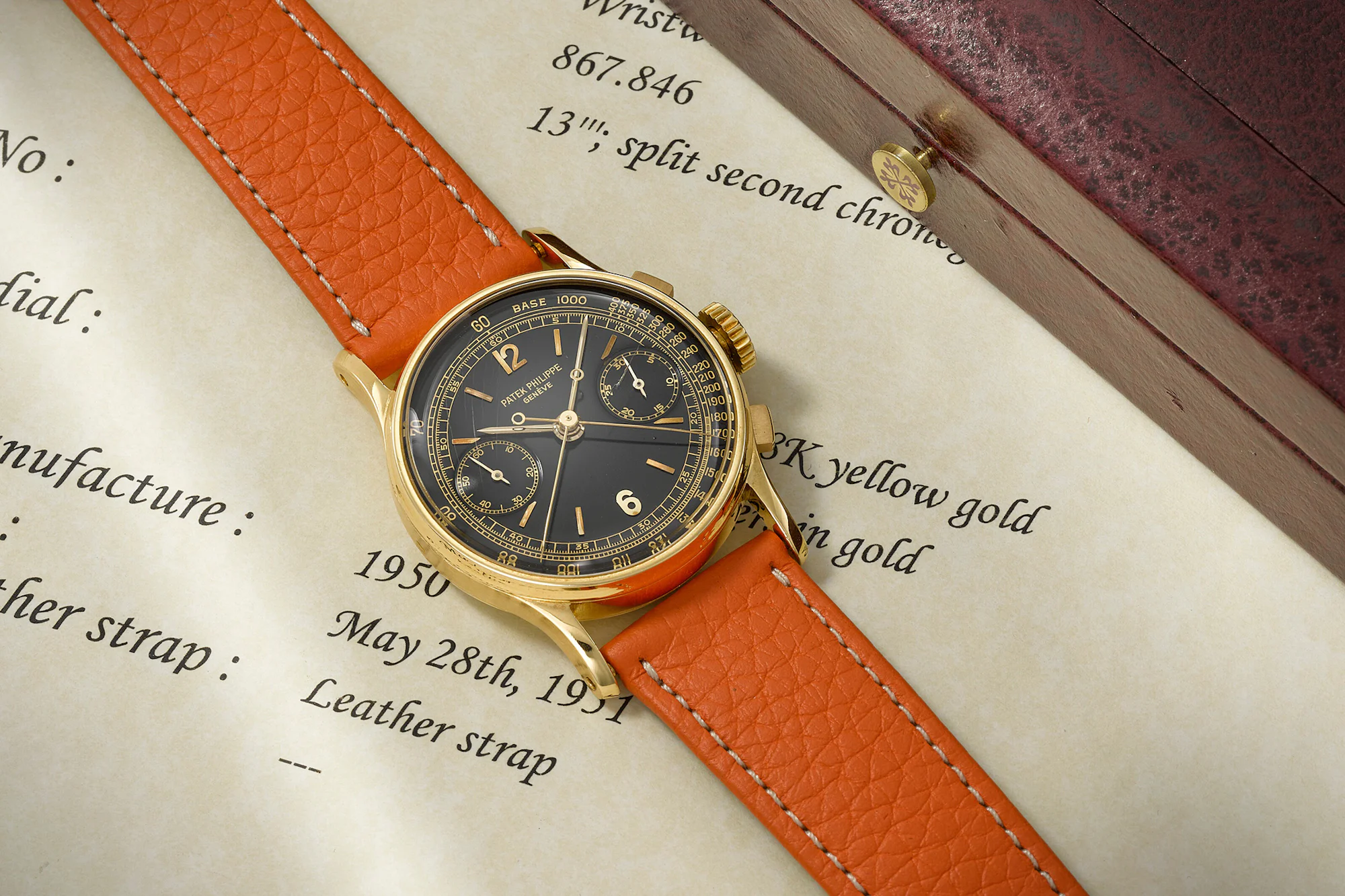
While I haven’t seen it in person, lot 102, a Patek ref. 1436 split-second chronograph looks very interesting on paper, but there’s a lot of backstory. The watch is a first-series 1436 (with a Vichet case), but by 1950, those were (as far as standard scholarship goes) replaced by the second series, so it’s a bit more unusual. The dial color isn’t listed in the extract, the dial indices aren’t aligned, so that’s where a collector would want to ask more information. Christie’s confirmed to me that the dial is actually a later addition, which is not stated in the catalog (at the time of publication). The watch previously passed at an Antiquorum auction in 2024 with a very high starting bid, and also in 2023, when it came out of the OAK Collection sale (which had some pretty tough results). This recent history often makes it harder to sell the watch each time it comes up, so the usual approach when you’re trying to push a sale is to lower the starting price to entice bids. The estimate is now CHF 400,000 to CHF 600,000, the same as the OAK sale and higher than at Antiquorum, so this feels like an uphill battle, but maybe the time has finally come for someone to buy this watch.
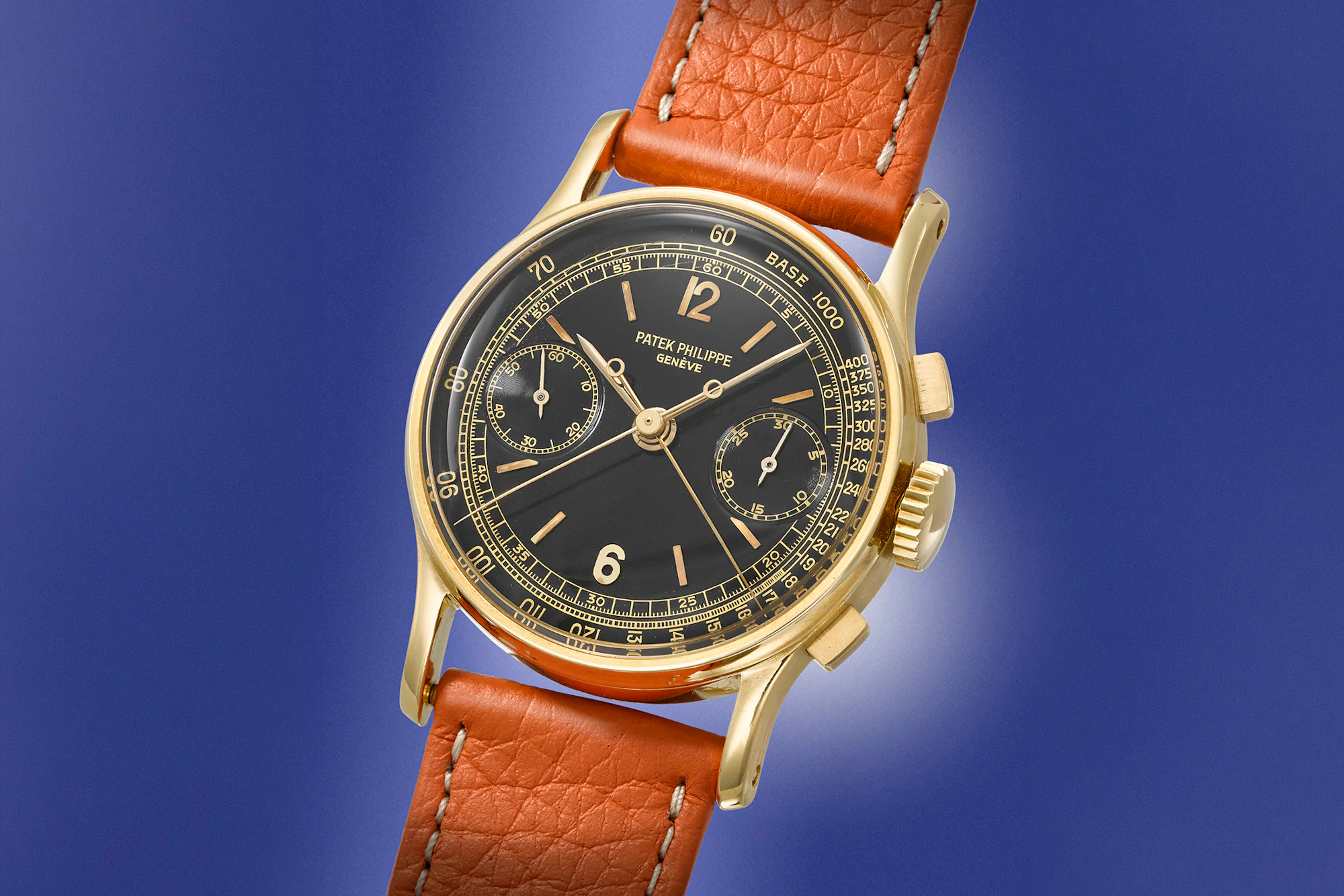
Photo courtesy Christie’s.
But if you’re looking for something to scratch a similar itch at a much lower price, you can check out lot 100, a pink-gold, black-dial fourth series ref. 96. Confirmed more specifically by extract, this one is CHF 12,000 to 25,000 (though the case looks kind of soft).
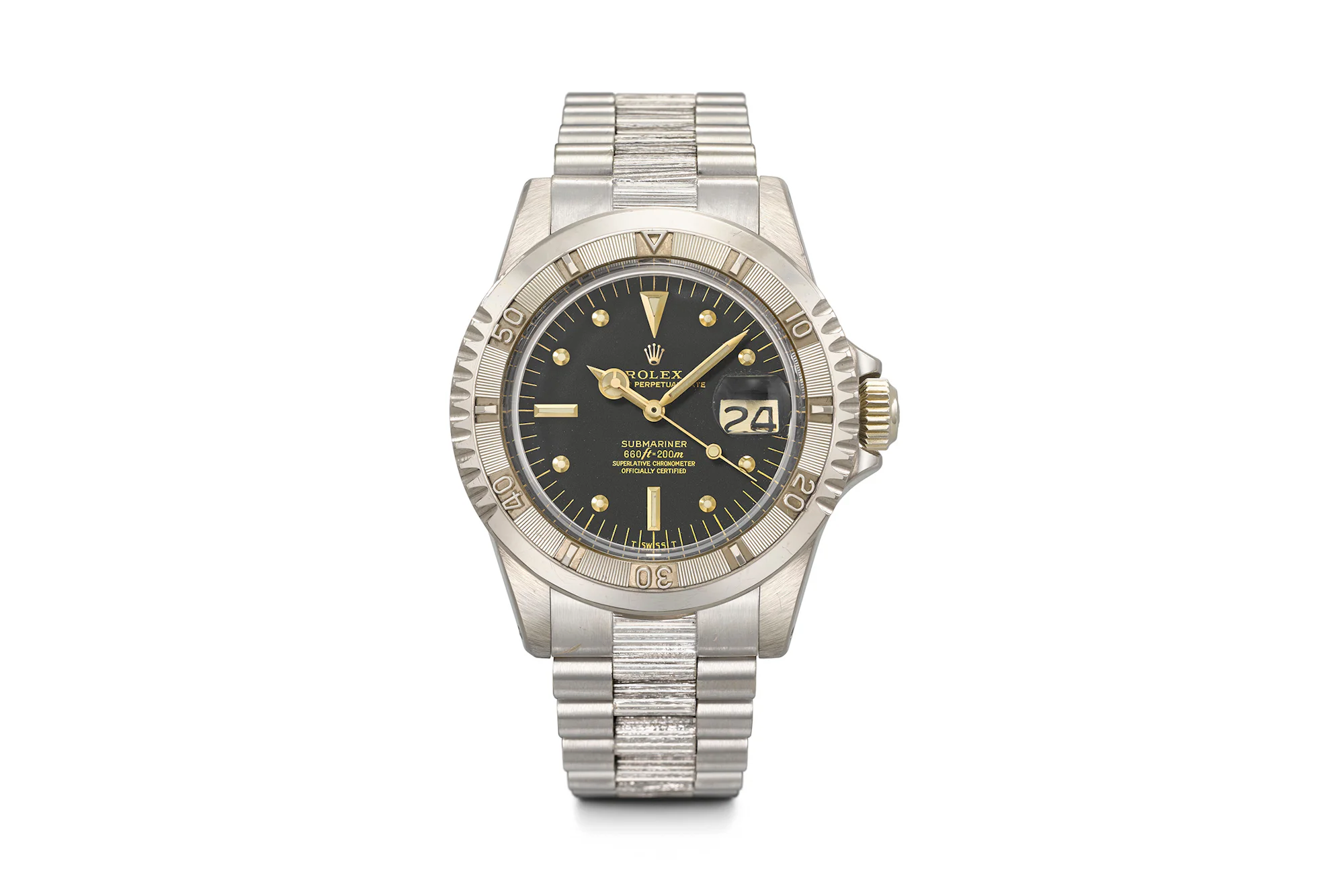
Three more standouts worth looking at. This Rolex ref. 1680 is remarkably weird. Apparently, there are three known “prototype” versions of the watch with unusual bezels and white-gold cases, and they come from the family of the original owner, who worked at Rolex. It’s the only one with a black dial. It’s hard to imagine this not getting extra attention and curiosity, but then again, Rolex didn’t really have perfect industrialization in the 1970s like some people keep claiming, and they certainly prototyped things. Prototypes would never leave the building now, but back then?
A Rolex ref. 1680. Photo courtesy Christie’s.
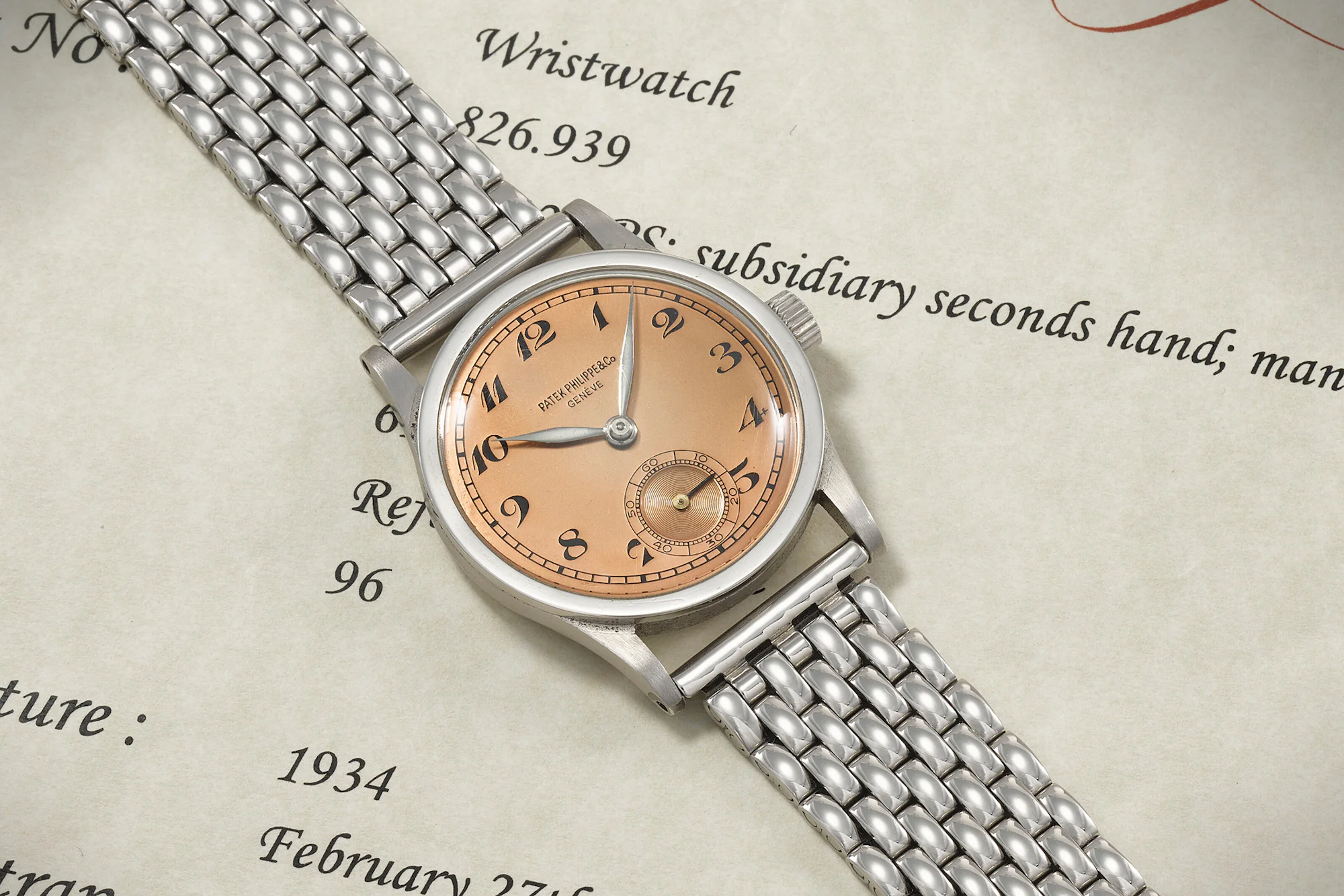
Photo courtesy Christie’s.

Photo courtesy Christie’s.
Sure, why not? More straightforward is this amazing stainless steel Patek Philippe ref. 96 with salmon dial and raised, engraved hard enamel Breguet numerals, all confirmed by extract. It’s one of the top five ref. 96s I’ve ever seen in a photo or in person. And then there’s another unique watch, a crazy cool and unique “owl” Day-Date Audemars Piguet Royal Oak ref. 25594ST. The watch has a unique dial configuration and belonged to Jean-Maurice Golay, a well-known watchmaker who was incredibly important in the 20th-century history of AP, and was documented in a 2018 story in Le Temps.
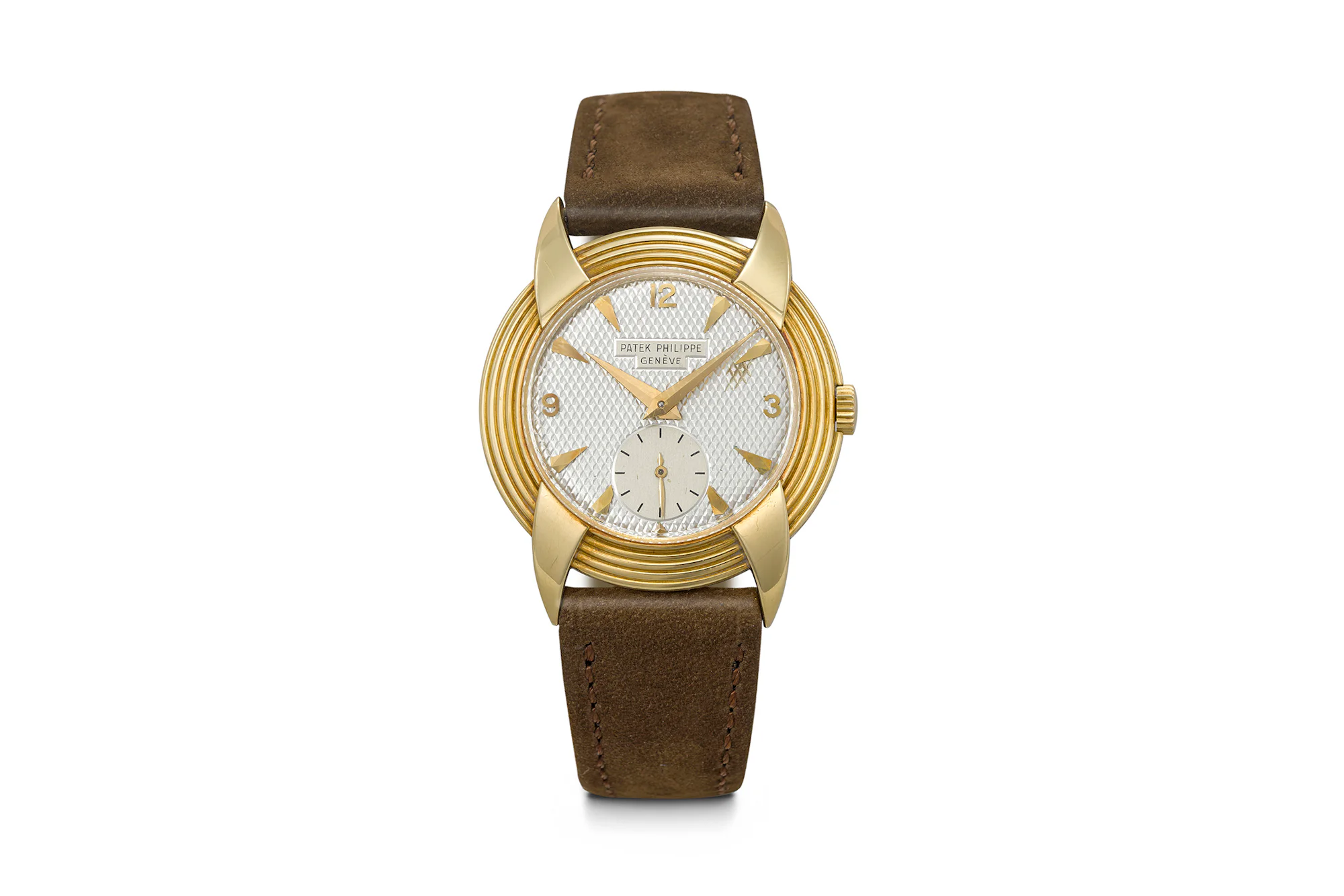
Photo courtesy Christie’s.
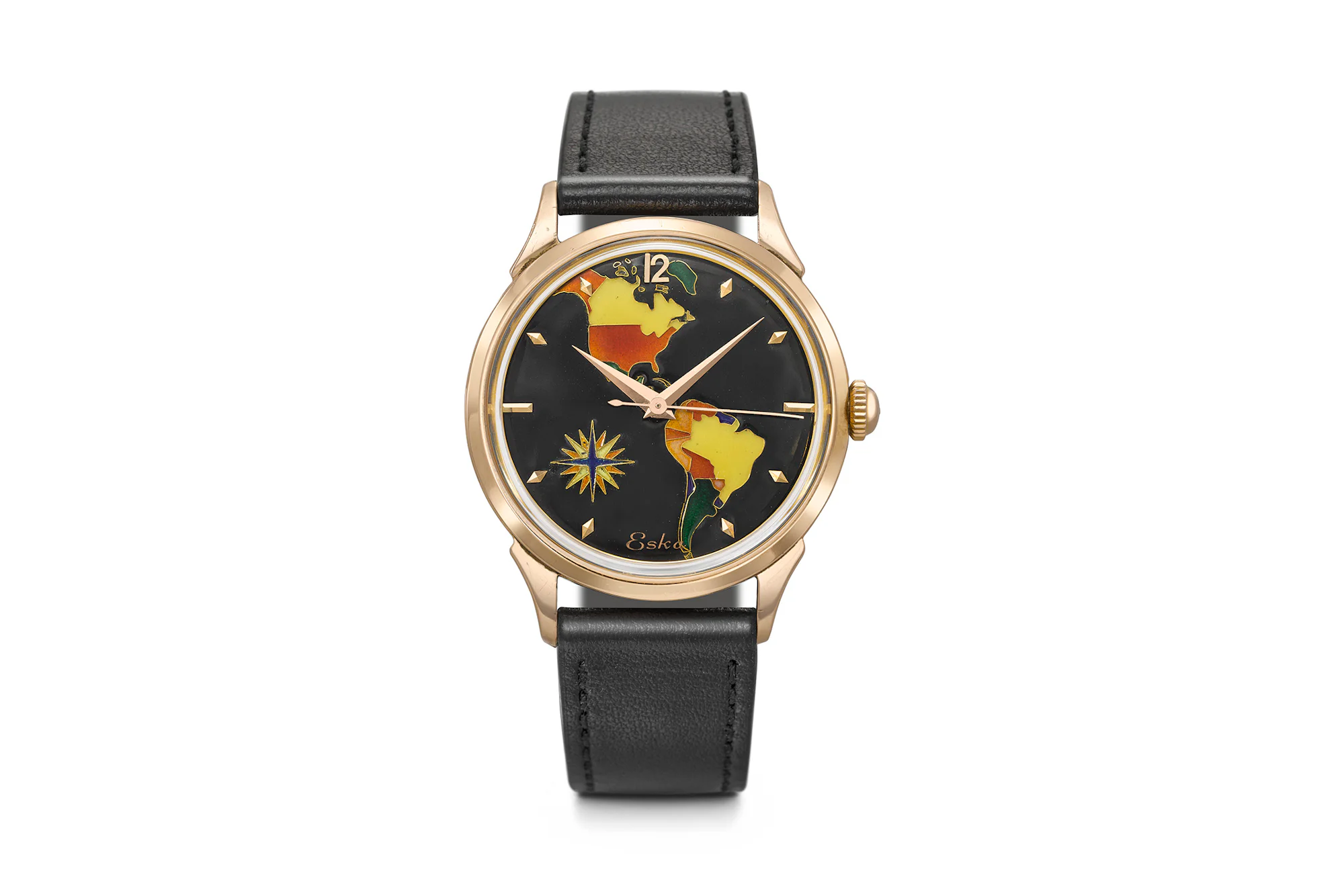
Photo courtesy Christie’s.
Instead of going through the rest from high to low, let’s walk through the auction linearly, as I did when I got the catalog PDF. First thing that jumped out at me is Lot 8, a Patek Philippe ref. 2549 with the Markowski “Devil’s Horn” case. It’s one of the boldest and most striking of all Patek Philippe time-only designs (though the black dial is obviously more coveted), but the CHF 12,000 to 18,000 estimate almost feels comically low. I haven’t seen one of these in 15 years, and even back then it went for $35,000. I also really love this cloissoné Eska with a black background and a map of North and South America. It feels like about 90% of these are in one collection in Italy, so if you want one, you might as well try to grab it (I have it on my watch list). Two lots after that is a Patek 605 HU world time with Louis Cottier-designed mechanism. It’s a pocket watch, but a rare one at that, and while people normally gravitate toward the cloisonné versions like MLG just sold for €754,000, the estimate is CHF 50,000 to 100,000, so it might be a good buy for a mid-tier Patek collector.
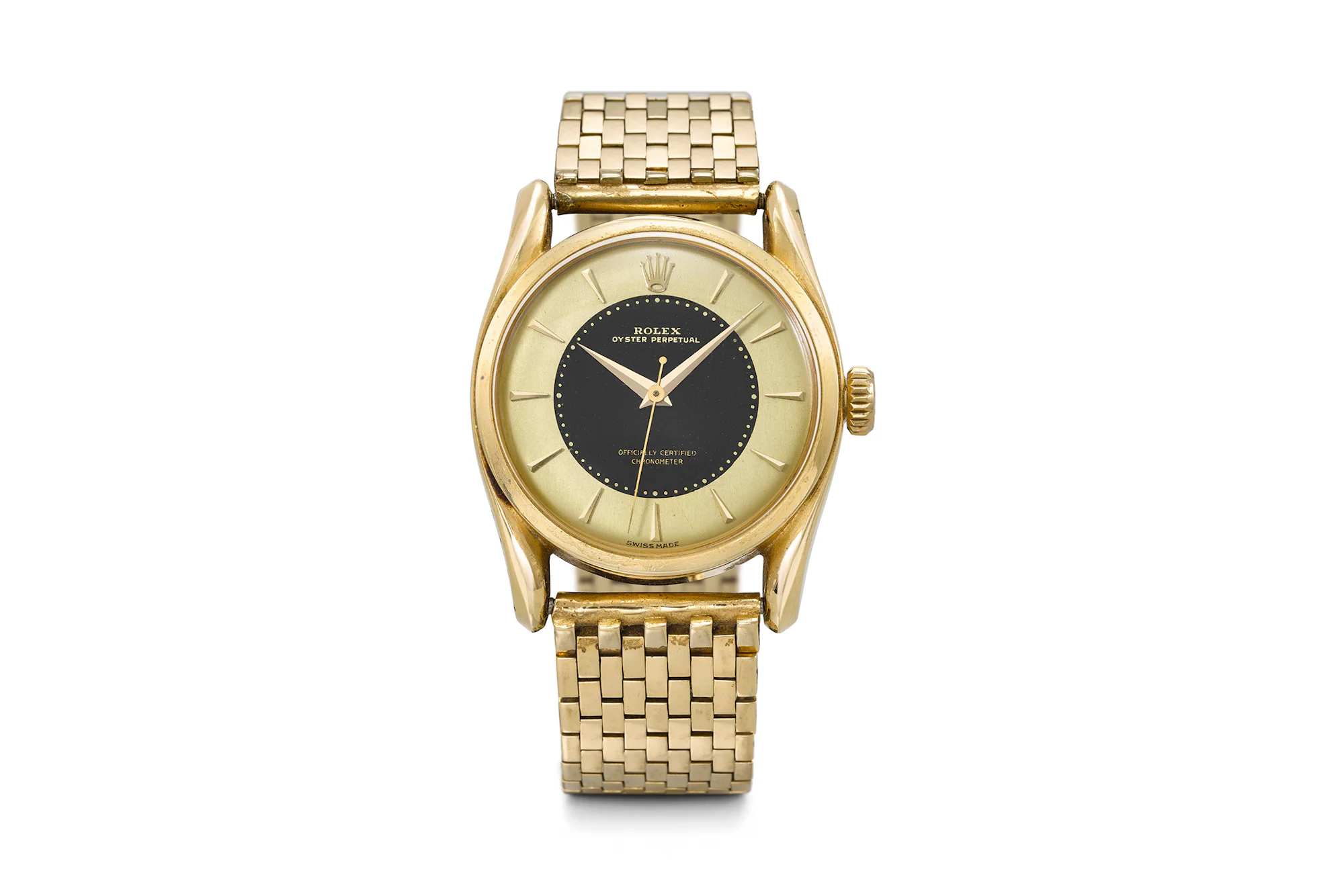
Photo courtesy Christie’s.
Three lots in the first 11? Okay, time to speed it up. Oh, wait, we have to stop again at Lot 14 because we have yet another brass movement F.P. Journe Tourbillon with Remontoir d’Egalité. I haven’t been able to compare in person, but this one has a higher estimate (CHF 500,000 to 1,000,000). It crosses the block later, so you can go for the one, then try this one too. Oh, also stick around for this cool Rolex Tuxedo with a brick bracelet.
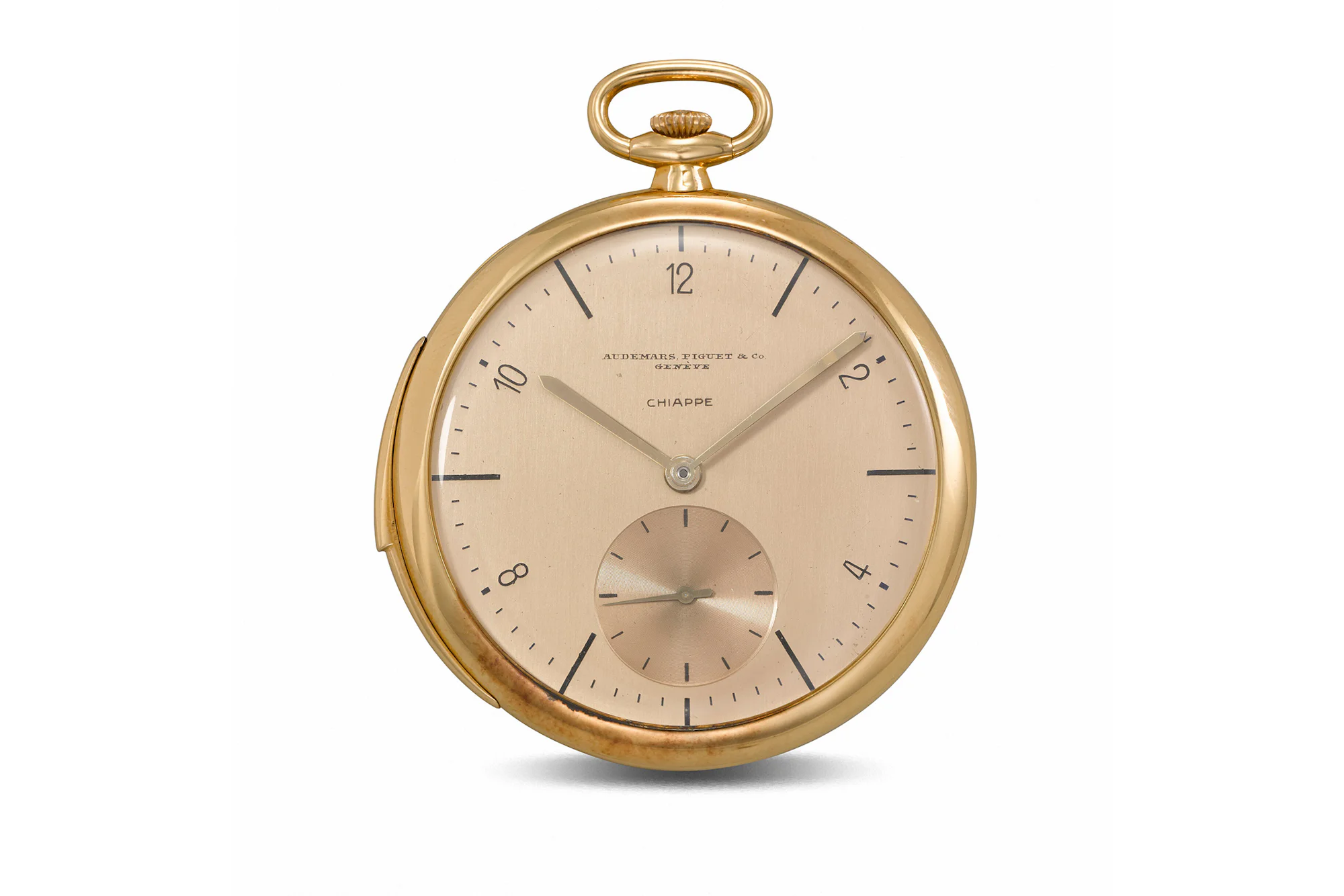
A pink-on-pink minute repeater from 1941. Photo courtesy Christie’s.
There are a few cool pocket watches from AP, like lots 35, 58, 67, and 85. First is the beautiful 1955 grand complication pocket watch with some beautiful patina on the case. My guess is it’s been in a drawer for quite a while. Rarer and more recent is the 1986 grand complication with a pavé diamond-set dial in a yellow-gold case. The estimates for these range from CHF 80,000 to 200,000. A bit more reasonable is this beautiful pink-on-pink minute repeater from 1941. The dial is signed Chiappe (a rarely seen signature) from Genoa, Italy, and the estimate is CHF 15,000 to 20,000.
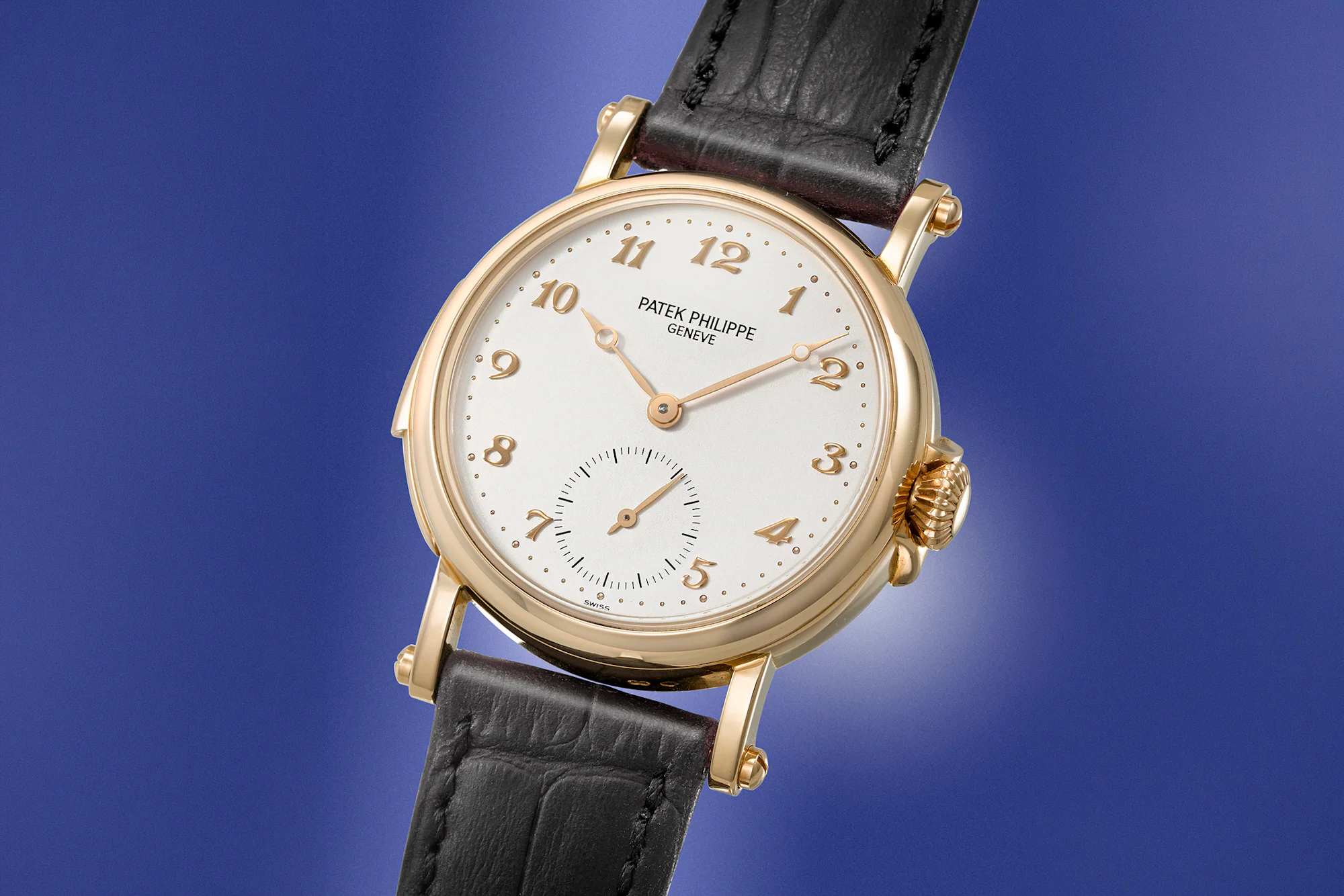
Photo courtesy Christie’s.
Speaking of repeaters, I accidentally skipped over Lot 63. That’s how catalog cruising goes. Two lots forward, one lot back. This is a beautiful, small 35mm limited-edition Patek Philippe ref. 5029R Minute Repeater. Made for the opening of the company’s factory in Plan-les-Ouates, Geneva, the watch features a truly amazing officer-style case crafted by the one and only Jean-Pierre Hagmann. Only ten pieces were made in pink gold, and another one was sold just a few weeks ago at Sotheby’s Hong Kong for around $400,000 (in an auction that went absolutely nutty). At CHF 250,000 to CHF 550,000, it makes sense in the lower middle of the estimate range, but it’s certainly gorgeous.
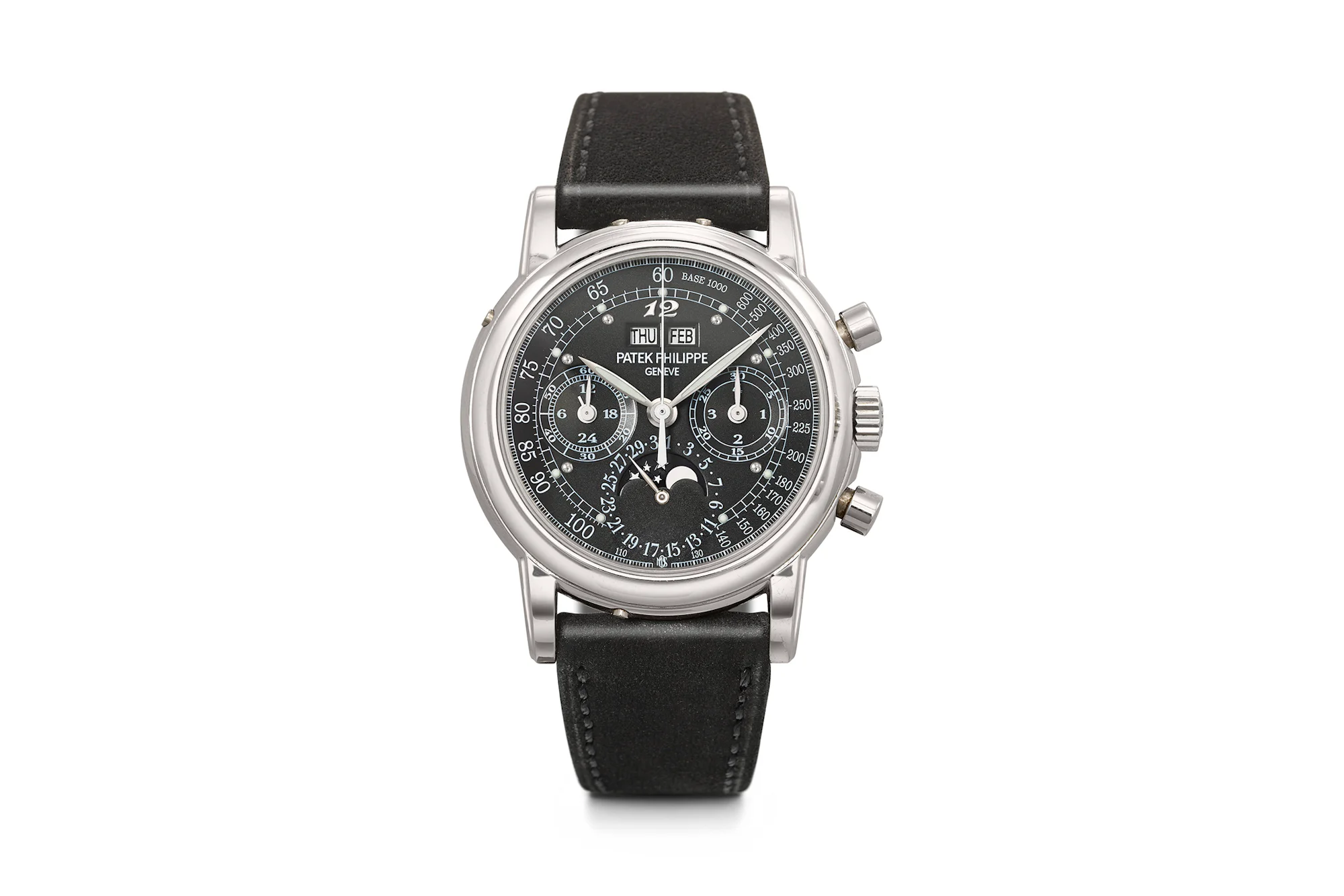
Photo courtesy Christie’s.
Toward the middle and end of the auction, there are two standout watches to call out. First, at lot 114, is a Patek ref. 3970EP-047 was made for one of the biggest Patek VIPs of the 21st Century, Michael Steven Ovitz. Ovitz loved a few things, many of which are reflected in this watch: a Breguet “12,” luminous indices and hands, and his initials “M.S.O.” at 6 o’clock. Lemania-caliber QP chronographs are going for bonkers money lately, and Christie’s sold the matching 5004P last year for $1.5 million, so the estimate reflects this at CHF 500,000 to 1,000,000. And last but not least is the ref. 3700/1G Jumbo “Nautilus,” a freshly discovered Khanjar-signed Nautilus with a crown above the Khanjar. There are three such watches known, plus a fourth without the crown above the knives. The final, massive estimate in our roundup for Christie’s is CHF 400,000-750,000.
Sotheby’s
Phew, okay, that was a lot for Christie’s. Take a pause. Drink some water. When you’re ready, we’re diving in again. Got it? Okay, let’s get into Sotheby’s.
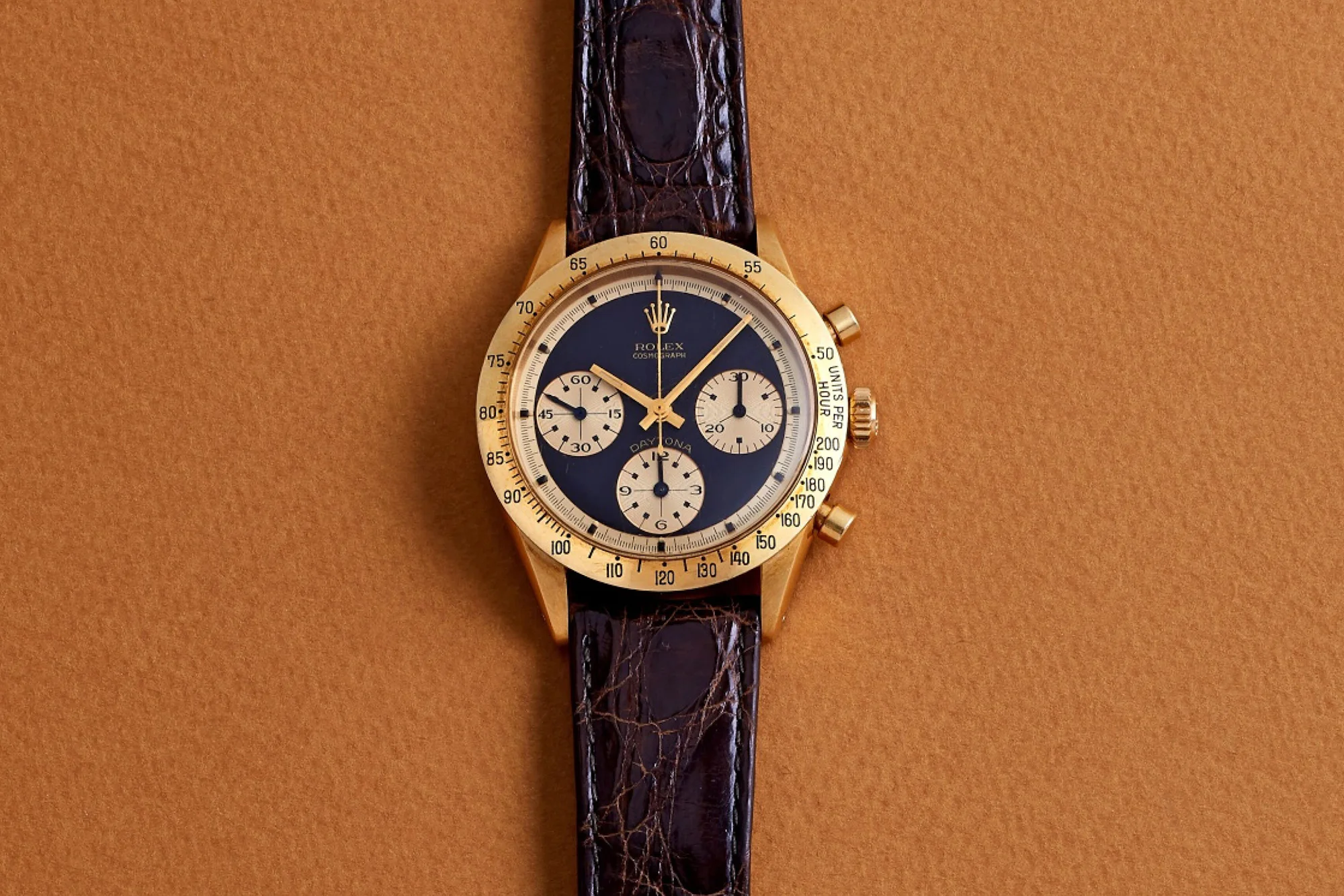
A Rolex ref. 6239 Paul Newman in yellow gold. Photo courtesy Sotheby’s.
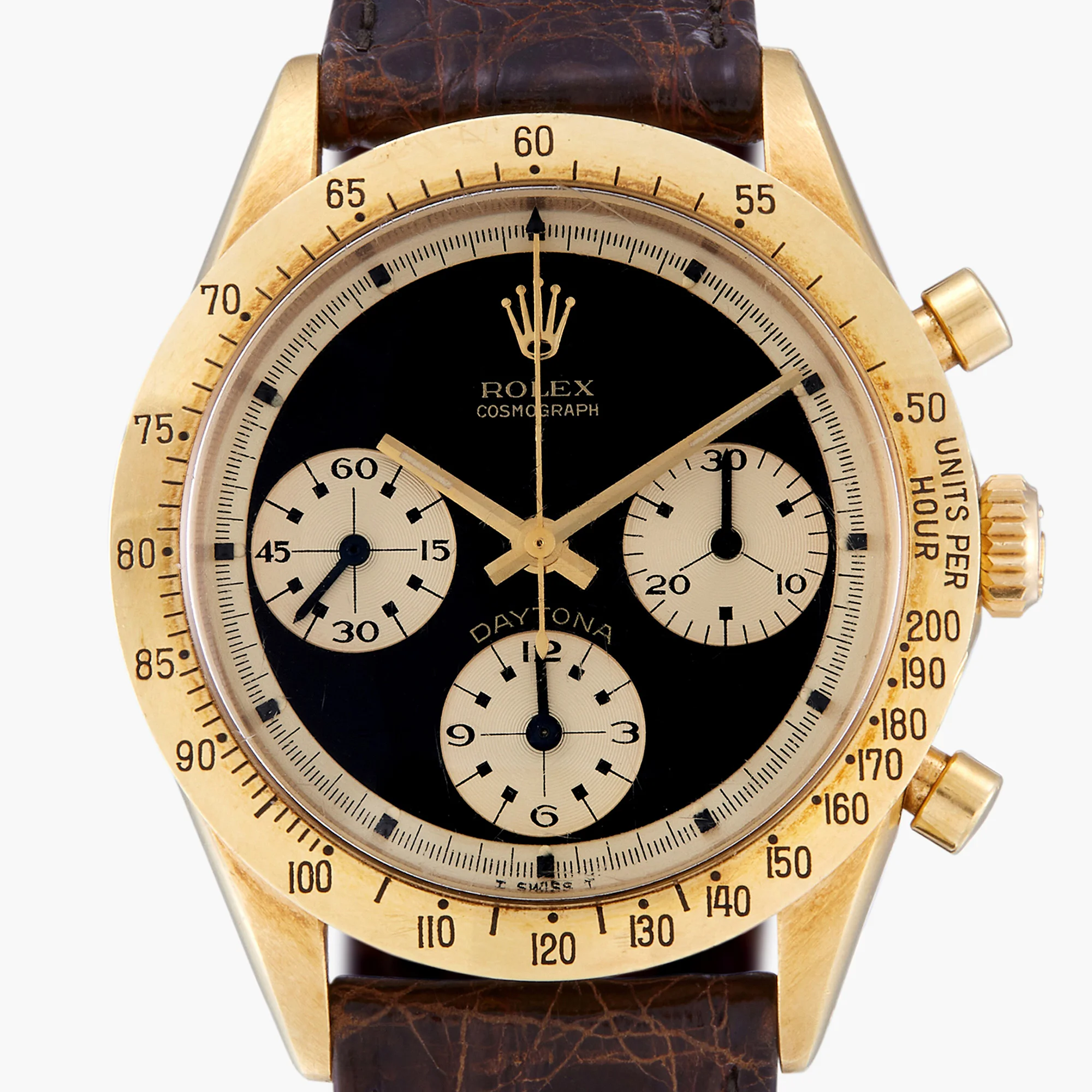
A Rolex ref. 6239 Paul Newman in yellow gold. Photo courtesy Sotheby’s.
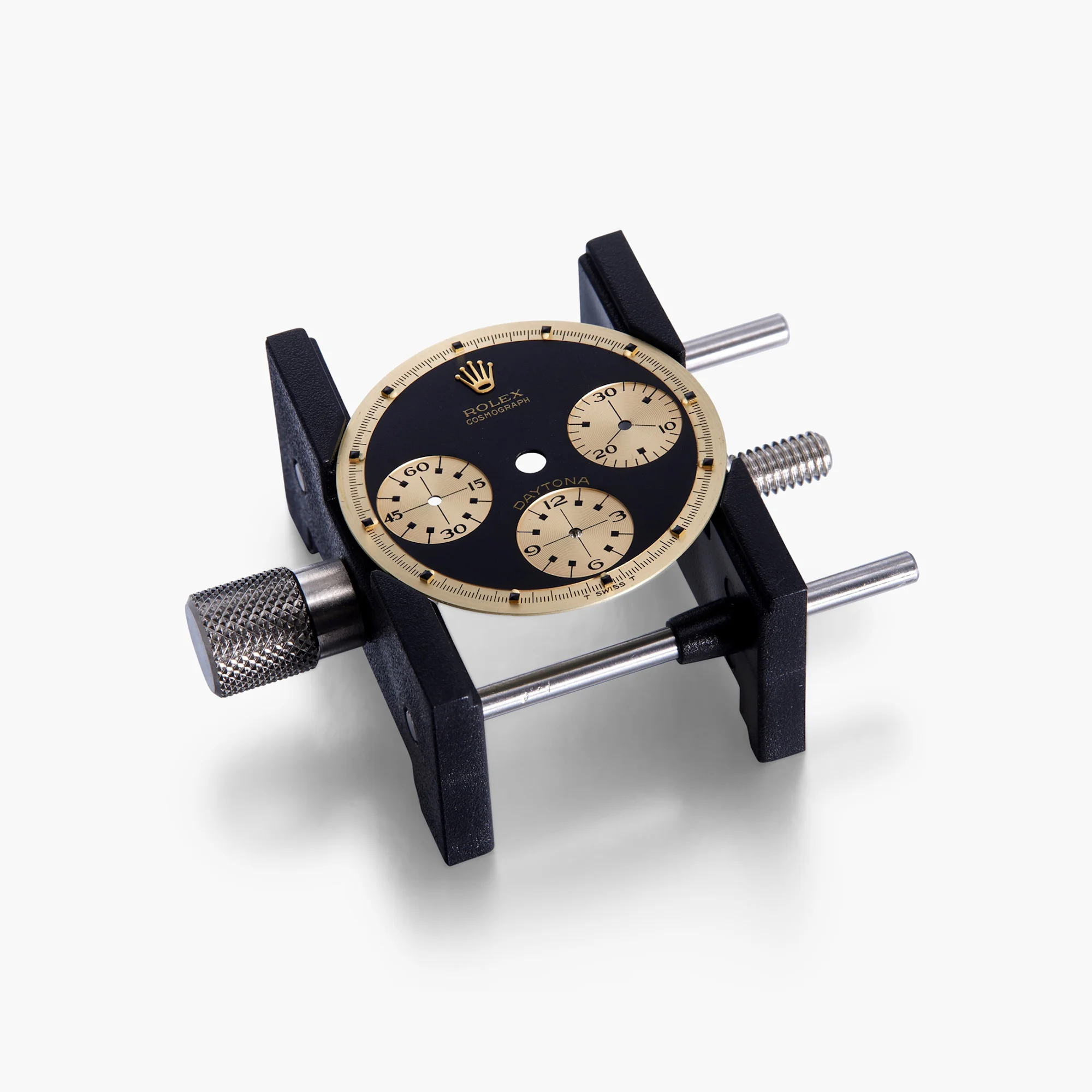
A Rolex ref. 6239 Paul Newman in yellow gold. Photo courtesy Sotheby’s.
It feels like Sotheby’s put a lot into the Hong Kong sale this year and took it lighter on Geneva’s auction. Apparently, something is in the air for “John Player Special” Daytonas. In addition to the few others this year, Sotheby’s has two more yellow-gold, black-dial Paul Newman Daytonas in Geneva. More expensive is the coveted (technically, the one called JPS) ref. 6241 on a bracelet, and it’s 14k gold to boot, signaling a watch meant for the U.S. market. The estimate is CHF 450,000 to 850,000. But despite my natural inclination to chant “U-S-A! U-S-A!,” I’d say that the more interesting of the two is the ref. 6239 Paul Newman in yellow gold. Apparently, there are about 10 of these around, and this one has been sitting in a drawer for 45 years (which is a shame). CHF 300,000 to 600,000 is the estimate.
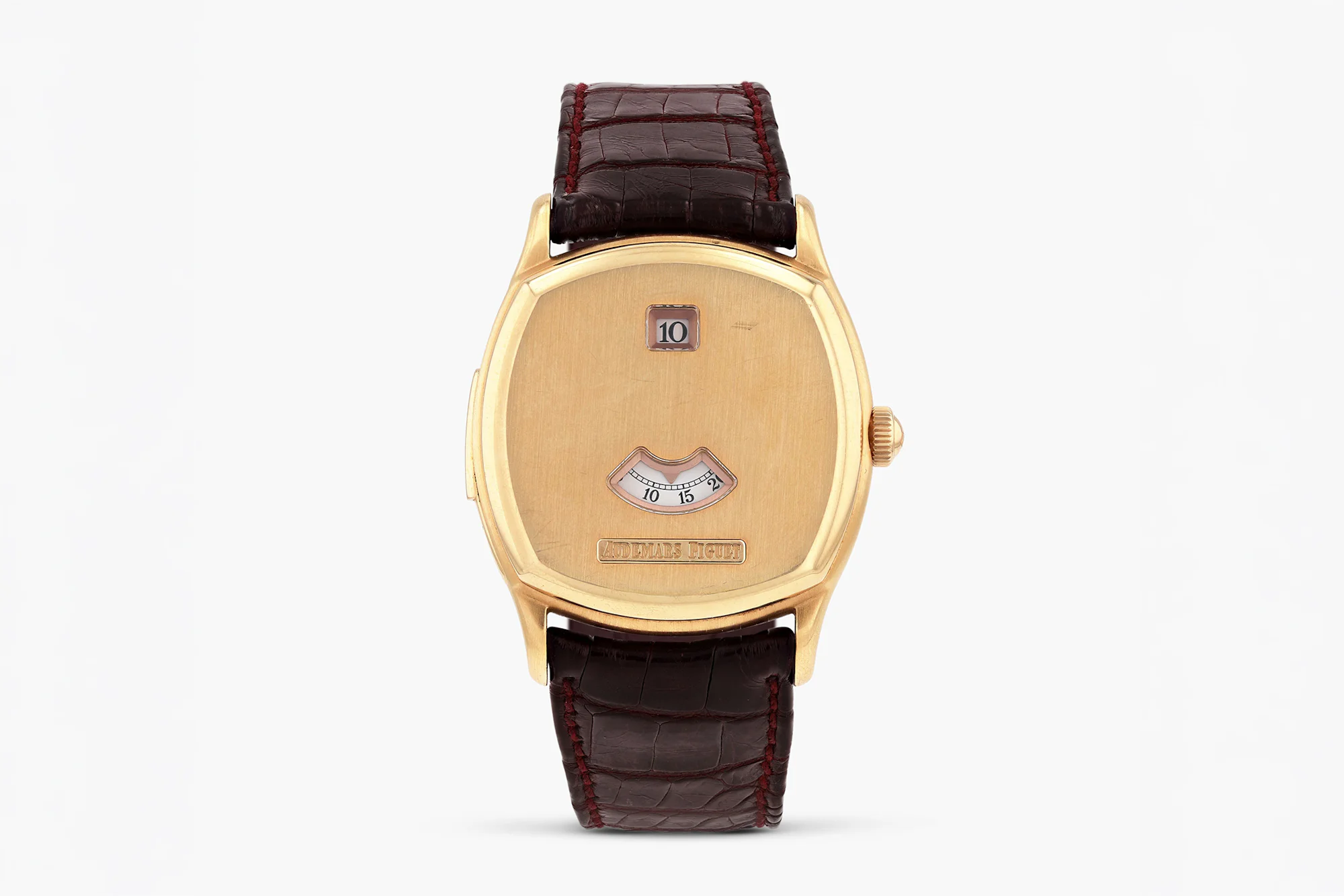
An Audemars Piguet John Shaeffer Jump Hour Minute Repeater. Photo courtesy Sotheby’s.
If you’re not worn out by brass movement F.P. Journe yet, there’s a Chronomètre à Résonance, but I’m just glad to see an Audemars Piguet John Shaeffer Jump Hour Minute Repeater (which I’ve written about extensively) (for CHF 90,000 to 140,000, which seems pretty impressive). The Patek ref. 3448 with Tiffany stamp is also sure to get some active bidding. Meanwhile, for calendars, I like the Breguet triple calendar with the Valjoux 88. A friend owns one, and I’ve been jealous, but at these prices, I’ll have to stay jealous.
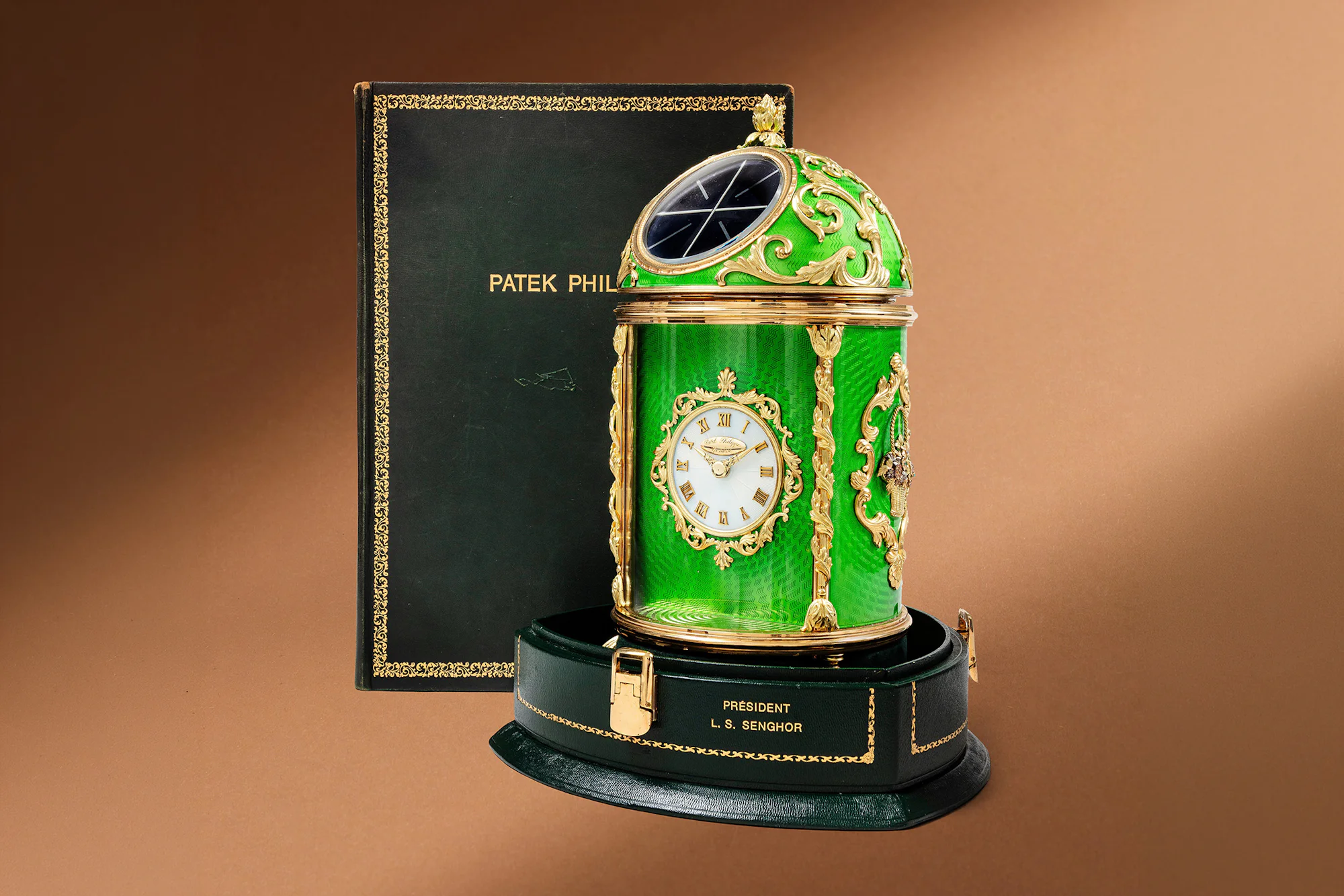
A Patek Philippe dome clock that belonged to Senegal’s first President, Léopold Sédar Senghor. Photo courtesy Sotheby’s.
There are two phenomenal timepieces with provenance at the auction. The most expensive (and maybe most odd) is the Patek Philippe dome clock that belonged to Senegal’s first President, Léopold Sédar Senghor. It’s got an incredible Renaissance motif with a ton of yellow gold and translucent green enamel, but the bidding starts at CHF 260,000. But far more my speed, and a watch I’d personally love to own, is the Rolex 1655 Explorer II that was gifted by the legendary alpinist and explorer Reinhold Messner to his expedition logistician, Prithivi Raj Chettri. Chettri’s son got all the provenance materials together, plus an ice axe that belonged to Messner, and at CHF 20,000 to CHF 40,000, the price is so low that there’s no way it stays within the range.
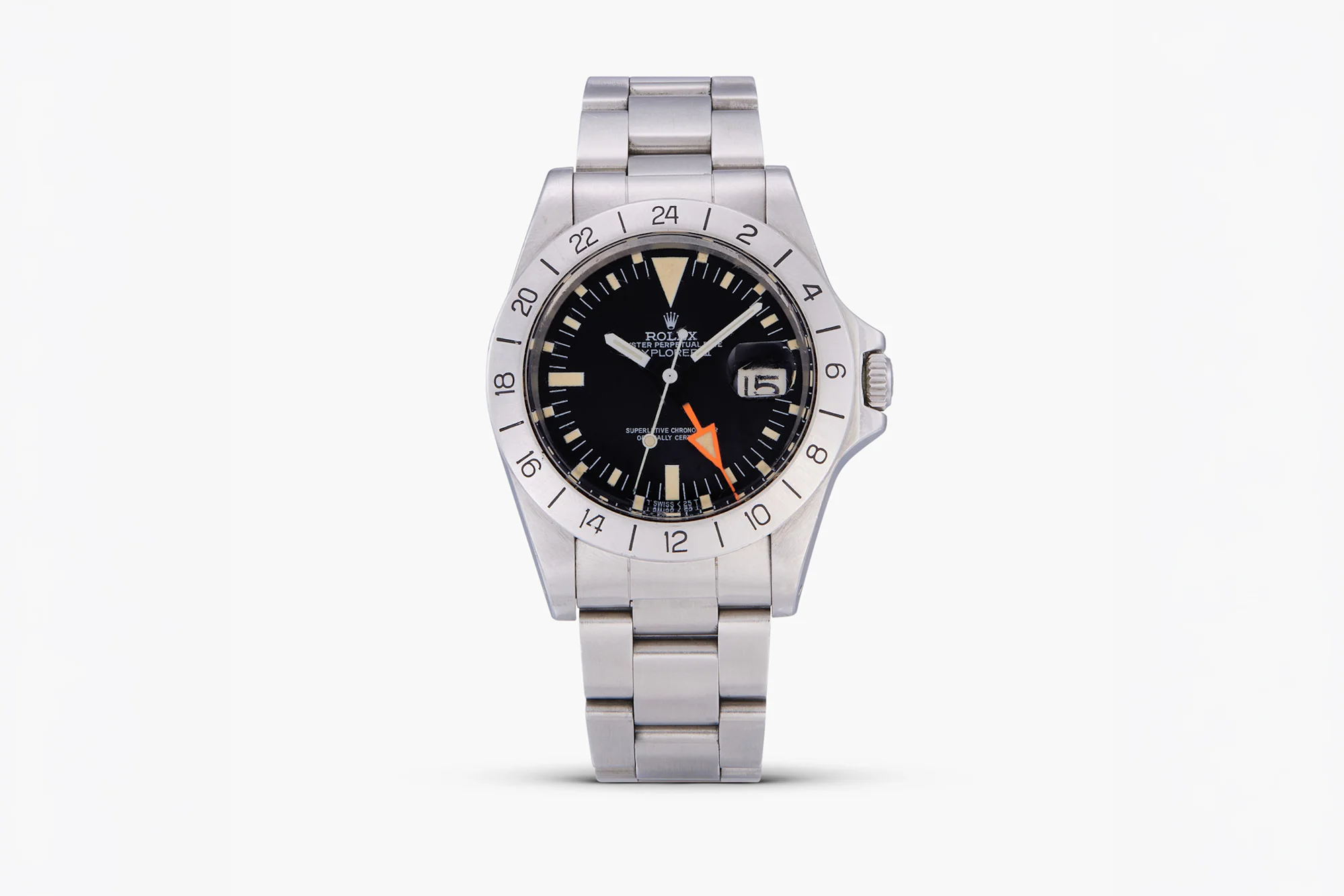
A Rolex 1655 Explorer II gifted by alpinist Reinhold Messner. Photo courtesy Sotheby’s.
As we mentioned before, Cartier went absolutely nuts at Sotheby’s Hong Kong, in a way that felt divorced from what my understanding of reality was, but hey—it’s the collectors’ world, and I’m just living in it. I wouldn’t say any of the watches stand out to me as particularly high-ticket compared to what we recently saw, but here are a few that piqued my interest.
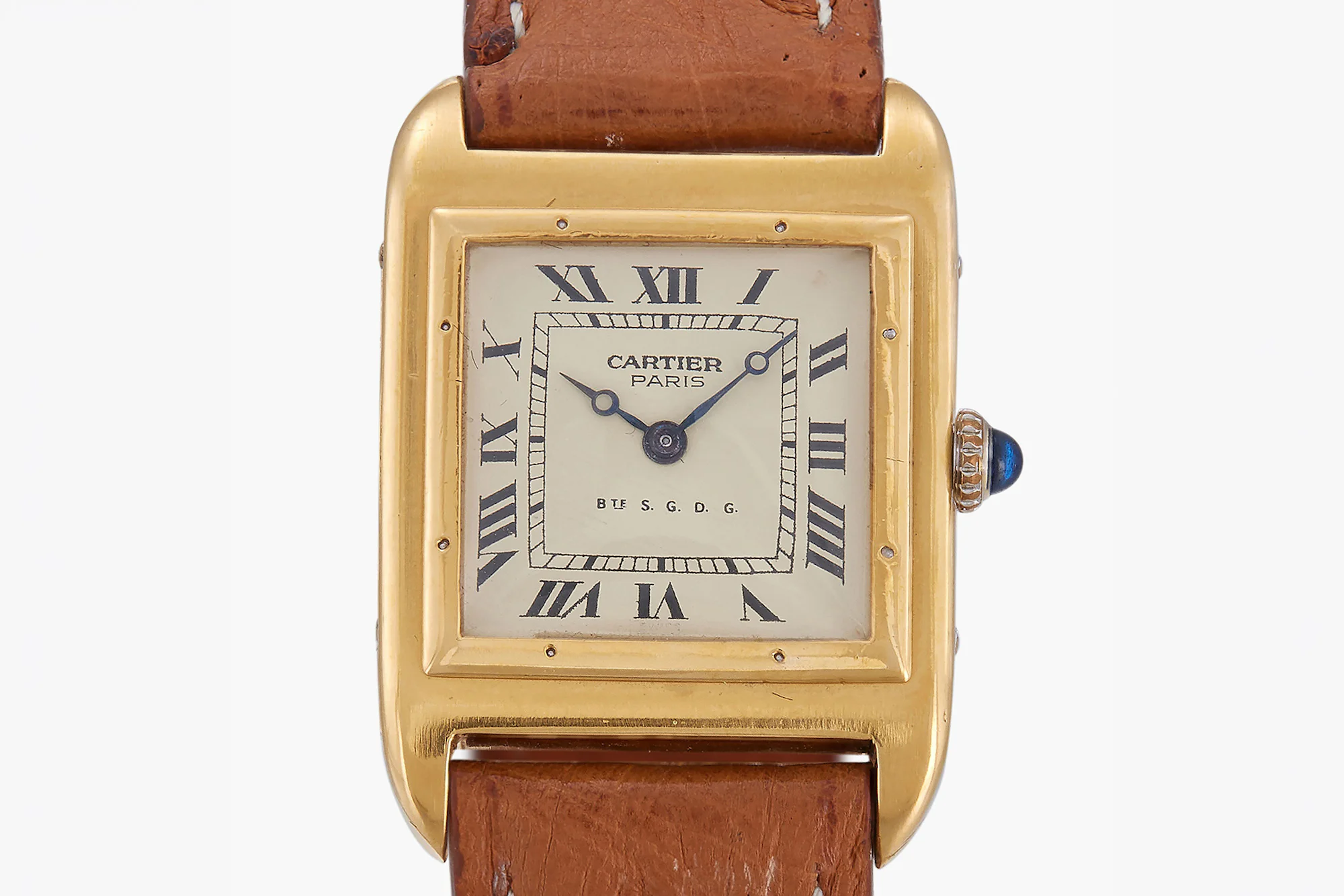
A Cartier Santos Droit. Photo courtesy Sotheby’s.
Right away at Lot 16, the Bamboos seem to be quite hot lately. This example, a large one from 1980, has an estimate of CHF 50,000 to 100,000, and it’s followed quickly by the adorable little Santos Droit from all the way back in 1911. This is an early and super-rare watch, probably a very early production piece, with the “Cartier Paris Bte S.G.D.G.” (Breveté Sans Garantie du Gouvernement) text on the dial (see examples here and here for further proof). While it’s pretty tiny, it seems well worth the CHF 30,000 starting estimate range if you’re buying purely on history. And the unusual case shape is just so unusual and wonderful.
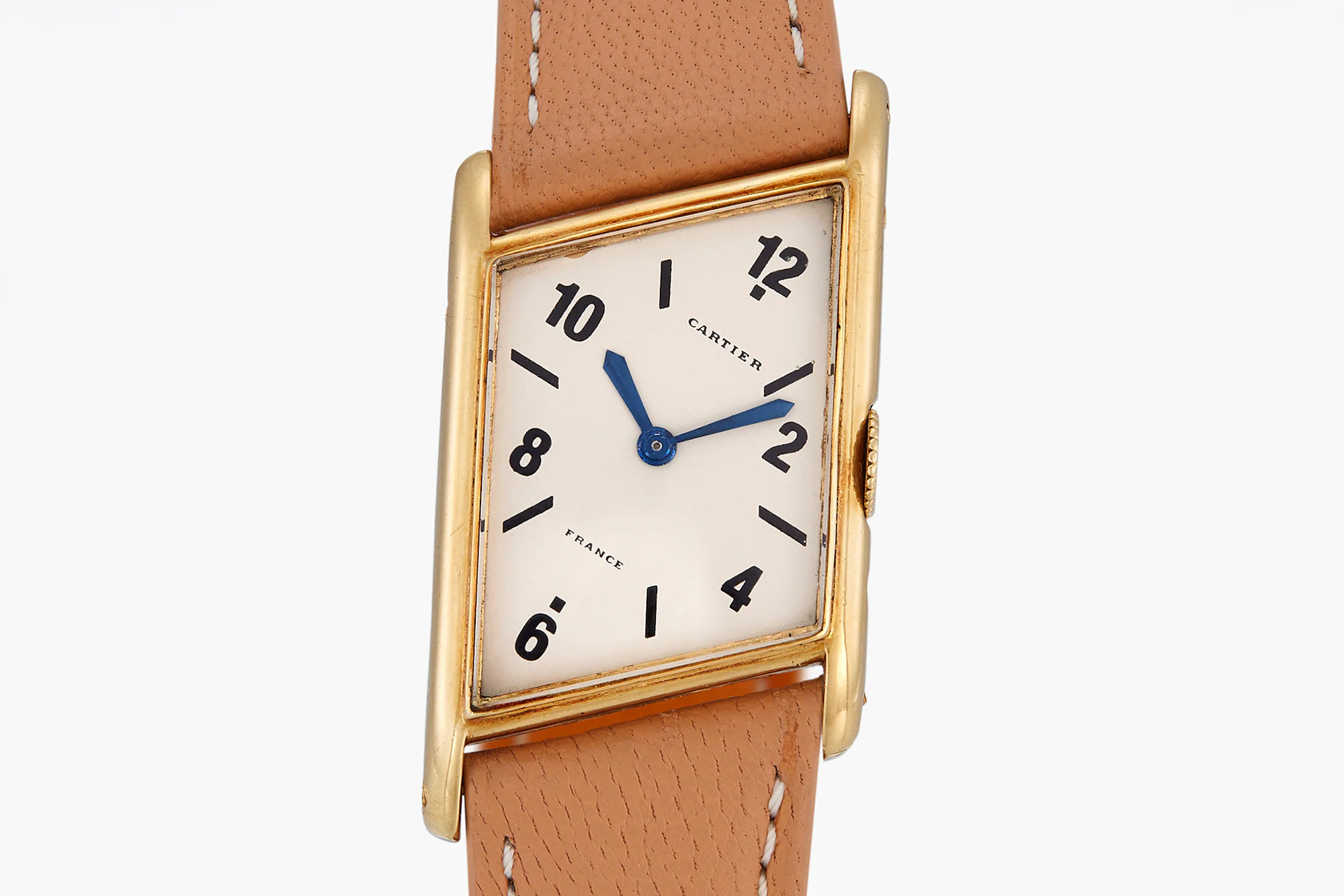
Cartier Paris Parallélogramme. Photo courtesy Sotheby’s.
At lot 49, there’s a watch that jumps out at me because of the bracelet alone. A 1950s Paris Cartier is right in that golden age sweet spot, for me, where things started to become more refined, but also generally survived in better shape. With “eagle beak” lugs, this isn’t super common (but not as rare as the larger size). Yes, the dial isn’t perfect—par for the course for this era—but the bracelet does look correct, not like one of the later-added ones you see from the 90s. It feels like a good buy in the CHF 30,000-50,000 range. Finally, while a different, more unusual 1990s Parrélogramme from London sold for $600,000 at the last Sotheby’s auction, there’s also a more traditional 1937 version from Paris up for sale, and I like it a lot.
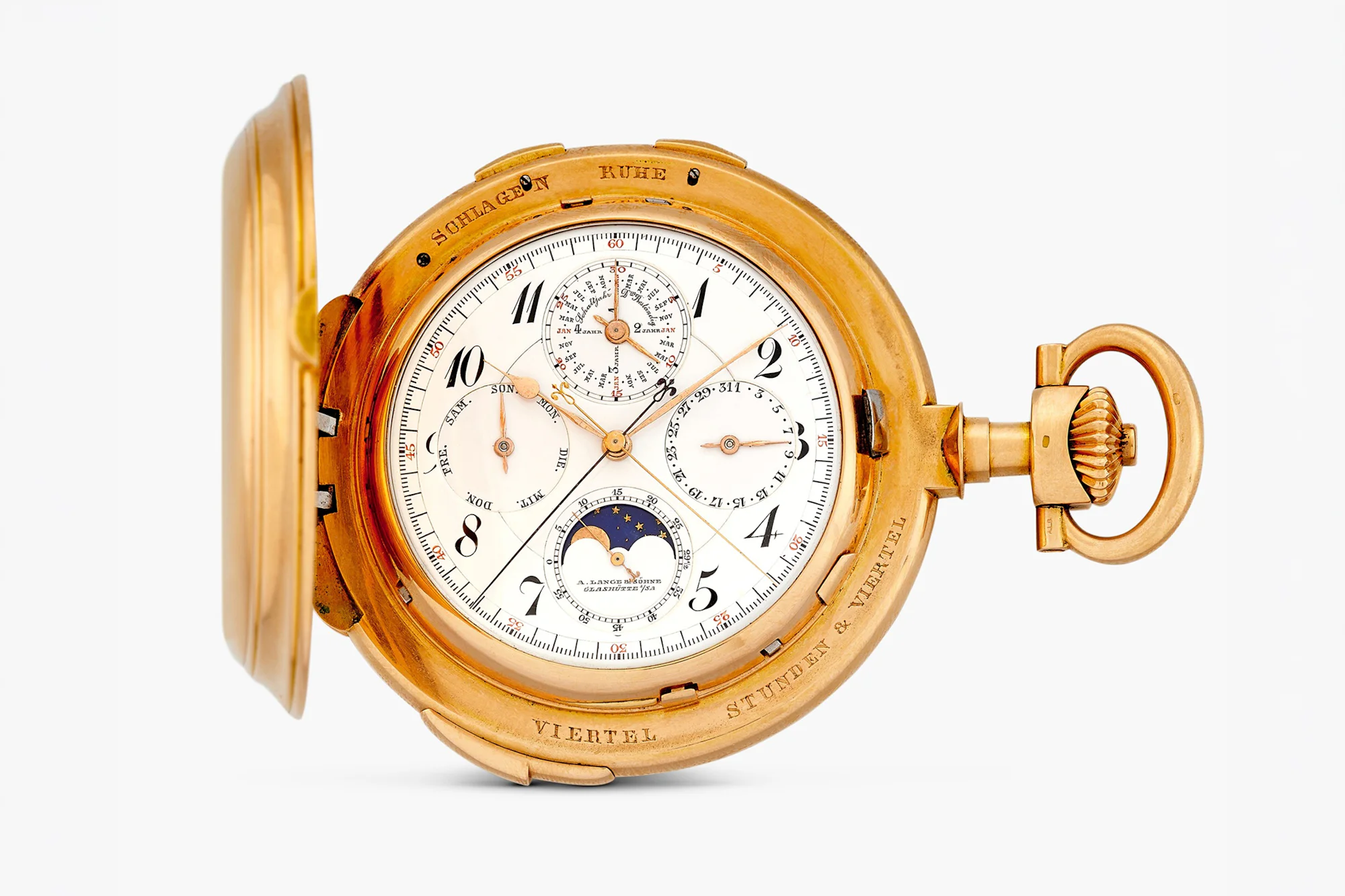
A 1916 A. Lange & Söhne grande complication. Photo courtesy Sotheby’s.
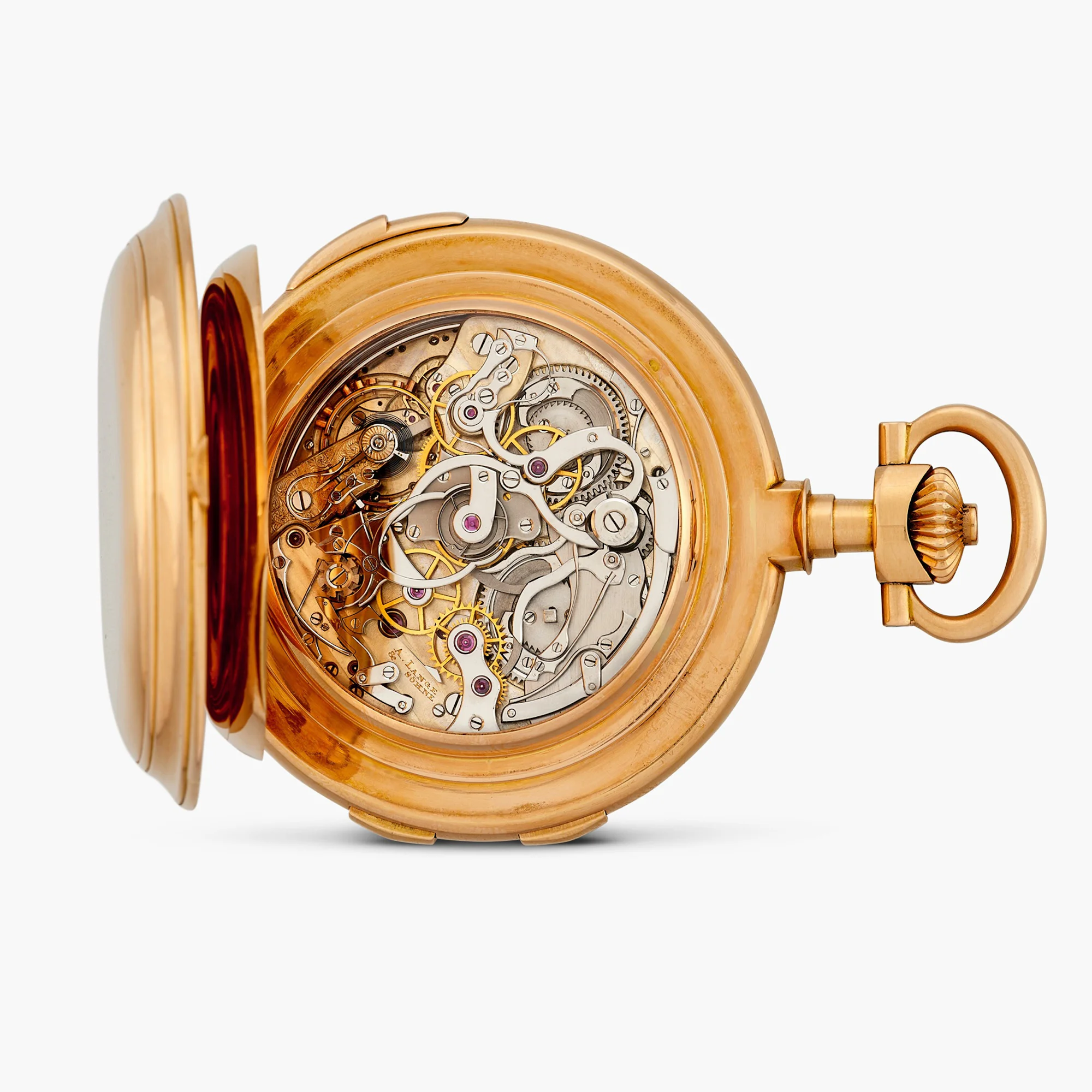
Photo courtesy Sotheby’s.
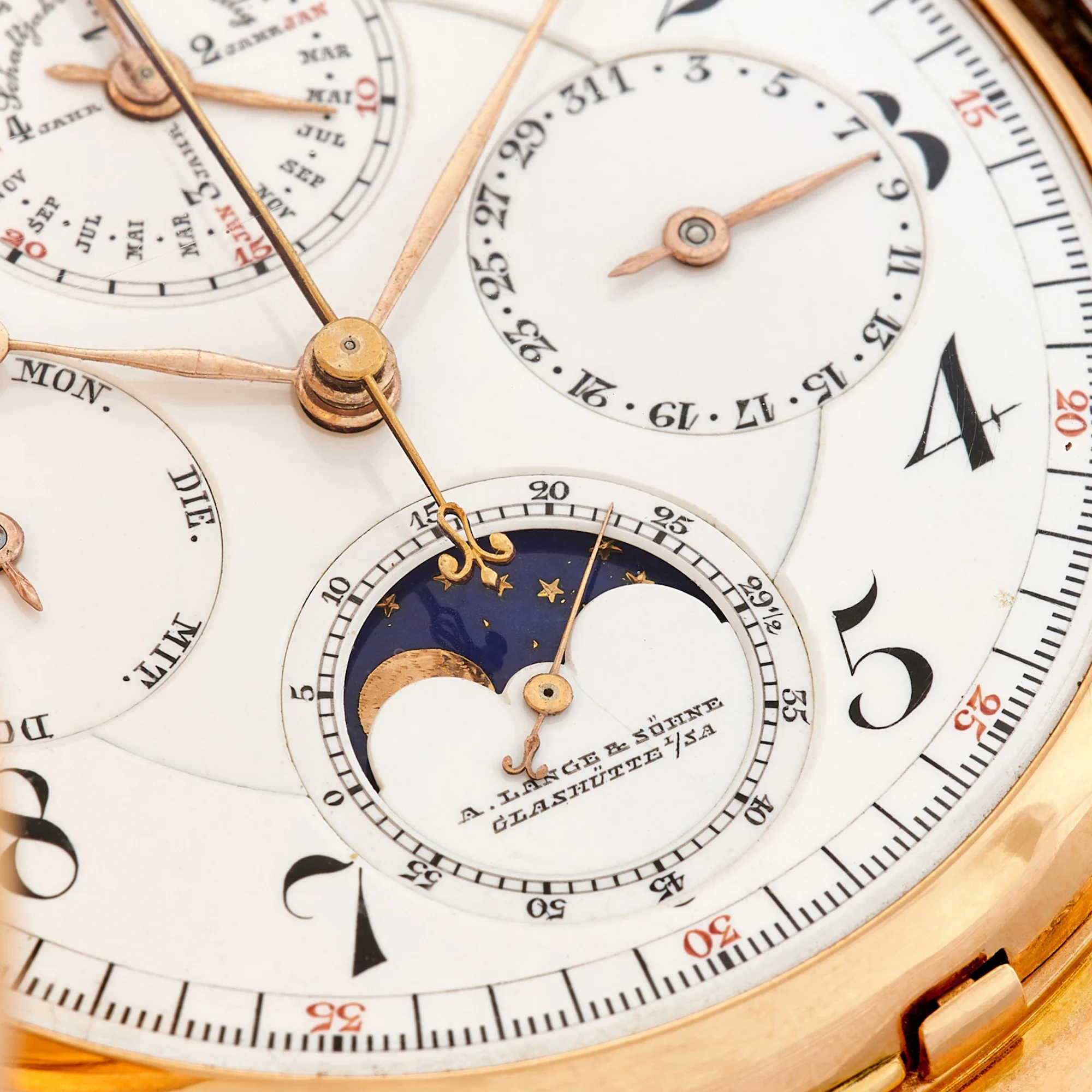
Photo courtesy Sotheby’s.
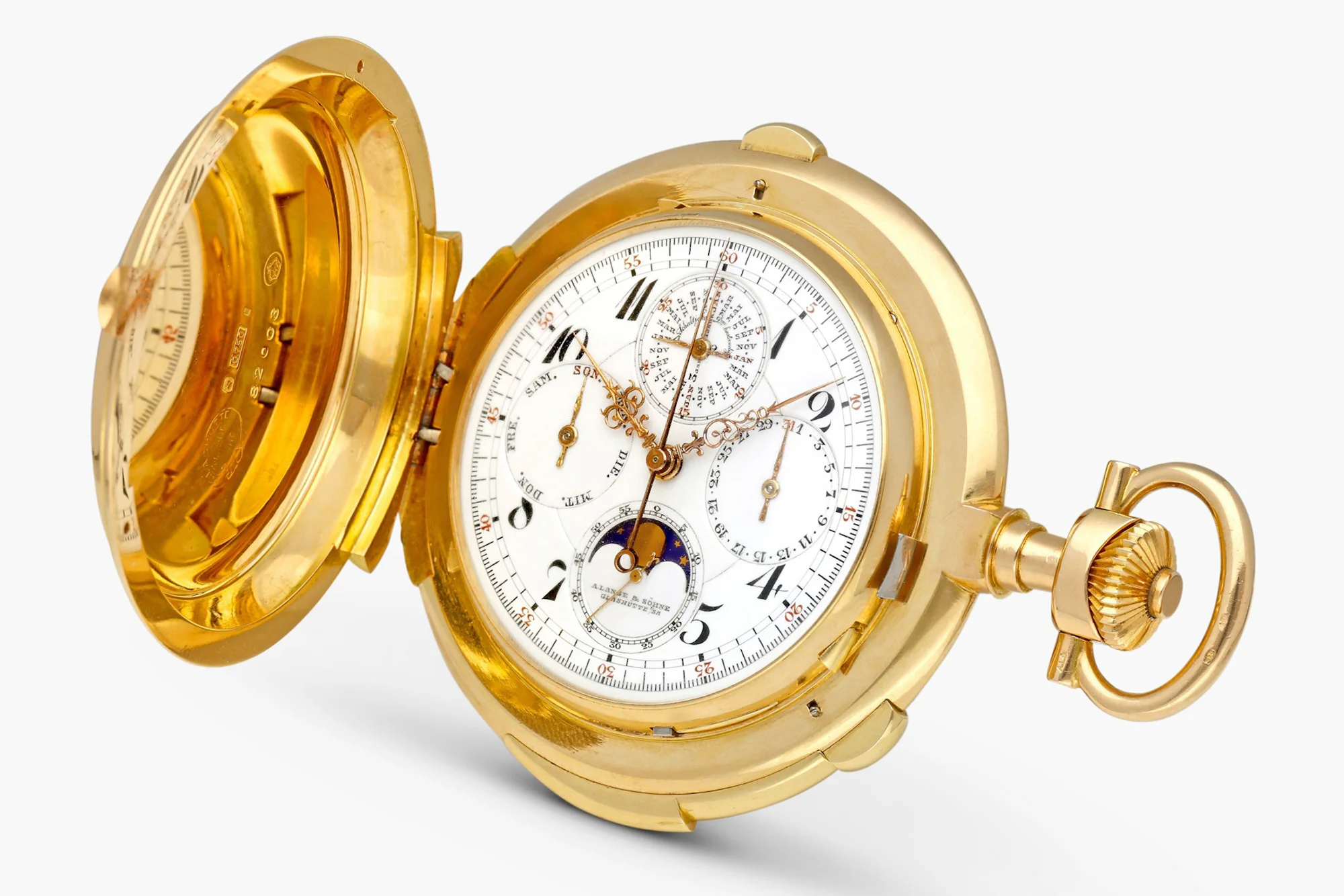
A Lange triple complication from 1928. Photo courtesy Sotheby’s.
Pocket watches are really having a moment again, and Sotheby’s isn’t sitting on the sidelines. Daryn Schnipper at Sotheby’s is the Queen of Pocket Watches, and she and the team have brought out a few goodies. The first is one of the most impressive examples of early Glashütte watchmaking, a 1916 A. Lange & Söhne grand complication that’s truly a watch meant for a museum. This watch has everything you could want in an early pocket watch: it’s a perpetual calendar, minute-repeating, grande and petite sonnerie, keyless lever clock, moon phases, double chronograph, and register. The fifth of nine made, based on a Piguet ébauche but with incredible finishing done in Germany, it’s the last one in pink gold and is in the same collection since 1939. It’s a once-in-a-lifetime watch with a once-in-a-lifetime price (CHF 700,000 to 1,200,000). Of similar Piguet-based construction, but less complicated, is the Lange triple complication from 1928. It’s sold twice in the last 20-ish years, but it’s still a beautiful watch, and the estimate is CHF 150,000 to CHF 300,000.
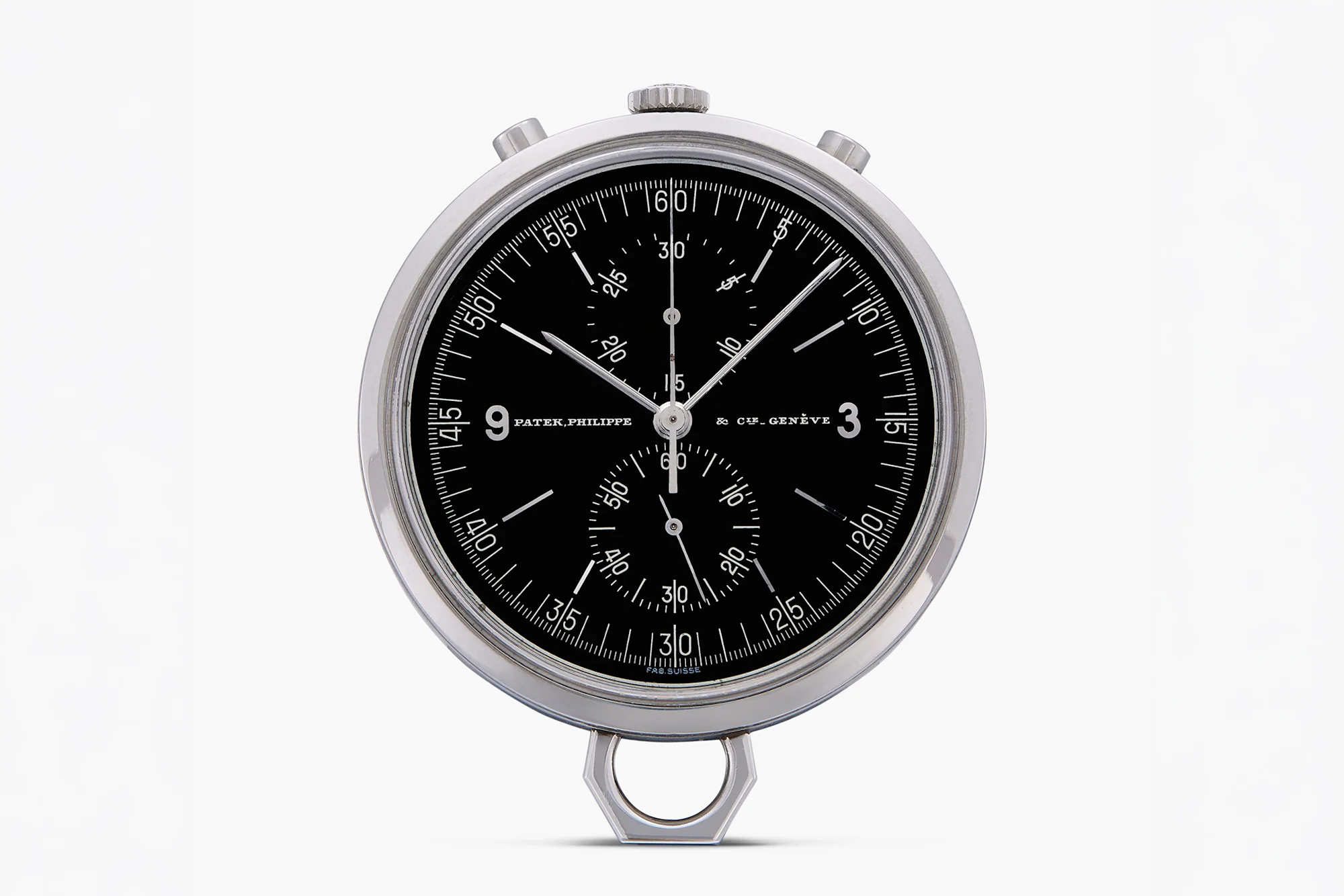
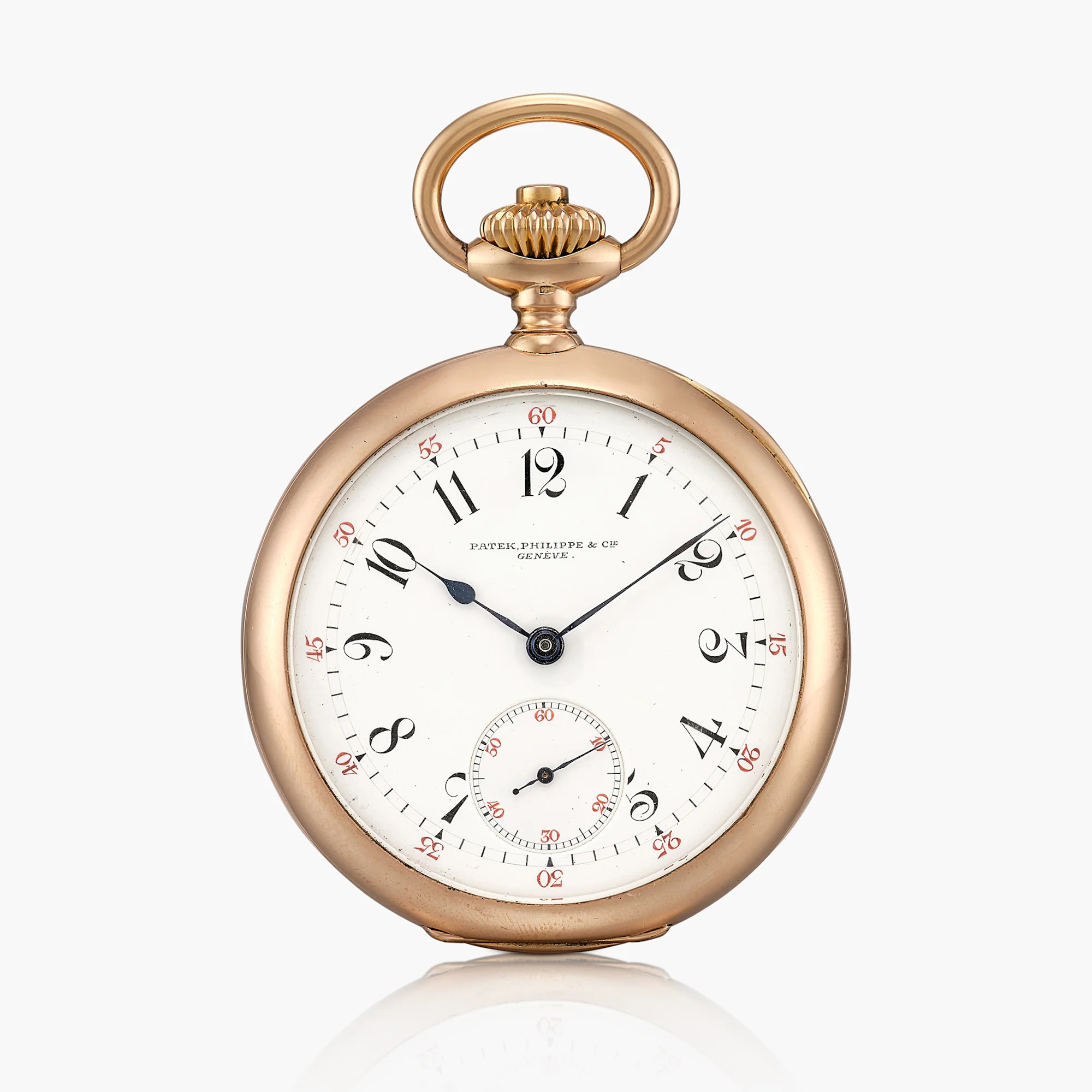
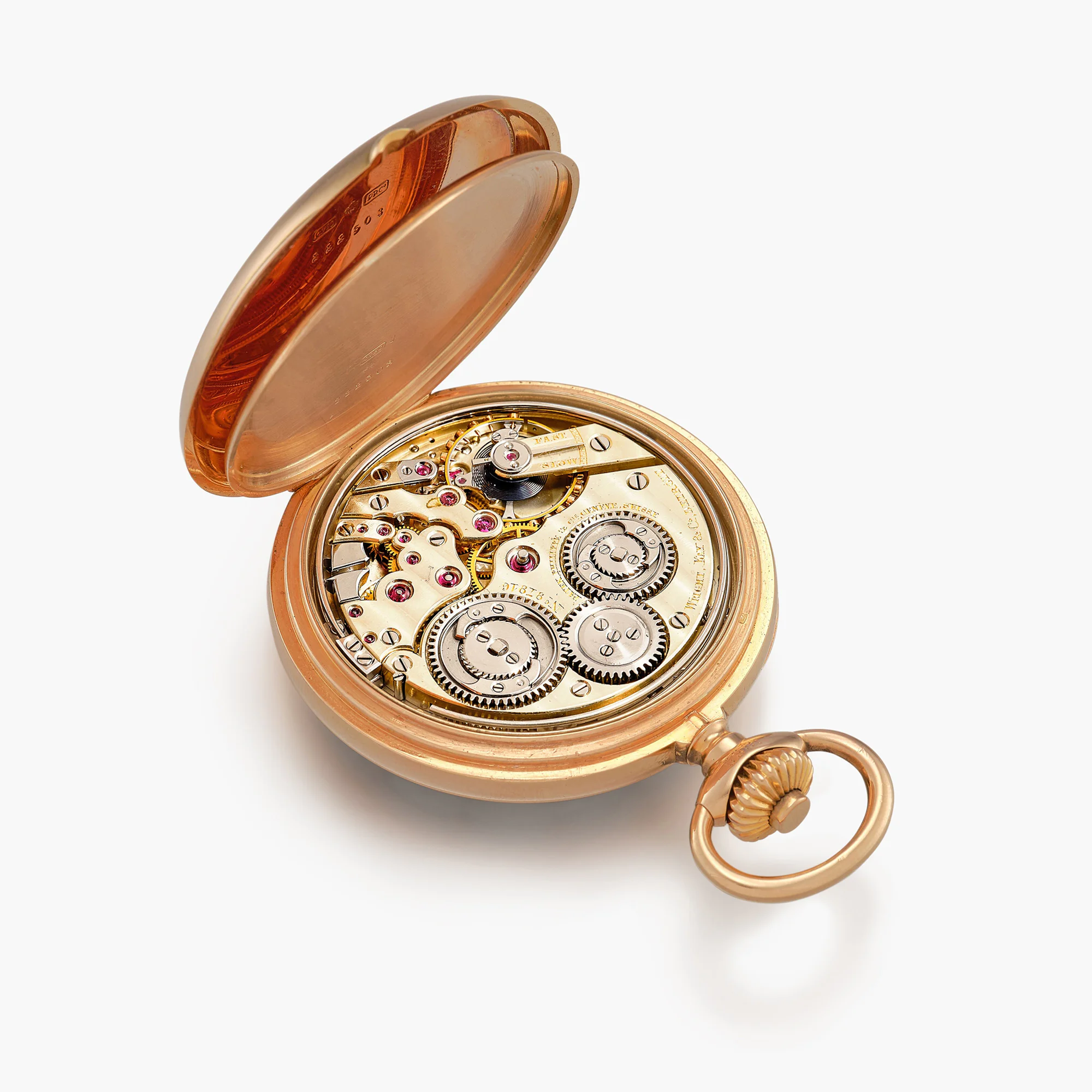
Finally, I have to mention two really cool Patek pocket watches. Nearly back-to-back, lot 137 and lot 139 are very different but very interesting all the same. First is a reference 840 from 1951, a stainless-steel, screw-down caseback, waterproof pocket watch chronograph with a case by Jean Vallon and caliber 13-130. That’s the same movement in the ref. 130 wristwatch, but this watch has a strange, solid bow at 6 o’clock and an incredibly beautiful, long signature black dial. Next is a keyless 1898 two-train trip minute repeater. Aesthetically more traditional, trip repeaters are far more complicated to make. Usually, sliding the repeater slide both powers the repeater and triggers it. Two-train repeaters allow the repeater’s power to be stored separately and triggered by a button. The estimates here are CHF 20,000 to 40,000 for each.