

I really didn’t need the Baltic Heures du Monde, and there were numerous reasons why.
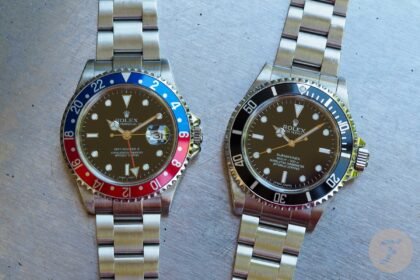
I’ve become inextricably associated with my “Pepsi” GMT-Master II (I always kind of hoped I’d be “that guy” to be tied to a cool watch—be careful what you wish for, I guess), so much so that at our recent community meet-up, someone said they didn’t recognize me without the Rolex on my wrist. I wear it most days, though I’m trying to break free of complacency since I do have a lot of other nice watches. But every time I travel, it’s on my wrist as I step on the plane, so a worldtimer was just about the last thing I needed.

And yet, together with my friend and our former Talking Watches guest, Adam Victor, I picked up a Heures du Monde in labradorite. There were three versions with different stones for the dial, and this specific model, with a darker, more muted color, felt most wearable and classic, so it felt like a good fit. We weren’t the only ones who jumped on the opportunity, as they also sold out immediately, which meant my hands-on had to wait.

Now, Baltic is taking pre-orders again, with the first deliveries slated for October. This was something they telegraphed coming during the initial release—the only difference is that the new ones aren’t numbered out of 200, which means you can pick one up if you missed it the first time. So, why get one? Well, because.

First of all, I’m under no illusions that everyone is lucky enough to get or afford a Rolex GMT. It was a dream of mine for a long, long time, and I got very lucky. But you can substitute the model for any watch, really, and find there’s no small number of people out there who probably do the same thing I do: wear a watch for the day, put it down somewhere convenient, go to bed, wake up, go to that convenient spot, grab the same watch again, and repeat your day. Whether it’s because it’s a dream watch, an easy watch, a watch that makes you happy—sometimes it’s just easy to rinse and repeat. In the past few months, I’ve worn Furlan Marris a lot, a G-Shock on a bracelet, our recent Timex 8-Lap LE, a Unimatic, a Tudor Pelagos (the original, not the 39), and a few others, but I always seem to come back to one watch. With that logic, buying one more watch doesn’t make sense. But sometimes, you want to be someone else.

To borrow two terms from behavioral and linguistic sciences, for me and many others, watches are a form of code-switching and a response to the Hawthorne effect. Many people change themselves depending on the people around them—language, diction, how they dress, or even how they carry themselves—and you often see it as people use it to fit into specific social contexts or build rapport with different groups. The Hawthorne effect goes hand in hand, in a way, because it says that people change how they act when they are aware that others are watching them.
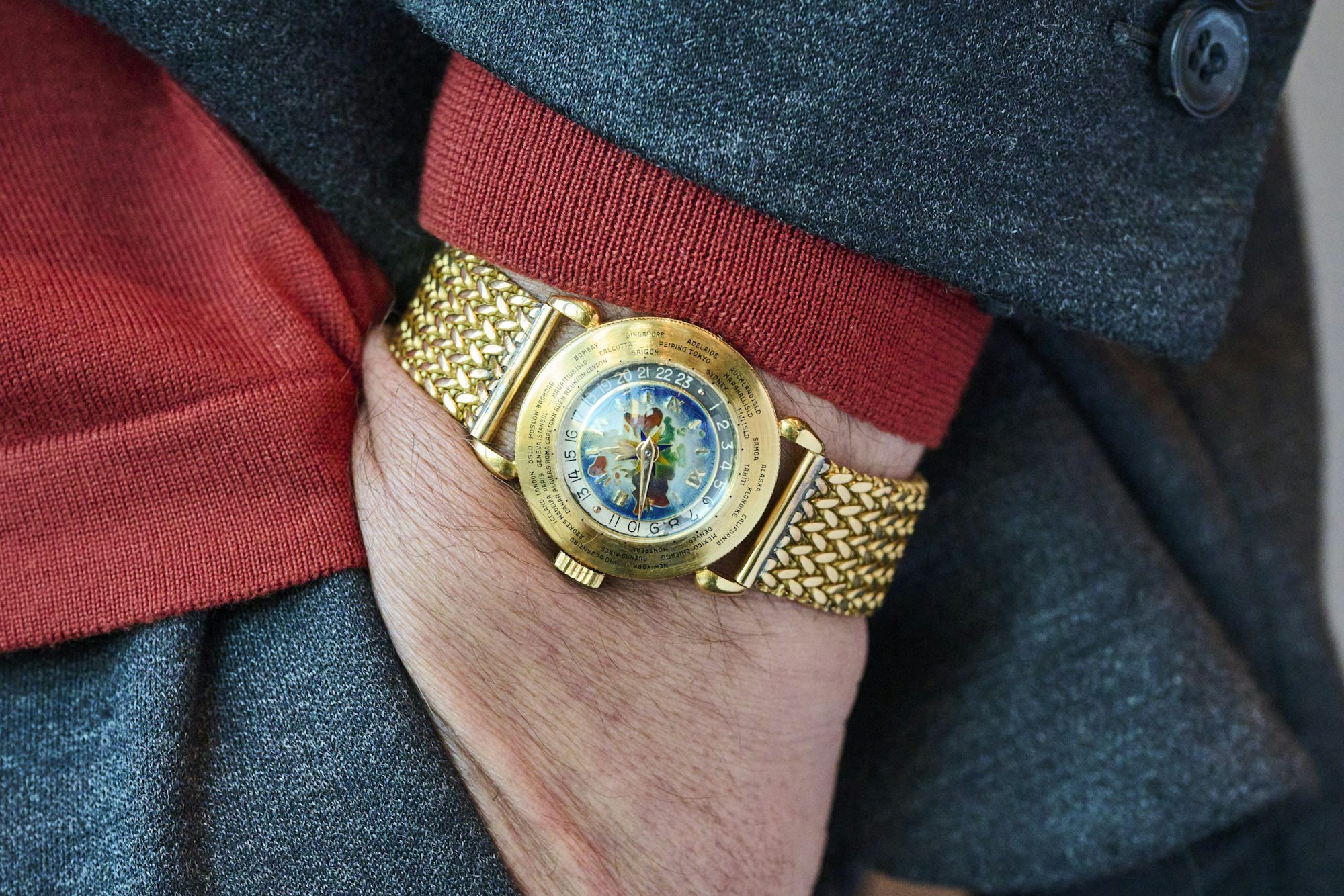
Davide Parmegiani wearing a Patek 1415HU with Eurasia cloisonné dial. If there’s a watch that would make me feel like someone else, it would be this.
I’d like to think I’m hard to put into a box. Maybe I’m not sure who I want to be at any given moment. There’s the big, burly dude from Wisconsin who just needs a tough tool watch and nothing else. Then there’s the part of me that loves vintage watches—the elegant, often delicate, sometimes complicated. And yet, in a room with some of the greatest vintage collectors, I’d feel weird wearing a modern GMT because it doesn’t signal that I love the same things they do. The Heures du Monde is perfectly suited; relatively affordable and great-wearing at that.

The Gobbi Milano-signed Patek ref. 2523 that belongs to a friend.
I’ll save you a deep-dive class on the Louis Cottier design of a world timer—instead, I’ll opt for some context. In the upper echelons of collectible vintage watches, world timers have often sat right below perpetual calendars and minute repeaters as the type of thing over which well-heeled sprezzatura types have been willing to get into the auction room version of a dive bar fistfight. Until just a few weeks ago, a two-crown world-time Patek was the most expensive watch sold in Asia. Another, with a cloisonné map of South America, sold for $10.2 million this spring.

Adam Victor’s 1415HU in pink gold.
Adam Victor owns the earlier reference, the 1415HU in pink gold, and previously owned an unusual AP worldtime that appeared in his Talking Watches episode. Every one of these examples has this perfect bit of vintage nostalgia, referencing a bygone era when air travel and easier communication shrunk the world, and you’d want to reference every time zone at a glance.
But you can’t recreate nostalgia. So yes, the references in Baltic’s Heures du Monde are obvious, it’s not easy to appropriately elevate the details to something worth enjoying without trying to force it to be something it is not. Baltic got it right in a way that spoke to me. I am never going to be the 1415- or 2523-owning type. But for the moments when I want to feel like one in a way that’s authentic to me, that’s the Baltic.

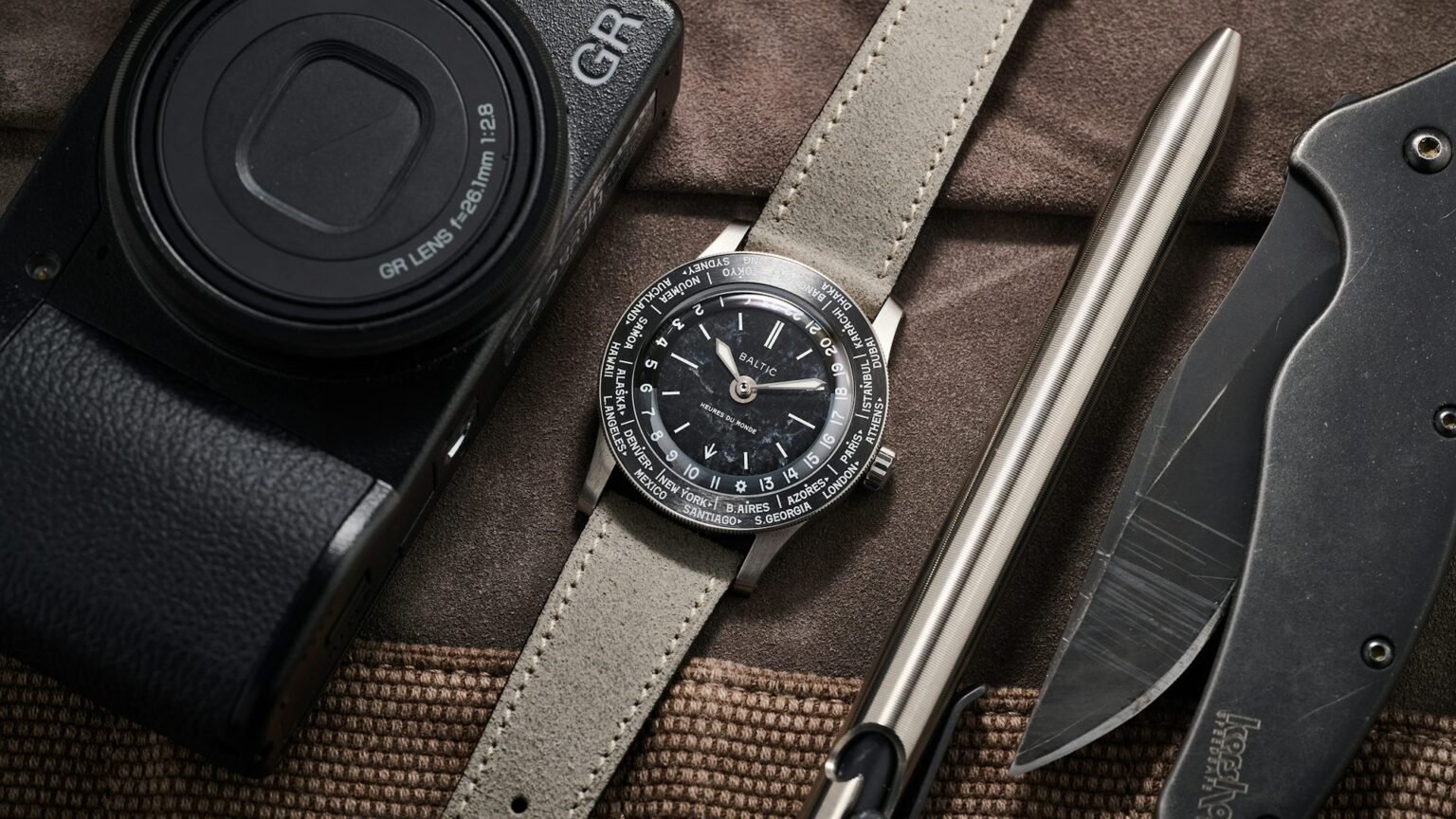
We are a watch review-oriented website, so instead of continuing to try to wax poetic (and failing to some extent, I’m sure), I’ll give you the physical reasons why the new release is worth getting, not just the emotional ones. First, it trends toward a vintage size without overdoing it, measuring 37mm by 11.3mm thick (with 2mm of that thickness coming from the double-domed sapphire crystal), yet it has a 45mm lug-to-lug, which helps it wear a bit bigger for people turned off by the 37mm label.


The dials, like this labradorite, the tiger’s eye, and sodalite, give a variety of stone dial options for different customers, but the one I have here seems the most versatile. The color shifts from grey to a deep blue to black, and it matches the included grey suede strap with quick-release spring bars (which are a bit redundant with the drilled lug holes, but still welcome, as I lost a spring bar recently when it catapulted into my eye and then onto the floor).


The caseback is solid, with a globe in relief, held down by four screws and giving 100m of water resistance. Like the brushed surfaces of the case and its shape in general, it’s not much to look at, frankly. Not bad, not super exciting (like the chamfered edges on the Baltic x SpaceOne collaboration recently), but fine at the affordable price. Inside is a movement for which you could say the same: they use an affordable Swiss Soprod C125 automatic GMT movement, adapted into a dateless world-time movement with a 42-hour power reserve. There’s a stop-second function, but no second hand to know if that’s working. But the feel of all the functions is good, and the price of around $1,500 feels reasonable. As a whole, the watch comes together.


Going back to the dial, the use of a military-esque broad-arrow to indicate the local time zone blends seamlessly with a worldtimer that’s a bit more rugged than elegant. The same could be said for the ceramic bezel, which attracts smudges and fingerprints that stand out because of the brushing, but keeps it from looking too much like an overly elegant watch (in a good way). The natural pattern and unique nature of every dial mask the fact that the crystal seems to be a dust magnet as well, but that then tones down the modern feeling of the well-polished sword hands.

The grey-and-black delineation of night vs. day on the 24-hour world-time rotating disc is there when you need to remember that 17:00 is a bit more daytime than 19:00 is, but it’s not distracting. The 120-click bezel is far from ideal functionally, but it’s hard to find a 24-click bezel, and by using a dive bezel as a quick substitute, the brand has kept costs down and turned that saving into other cool features, like the luminous cities on the bezel. There are triangles next to the cities that observe daylight saving time (DST).

Functionally, if you pull the crown out one click, you can turn it clockwise to advance the 24-hour ring by one hour at a time. Rotating counterclockwise normally sets the date, but without that function, it does nothing, so you can only move the worldtime disc forward. My normal use while traveling would be to set the local time, then advance the 24-hour ring to the correct time at home in New York and leave the bezel put, but there are other ways you can use a worldtimer.
And yet, here’s the rub: I probably won’t use it while traveling that much at all. I might bring it with me if I’m meeting some vintage-loving friends, but I still find a GMT more practical. However, that’s not to say the Baltic will miss wrist time; even if it doesn’t travel much, it’s a perfectly suited summer watch, or one to wear at my desk when I have to worry about what time it is while I’m bothering my colleague Masa at Hodinkee Japan. Plus, it scratches a nostalgic itch, even without trying too hard.


I’ve outfitted mine with a “beads of rice” bracelet from a vintage dealer, “Private Eyes,” in Japan. I’m particular about BoR bracelets. No judgment against the other makers on the market (Baltic included, but also Forstner, which comes highly recommended). I like mine in a certain, particular old Gay Frères style: solid bar links at the ends, rolled, folded, and fully round beads with the edges visible on the sides. No flat backs of bracelets or beaded bars. Endo at Private Eyes has found someone to replicate the old ones perfectly, with a lot of variety, plus a few other options. I’ve got a couple now, for my Furlan Marri flyback chronograph and this watch, and it makes a lot of difference.

Long story short, there are different tools for different jobs. Just as I shoot most of my work with a Nikon Z7II and a 105mm macro, I like traveling with the Ricoh GRIIIX because it often suits moments when the “big guns” are overkill. The Baltic Heures du Monde doesn’t need to be a “big gun”—it just needs to be the watch that I reach for when I want to be myself, just another version of him.
The Baltic Heures du Monde worldtimer is once again available for pre-order for €1,300 on a strap. To order, visit the brand’s website.