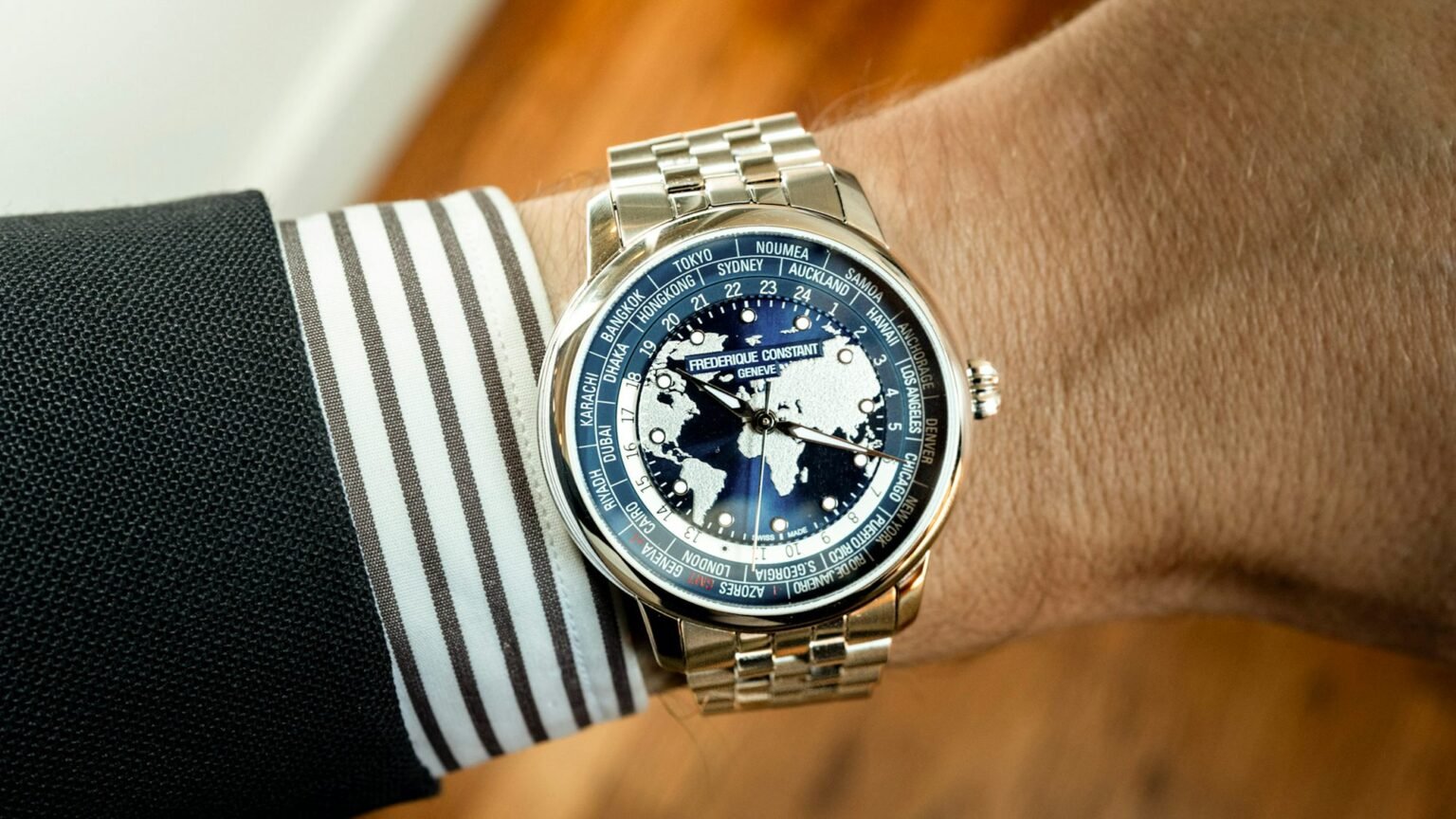

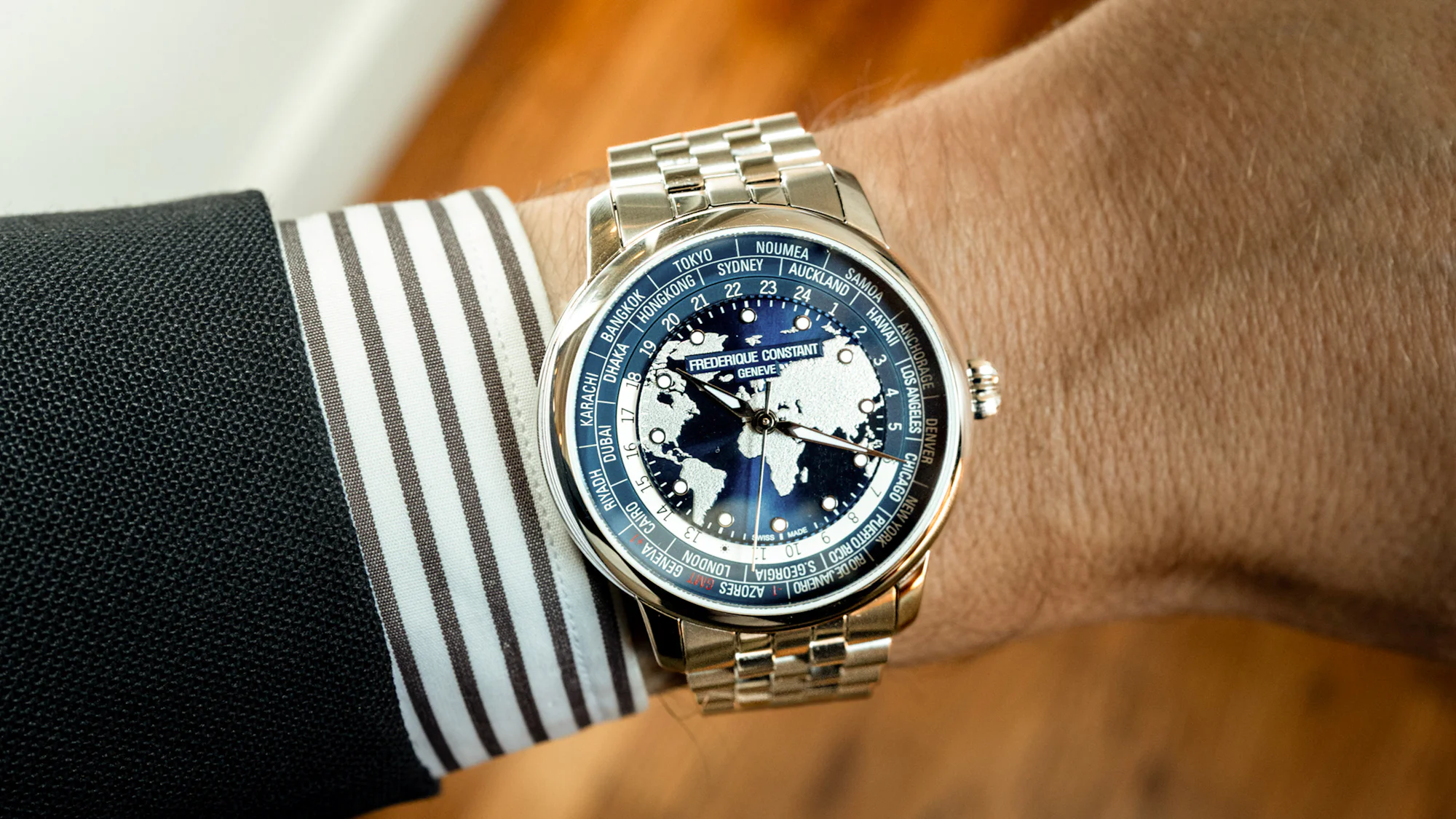
I’ve always had a certain fascination with world timers—for one, it’s a practical complication, but mostly because I love watching brands solve the problem of presenting a lot of information—text, numbers, data—and condensing it into a dial that actually works. When it works, it really works. So when I heard Frederique Constant was updating their Classic Worldtimer at Watches and Wonders this year, I was intrigued.
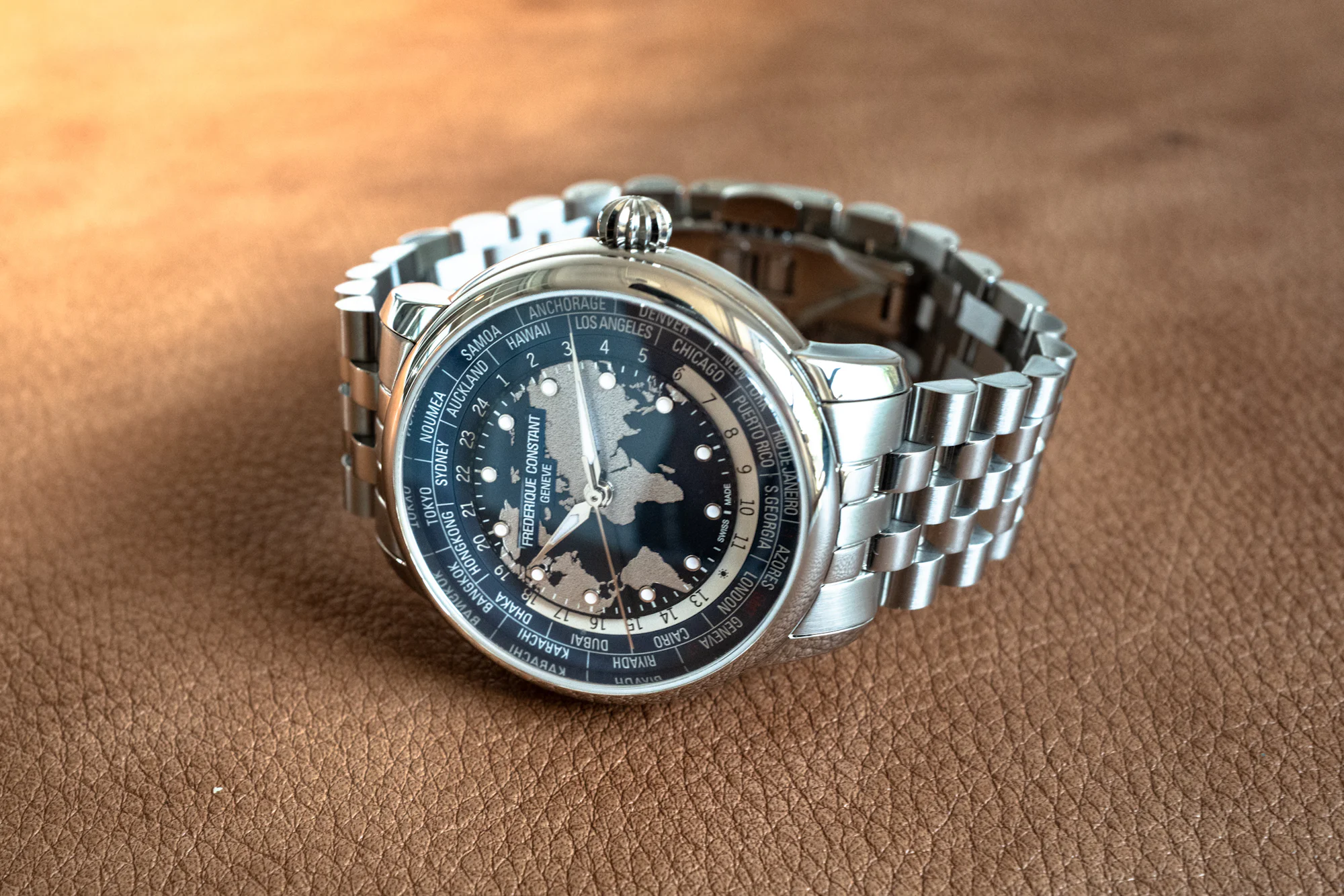
The broader market is fascinated with world timers too. If the upper end is any indicator that world timers are trending, look at what the ref. 2523 “South America Map” Patek sold for a few months ago. Couple that with brands exploring different ways into the complication—our own Ben Clymer spent time in Geneva last fall and came back with lavish praise for a world timer from Andersen Genève, calling it the favorite thing he saw on the entire trip. But the big hiccup for me with world timers has always been simple: they’re often quite expensive.
World time, generally, was historically reserved for a brand’s most exclusive references, in precious metals, running mid-five-figure to low-six-figure—only in recent years have brands like Nomos, Omega, Breitling, and IWC started offering steel versions, which dragged the entry point down to the mid-four-figure range. Frederique Constant has been chipping away at that problem for well over a decade now, and with the Classic Worldtimer Manufacture release at Watches and Wonders this year, I think they’ve cracked it—for a price well under five figures.
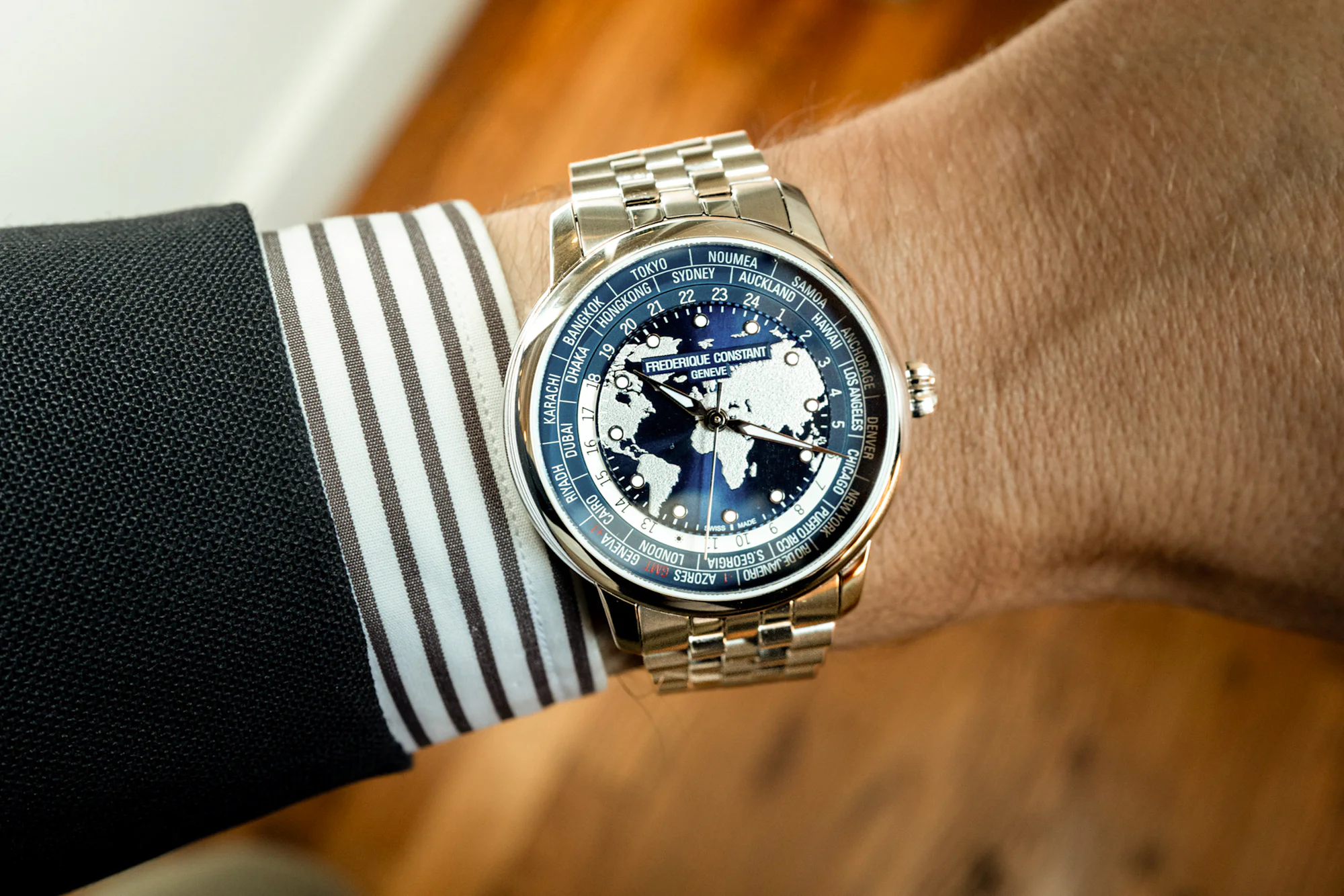
The brand has a brief history with world timers, though FC dates the start of the complication to 2012—a few years after they began producing their own in-house calibers. That’s when they released the Classics Worldtimer Manufacture, debuting the FC-718 in a 42mm steel case. Over the next decade, it stayed largely unchanged, aside from a few dial colorways; the navy blue scheme arrived in 2016. The next real touchpoint was 2022, a decade after the original launch, when FC marked the anniversary with the Highlife Vintage Worldtimer Manufacture Edition—first a 10-piece run that sold out in under 50 minutes, then a 100-piece follow-up with blue indices swapped in for black.
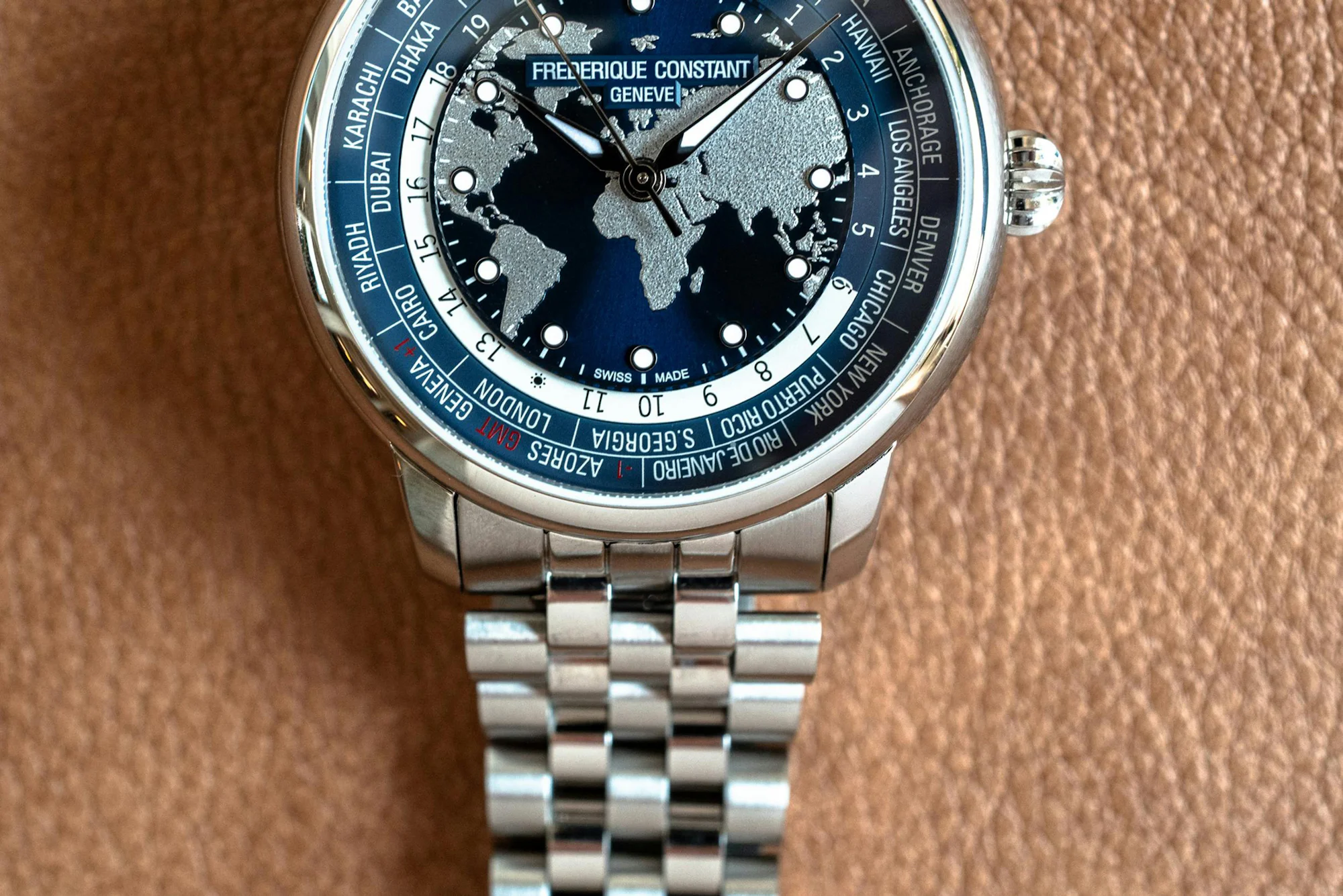
What I like here is that even with the size slimmed down in the new release, the original silhouette holds—down to the crown placement. Two big updates this time around, and they’re connected. The date dial is gone—a notable absence, and one that adds more than it subtracts. Losing it cleans up the ring of text that has to wrap around the dial, and it’s what let FC bring the case down from 42mm to 40mm. Smart decision if you ask me. I loved how it wore on my thin 6½” wrist. Usually I tend to skew smaller on case size, but the 40mm here still felt right—I think the move down from 42mm had folks like me in mind.
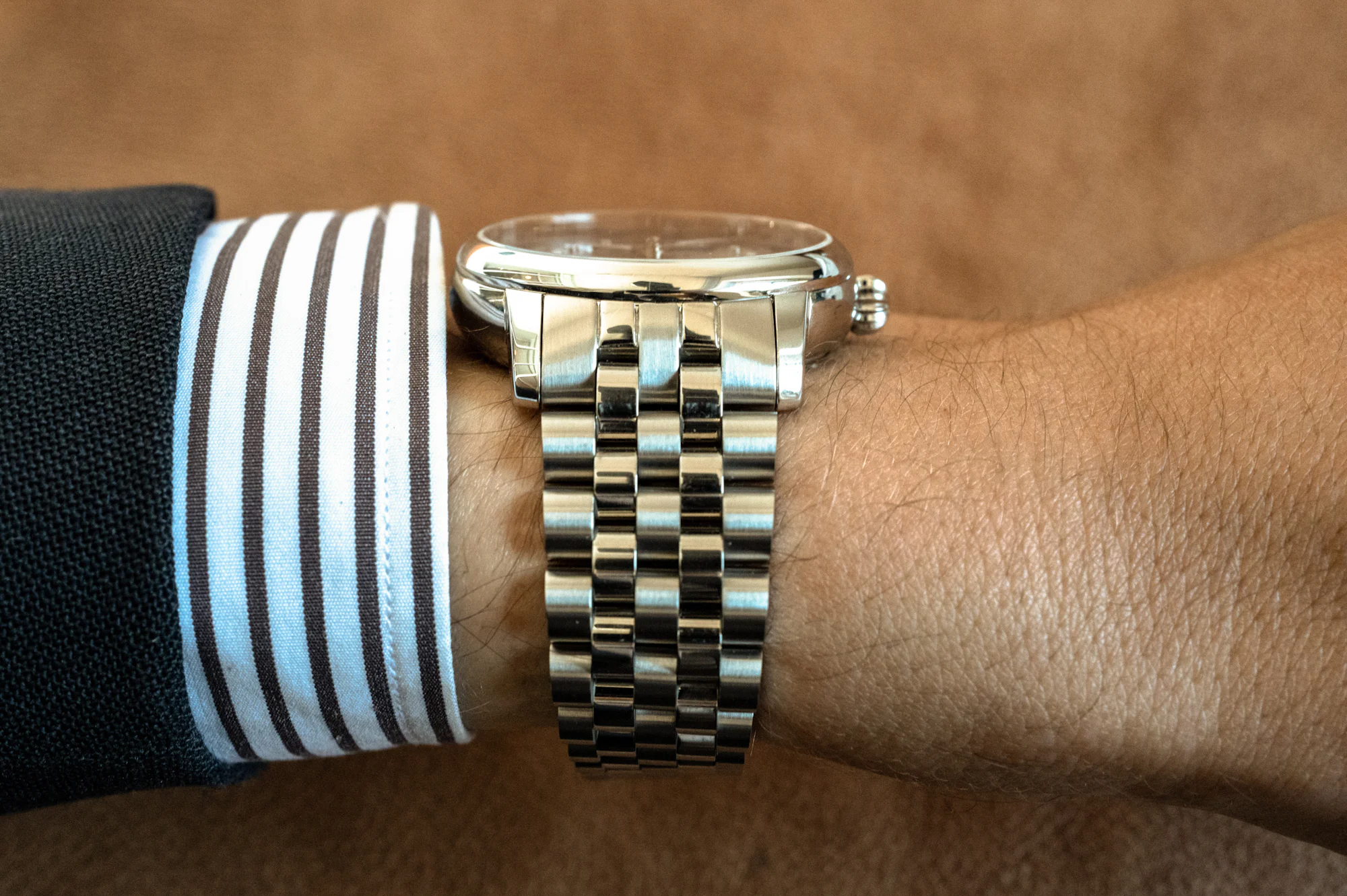
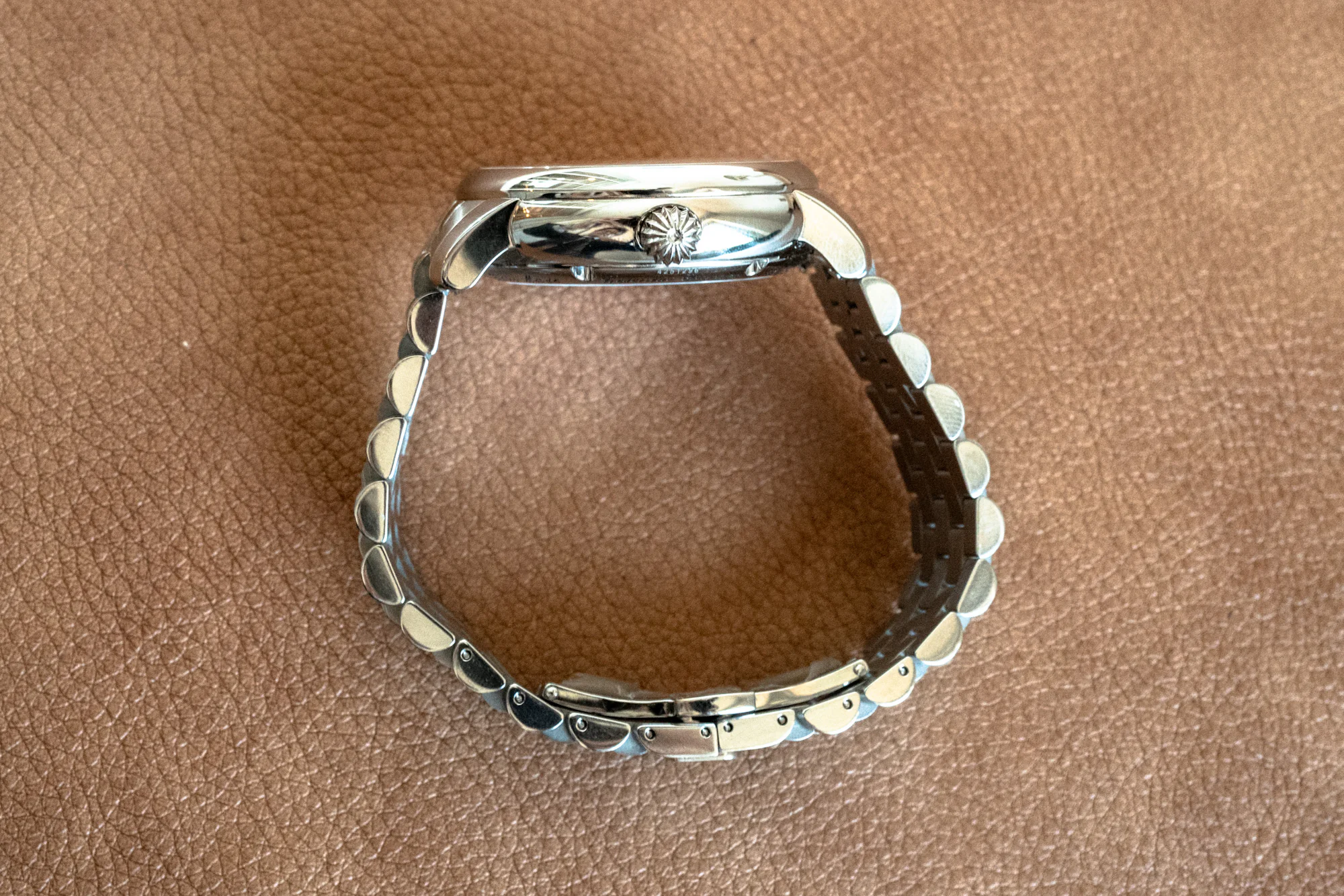
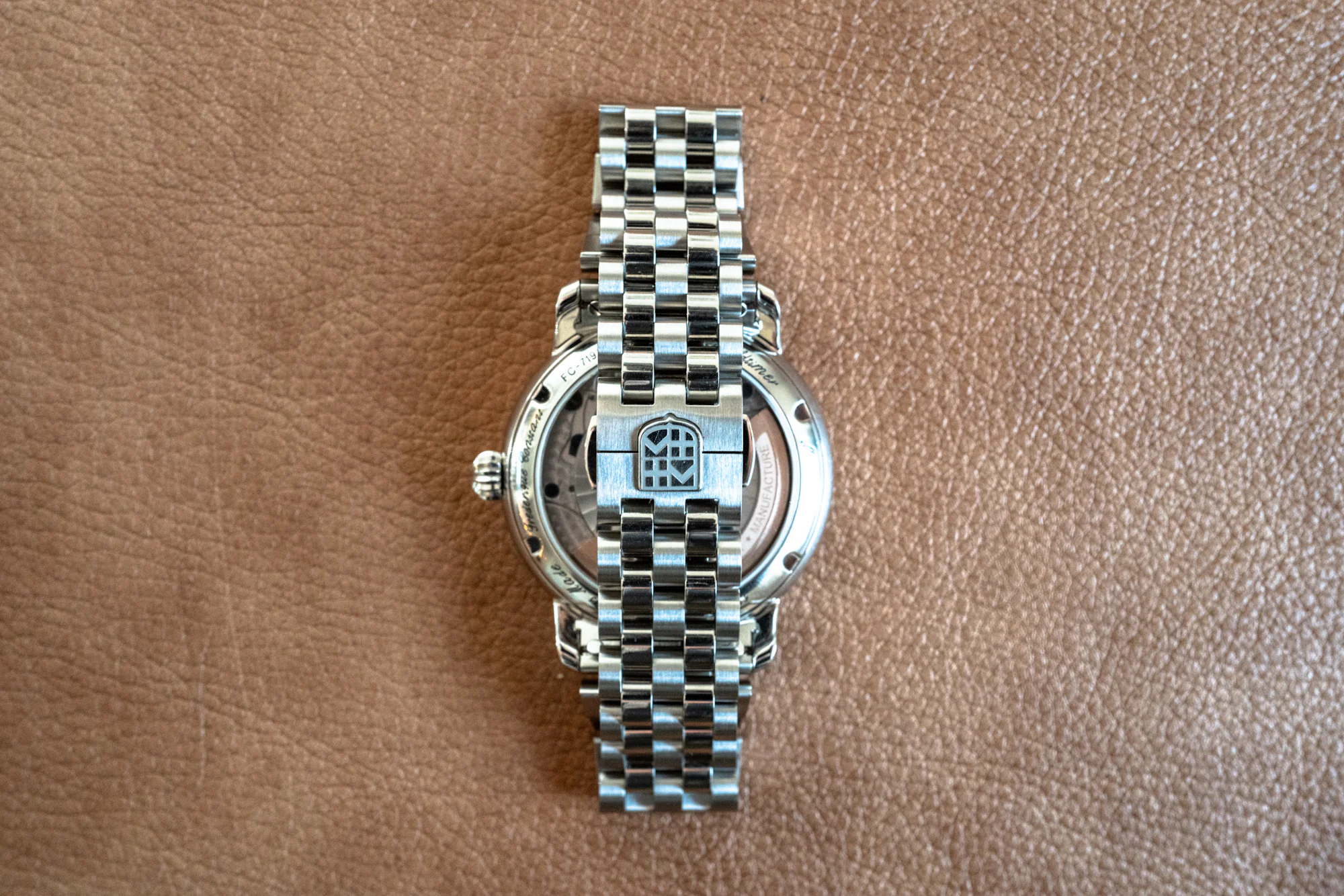
The brand offers three variants this time, perhaps most notably, a navy blue dial on a new five-link steel bracelet—the first bracelet option FC has offered on this watch, as it’s been strap-only up to now. There’s also a gradient blue dial on an interchangeable alligator strap, and an 88-piece diamond-set limited edition (light blue dial, 70 diamonds/0.785ct on the bezel, two interchangeable straps).
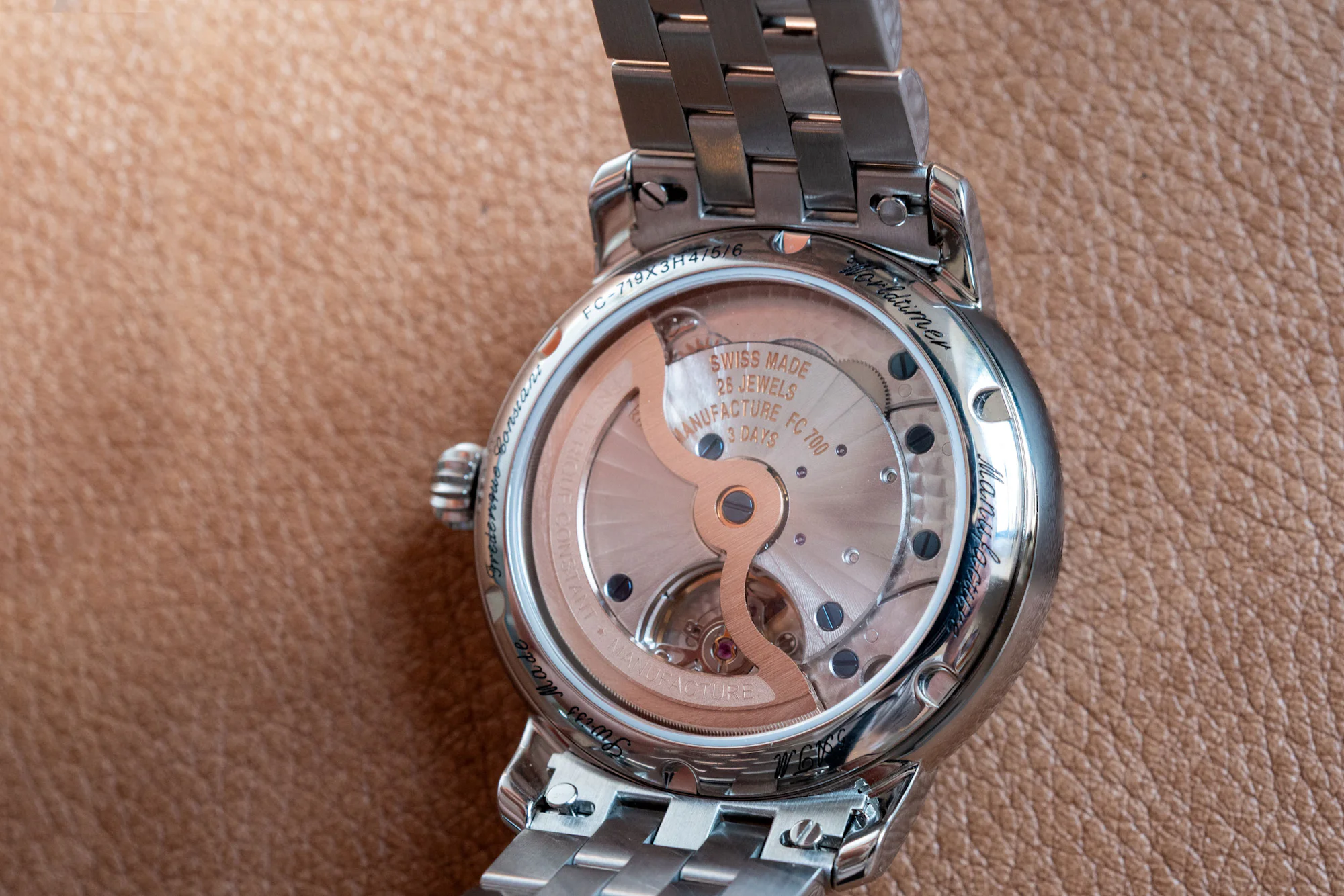
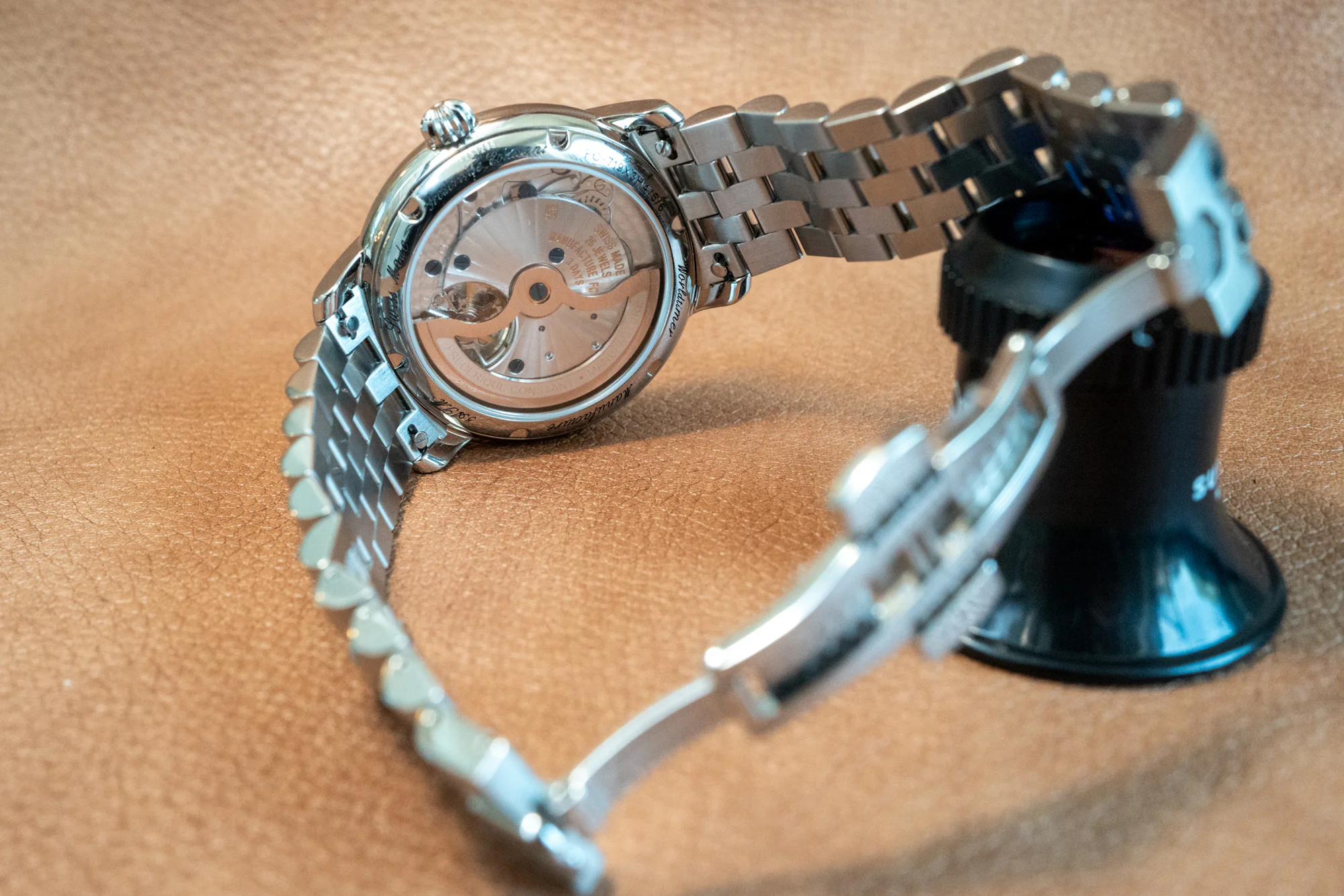
The other update is the new in-house caliber, the FC-719—the brand’s 35th manufacture movement since 1988. Power reserve nearly doubles, from 38 hours to 72, via a longer mainspring barrel and revised alloy, while holding the movement to the same footprint: 30mm diameter, 7.05mm height. The worldtimer module itself has just 24 components and adds only 1.6mm of height—everything (hours, minutes, world time) still sets through the crown alone, with no correctors and no extra case openings to compromise water resistance.
Let’s talk about the map. FC’s treatment here is a flat/globe-graphic relief map with latitude/longitude lines—not a true polar or Mercator projection. It’s closer to Montblanc’s Orbis Terrarum globe-on-dial approach than to Patek’s enamel cartography or the actual-projection debate you get with Christopher Ward. It’s also a continuation, not a reinvention—the relief map in the center has anchored this dial since 2012, and the new generation keeps it front and center rather than using the redesign as a reason to change course. Worth noting: the map is doing more work on this dial than before, now that the date subdial’s gone and it’s the only thing left to carry visual weight.
There’s also a small reversal worth flagging on the city disc. A handful of past special editions—the Full Black and the Globetrotter among them—swapped the full city names for three-letter airport codes around the periphery. This release goes back to spelling cities out in full. Combined with the smaller case, that’s a real test of legibility, and the dial doesn’t feel crowded for it. Both non-limited-edition models are priced at $6,195, and the 88-piece limited-edition gem-set is priced at $9,995.
There’s real competition here, but the field isn’t as crowded as other categories. Closest on price is the Montblanc Star Legacy Orbis Terrarum, running the MB 29.20—a modified Sellita SW350-1 with an in-house worldtimer module comes in at $8,000. The true closest comp mechanically is the Bulgari Octo Roma Worldtimer, released at Geneva Watch Days back in 2021—in-house BVL 257, also set entirely via the crown, launched at $8,350. Between the two, Montblanc is close on price but leans on a modified base caliber; Bulgari matches FC’s from-scratch approach but costs meaningfully more. Yet for the price and the in-house caliber improvements, especially nearly doubling the power reserve, the FC still comes out on top.
If we look at the other end of the market, the Christopher Ward C1 Grand Malvern Worldtimer, running the JJ03—a modified Sellita SW330 base—comes in at $1,485; the dressier C1 Worldglow starts at $1,995 on leather. Baltic’s new Heures du Monde runs the Soprod C125, a modified GMT movement rather than a from-scratch worldtimer caliber, at $1,495 on leather and $1,560 on bracelet. Both are working from a different premise than FC—modifying an existing GMT architecture to bring the price down, rather than building a dedicated worldtimer caliber from scratch. We can round out this tier with Farer’s World Timer line, which James covered the original Roché back in 2019, praising its 39mm case as a genuine outlier in a category that tends to run large. The lineup has since grown into the Roché II, Foxe, and Thorne references, running just under $2k on a Sellita SW331-2 Elaboré—another GMT base repurposed the same way, the hand swapped for a rotating disc set against a city bezel
With little competition in the market at its exact price point, significant design updates to a watch people liked, and an improved in-house movement—I think Frederique Constant has gone under the radar with this release this year. Even the diamond-set variation is coming in under $10k. You can go up or down, depending on what you’re looking for, but I think this is the perfect mix of world-time functionality, complete in a size, design, and movement that justifies the already competitive price.