
Cartier, once dubbed “The King of Jewelers and the Jeweler of Kings” by King Edward VII of England, is regarded by many watch aficionados today as a jeweler first and a watchmaker (primarily, a women’s watchmaker) second. Historically, however, nothing could be further from the truth. Cartier’s horological roots run even deeper than its high-jewelry history, and the French-Swiss luxury powerhouse has contributed some of the most historic and influential watch designs in the world — including the model recognized today as the first purpose-built wristwatch for a man, the Cartier Santos.

[toc-section heading=”1847: The Origins of Cartier”]
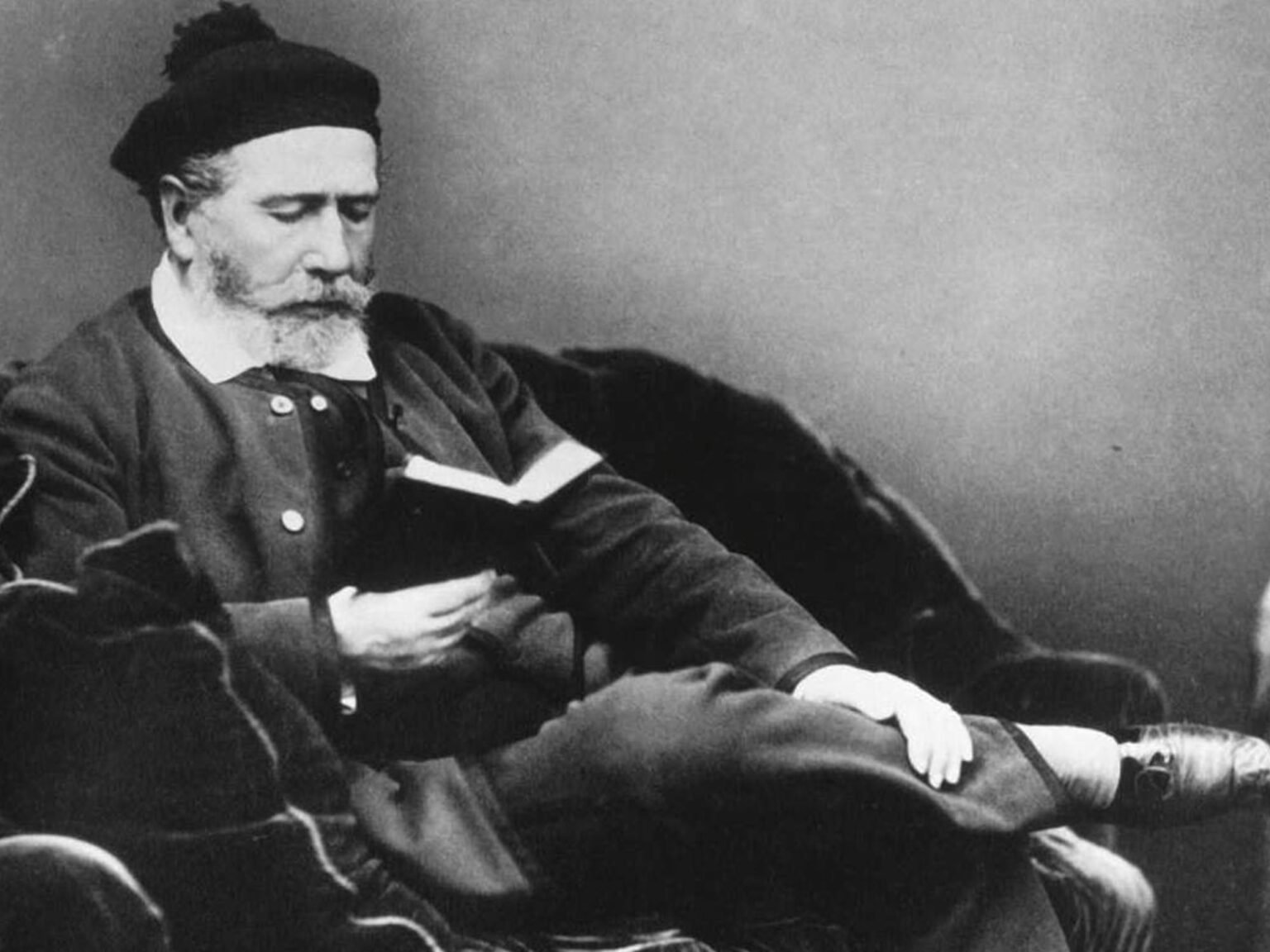
The maison’s eponymous founder, 28-year-old Louis-Francois Cartier (older in the photo above), apprenticed under master watchmaker Adolphe Piccard and founded the company in Piccard’s Parisian workshop in 1847. As Cartier’s watches and jewelry found widespread success, and an esteemed client list that included royalty like Princess Mathilde, cousin of Napoleon III, the firm moved to more luxurious quarters in the Palais-Royal District and eventually to the current world headquarters at 13 Rue de la Paix. Louis-Francois passed the reins of the growing company to his son Alfred in 1874, and Alfred brought in his sons to succeed him toward the end of the 19th Century.

It was this third generation of family ownership, under brothers Pierre, Jacques, and Louis Cartier, that truly catapulted Cartier from the boundaries of France to the world stage. While Jacques was traveling the world to establish outposts and relationships, and Pierre was setting up the world-famous Fifth Avenue shop in New York City, Louis (above), an aesthete who nurtured a love of Islamic and Far Eastern Art, became the primary creative force behind many of Cartier’s most iconic watches, and the very first of those watches aimed at a male audience emerged from Louis’s friendship with another icon of Paris high society in the early 20th Century, Alberto Santos-Dumont.
[toc-section heading=”1904: The Original Santos Wristwatch”]

Santos-Dumont (above) was a Brazilian-born aviation pioneer and social bon vivant, known for flying his steerable balloons over the rooftops of Paris. In 1904, Santos-Dumont and Louis Cartier had a conversation that would change the course of watchmaking history. The Brazilian lamented to Louis about the difficulty of keeping both of his hands on the controls of his aircraft while also checking the time on his pocket watch. Keeping track of the time was crucial in the early and very competitive days of aviation, which were all about setting and breaking time and speed records, but wearing a watch on one’s wrist, a more practical solution for an aviator, was still considered feminine by gentlemen of the era.

The wrist-borne timekeeper that Cartier made for his friend in that pivotal year addressed Santos-Dumont’s concerns while also offering an avant-garde, stylish look that suited the aviator’s alpha-male reputation. Basing its design on a square-cased pocket watch that he’d previously made, and equipping it with a caliber from future Jaeger-LeCoultre co-founder Edmond Jaeger, Louis mounted the watch on a leather strap and added elements inspired by the Art Deco style popular at the time, as well as subtle distinctions that defined it as Parisian, like the exposed screws of the rounded-square bezel that evoke the rivets of the Eiffel Tower, and the radiating Roman hour numerals that legend has it were inspired by a street map of Paris.
The watch’s association with Santos-Dumont’s dashing, daredevil image helped it to catch on with the gentlemen of Paris and eventually throughout the world. Cartier finally offered commercialized versions to the public in 1911, in various precious metals, at a modest 35mm x 25mm size. Its distinctive Art Deco styling would fall in and out of fashion over the ensuing decades — particularly during the World War II years, when simpler, round-cases watches were back in vogue — but the Santos has been a presence on the watch market ever since.
[toc-section heading=”1978: Santos de Cartier: Sport-Luxury Pioneer”]

Image: 1978 Cartier Santos via 25 Dials
By the late 1970s, a new category of timepiece was on the rise, heralded by pioneers like the Audemars Piguet Royal Oak (1972) and Patek Philippe Nautilus (1976) — the “sport-luxury” watch, identified by bold, unconventional design centered around an organic integration between case and bracelet. Cartier’s Santos, which predated both of them by more than half a century — and which was arguably just as forward-looking for its era — took inspiration from those watches for a new interpretation in 1978, renamed the Santos de Cartier. This version replaced the traditional leather strap of its predecessors with an integrated bracelet, and both the case and bracelet were made in steel rather than the precious metal that Cartier had almost exclusively used for its watches.

Photo: Sotheby’s
With the Quartz Crisis in full swing during the 1980s, Cartier introduced another iteration of the Santos, the Santos Galbée, which offered a more softly rounded case shape, with curvier lugs, and which (for the most part) contained quartz movements. Cartier produced the Santos Galbée models into the 2000s, even as the demand for mechanical (and bigger) luxury watches was revving up, and even responded to these trends with the Santos Galbée XL models in 2005, measuring 32mm x 45mm and housing an automatic ETA 049 movement.
[toc-section heading=”1998: Santos-Dumont, the Elegant Alternative”]

Photo: Bonhams
Starting in the late 1990s, Cartier started offering a version of the Santos that stepped back from the sportier aesthetic that the model had acquired and embraced a dressier character. Appropriately named the Santos-Dumont, these iterations of the world’s first men’s wristwatch are understated in size — initially, just 24mm wide in the men’s models and 20mm wide in the ladies’. Today, the Santos-Dumont family spans three sizes: Small (38mm x 27.5mm, 7.3mm thick, almost always with quartz movements), Large (43.5mm x 31.4mm, 7.3mm thick, usually quartz, with occasional mechanical options), and Extra-Large (46.6mm x 33.9mm, 7.5mm thick, always with automatic mechanical calibers, primarily the Cartier 430 MC). The wrist presence of the Santos-Dumont is overall more understated than that of the Santos, and the dial is more open, with the Roman numerals and railroad minute track sitting nearer to the outer edge of the dial. Significantly, Cartier trumpets the Santos-Dumont’s more elegant appeal by offering it only on leather or fabric straps, foregoing the integrated bracelet of the Santos. Both collections feature the emblematic softly squared bezel and exposed screws but the Santos-Dumont eschews the shoulder-like crown guards that add heft to the larger Santos de Cartier pieces.
[toc-section heading=”Santos 100: Going Big for the 100th Anniversary”]

Photo: Sotheby’s
The Santos collection reached its 100th anniversary in 2004, and as per the demands of the watch-enthusiast market at that time, Cartier celebrated the centennial with the biggest, sportiest version of the historic timepiece to date. The Santos 100 “Large” models spanned an immense 51mm tall and 41mm wide while still keeping the profile reasonable, at 10.3mm thick; the “Medium” pieces in the collection were 36mm x 36mm square. Both contained automatic ETA calibers, and Cartier expanded upon the original steel-cased versions with avant-garde materials and bimaterial combos, incorporating black PVD, titanium, and 18k yellow gold in some editions. Cartier followed up the three-hand Santos 100 timepieces with Chronographs (in steel and titanium) in 2005, and Skeleton models in 2009; these Santos watches saw the debut of Cartier’s manual-wound skeletonized Caliber 9611, cleverly designed so that the bridges formed the maison’s famous radial Roman numeral hour markers. The Santos 100 series was produced until 2017, clearing the stage for the most recent line-wide revamp of the Santos one year later.
[toc-section heading=”2018: The Santos 21st Century Revamp”]

In 2018, Cartier launched 13 new models in the Santos de Cartier family, adopting the ergonomically curved edges and lugs of the Santos Galbée as well as the integrated-bracelet design of the original 1978 editions, and trimming the stately dimensions of the Santos 100 down to more midrange size options that had started returning to vogue: 47.5mm x 39.8mm for the “Large” models, 41.9mm x 35mm for the “Medium.” The bezels of these newer models, still sporting the visible screws that had been a hallmark of the Santos for more than a century, were no longer a rounded square but had been subtly re-engineered so that the top and bottom flowed naturally into the first bracelet link, upping the ante on the increasingly popular “integrated” look. The initial launch consisted mostly of automatic, time-only models in various material options, powered by Cartier’s in-house Caliber 1847 MC (the initials are for “Manufacture Cartier”), along with the newest version of the Santos Skeleton (using the same Caliber 9611 as the Santos 100 models). Also establishing the new Santos models as clearly modern timepieces was their use of Cartier’s user-friendly SmartLink and QuickSwitch systems, which allow the watch’s owner to remove bracelet links and swap out straps and bracelets without using any special tools or visiting a jeweler.

The success of the 2018 Santos relaunch carried over into the following year’s releases. The newest generation of the Santos Chronograph debuted in 2019, offered in all rose gold, two-tone yellow gold and steel, and steel and black DLC. (The inspiration for a chronograph in the collection, Cartier touted at the time, are the devices that Santos-Dumont would have used to time his flight speed records in the 1900s.) The cases are Large (35.1 mm x 45.9 mm) or Extra Large (39.8 mm x 47.5 mm), with an ergonomic shape that incorporates a single start-stop chronograph pusher at 9 o’clock and a zero-reset button directly integrated into the crown. The dial’s familiar Roman hour numerals and sword hands are joined by three subdials at 3, 6 , and 9 o’clock and a date window at 6 o’clock.

Cartier unveiled the newest version of the Santos Skeleton in 2023, which pays the most direct visual tribute yet to the model’s aviation origins. Distinguishing the watch from previous Skeleton models is the intricately sculpted micro-rotor that winds the new Caliber 9629 MC; visible from the front side through the sapphire dial, it is designed to replicate the Demoiselle, an early airplane that Santos-Dumont invented in 1907, flying over a globe.

As difficult as it might be to believe for a watch that is more than 100 years old, Cartier still finds ways to introduce new and intriguing iterations of the core Santos model, one of the most recent and notable being the first all-titanium version of the watch in 2025. Thus far, only available in the “Large” size (47mm x 39.8mm, 9.4mm thick), the model uses titanium for both the case and the now-iconic riveted bracelet, making for a timepiece that is 43 percent lighter than the corresponding model in steel (97 grams vs. 147 grams). Behind the bright white dial, with blued sword hands sweeping over the black-printed indexes and minute track, ticks the automatic Caliber 1847 MC, protected by a closed caseback. The use of sturdy but lightweight titanium is, in one sense, a nod to the watch’s utilitarian origins — lighter is obviously always better when you’re in a flying machine, especially a small one — even though the Santos has long transcended those origins and solidified its status as an OG sport-luxury timepiece.

While it is the Santos models that receive the most enthusiast attention in this era of integrated-bracelet mania, the smaller, more elegant Santos-Dumont line offers some noteworthy horological cred of its own. In 2024, Cartier introduced perhaps the most off-the-wall version of the model yet — the Santos-Dumont Rewind, a limited edition of 200 pieces in platinum with a quirky “reversed” dial layout. A close look at the carnelian red dial, with its applied Roman hour numerals and apple hands, reveals that the hours are arranged counterclockwise: 12 at the top, 11 where the 1 should be, 10 where the 2 should be, and so on. The hands, accordingly, move in the same direction for a quirky (and arguably very confusing) way of reading the time. When the hands are at 10:10, for example, the time on the Santos-Dumont Rewind is actually 2:50. This unconventional display comes courtesy of Cartier’s manually wound Caliber 320 MC, which beats behind a solid caseback with the signature of Alberto Santos-Dumont, engraved in both backwards and forwards script. On the one hand, it’s hard to reconcile such a classically elegant-looking watch with such an impractical feature, but on the other, it’s easy to imagine the watch’s namesake — who, once upon a time, boldly defied convention and eventually changed the course of history by ordering a wristwatch for a man — appreciating the audacity of it.
For more information, visit the brand’s website here.