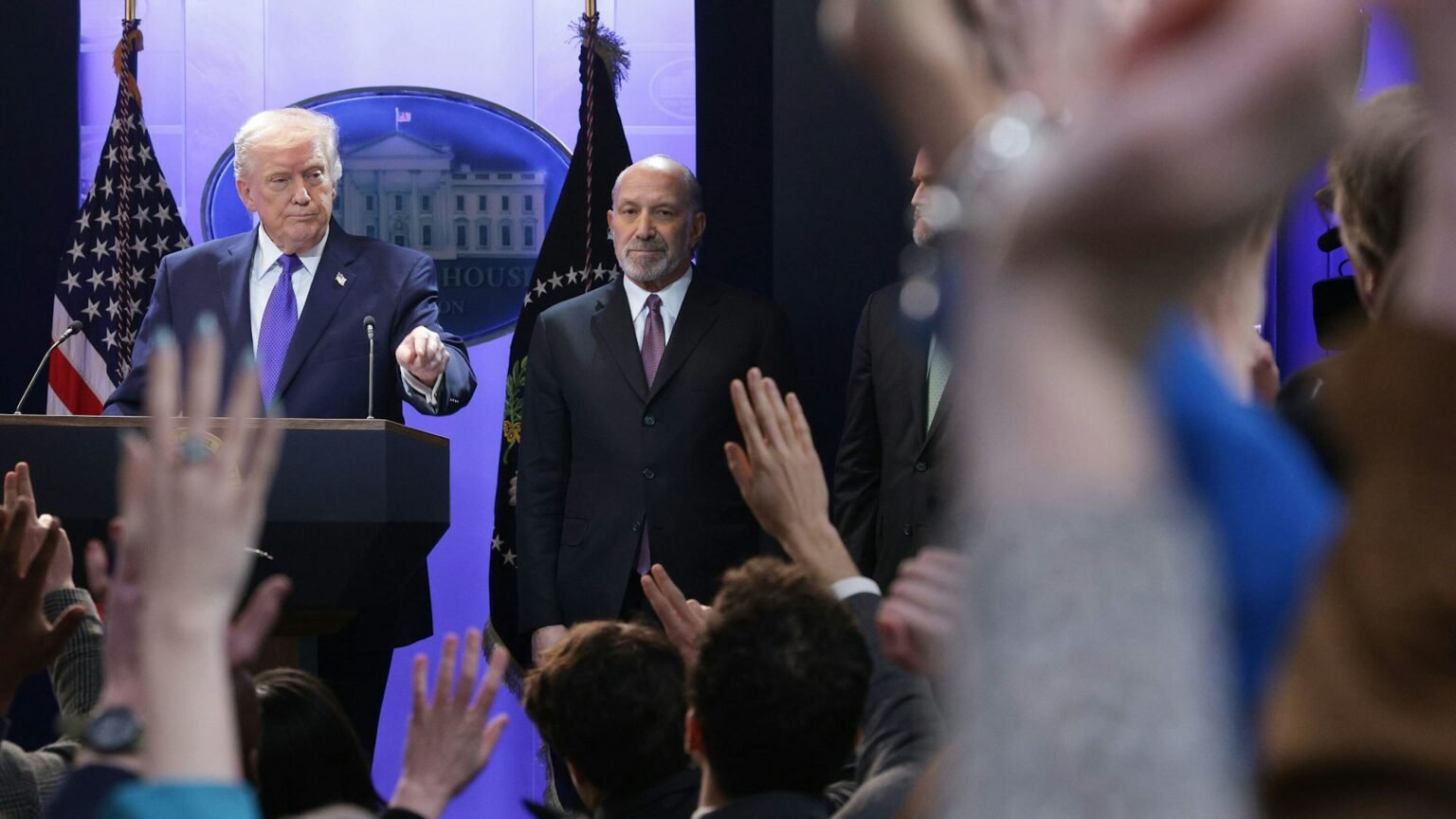


Independent watch retailer Collective Horology LLC filed legal action against President Donald Trump, U.S. Trade Representative Jamieson Greer, and a host of other government officials and departments, alleging the administration’s new tariff duties are “unlawful,” lack congressional approval, and harm American business.
The Ventura, California company, in a lawsuit filed in the United States Court of International Trade on July 24, alleges Trump and his deputies, in imposing tariffs of 10% and 12.5% on goods imported into the U.S. under Section 301 of the Trade Act, exceeded the President’s authority to unilaterally levy such measures. The lawsuit represents the most aggressive response yet by the watch industry that has been financially kneecapped by the levies that have exacerbated an economically challenging environment that includes a strong Swiss franc against the U.S. dollar and record precious metals prices, a key input in luxury watchmaking. Many of the most high-profile watch brands raised prices in response, while retailers have taken a hit on margins.

Collective Horology co-founder and CEO Asher Rapkin. Photo courtesy Collective Horology.
Founded in 2018, Collective sells independent watch brands including Armin Strom, Czapek, Fears, U.S.-based J.N. Shapiro and Ming, among others. The company has paid more than $160,000 in tariff duties under various schemes imposed by the Trump White House and U.S. Trade Representative Greer, says co-founder and Chief Executive Officer Asher Rapkin. Despite a Supreme Court ruling in February that found Trump lacked the authority to levy his initial round of tariffs, the administration has used alternative laws and measures to keep the tariffs in place, and Collective says it has yet to be refunded its costs.
The latest round of tariffs, filed under Section 301 of the Trade Act and effective July 24, alleges the use of forced labor in countries captured under the tariff scheme, including Switzerland, the center of the high horology sector and a country that boasts among the highest wages in Europe. Collective is expecting watch imports valued at about $69,000 in the coming weeks and will be obliged to pay approximately $8,280 in tariffs, according to the lawsuit, which was filed with the backing and support of the Liberty Justice Center, a U.S. non-profit litigator advocating for Constitutional freedoms including economic liberty and free speech. Liberty Justice Center led the legal fight to the Supreme Court of the United States, which ruled Trump’s initial round of tariffs illegal.
“For a small American retailer importing highly specialized products with limited capital reserves and without the scale or negotiating leverage of a multinational luxury conglomerate, an additional duty of 10 or 12.5 percent has an immediate and substantial impact,” the plaintiffs, which also include New York-based spice importer Burlap & Barrel, said.

Watchmakers at Armin Strom in Biel/Bienne, Switzerland, a brand retailed by Collective Horology, which is suing Donald Trump over import tariffs.
Rapkin, the Collective CEO and co-founder, says he estimates that the company has lost use of or access to “hundreds of thousands of dollars” because of the import duties. “We were able to weather that, but that’s not the kind of thing I want to be lucky about. So I am, on the one hand, appreciative that we run our business in a way that allows us to survive and grow, but I should not have to fight this battle,” Rapkin says in an interview.
Tariffs are tools in government trade policy that can be used to offset or mitigate advantages that other countries have in manufacturing. For example, tariffs applied against auto imports can help local car and truck makers compete with offshore manufacturers with lower labor costs or government subsidies. However, the watchmaking industry is unique in that movements and components are generally made at scale in just a few countries and regions, including Japan, China and Switzerland. The U.S. watch industry, while once a world leader more than a century ago, has no current capacity for production at scale.

Rapkin (left) and Collective Horology co-founder and Creative Director Gabe Reilly (right).
Photo courtesy Collective
“This is not a thing in my mind that I should be using my time and effort and energy on. I would far prefer to be talking to you about the watchmakers that I believe in and the art form that I’ve invested my life in, not the finer points of trade law,” Rapkin adds.
The case is expected to proceed in the U.S. Court of International Trade over the coming months as other legal challenges to the tariffs also progress. The Trump administration has yet to formally respond to the legal challenge. None of the allegations made by the plaintiffs have been proved in court.