

Welcome to Friday, Baller. We’re in busy times, what with the weather changing, and, at least in the States, we’re enjoying an embarrassment of riches movie-wise, with a new Sorkin movie just having opened and two incredible new movies—The Only Living Pickpocket In New York and You Can See Everything premiering next Friday. I, for one, am already stocking up on popcorn.
Scorekeeping last week’s picks, the Lucien Piccard Telephone and the Mappin and Webb watches remain available, while the Omega Admiralty and JLC Master Mariner have both sold.
Strays
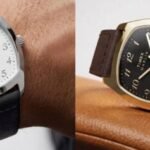
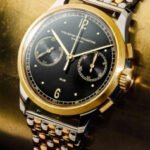
I don’t know if “understated bling” is a thing or not, but if such a category exists, it is absolutely where this Piaget Protocole in white gold from Rare Birds belongs. If Seiko’s announcement of its newest panda chronograph whetted your appetite, here’s an awfully great vintage Wittnauer two-register chronograph on auction from Loupe This, which, no, isn’t as cute and lacks ears for pushers, but is still a great watch. Should you, after reading more down below about Abercrombie & Fitch watches, find yourself in the market for a vintage alarm watch from the brand, look no further.
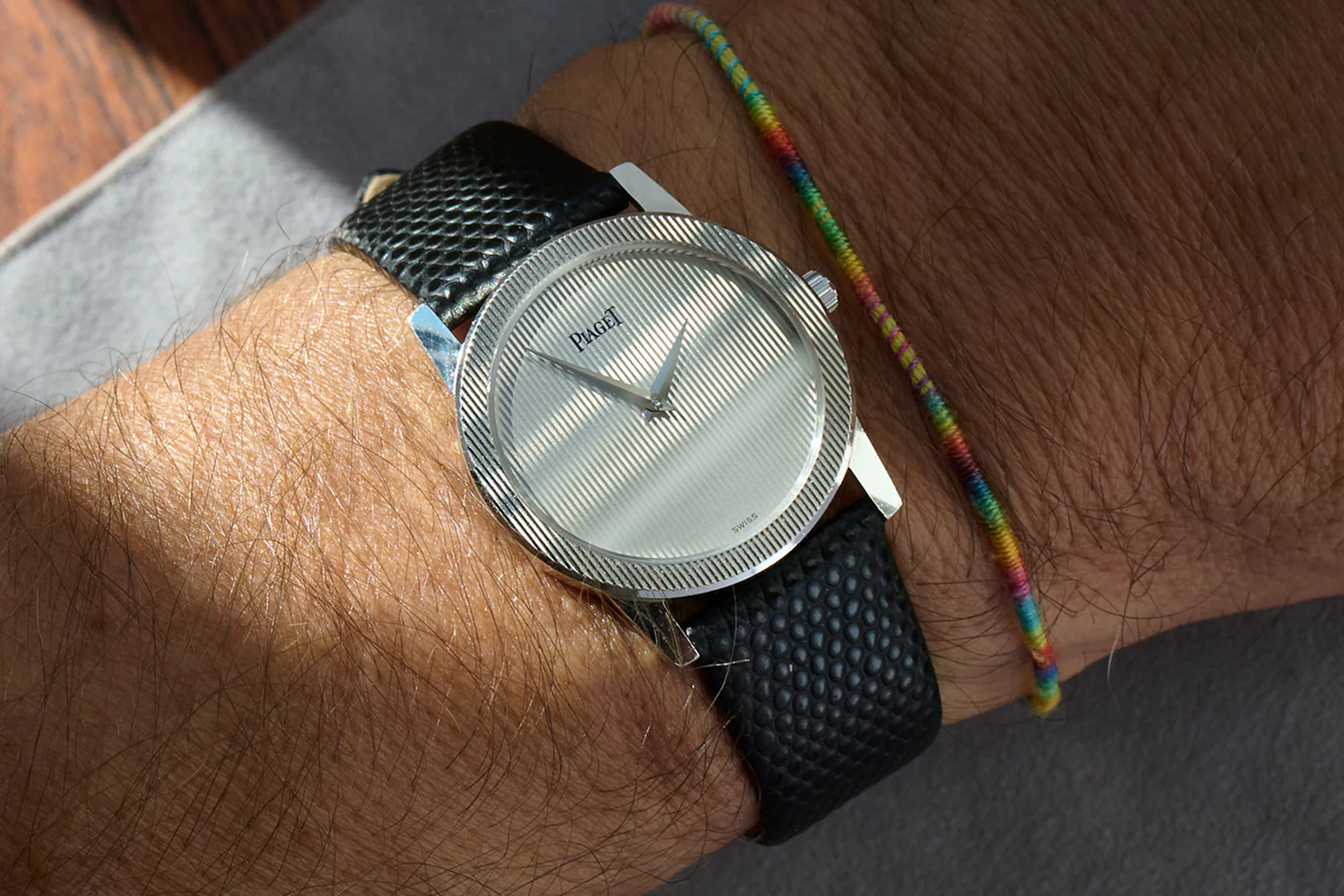
Photo courtesy of Rarebirds.
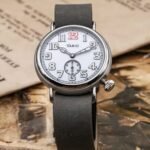
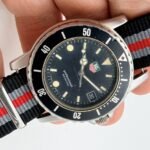
Vintage lesser-known great-looking diver? Absolutely. Interesting vintage Rolex Prince? Why not. On the one hand, I’ve never seen any LeCoultre chronograph configured like this one. On the other hand: everything appears correct—signed dial and movement, appropriate wear, etc.—so who knows. Finally, for those who want to take a truly big swing, here’s a Patek 3941 perpetual calendar, an extremely uncommon sibling to the 3940, the difference between them being that the 41 has a sapphire caseback. Bidding starts at €190,000, and the high estimate is half a million euros, so start saving for this one several decades ago.
Orvis Solunagraph
Jones and Horan’s October auction is stuffed to the gills with bangers, from Edward Murrow’s own personal Bulova chronograph to a great-looking Rolex 6234 to an are-you-kidding-me-look-at-those-lugs Patek 2466. Also worth a look is this great vintage Harwood, an 18k Omega Constellation with a bracelet to boot, and a LeJour ZRC, just in case the ZRC from two weeks back got you amped about old geometric divers.
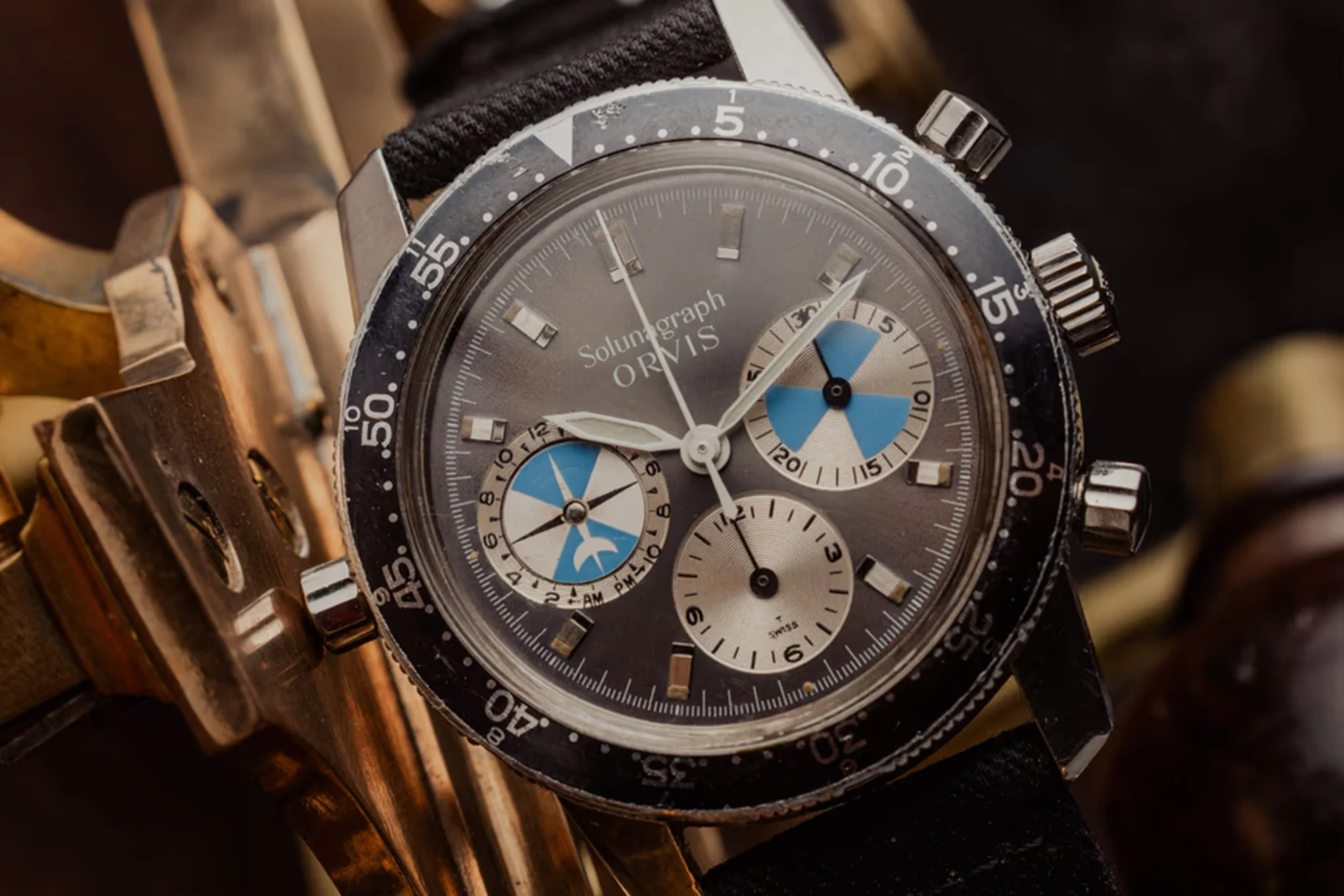
Photo courtesy of Jones & Horan.
However, let’s dig into this Orvis/Heuer Solunagraph, one of those watches it’s impossible not to develop a pretty intense lifelong crush on (apologies if you’ve just now been caught in the thing’s snare). The history of Heuer’s development of a watch capable of tracking the tides is fascinating, and if you’ve not read the whole thing in-depth, here’s the inimitable Jeff Stein’s excellent coverage of the complication’s history.
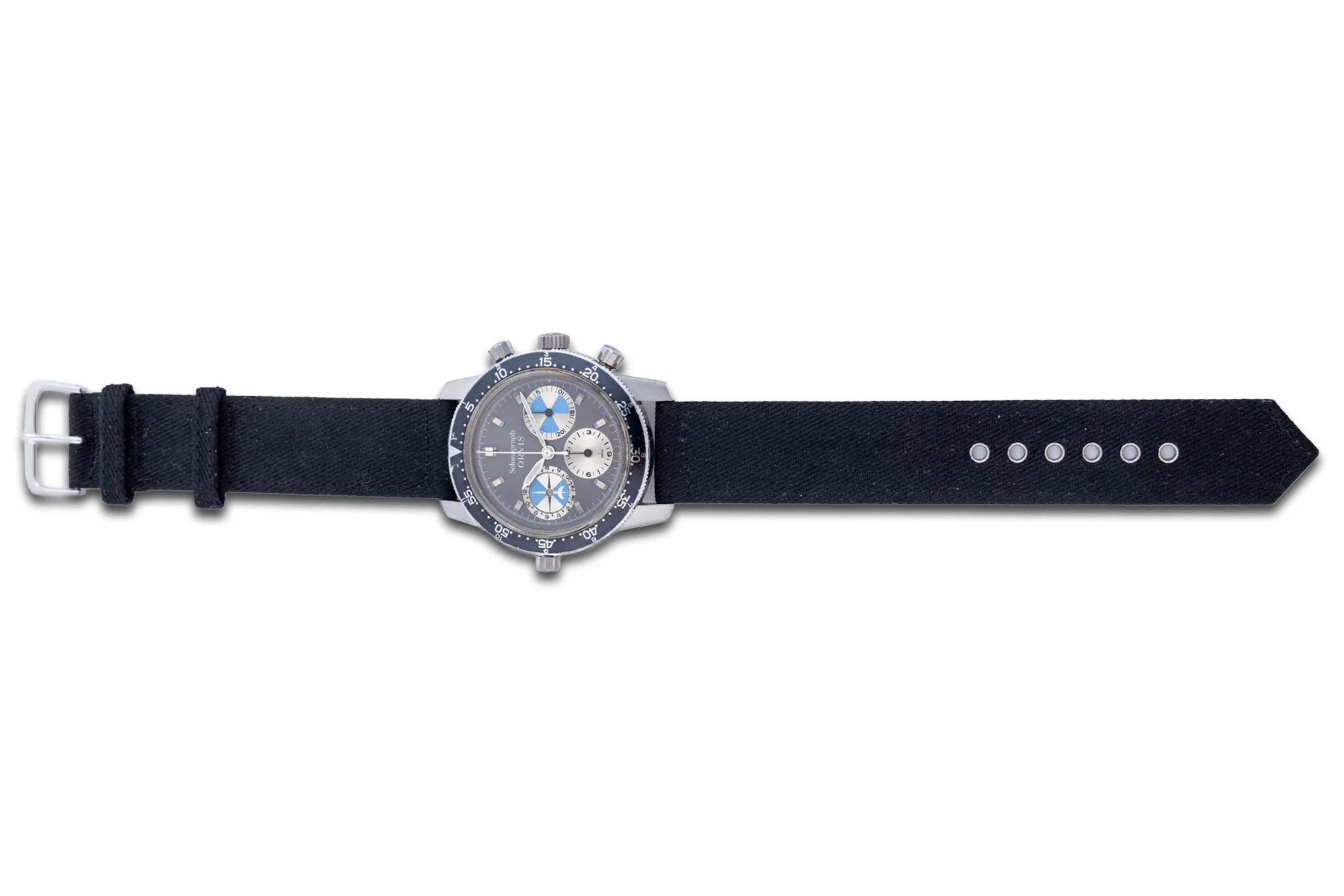
Photo courtesy of Jones & Horan.
Heuer introduced this specific watch—a three-register chronograph with the running seconds replaced by a tide tracker—around 1949, and for the next quarter century various iterations were available, signed Heuer, Abercrombie & Fitch, and, eventually, Orvis (here’s the equally inimitable Eric Wind covering specific Abercrombie & Fitch references). To preempt your question, no, Heuer did not pick just one name and stick with it across brands: the same watch was purchasable as the Mareograph, the Seafarer, and the Solunagraph. Also, no, these watches weren’t, despite their beauty, runaway bestsellers, as the demographic in need of such complication wasn’t exactly overwhelming.
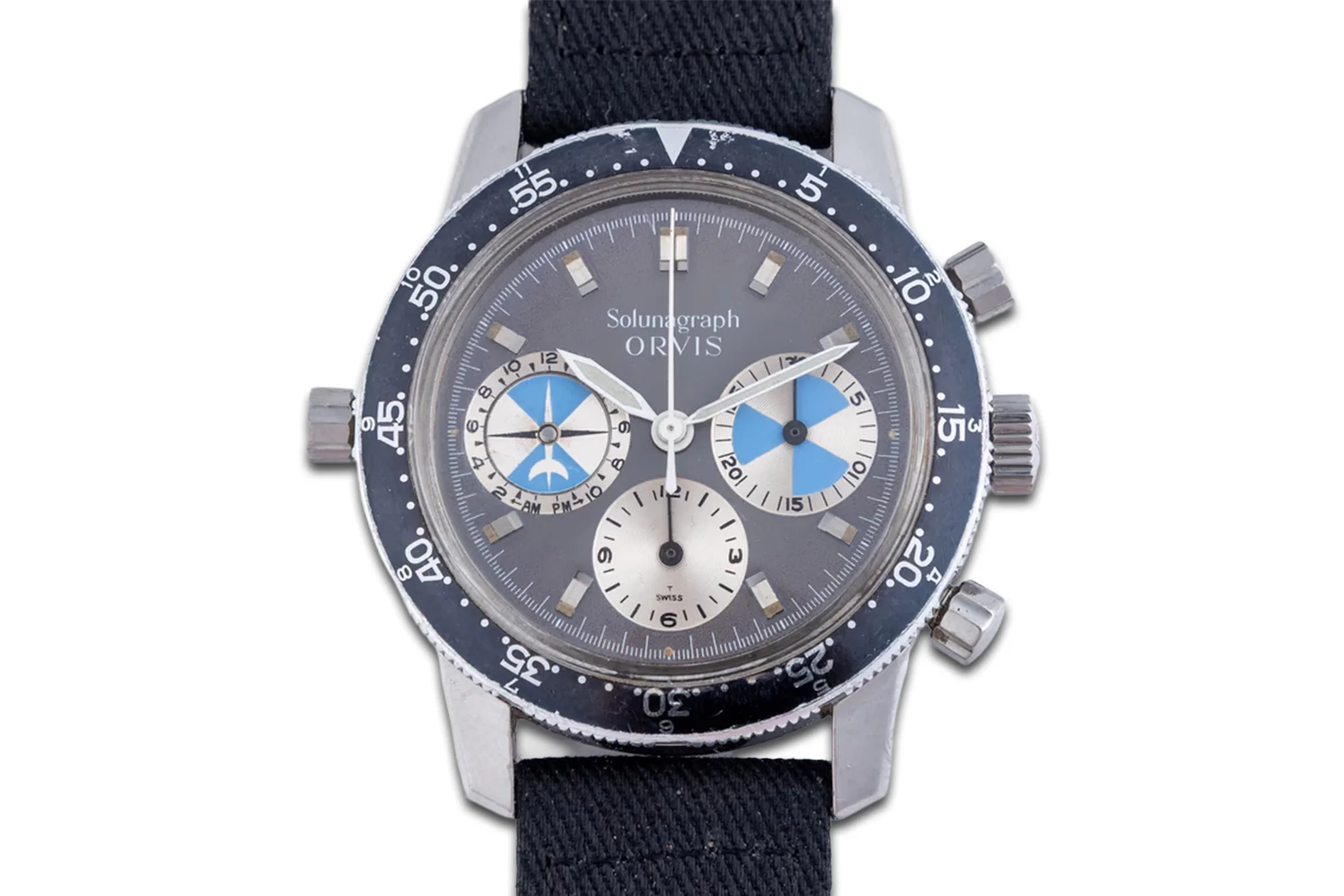
Photo courtesy of Jones & Horan.
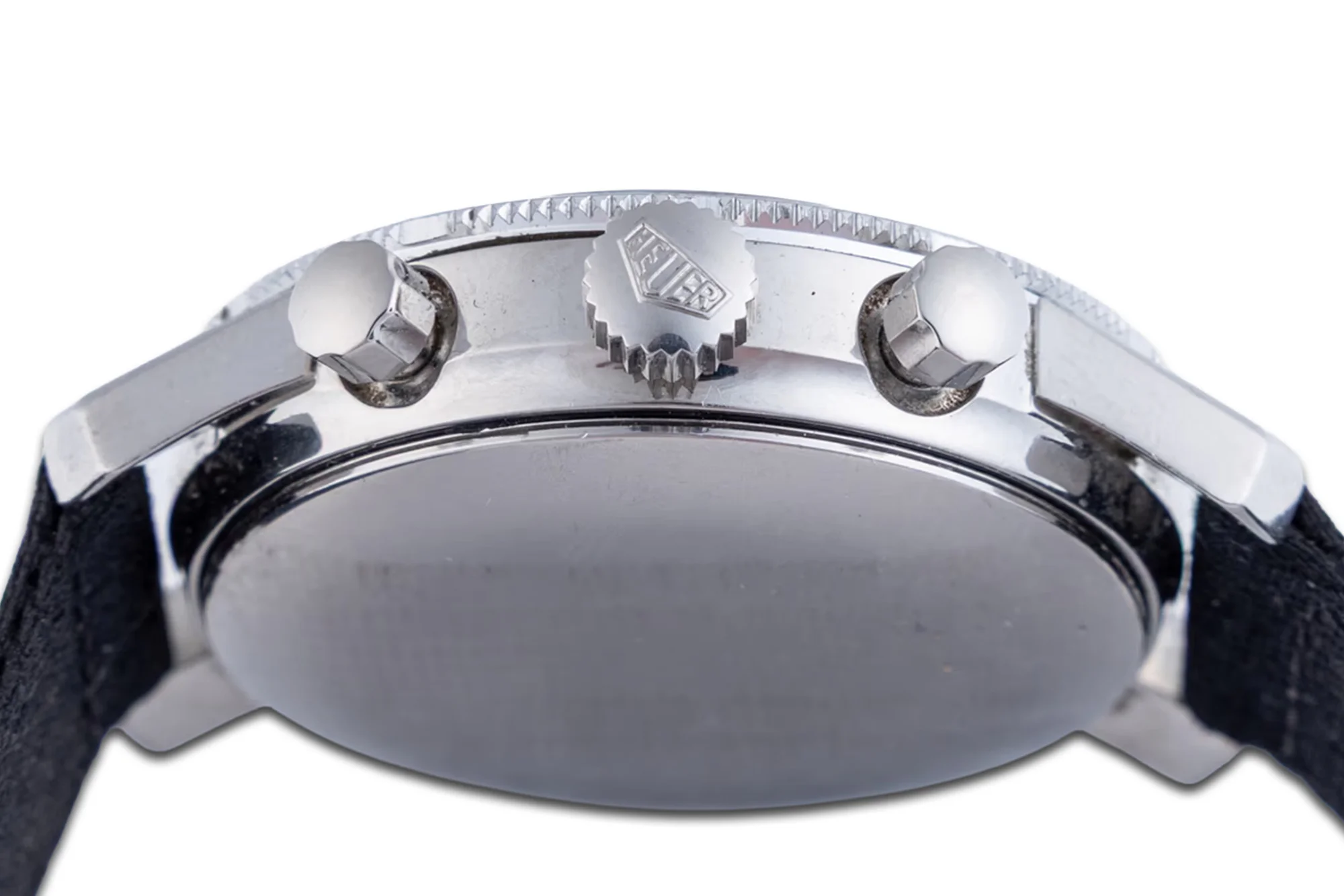
Photo courtesy of Jones & Horan.
All of which feels like so much throat-clearing given the watch itself. If you know your Heuers, you can recognize that’s a 2446C case, a 40mm beast that, despite a more brutalist profile than the lithe Carrera, still wears very well. As noted in the listing, the watch has been polished at some point, but not grotesquely; plus, the real catch here is the dial and hands, which are original and look excellent. Couple that with the fact that the pushers are fluted, and you’ve got a watch with a foot in the world of the classic manual-winding Heuer chronographs from the early 60s, and one in the forward-looking watches from the late 60s/early 70s, when Heuer (along with Seiko and Zenith) released one of the first automatic chronographs.
Of the various iterations of Heuer tide watches, the Orvis 2446C is (according to Crosthwaite’s and Gavin’s invaluable Heuer Price Guide) the least valuable, for whatever that particular data point is worth. Jones and Horan’s October auction runs most of the month, so you’ve got time to divest yourself of some other pieces to free up funds for this beauty. With an estimate of $8,000-$12,000, it’s been bid to $4,300 at the time of writing and auctions on the 22nd.
Omega DeVille Emerald
There’s enough info out there about Andrew Grima that it doesn’t seem critical to go too deep into the man’s legacy and work here. For our purposes, let’s note that according to some he was, as the coffee table book about him claims, “the father of modern jewelry.”
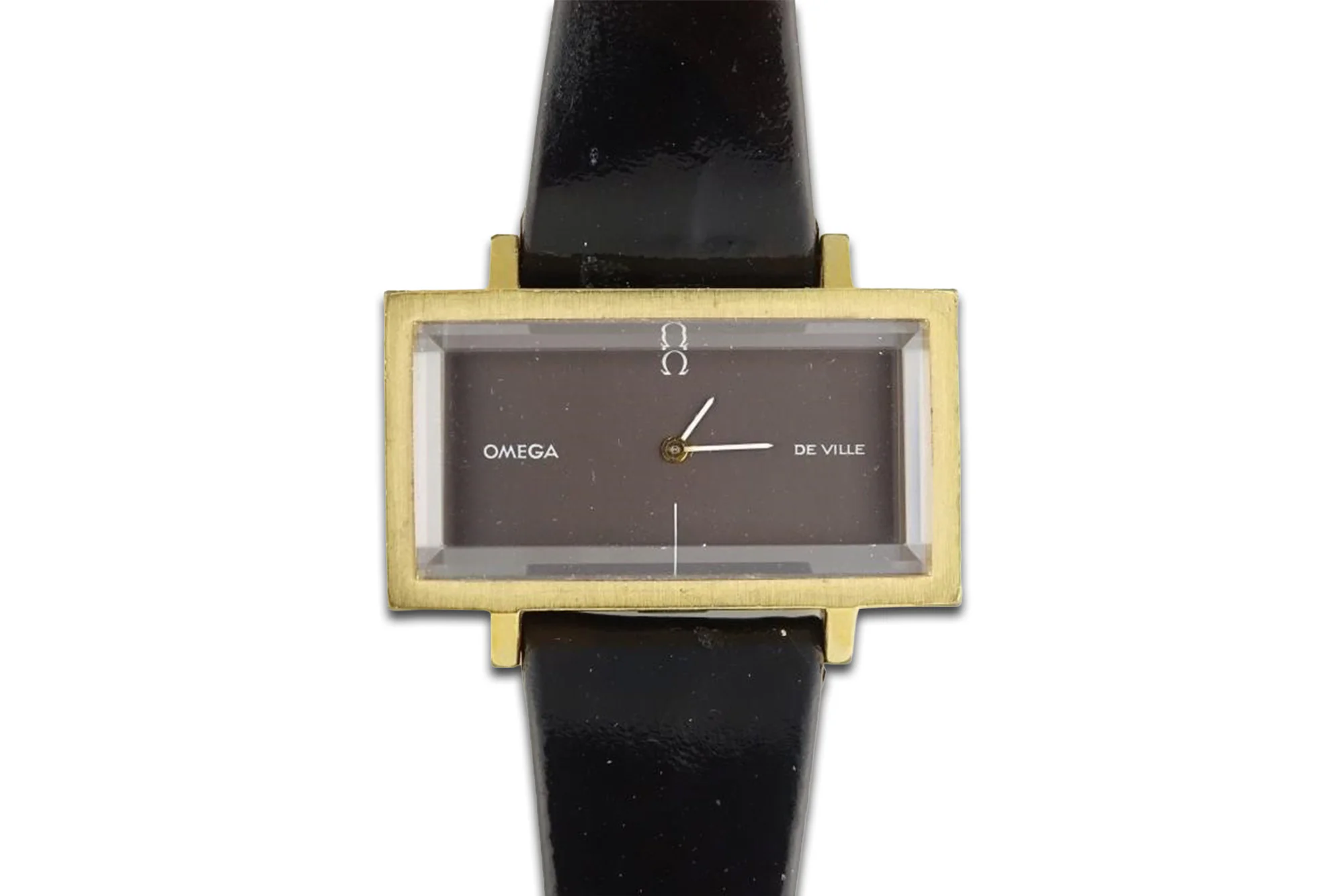
Photo courtesy of HiBid.
More importantly, in 1969, he was invited by Omega to design a collection, a collaboration he agreed to (with extraordinary stipulations, including that neither his nor Omega’s name could be on the dial of the watch). The About Time collection of 55 watches, however, did well, despite (or because of) Grima’s stipulations, and the whole thing feels like more than a bit of a fluke given that, prior to the Omega collection, Grima’d designed no watches, and in fact had said: “If you need to know the time, ask your chauffeur.”
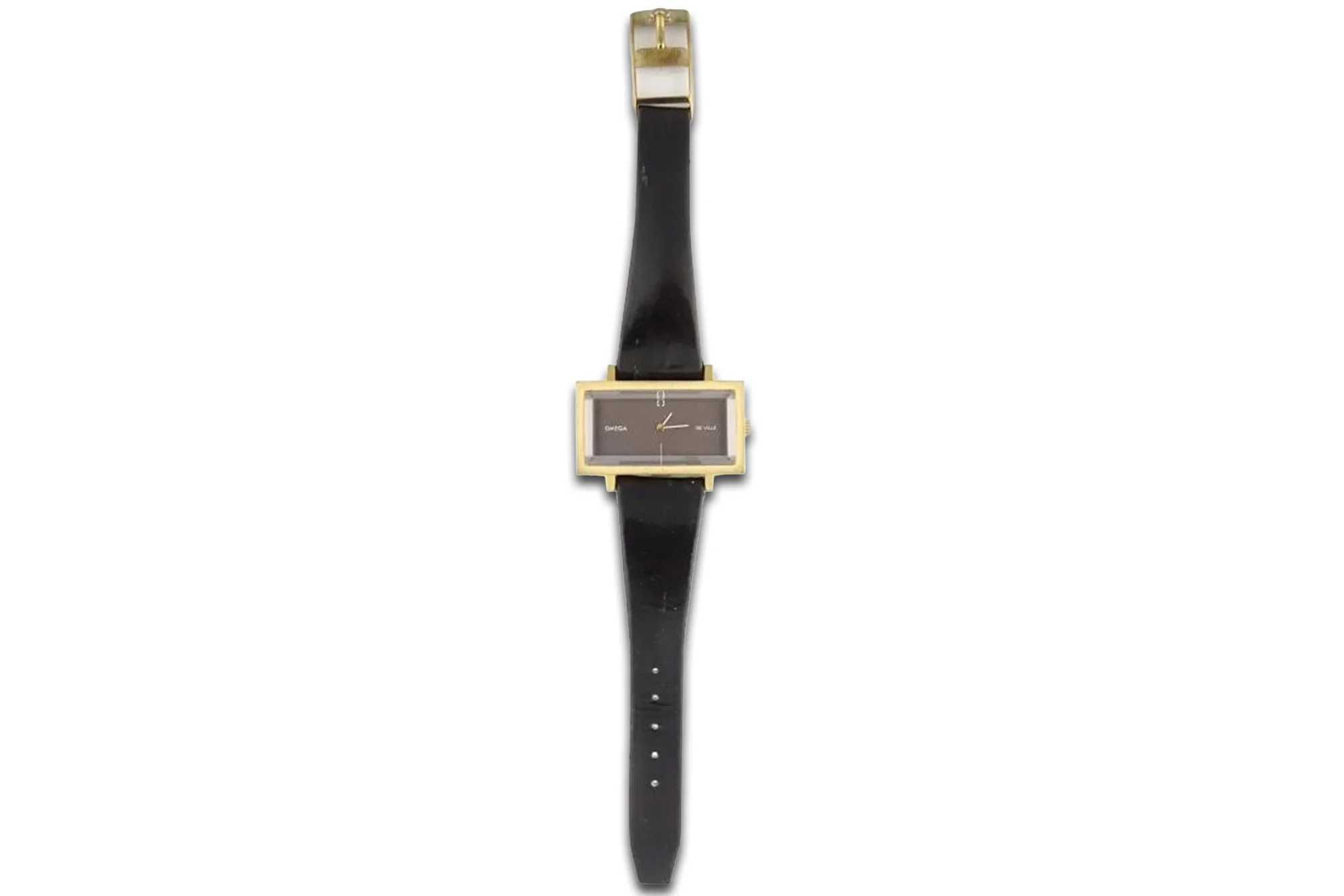
Photo courtesy of HiBid.
Later, Omega returned to the well for the Time In Style series, developed after the success of the About Time collection, drawing inspiration from Grima’s original designs. This time, however, Omega’s name was on the dials, and the watches were full production pieces.
This particular Omega DeVille Emerald—so named because of the faceted crystal—is from the Time In Style series, and while the watch isn’t new old stock, it sure seems close (zoom in on the 6th picture to look closely at the original Omega strap and the lack of much wear). Coming with its original box, strap, and buckle, the watch presents very well, with a markless brown dial, a gold-plated case showing no wear-through, and a caseback with the brushing still intact. I can’t imagine what this wears like, at (according to the description) 38mm wide and only 21mm long.
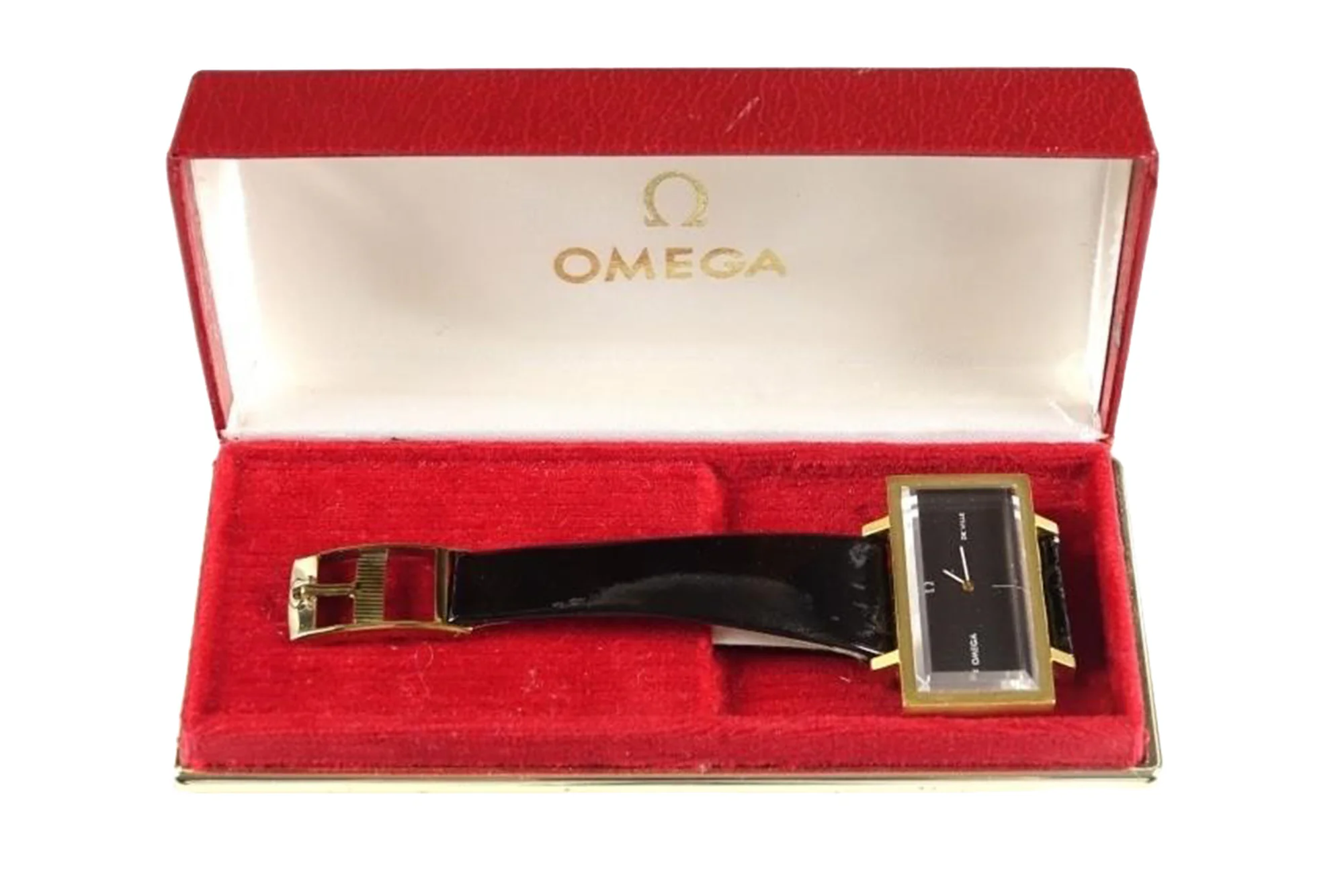
Photo courtesy of HiBid.
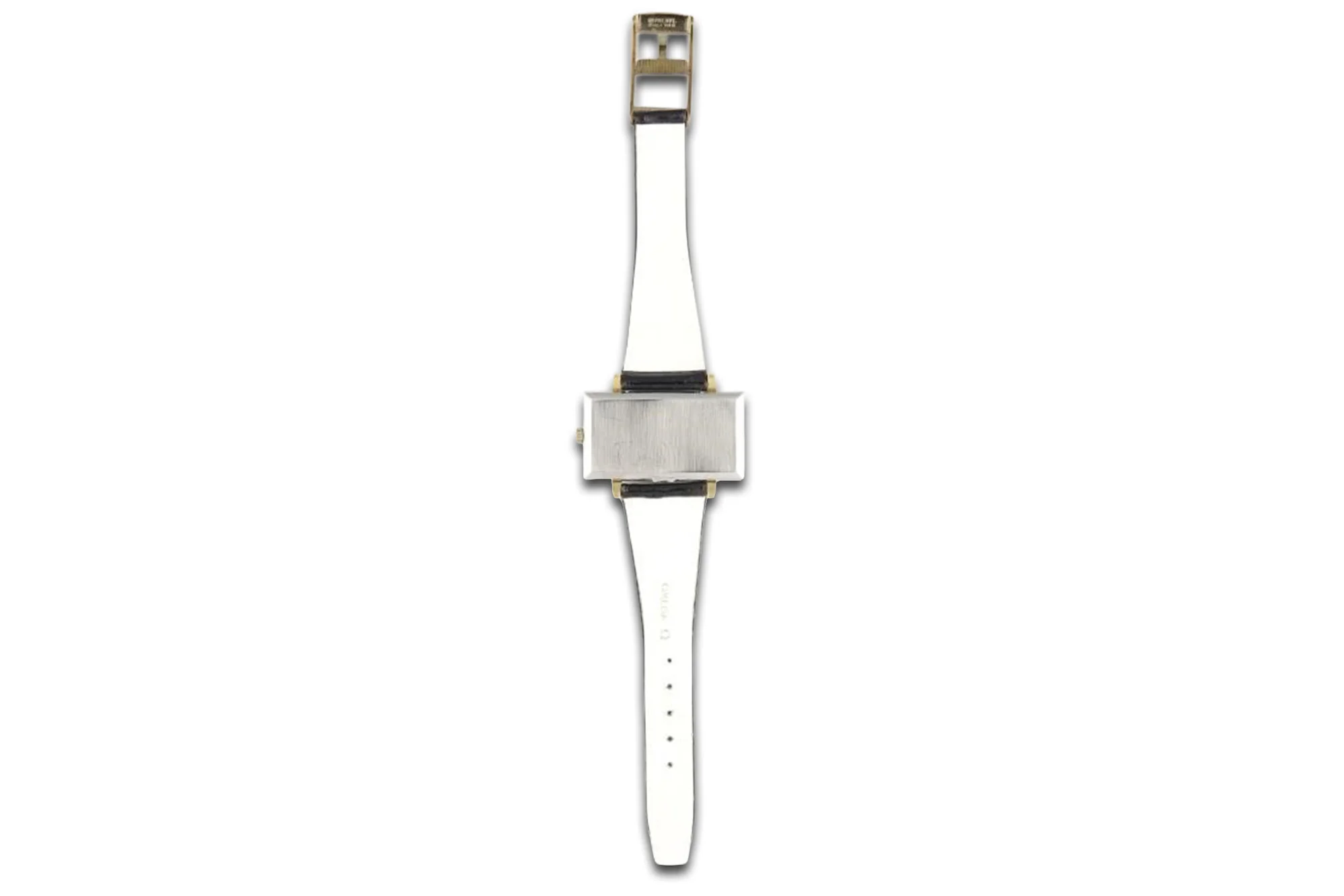
Photo courtesy of HiBid.
All of which is to say that if you’re into Grima Omegas, this is a great one to pursue. Watches like what Grima made for Omega seem oddly relevant, not just as collectors’ items, but in terms of where (some) contemporary watches seem to be pointing. While the Toledano and Chan Oshinobi is almost diametrically opposed to Grima’s work—the former’s subtlety inverted by the look-at-me blinginess of the latter—the Grima Omegas were fundamentally about trying to bridge the gap between jewelry and watches. Whether we’re in a similar place remains to be seen, but it’s hard not to sense certain echoes.
This Emerald will be auctioned on the 15th, and the watch currently has no bids with an estimate of $500-$1,000.
LIP Mach 2000 Dark Master
It’s 1973, and you’re LIP, a good French company that has, like many of its peers, fallen on hard times due to the rise of quartz watches. Like plenty of other companies (say, Omega), you wonder if one possible avenue out of your troubles is to bring in a famous designer for a bit of a refresh or ‘synergy.’ Again, you’re French, and so you reach out to one of the most famous French designers then working, Roger Tallon.

Photo courtesy of Fellows.
Tallon turns around and designs the Mach 2000 line; the watches that comprise the line are almost instantly recognizable for how they balance an extremely buttoned-down utilitarian aesthetic with pops of almost childish colors. Out of focus and glanced at quickly, Mach 2000 watches appear like adult watches left at a kid’s table and, subsequently, appended with bits of crayon stuck on like antennae.

Photo courtesy of Fellows.
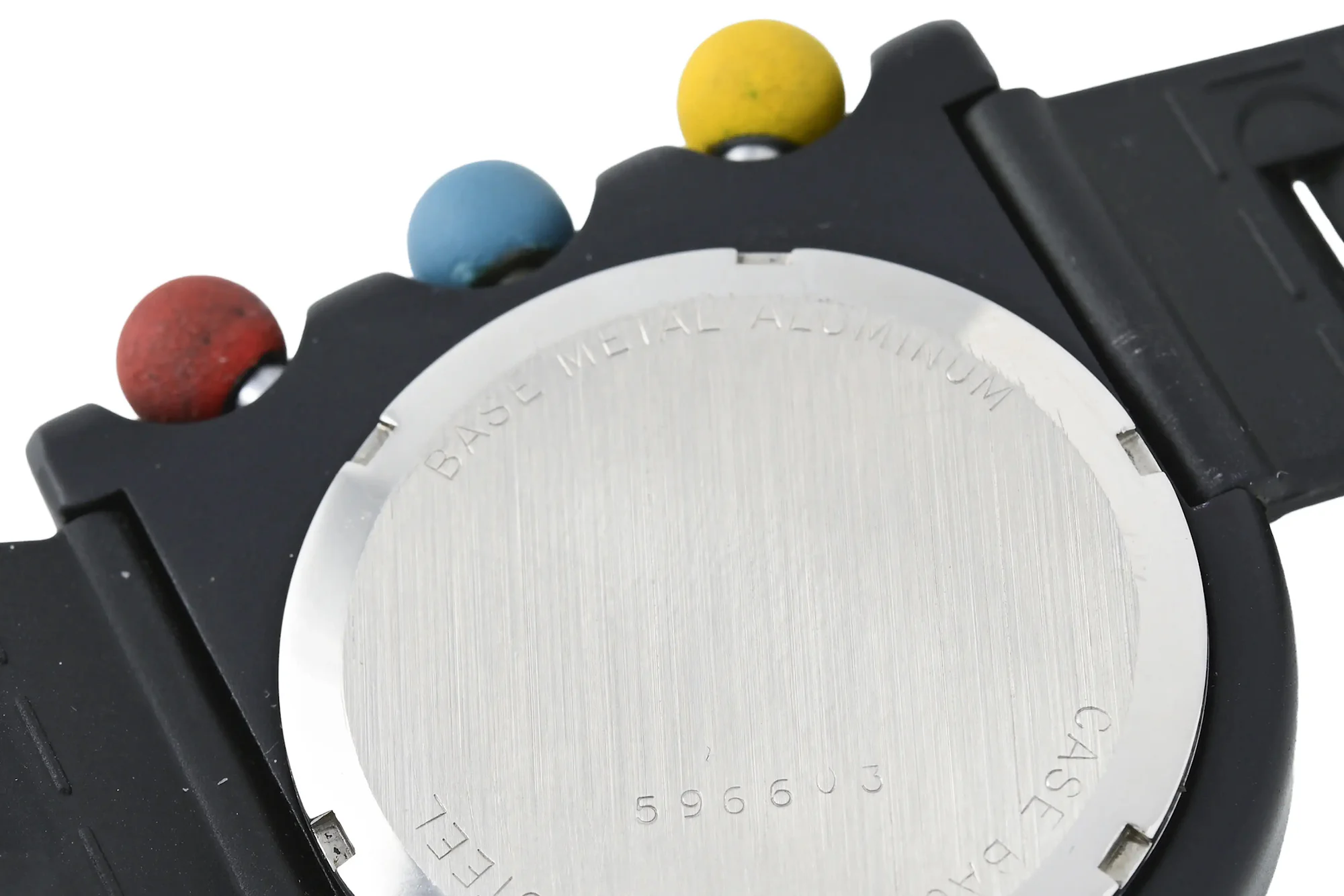
Photo courtesy of Fellows.
The Mach 2000, cool as it was, didn’t do enough to save LIP (a company with a fascinating labor history which coincided with the release of the Mach 2000 line), but it remains a phenomenal design, and one that the resurrected LIP has also brought back. However, this particular one, the “Dark Master,” is the OG, a manual-wind Valjoux 7734-powered chronograph that screams 1970s. Obviously, the big risk on these models is wear-through on the case, but this one looks fine. Past that, it comes on its original signed rubber strap; the dial and hands seem immaculate, and the colorful pushers and crown guarantee this thing’ll never blend too much in.
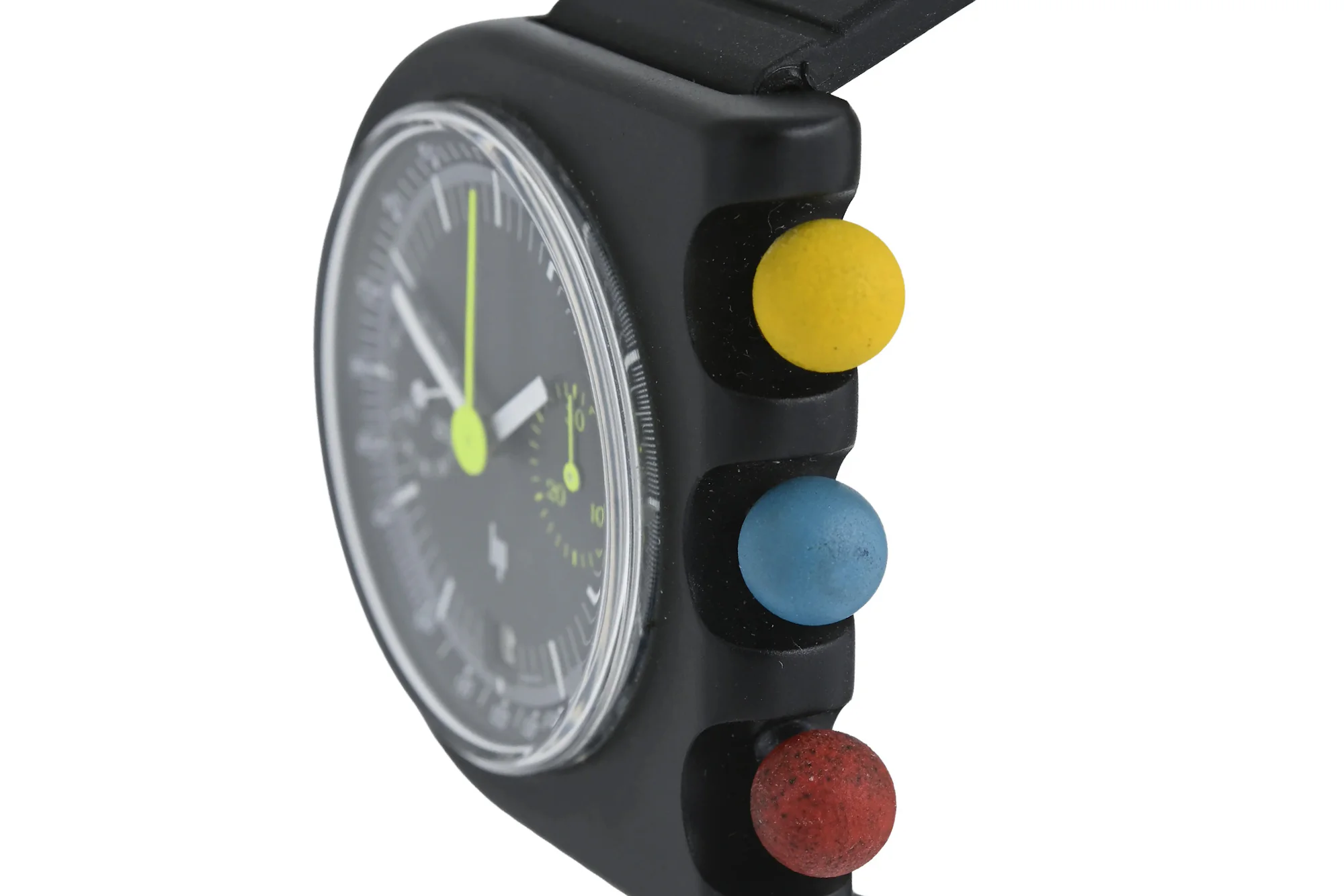
Photo courtesy of Fellows.
Going up for auction on the 16th through Fellows, this Mach 2000 Dark Master is bid up to 900 GBP at the time of writing, with an estimate of 1,000-1,500 GBP.
Patek Philippe ref 5107
The idea of dialectics as an animating force in human life stretches back to the Greeks, but Hegel was the guy recognized as codifying the notion that the tension in dialectics wasn’t, in and of itself, a problem that’d never be overcome, but could instead be viewed as a source of generative growth and development. Let’s leave our unbesmirched snouts out of any broader trough having to do with how dialectics may play out more broadly in politics or other realms of contemporary public life and instead focus entirely on how dialectics play out in watches, specifically the tension between dress and sport watches.
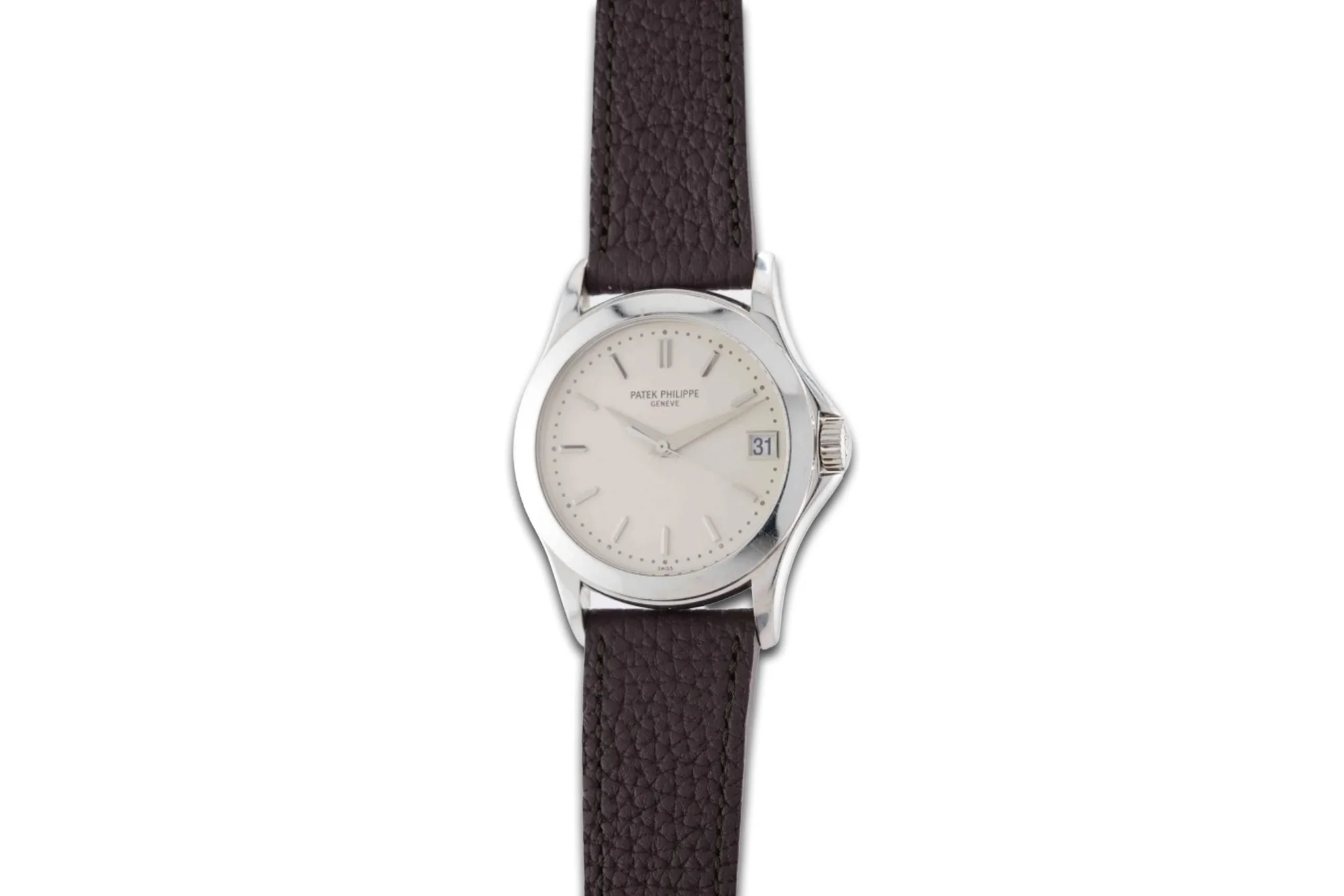
Photo courtesy of Osenat.
To do so, let’s consider the Patek Philippe 5107, a Calatrava with crown guards. Let me say that again: a dress watch from Patek, in precious metal, with crown guards.
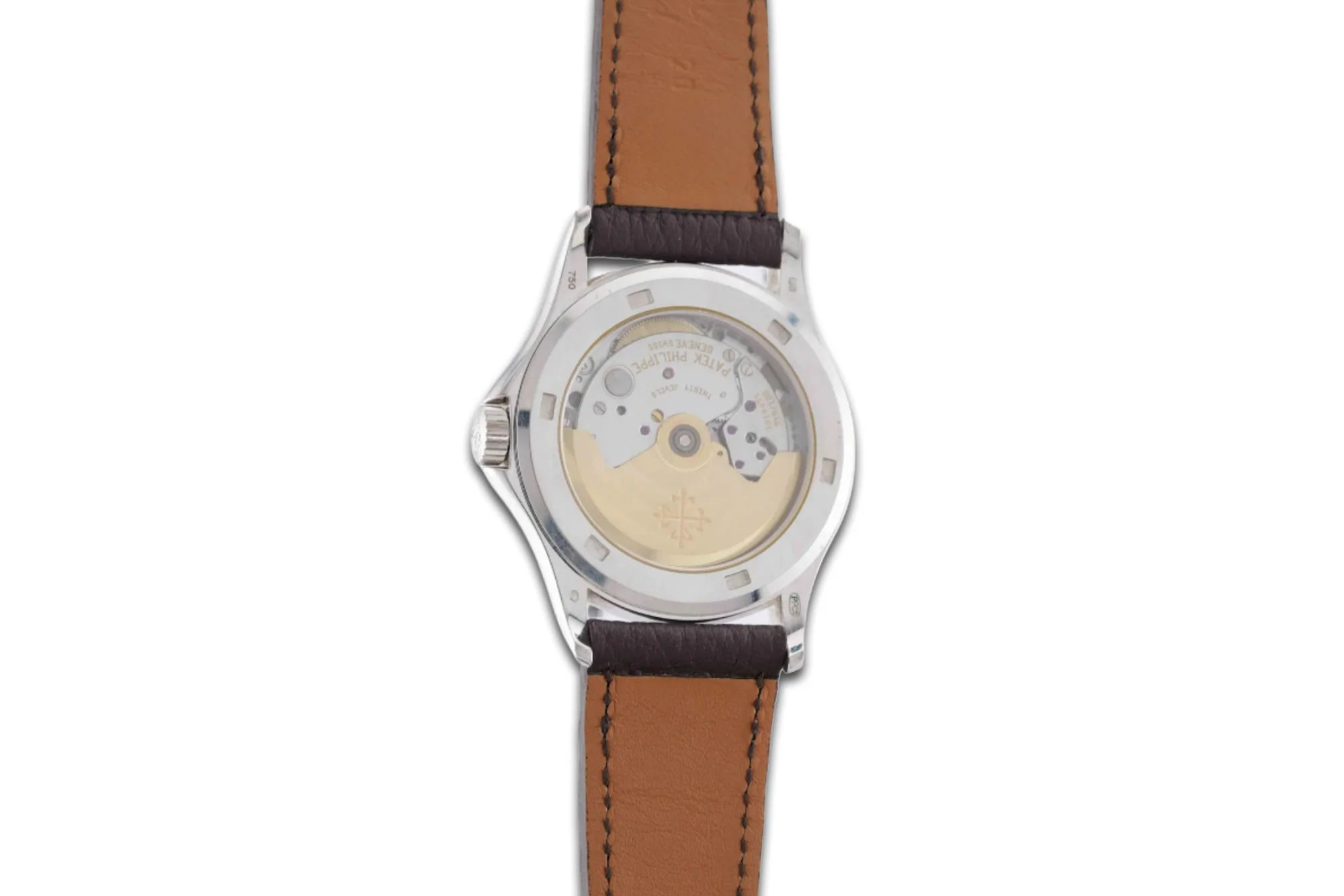
Photo courtesy of Osenat.
I’m unsure what else needs to be said. That this particular iteration is white gold? That it is 37mm, about which you’re allowed your own feelings re platonic ideals in terms of size, but which is, inarguably, just right considering how perfectly the date window sits at the edge of the dial? That the reference was made from 2000 till 2005, that this example is from 2005, and that it looks turn-of-the-millennium in the sense that the watch mashes up improbable, antagonistic ideas? That it utilizes the cal 315 movement, which is the slower-beat (3 Hz) predecessor to the 4 Hz cal 324 currently used by Patek across a number of watches (including the 5227, which has no crown guards but looks otherwise shockingly similar to the 5107, except, being 2mm bigger, has a date window that doesn’t hug the dial’s edge)? That it is, as you could likely have surmised, the only Calatrava made by Patek to utilize crown guards?
This specific example does not come with its box and papers, and it’s clearly been worn. However, this watch is so spectacular because, by definition, a Calatrava is a dress watch. Equally definitionally, crown guards prevent damage to the crown and, at least historically, such protection was presumed useful only on watches expected to be worn in physically demanding settings. Considered this way, the Patek 5107 is somehow both a) the equivalent of, say, a pair of opera glasses featuring a bottle opener at the end of the handle, and b) firmly in the let’s-try-something-unlikely lineage that led, in the 1970s, to the introduction of the Nautilus, another dialectical mashup of a watch.

Photo courtesy of Osenat.
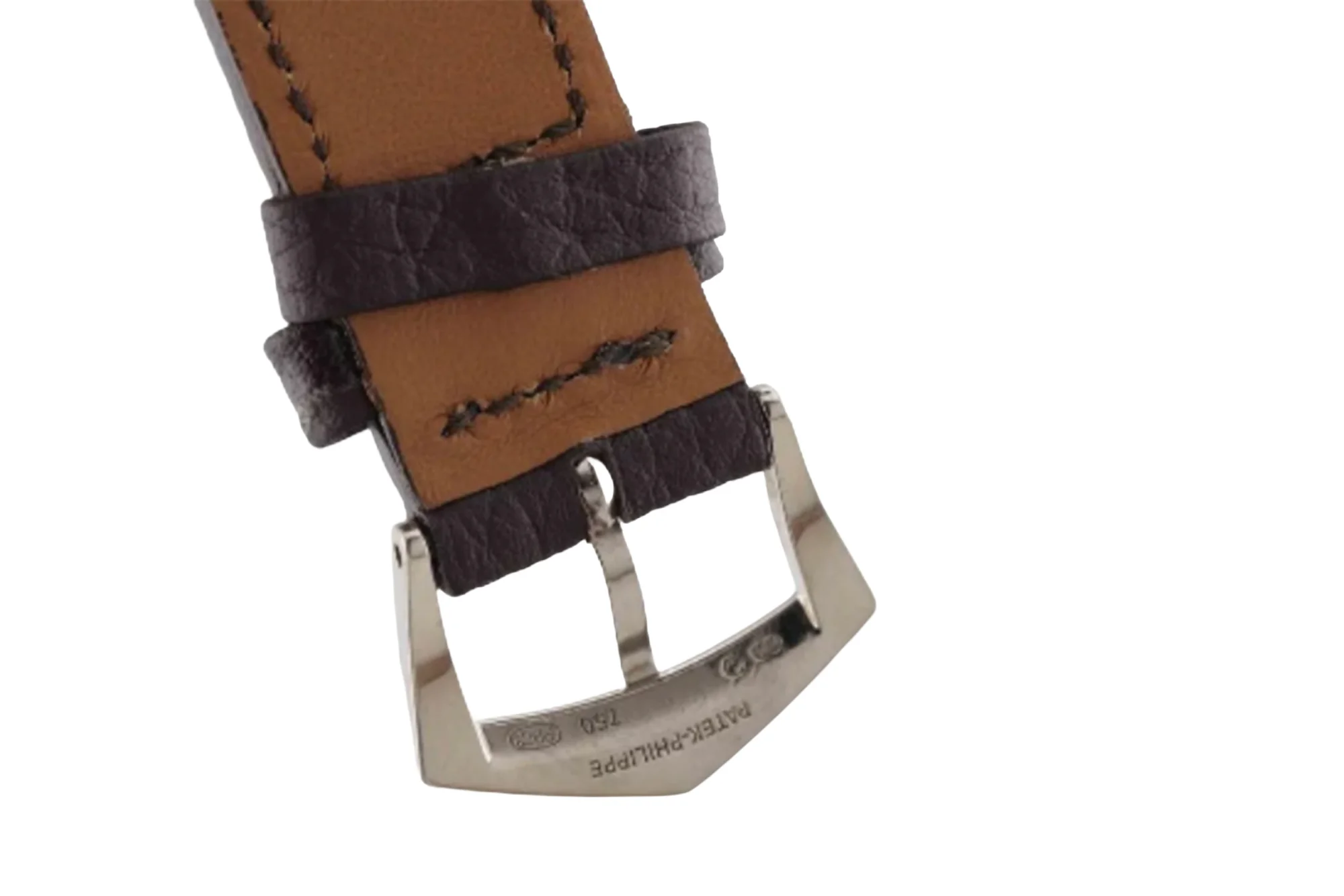
Photo courtesy of Osenat.
This watch auctions on the 14th, with an estimate of €14,000-€18,000, and if this Patek isn’t quite your speed (who hurt you?), the whole Osenat catalog is worth a gander, though make sure to read the details of each lot (this gold 1675, for instance, had its crown guards ground off to look like a 6542, but it should, if it is actually from 1964, have different hands).