

There are many crossovers between watches and other spheres, from diving and broader sports to exploration of the skies and outer space. Possibly one of the most poignant and deeply rooted connections is between watches and cars. This link largely traces back to early automobile racing and the need for precise speed and distance calculations.
Pocket chronographs with tachymetric scales and specialized dashboard-mounted chronometers became standard equipment. The popularization of the wristwatch went on to evolve this relationship, allowing race car drivers to calculate lap times and average speeds directly on their wrists. This is where we saw the birth of models like the Omega Speedmaster, the Heuer Autavia and Monaco, and the Rolex Daytona. It would be a bit later until we saw the debut of the chronograph we’re here to discuss today – but more on that later. When it comes to cross-industry partnerships, I would go so far as to say the one between watches and car racing is one of the most significant – and lucrative. The Monaco and the Daytona have gone on to bear additional significance because of their wearers, bringing the models out of the racing world itself and into the pop culture zeitgeist with actor Steve McQueen sporting the Monaco in the film Le Mans and actor and racer Paul Newman sporting the Daytona. Thanks to these associations, these models have gone on to achieve millions if not tens of millions of dollars at the auction block, with the Paul Newman Daytona setting the record for a vintage watch and becoming the so-called holy grail of collectible chronographs as well as arguably skyrocketing the Daytona collection as a whole into one of the most highly sought after in the market.
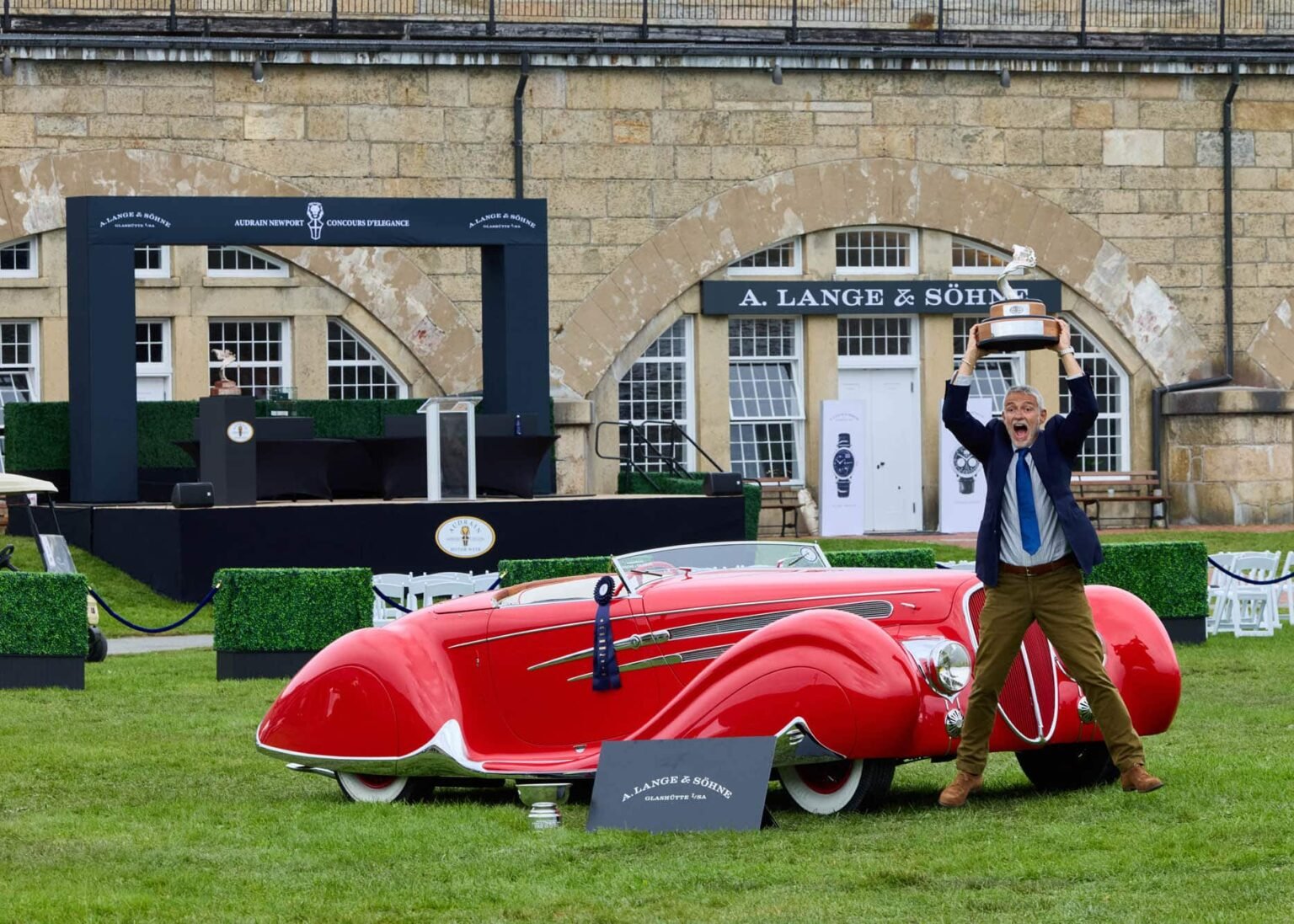
Outside of the hype around watches and racing, there’s actually a much deeper connection between watches and cars as well as their collecting communities. I remember first being made aware of some parallels in my early days entering the watch industry. When I tried to explain this wild world I was getting into, I often found myself describing the technical complexity of watches in the context of cars – the movement is like the engine, I would tell my friends and family, but imagine how impressive all that engineering and mechanics is on a small scale! I got my start in watches in the pre-owned market, which looked vastly different in 2012 than it does today. One of the first things I was told by my employer was that watches were just like cars when it comes to value – the minute you “drive them off the lot,” they depreciate. When it comes to watch collecting, we’ve increasingly seen this is not always the case, but it remains the reality of car collecting. Candidly, this has made me respect car collectors even more – they are not in it for the money, and it’s really all about the passion and dare I say nerdery. I experienced this passion and nerdery firsthand at the Audrain Concours of Elegance in Newport, Rhode Island – I also experienced the common values between these two worlds of cars and watches. I was brought to the event by its presenting partner who you likely know well: A. Lange & Sohne (which might give you a hint to the aforementioned chronograph we’ll unpack). In the time I’ve known the brand’s CEO, Wilhelm Schmid, I’ve come to realize he’s really a car guy – this is where he got his start. His dad was a car dealer, and this informed his early appreciation for both design and mechanics. Schmid tried his hand at being a mechanic, but it was short lived, and he went on to university instead. Yet, he quickly found himself back in the automotive world after graduation, first at what is now known as British Petroleum (BP), where he eventually became the Global Account Manager for BMW. It comes as no surprise his next role was at BMW before eventually shifting out of the car space and into watches as the CEO of A. Lange & Sohne for nearly 16 years.
However, the relationship between A. Lange & Sohne and cars is not the typical approach many watchmakers take – there is no brand partnership with a specific maker, no co-branded watches, and no car paint on the dial. Instead, it is that deeper shared ethos. “In the 90s when the brand was being rebuilt, you must remember there was really no plan – no archives to refer back to,” Schmid explains. “At this time, probably the strongest expression of German quality was Mercedes – closing a door of a Mercedes, both the sound and the feel is very solid, very specific,” he continues. “Mr. Blumlein, the co-founder who helped revive the brand with Walter Lange, said that whenever someone touches one of our watches, puts on one of our watches, that is the feeling he wanted to create. So, it was never about emulating the design of the car,” Schmid stresses. “It was about imparting the same values and experience.”
A. Lange & Sohne’s work with the Concours of Elegance began years later with that same foundation of shared values. It started in 2012 with a single event, the Italian Concorso d’Eleganza Villa d’Este at Lake Como and has since expanded to three total events including the Concours of Elegance at Hampton Court Palace and the Audrain Newport Concours d’Elegance. “This value system translates to the concours events,” confirms Schmid. “Our value system is the craftsmanship and skilled people that work on watches, the many hours that go into every watch. It is our interesting history – a family company gone for 40 years, then coming back. Of course, there is our very strong design language – very German design language – of legibility and robustness,” he continues. “The cars at the concours are exactly about these same three things. You needed very skilled people to build them in the first place, and now, you need very skilled people to keep them on the road. They all have a great history, and they have a design that is as appealing today as it was when they were new. These are the common denominators we share.”
There is another inextricable link between cars and watches – the chronograph – and when it comes to chronographs, A. Lange & Sohne is one of the most significant brands in the history of the complication. “Even by today’s standards, many people still feel it is the benchmark for the chronograph,” Schmid emphasizes. The brand’s work in the realm of chronographs traces back to 1999. That year, A. Lange & Sohne became the first brand to serially produce a chronograph caliber built entirely in-house from the ground up as opposed to the standard, outsourced modular add-ons or modified ebauche movements used at the time. This caliber made its debut in the brand’s Datograph. “Did you know I saw the Datograph before it was launched when I was working for IWC?” asks Tony De Haas, A. Lange & Sohne’s Director of Product Development. “I was in Schaffhausen, the headquarters where Blumlein had Les Manufactures Horlogeres (LMH) with IWC, Jaeger-LeCoultre, and A. Lange & Sohne,” he continues. “I was going to give my notice to go to Renaud & Papi, and when I went to Mr. Blumlein’s office, he was wearing the prototype of the Datograph – I had never seen anything like it.” When A. Lange & Sohne entered its renaissance just five years prior to the launch of the Datograph, three of the four inaugural models debuted the brand’s now instantly recognizable and signature outsize date, inspired by the iconic clock built in 1841 for the Semper Opera House in Dresden – a clock Ferdinand Adolph Lange helped create. “The brand was forced to lower the two subdials of the chronograph because of the outsize date,” De Haas explains. “You can’t put them at the same level in the middle because of the units disc of the outsize date just passing next to the minute counter. So, there was no other solution than to create their own movement that could accommodate this layout. But the decision to make the chronograph movement was not just a practical one,” he clarifies. “You must understand at this time, the industry was still crawling out of a deep hole from the quartz crisis – the industry was not expecting another brand, especially from Germany, to come to market. Mr. Blumlein knew the brand needed to differentiate,” he continues. “This is why from the beginning A. Lange & Sohne built its own movements, which was revolutionary right after the quartz crisis – most brands used base movements because it’s an investment to build a movement from scratch and things were too uncertain to put in that time and money.”
While the design of the Datograph collection has changed, most significantly with the introduction of the Datograph Up/Down in 2012, that revolutionary movement architecture of the original has largely continued to serve as the foundation, even with the upgraded power reserve. In addition, A. Lange & Sohne has built on this chronograph design, incorporating additional complications beyond the trademark outsize date and the power reserve indicator introduced in the Up/Down. One of the most notable came in 2006, six years prior to the transition to the Up/Down configuration. That year, the brand launched the Datograph Perpetual. As the name suggests, this model incorporated a perpetual calendar into the design. Now, on the 20th anniversary of the model and on the significant day of October 24 – the date of the brand’s official rebirth and presentation of its initial collections in 1994 – A. Lange & Sohne unveils the next evolution of the Datograph Perpetual. For the newest incarnation, you have a 950-platinum case in contrast with a black dial set with baguette-cut diamond hour markers, each applied by hand. The in-house chronograph function lays the groundwork with a classic column-wheel design. However, this time, we have a flyback chronograph, making it possible to stop an ongoing measurement and to start a new one with the activation of a pusher. The functionality extends with the addition of the perpetual calendar, which displays the date in the signature outsize date window at 12 o’clock as well as the day of week in a concentric circle within the small seconds register at 8 o’clock and the month within the inner circle of the register for the minute counter of the chronograph at 4 o’clock, maintaining the symmetry of the Datograph design while still remaining highly legible – one of the core tenants of the brand.
Tucked at 6 o’clock, you’ll find the moonphase complication. All of the calendar indications as well as the moonphase display can be jointly advanced with the rapid-correction pusher at 10 o’clock, protected by a safety mechanism to prevent inadvertent activation. In addition, they can also be separately adjusted with individual recessed correctors. This packed design fits into 41mm and is powered by the manually wound L952.1 caliber made up of 556 individual parts, 223 of which fuel the calendar mechanism. The model is topped off with an integrated five-row platinum bracelet secured with a deployant buckle.
For more information, including pricing, head over directly to A. Lange & Sohne.
The post The Connection Between Watches and Cars Beyond Racing appeared first on Worn & Wound.