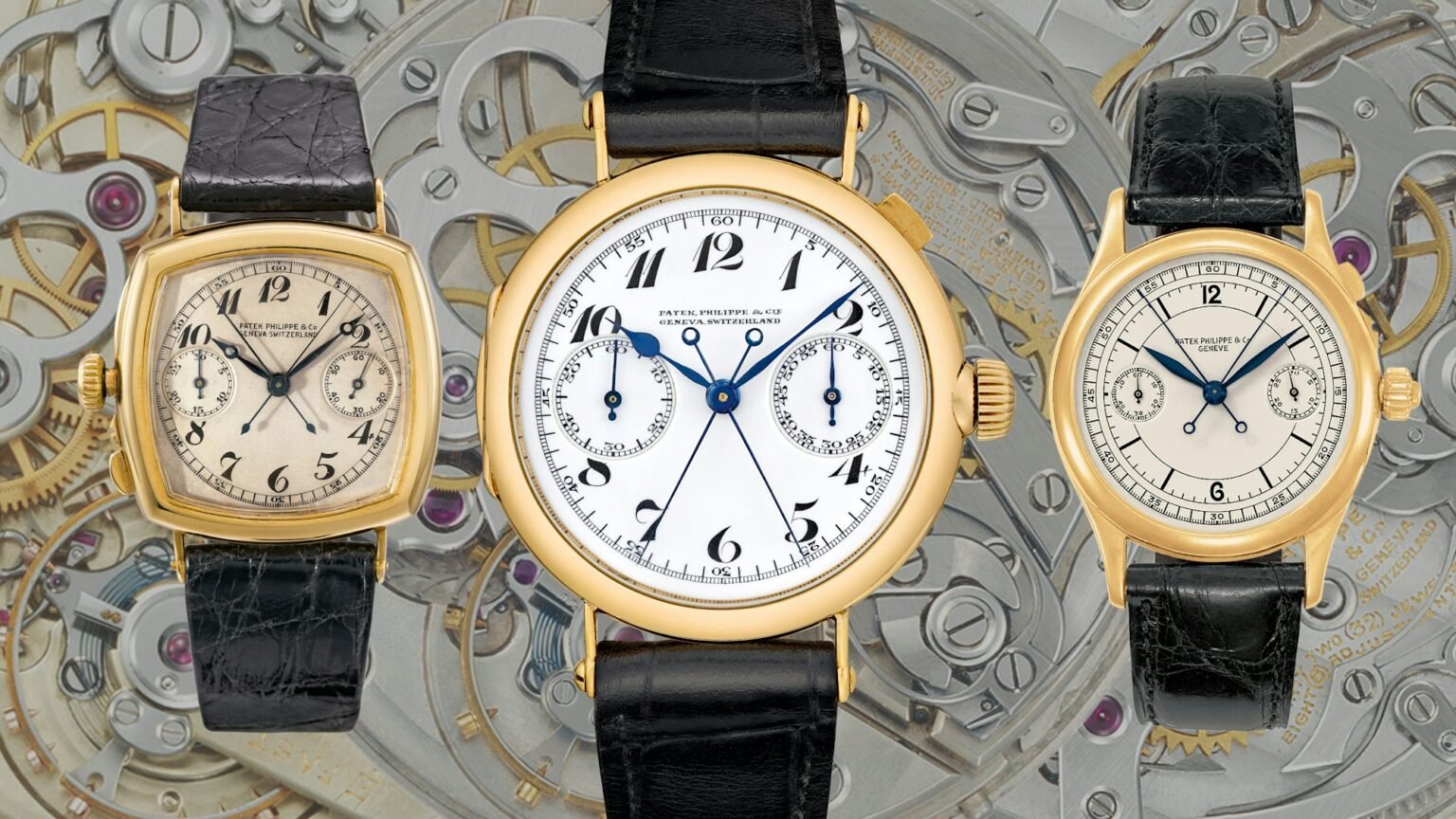

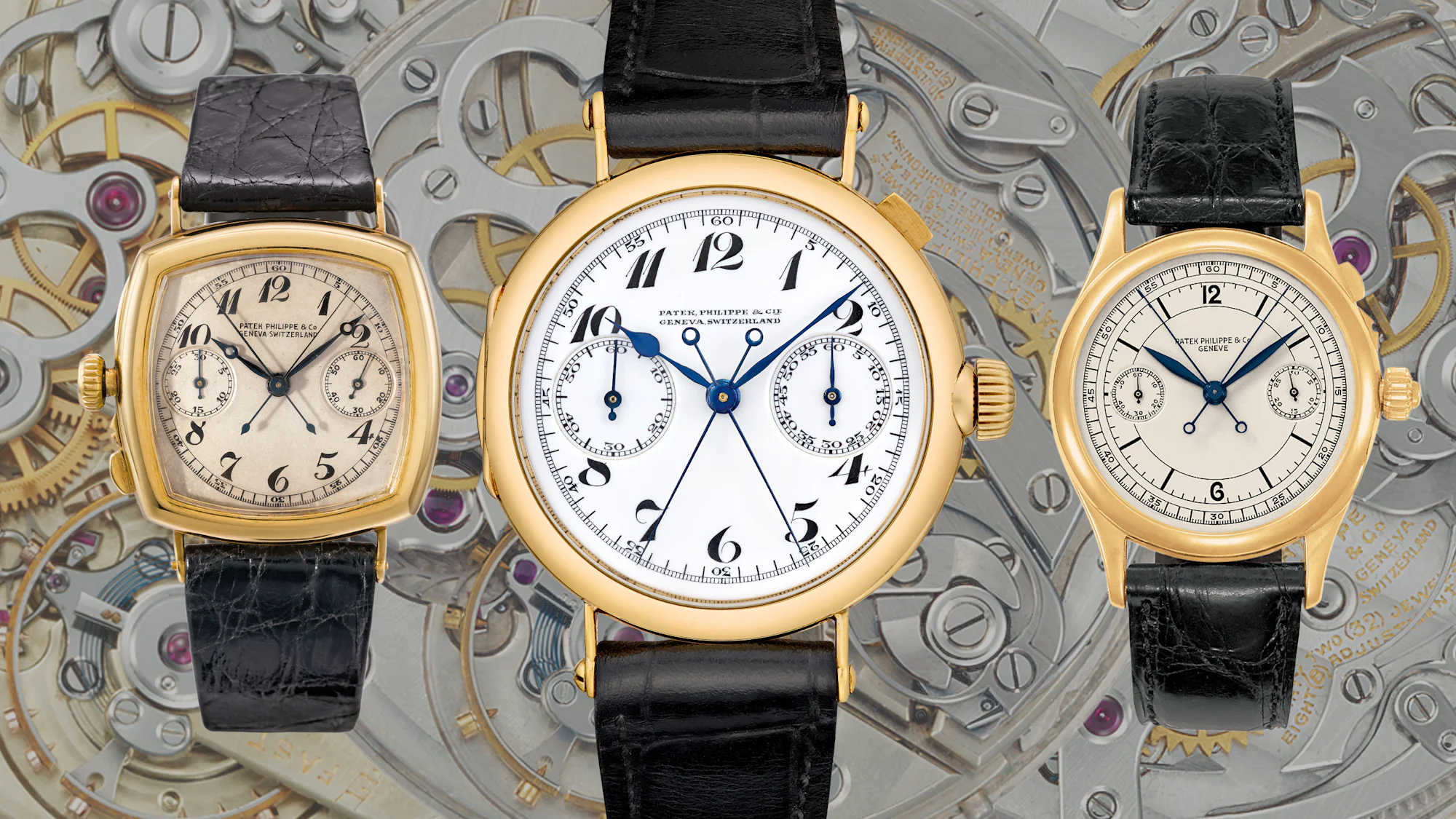
In our first addendum to our Reference Points video and story on Patek Philippe split-second wristwatches, we looked at Patek Philippe split-second pocket watches and the brand’s relationship with its supplier, Victorin Piguet. Switzerland has (and continues to have) the most robust supplier marketplace for everything from complex movements to dials and cases. In the warmer months of the late 19th and early 20th Centuries, it was easy enough to just send someone on a short journey to the Vallée de Joux with a letter requesting a movement or other parts and receive one a short time later. These établisseurs all had their own specialties, but few were as important as Victorin Piguet.
I’d argue it was far more unusual for Victorin Piguet not to be involved in a watch (such as their absence from the La Grosse Pièce project for Audemars Piguet) than to see their name on supplier lists. So what was their impact on wristwatches?
In our video, we focused solely on serially produced models (and even then, there were a few we couldn’t get our hands on), all of which started after Patek shifted its production more in-house. One thing we didn’t discuss, however, was the history of the brand’s first split-seconds wristwatches, which used a Victorin Piguet ébauche. It’s no understatement that these watches are among the most important in Patek Philippe’s history and among the most coveted for vintage-focused Patek collectors. One-off, bespoke pieces, these watches don’t exactly fit in with what we were discussing in the video. But you can’t tell the story of Patek splits without them.
The Rise of the Victorin Piguet Single-Button Split-Second Wristwatch

Patek Philippe’s first simple chronograph wristwatch, with a 13”’ Victorin Piguet ébauche, from 1924. Photo courtesy Patek Philippe.
By the 1910s and 1920s, demand for wristwatches had grown massively. By the 1930s, demand for wristwatches would be double that of pocket watches. In 1924, Patek Philippe made their first simple chronograph wristwatch, using a new 13” Victorin Piguet ébauche, making three in total. It was a great start for Victorin Piguet, continuing from their successes in pocket watch construction. But despite a 40-year stranglehold on the Patek’s chronograph market, the 1920s to 1930s marked a relatively short period during which Victorin Piguet ébauche movements were used for special, bespoke wristwatch orders for important Patek clients.
Victorin Piguet would shortly after suffer from Patek Philippe deciding to move to a more industrialized, standardized, and therefore economical process for their product lines. But what they did make in their brief time making wristwatch movements was quite extraordinary. From split-second wristwatches to minute repeaters and perpetual calendars (including the first ref. 1526 perpetual calendar prototype), the world—or rather the wrist—was their oyster.

Brothers Gianni and Attilio Ubertalli. Photo via Wikipedia.
The first Patek Philippe chronograph wristwatch wasn’t the watch from 1924. It was, in fact, a rattrapante, the first-ever split-second chronograph wristwatch by any maker, and it came out one year prior. Made in 1923, one year before they made their first simple chronograph, the watch used a slightly smaller 12”’ extra-flat Victorin Piguet base. The movement (no. 124’824) was actually made in 1903 but wasn’t cased (into case no. 235’326) and sold until twenty years later. It measured only 33mm by 11.1mm and used a movement base that was 11.279mm smaller in diameter than any split-second pocket watch Patek had made.
As you might imagine, the type of person who could order such an important and unusual watch at the time wasn’t just an “Average Joe”; it was Attilio Ubertalli, who had previously been president of the football club Juventus (which Gianni Agnelli would later own). That watch is now in Patek Philippe’s museum, and if you value “firsts” from what is arguably the most prolific complications expert of the 20th Century, you could argue it’s among the most important watches in the brand’s collection.
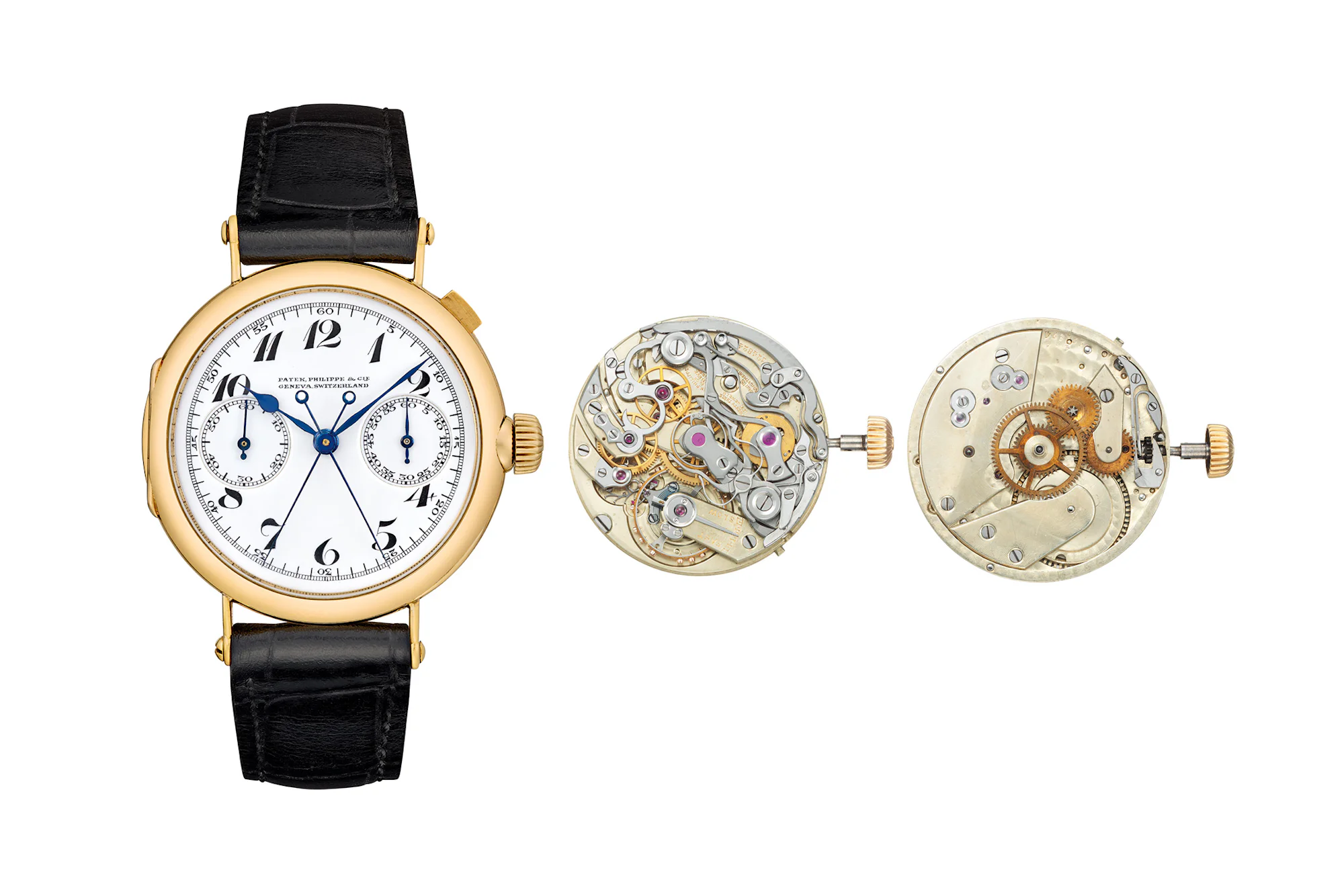
Patek Philippe’s first chronograph wristwatch, which was also a rattrapante, was made in 1923. Photo courtesy Patek Philippe.
When you compare the movements side by side, you get a sense of a modernized “Victorin Piguet” style I mentioned, mixed with the best of Patek’s treatment. Despite the 2.2mm overall size difference (the split being, surprisingly, smaller), the basic underlying construction is the same.

The two Victorin Piguet-based movements of the simple chronograph (left), a 13”’ size from 1924, and the split-second chronograph (right), a 12”’ size from 1923. Photos courtesy Patek Philippe.
If you look at the split-second mechanism, you can see that while it adds a lot of parts (like the second capped column wheel and a cover for the minute counter) and some reconfiguring of the levers, it’s a pretty straightforward (and again, very modern and delicate) approach. There are parts of the watch that are more reminiscent of a 17”’ LeCoultre & Cie split-second mechanism, with the mustache springs pressing on the chronograph brakes and the split-seconds column wheel at the end of a scissor-like mechanism.

A Patek Philippe & Cie. split-seconds pocket watch, movement no. 415’150. The watch, with a 30-minute counter, was made with a 17”’ LeCoultre & Cie ébauche made in 1927-1929 and retailed by Gübelin. By the 1920s, Patek had started to shift away from Victorin Piguet’s work and onto other makers (unless leftover movements were found). Photo courtesy Patek Philippe.
If you’re familiar with Patek’s watches from the mid-20th Century (or have read our Reference Points), you’ll know that the brand made a few bespoke split-second wristwatches “on order” for clients, including Philippe Stern himself. But that kind of bespoke process was just the status quo a few decades earlier. It wasn’t until 1934 that Patek began making standardized chronographs, with movements and cases produced in series or batches, starting with the ref. 130 and ref. 1436 in 1938. Before that, Patek was making everything as one-off watches, sometimes on request, sometimes on speculation, and seemingly always unique (down to the movement) and always based on a Victorin Piguet ébauche.
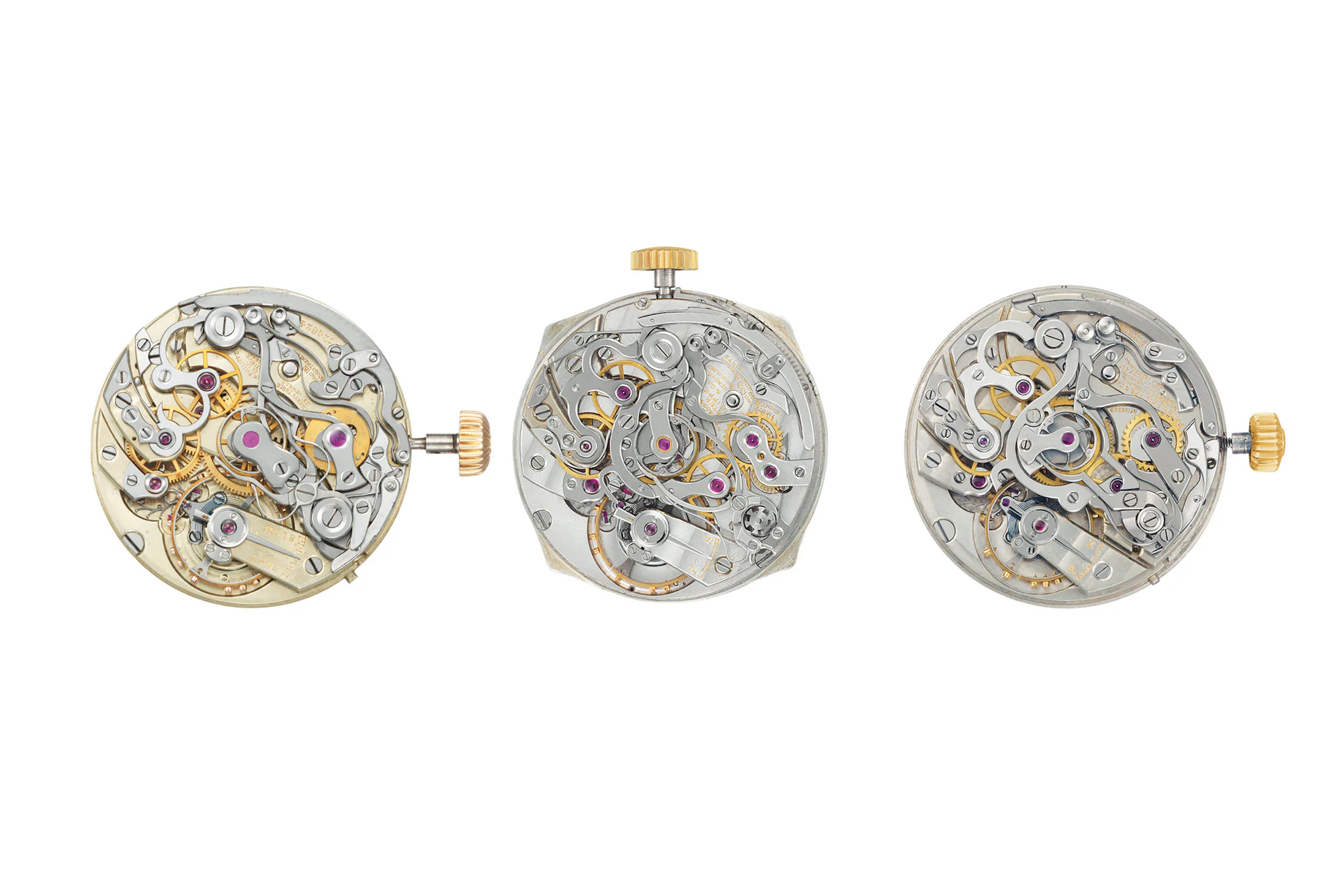
Three examples of 13”’ Victorin Piguet-based split-second movements. From left: Movement no. 197’876 from 1923; Movement no. 198’098 from 1927 to 1928; Movement no. 198’369 from 1930 to 1933. Photos courtesy Patek Philippe.
Patek also did so with a lot of variety. Putting aside the fact that Patek changed the crown orientation (itself not an easy task), you can see that while the underlying bridges, balance cock, and gearing is the same, the shaping of the levers and cams, the capping (or lack thereof) of the column wheel, the shape of the brakes/pincers for the split-second wheel, and a variety of other things changed over a very short period of time.
That flexibility in design was also reflected in the dials. Keep in mind that while the Swiss watchmaking industry had begun to adopt the American system of industrialization decades ago, much of it still operated on an ad hoc basis, especially when it came to complications. If you had an idea for a complication, especially one no one else was offering at the time, you ordered cases and dials as needed. No need (or even thought considered) to get 20 gold cases and dials of the same design and risk being stuck with extras. Victorin Piguet-based splits found their way into everything from round cases with officer lugs, Calatrava-style cases, and tonneau cases with sloping lugs. One of the most interesting and surprising was a custom-ordered left-handed version with a more square quasi-tonneau case with officer lugs.
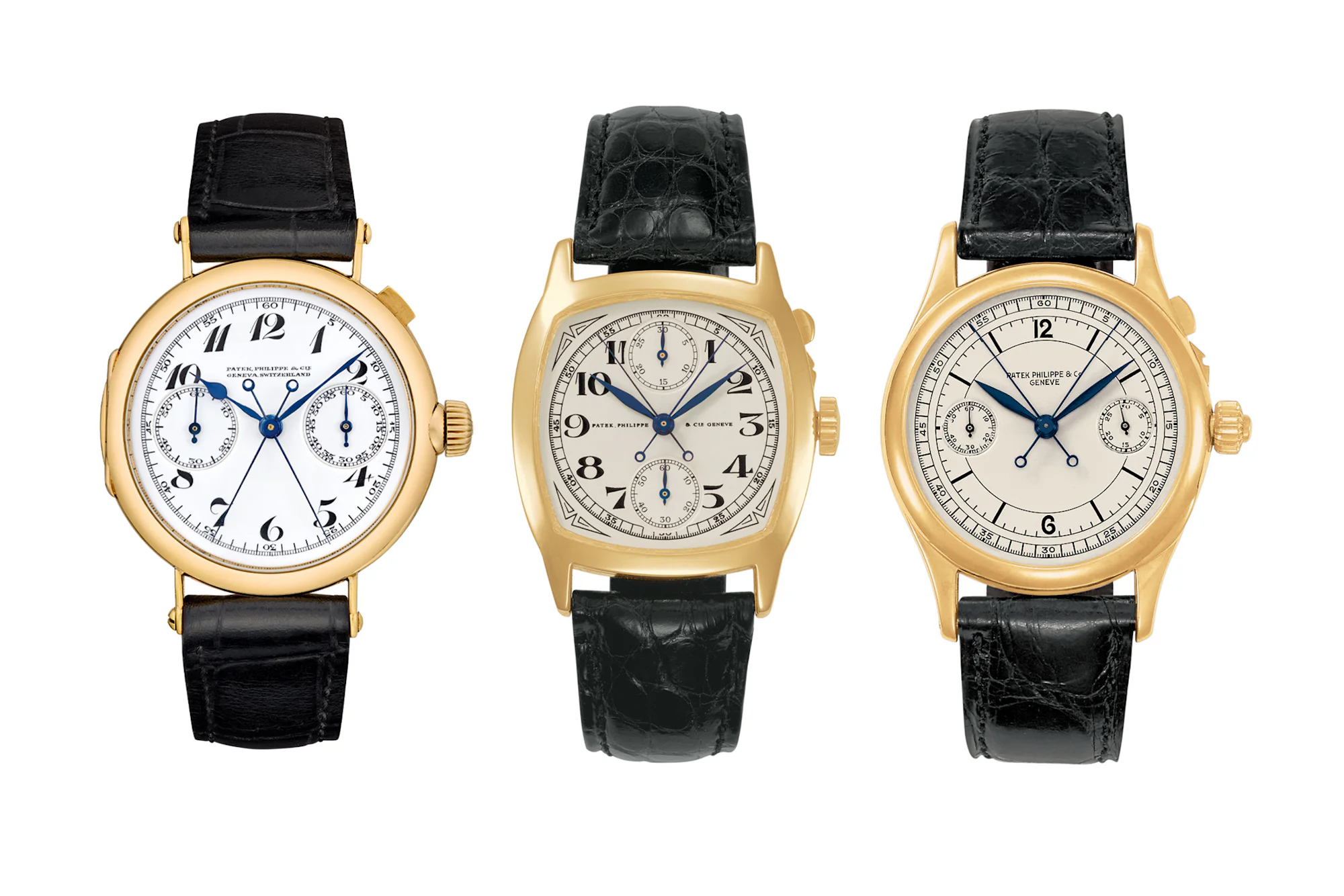
Three examples of 13”’ Victorin Piguet-based split-second watches. From left: Movement no. 197’876 from 1923; Movement no. 198’098 from 1927 to 1928, which was delivered in 1928 to the Henri Stern Agency, New York (unsurprising, due to the numerals); Movement no. 198’369 from 1930 to 1933. Photos courtesy Patek Philippe.

A Patek Philippe single-button Victorin Piguet-based split-second wristwatch that belonged to famed racer Henry Segrave and later to Amelia Earhart, both of whom died tragically while pursuing record feats. The watch was sold in 2024 at Monaco Legend Group’s spring auction for $1.86 million.

A unique left-handed version of the Victorin Piguet split-second Patek wristwatch, most recently sold by Christie’s in 2006. Photo courtesy Christie’s.
Since Patek Philippe owns at least three of the known Victorin Piguet single-button splits, that means that there are only eight that could theoretically be up for grabs in private collections somewhere. However, you need to know what you’re getting into if you’re going to buy. Beyond the incredibly high prices that these watches fetch at auction, most have substantial restoration (or replacement) of their dials, which often didn’t stand the test of time. The most recent watch to come to market, which previously belonged to Henry Segrave and later to Amelia Earhart, had its dial completely redone by Patek during an extensive restoration. You can read more about that watch in our previous coverage.
Four Unusual “Ref. 130” Split-Second Victorin Piguet Chronographs and the Reference 97
We didn’t dive into the reference 130 split-seconds in the video. Among the Victorin Piguet single-button split-seconds watches, there are four watches bearing the reference number 130 and split-seconds mechanisms. The history and the “why” are not entirely clear, and they are more easily lumped in with the other Victorin Piguet-based chronographs. You can see where the history here might get a bit murky, since the ref. 130 is Patek’s first serially produced chronograph (but doesn’t feature a split-second mechanism).

A Patek Philippe & Cie, Genève, split-second wristwatch, likely with 13”’ Victorin Piguet ébauche movement no. 198’396. The case, no. 617’296, is labeled ref. 130. The watch was made in 1930 and the movement was stamped PXP for U.S. export. Photo courtesy Christie’s.
I’ve not been able to get a cohesive answer from sources, though maybe someone out there can fill us in. Maybe, on the other hand, the answer is lost to time. My best guess is that somewhere along the line, Patek Philippe had some leftover Victorin Piguet movements and decided to fit them into cases that they had on hand for the ref. 130. The timing of that theory is a bit fuzzy, seeing as the first example—the well-known “Boeing” watch—was (according to Christie’s) apparently “made” in 1930, four years prior to the ref. 130 existing.
But I haven’t seen the extract, and it’s possible they’re only referring to the movement. Based on the serial numbers, I would assume the movement was made in 1930, either recased later or left uncased until it was sold in the late 1930s, around the time the rest of the examples were sold. This kind of historical accounting matches other Patek watches, like the ref. 541 perpetual calendar minute repeater, with a movement made in 1930 and sold in 1939.

A Patek Philippe & Cie, Genève, split-second wristwatch, with 13”’ Victorin Piguet ébauche movement no. 198’405. The case, no. 617’297, is labeled ref. 130. The watch was made for Cartier, with Cartier serial no. 8703, sold on the December 15, 1938. Photo courtesy Antiquorum.
Interestingly, three out of four watches are signed by Cartier: the Boeing, an example with a sequential case serial number that first appeared at Antiquorum’s “The Art of Patek Philippe” sale in 1989 (originally sold in 1938) and again in 2001, and a third made in 1939 and offered at Antiquorum’s “The Magical Art of Cartier” auction in 1996. It sold for CHF 333,500, or around $176,575 at the time, though the case number was not listed.
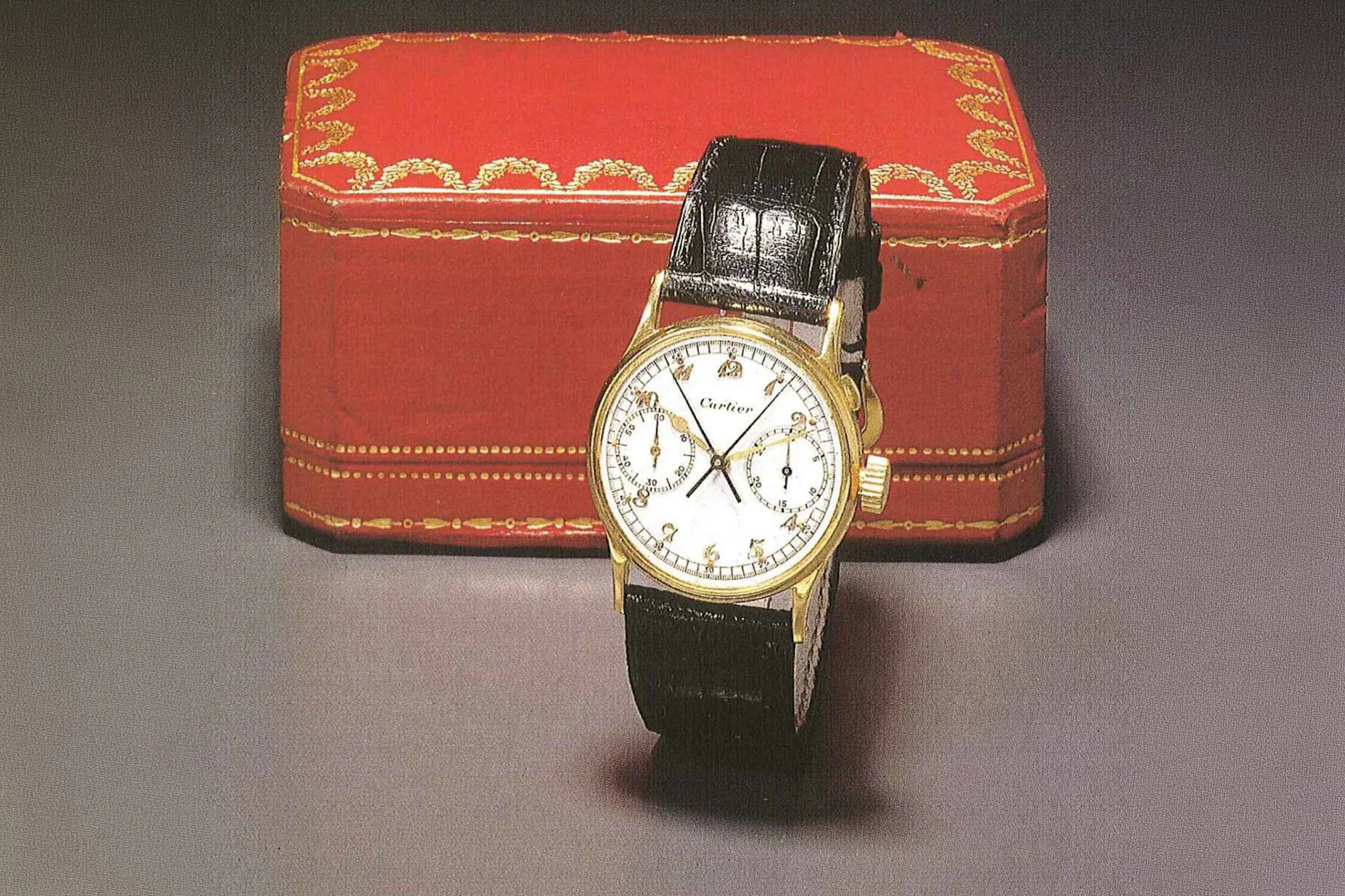
A Cartier-signed Patek Philippe-made Victorin Piguet-based single-button split-second chronograph, sold at Antiquorum’s “The Magical Art of Cartier” auction in 1996. The watch apparently came with a Cartier Certificate of Authenticity N° 2369. Photo courtesy Antiquorum.
As you can see, that third example lacks any Patek signature, leaving just “Cartier.” It’s not unheard of—there’s a similar ref. 130— but it’s certainly a very rare thing to see. All are single-button configurations like the other watches mentioned before, but the dials and spacing between the dial and crystal were apparently modified to make room for the split-second mechanism.

The third of four ref. 130 wristwatches with a split-seconds mechanism and the only one with a co-axial crown pusher. This example is in the Patek Philippe museum. The missing text in the photo caption above was how the photo was sent to me. Photo courtesy WatchesBySJX.
The remaining known example differs in pretty meaningful ways. This one (above), from 1937, is in the Patek Museum and, as far as I can tell, was previously published only in a 2015 story by WatchesBySJX. It features a Calatrava-style case with a single pusher in the caseband and a coaxial pusher integrated into the crown, which is more commonly found on later ref. 1436 models. Frankly, it’s a very strange watch.

A Patek Philippe & Co. split-second chronograph wristwatch ref. 97 with hinged caseback. The watch uses a 13”’ Victorin Piguet ébauche for movement no. 198’369, made from 1930 to 1933. Photos courtesy Patek Philippe.
There’s also the curious case of the reference 97. With a Calatrava-style case just like the ref. 96 (which also sometimes featured complications), the ref. 97 is another watch with an unknown origin. Made between 1930 and 1933 (possibly made in 1930 and then recased in 1933 before being sold), the watch has a very modern, printed sector dial with very small subdials, no tachymeter, and a coaxial pusher in the crown like 130 above. That latter feature wouldn’t appear in almost any other Patek besides that 130 for at least 17 more years, and it’s not clear who made the case. So why does it exist? This era was the Wild West for Patek. Anything goes. Why make something? Because. That’s the closest we’ll probably come to an explanation.
The Rest of the Story

The James Shultz perpetual calendar minute repeating wristwatch. Photo courtesy Christie’s.

Henri-Daniel Piguet. Photo courtesy Patek Philippe.
As mentioned in our story about Patek Philippe split-second pocket watches and the history of Victorin Piguet as a whole, the brand wasn’t just a specialist in chronographs. The établissage system allowed them to become integral to the making of some of the most important watches in history, including the Henry Graves Supercomplication. But it wasn’t all Patek Philippe; they also made important watches, including the first-ever perpetual calendar minute-repeating chronograph wristwatch for a jeweler in New York named James Shultz (not Patek Philippe, as is often mistakenly repeated).
Patek Philippe bought movements from Victorin Piguet in such high quantities that they continued to deliver both pocket watches and wristwatches using VP ébauches for decades. Special projects were also supported by the workshop, and by the 1980s, the three remaining watchmakers, including Victorin’s 76-year-old grandson, Henri-Daniel Piguet, worked almost exclusively on Patek Philippe timepieces. Between 1982 and 1986, Philippe Stern (then president of Patek Philippe) asked his brand to take an old Victorin Piguet caliber and, 56 years after the James Shultz, finally made Patek’s first perpetual calendar minute-repeating wristwatch. It was a beautiful bookend to a collaboration over a century long.

The Patek Philippe ref. 3615, a unique watch made between 1982 and 1986 on request from Philippe Stern, based on a Victorin Piguet ébauche that was likely made in the 1920s. Photo courtesy Patek Philippe.
For more on Patek Philippe split-second watches, watch and read our Reference Points article.