

The watches made by Dutch independent De Rijke & Co. are all charming and considered designs, but it’s difficult to trace any defined throughline between them. While most upstart brands tend to find their lane and iterate on a concept ad nauseam, De Rijke has consistently kept us on our feet while avoiding the creative quicksand that can come with a successful watch.
The brand first made a splash with the Amalfi, a smart, Bauhaus-informed driver’s watch with a clever two-piece case design that could be rotated through 90 degrees to orient the dial at the ideal angle for the wearer to read while their hands gripped a steering wheel or handlebars. The Amalfi had a timeless design and a romantic origin story that involved the brand’s founder, designer and engineer Laurens De Rijke, embarking upon an 11,000 kilometer Vespa tour of the Amalfi Coast. It was a basic design that De Rijke could’ve played with and re-editioned to death, and while the brand has iterated on the Amalfi concept, the approach they’ve taken was wholly unexpected.
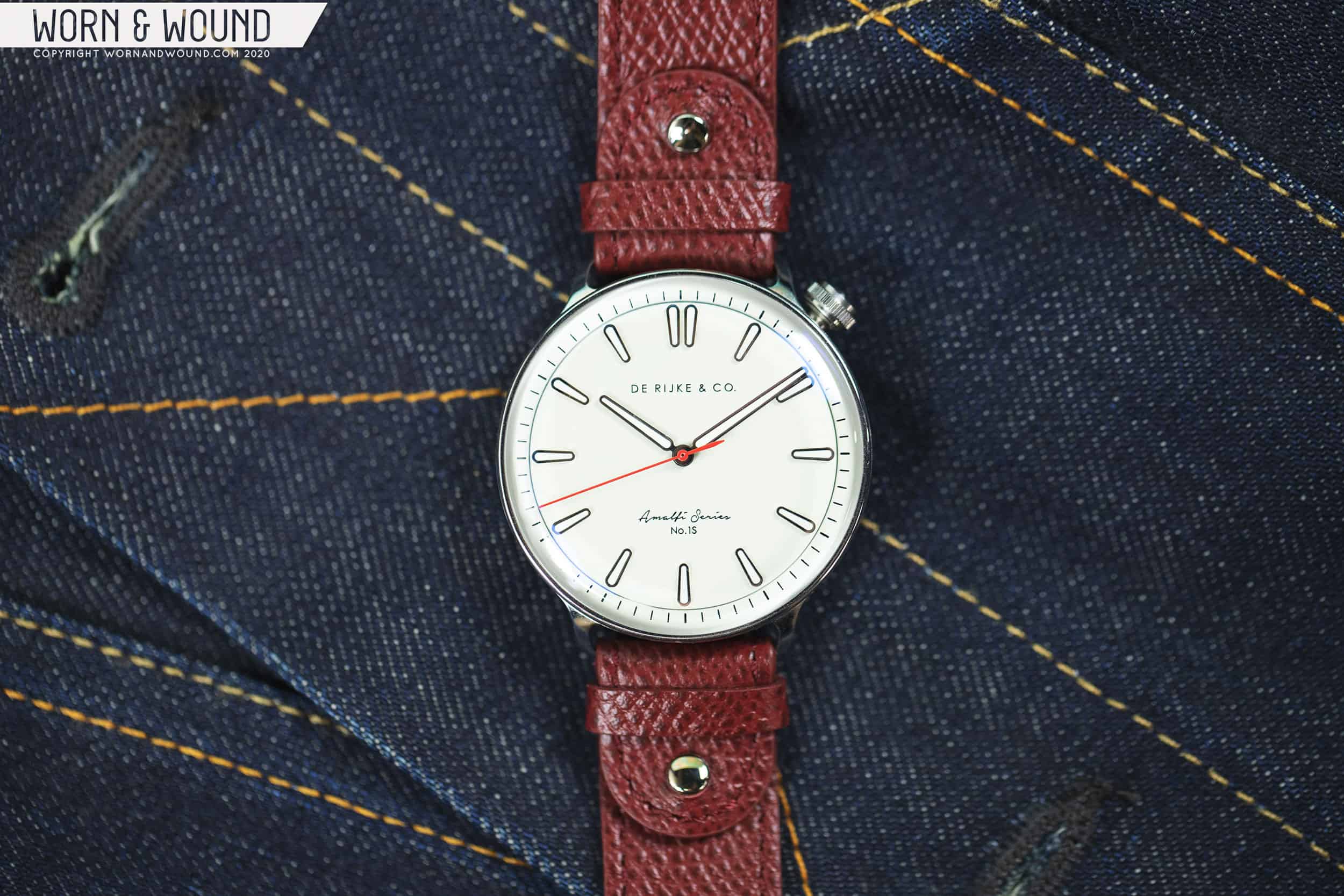
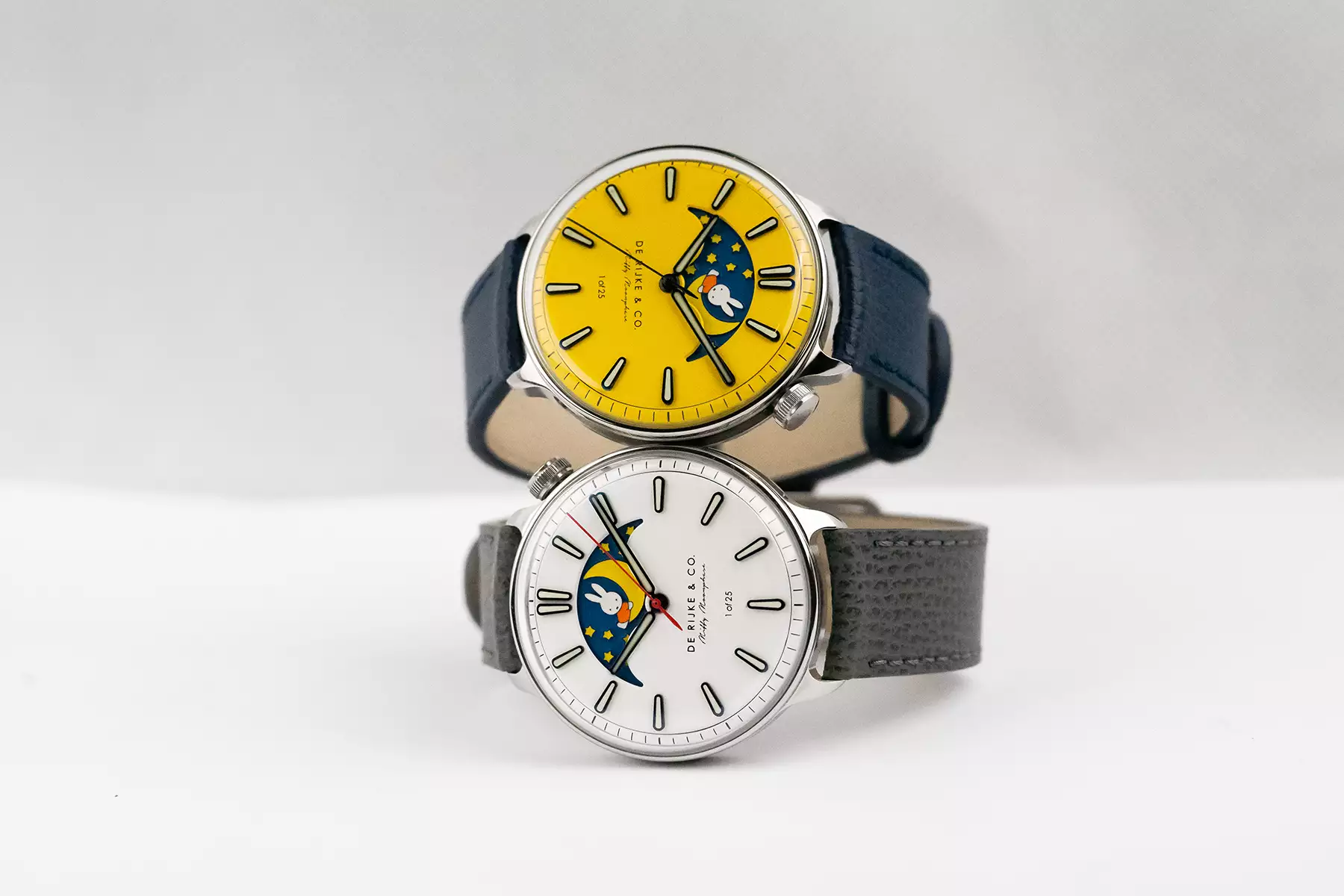
The watches that followed the debut Amalfis were a series of limited edition collaborations featuring the iconic Dutch cartoon character “Miffy.” The Miffy collabs have featured everything from moonphase designs, to enameled dials, to ceramic cases. While they were a surprisingly playful and whimsical way to follow up an elegant, functionalist watch like the Amalfi, these limited editions all became bonafide hits–to the point that they’ve become something of a signature collection for De Rijke and Co.
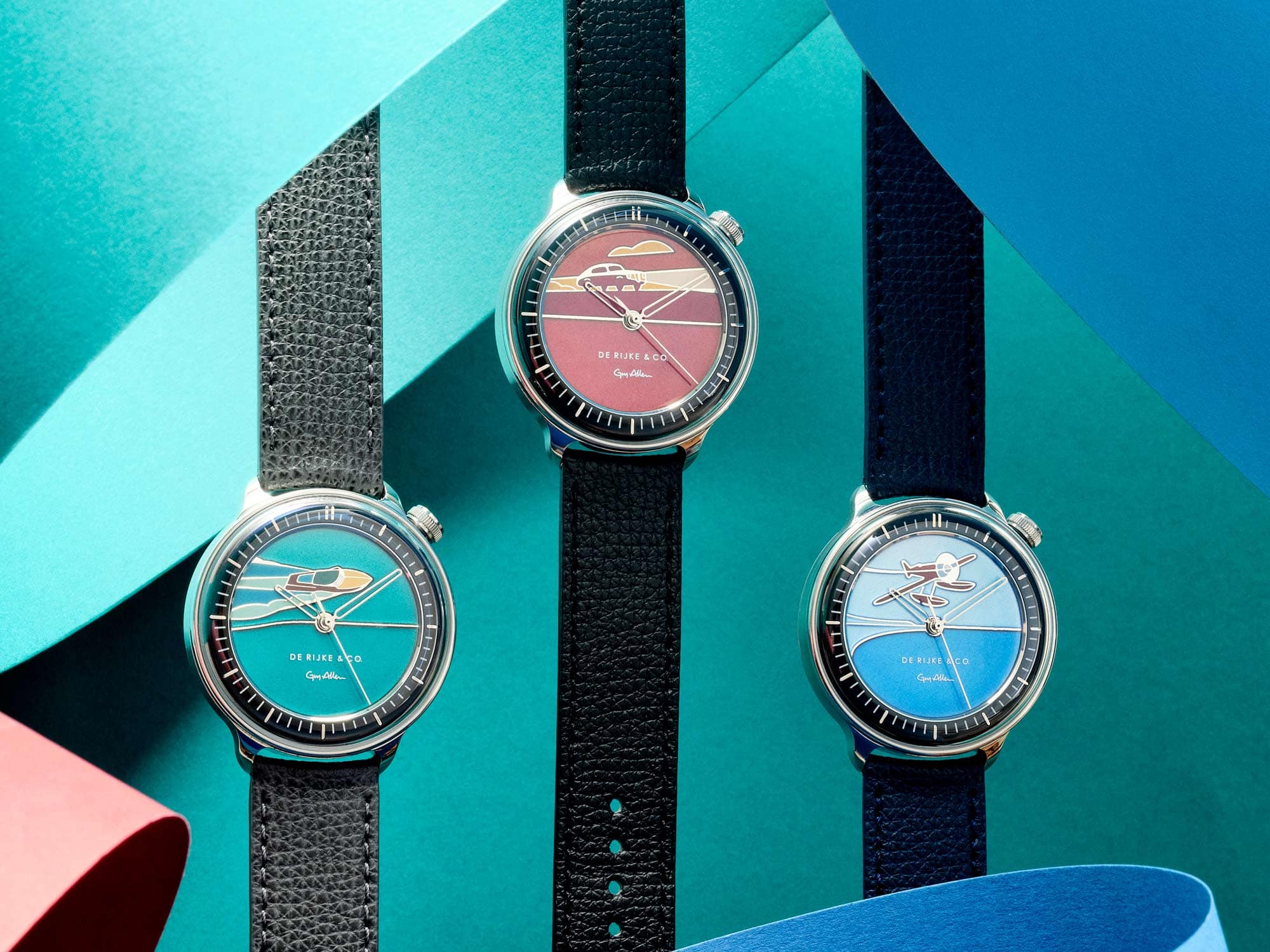
The Miffy collabs were followed by another collection of limited editions, this time returning to an automotive motif and featuring gorgeous, artfully enameled dials that were crafted in collaboration with noted British illustrator Guy Allen. Playing off of the Amalfi’s motoring-first design, the dials Allen and De Rijke dreamt up for these watches depicted Land Rovers, Lancias, and Porsche 911s racing through various environments. While they doubled down on De Rijke’s uncanny ability to balance a playful concept with a sense of elegance and maturity, they had a completely different appeal from the Miffy watches.
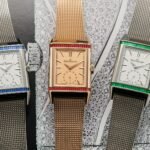
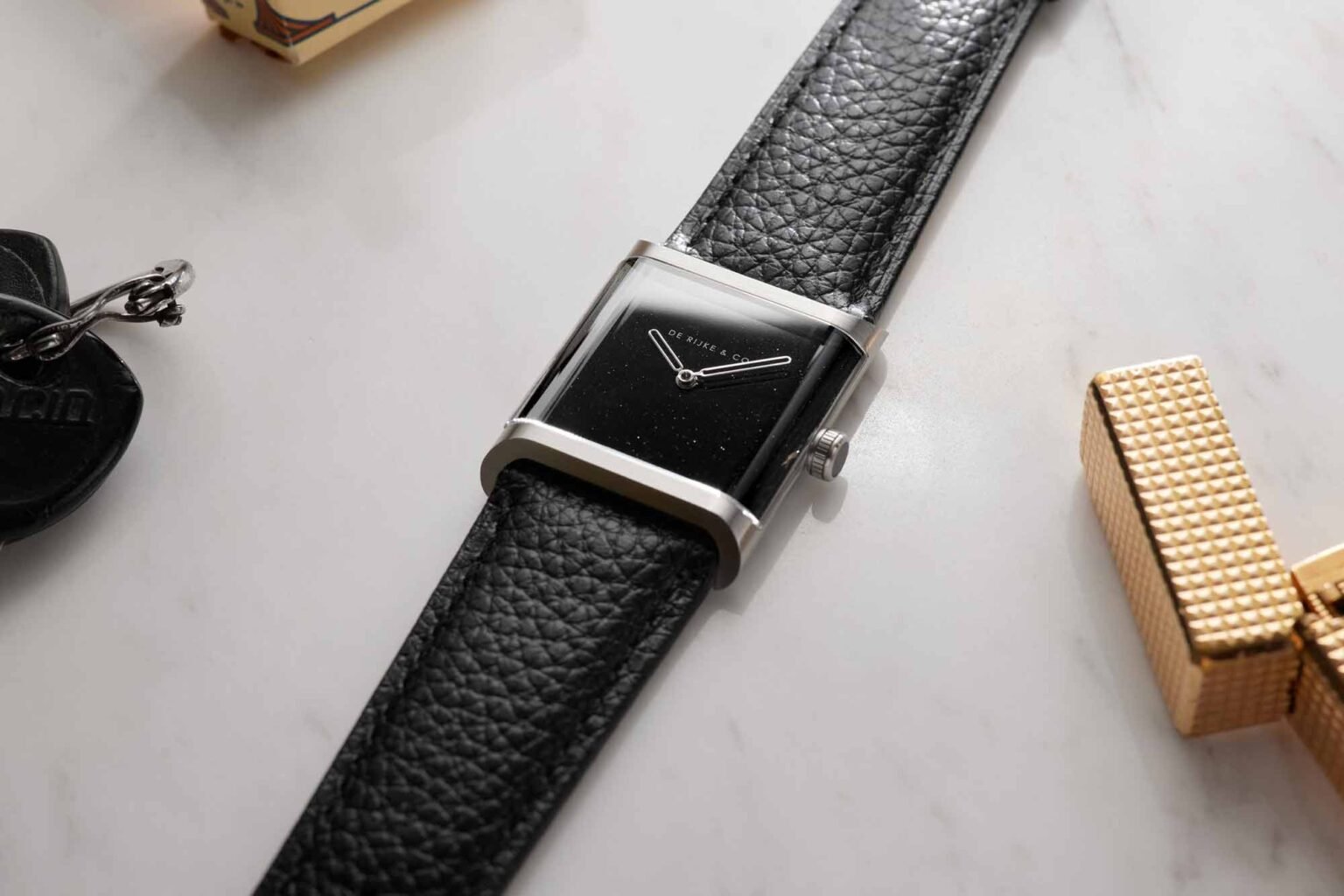
With the brand’s latest release, a minimalist dress watch called the Capri, De Rijke has taken another deeply unexpected left turn. The Capri turns the classic rectangular dress watch recipe on its head. While its essential form factor is familiar, the details of its sculpted case design and the depth of its curved crystal give it an air of retro-futurism. The Capri takes inspiration for its showstopping crystal design from the curved shop windows found on the Isle of Capri. It’s a watch that revels in the small details and it’s one of the most exciting new dress watch designs we’ve seen in years. Beyond further diversifying the De Rijke oeuvre, it’s a watch we see as a statement of intent from a young designer that’s obviously got a lot more in the tank than playful cartoon collabs and novelty concepts.
In the following interview, Laurens De Rijke brings Worn & Wound inside the design process of the Capri, discusses his background in design, and provides some insight into how he consistently does such a remarkable job of balancing form, function, and whimsy with his watches.
I’m really intrigued by your latest release, the Capri. It seems like the watch has made a major splash since its debut.
Laurens DeRijke: It’s been very interesting. The response has been very good, but it’s always very scary to launch something completely new. We did a few different things with the Amalfi, like the collaboration with artist Guy Allen, but those were still variations of the same theme–not necessarily a completely new watch. So to see that the Capri has been received so well has been super nice.
The Capri is a real departure from the Amalfi line, which has become known as a vehicle for playful collabs like the Miffy limited editions. Creating something as inherently serious as a minimalist dress watch like the Capri must have taken a real leap of faith after the success of the Amalfi collection. Was it an intentional decision to lean in a more mature direction with the Capri?
Definitely. I want to be respected as more of a “real” designer and someone that can do more than what I’ve done with the Amalfi line. The Capri was really a blank canvas and a chance to do something different, and yeah, more serious. The Amalfi was also quite a serious watch if we’re speaking in those terms in its integration of function as a drivers watch, but the challenge with that watch was completely different. It was really about integrating function and still keeping it highly legible and making the dial as big as possible. Legibility was key with that watch, so that need limits your aesthetic choices and limits you as a designer. You have to really balance the engineering side with the aesthetic side with a watch that has a function like that. With the Capri, it was an excuse to really just focus on aesthetics instead of function. I really wanted to show that I can do that, and create nice forms and shapes in a way that I feel was not as obvious in the Amalfi line for most people.

Beyond the collaborations, the Amalfi watches have a wonderfully romantic backstory that I think adds to that sense of playfulness. Who wouldn’t want to hop on a Vespa and tour the Italian coastline?
I think what’s interesting is when I started developing my watches in the beginning, I was really drawing from that romantic inspiration as well. When I started developing watches, I got in touch with a professor here at the technical university named Bruno Ninaber van Eyben, and he took me under his wing. He is really a designer that puts aesthetics first. For example, his first watch design is still sold at the Museum of Modern Art in New York, and his first client was the Museum of Modern Art back in 1974.
When he took me under his wing, I got to see a different side of design and development, and I really started to appreciate the aesthetic approach. That created a bit of a conflict for me as I was making the Amalfi because it made me also want to really explore minimalistic design themes. I became really intrigued by that side of design, but I felt there was no place for it with the Amalfi.
I think a lot of designers and engineers get trapped in orthodoxies like minimalism. Do you struggle with that as a designer?
Ferdinand Porsche had an ethos that really inspires me, which is that design is the elegance of function. Even if you really focus on the engineering side, you always have to find the right balance to make a design elegant. Sometimes the engineering weighs heavier within the product, but the best designers find a way to work with the engineers to make it really pretty. In my case, it’s sort of ambiguous. I am the engineer and I have an engineering background, but I’m also the designer–so it’s always a constant battle between those two. And while there’s that battle, I also think that duality gives me an advantage over some watch designers. I know the limitations of each side, and can find ways to to cope with them in a way that’s much easier than when the process involves multiple people.
For instance with the Capri, one of the challenges was the curved glass we used for the crystal. Part of that was finding the right supplier, but there was a technical side to it. There’s a technical side to that glass where you have to know you’d typically use a gasket to press the glass into the watch, but you can also glue it in. The latter is a bit more difficult and more time consuming, and it’s trickier because you don’t want to see any of the glue when the process is done, which sometimes means carefully removing it afterwards. But knowing that creating glass like I did for the Capri was technically possible and that I could still attain a certain amount of water resistance helped me with the design side.

Another instance was choosing the screws for the caseback. They’re hidden behind the strap and that requires a different kind of thinking in terms of how we put the case back on and how we make it water resistant. These are all details that I like to focus on and I also like the challenge in finding the technical solution to make an aesthetic work.
A lot of independent watchmakers come from a watchmaking background and don’t necessarily have the design chops you have, but I think the more interesting watches coming out these days are from people that are free from any specific horological tradition. Can you tell me more about your design background? I’m also curious if you feel a certain freedom in not following a specific watchmaking tradition in the way a lot of independents are?
Indeed what you’re saying is very true. I think one of the reasons I do things differently is that one of the first things I learned in a design program at university is that every company has to innovate. It’s basically “innovate or die” and when you’re told that as a first year student, that idea really grows in your mind. You have to do something to be different. So that’s still one of the first things that comes to mind when I design a watch.
I also think most watchmakers in Switzerland work from the inside out; they start with a technical basis and want to make a watch that’s really advanced technically first, then they think about the outside of the watch. Things like how it looks and how a person interacts with it. With a design background like mine, the process is completely the other way around. You always start with the user interaction. I think coming from a design perspective rather than a watchmaking one makes for more innovative watches, and it’s why certain designers have become very popular in the watch world, like Ressence.
Despite being a dress watch concept, the Capri is still playful in its own way. Can you tell me about the inspiration for that watch? I’d also love to know more about the challenges you overcame in creating its signature crystal.
I’m not blind to the watch market, but I try to keep one eye on the market and one eye focused on doing my own thing. So I saw the growing trend for dress watches and saw a challenge in that trend to see if I could apply my unique philosophy to a dress watch. Could I develop something really unique in that space that was still elegant. Something that was mine, but not unrecognizable as a dress watch.
The Capri design started out as something quite ordinary. I started with the Selita automatic movement, but I quickly realized that it was not distinctive enough. Normally when I start designing a watch, I just start with the case shape. I sketch a shape, then I often develop it on the computer and then I create a model of just the shape. I wear it for a while to see how I interact with that shape and how it feels. Often a shape is rejected at that point and I try to analytically figure out what it is I don’t like about it.
With the original Capri shape, it felt like something too ubiquitous, too ordinary, and I also wanted to make it thinner. I found that housing the automatic movement was limiting my freedom when it came to the case’s shape. I also started to look a little more at the other watches that I really liked, which isn’t something that I’ve done before when designing a watch because I always want to start with a new idea of my own. So with this watch, I did take a look at the classic Cartier and Jaeger-LeCoultre dress watches for some inspiration, and I noticed that if you look at them from the side where the strap mounts, the shape is essentially a curve. So I thought “How can I implement that curve in a new way in my own watch?” That also required using a thinner movement, so I went with the Handon movement from ETA, but I still had a traditional square crystal. I realized that I’ve always had an admiration for curved glass in things like windows, and just curved shapes in general. I have a Charles Eames lounge chair, and there are similar curves in that design in both the chair itself and the ottoman. So all of these things inspired the shape of that glass, along with the windows you’d see in storefronts in the 1930s, like shopping windows. I really admire those windows. Once I had that shape, the rest followed, and while there was a technical challenge in making that curved glass, I was really determined to make the shape work.
A great shape is something that can be vamped on and played with over and over again, especially in watchmaking. That’s something you’ve already shown with the Amalfi line. While the debut run of the Capri has just been released, I’m curious if you plan to keep vamping on the design after the initial release?
That is one of the reasons why I decided to keep the first run so limited. I already know how I want to do different things with the watch and I already have versions in mind to follow up the first run and I’m really eager to start developing those. One thing we are working on is a glass caseback, so you have the same glass on the front as on the back.
Outside of commercial success, what criteria makes a watch design successful for you as a designer?
For me, there are few aspects. I think the ergonomic side is very important and I do think of something like the Ressence watches, which are super nice and I really admire the designer and the concept, but the watches are super big and while they improved that and their late designs are much thinner, I really focus on is ergonomics and how it feels and fits on the wrist. Coming up with a distinctive, refreshing shape is also really important to me, so balancing ergonomics with that aspect can be a challenge.
If I’m creating a really functional watch with a specific purpose like the Amalfi, the criteria changes and things like legibility become really important. So balancing a requirement like legibility with elegance is what makes a functional watch design a success for me. With a dress watch like the Capri, the focus is obviously more on elegance and aesthetics.
A lot of independent watchmakers outside of Switzerland tend to project a unique sense of national pride. Beyond introducing a beloved Dutch character like Miffy to the watch world, is there anything in the DNA of De Rijke watches that you can point to that’s specifically Dutch?
For me that’s not really a goal. I believe thinking like that can be limiting. I am proud of where I’m coming from and this country has provided me with the means to do what I do, but I think watchmaking is always super international and experts can be found everywhere. For example, I’m working on creative direction with a woman from Switzerland. My ceramic cases are made in Japan.
As far as a Dutch design philosophy goes, I do think there is a style that resonates with us that’s the equivalent of Bauhaus and that style from the 1930s. The German and Northern European design language of less is more and function comes first. I’m definitely inspired by and influenced by that philosophy.
The post De Rijke and Co.’s Balancing Act appeared first on Worn & Wound.