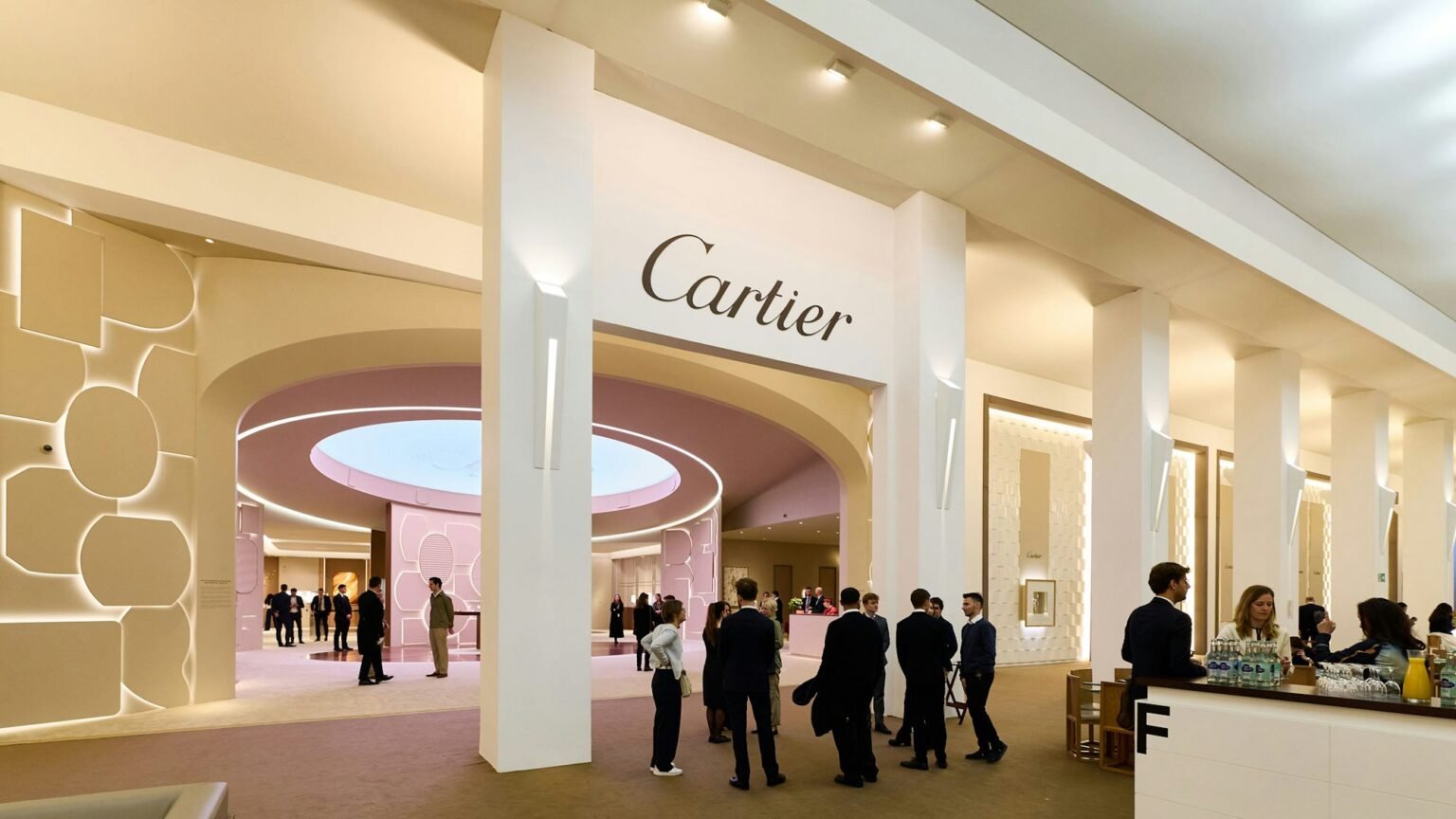


Among top-level, mainstream Swiss-made watch brands, few can match Cartier’s performance over the last half-decade. The Paris-based jewelry marque has vaulted ever higher to become the second biggest watch brand by sales, according to analyst estimates from both Vontobel and Morgan Stanley. While the jewelry unit of Cartier remains its primary driver, analysts say estimated sales from the watch division grew about 10% in 2025 to exceed CHF 3 billion, up from less than CHF 2 billion in 2019.
What’s perhaps more notable is the performance of Cartier’s watch division relative to the broader market. As most brands have surfed the undulating wave of the post-COVID boom, followed by a downturn in demand, Cartier’s watch unit has outpaced the market while remaining relatively affordable and accessible, with prices averaging about CHF 6,000 per watch and implementing lower price increases than most competitors, according to analysts. That has allowed Cartier to consolidate its position as one of just a handful of high-volume, long-established, and approachable-priced brands that are top choices on mainstream watch consumers’ want lists, particularly among younger buyers.
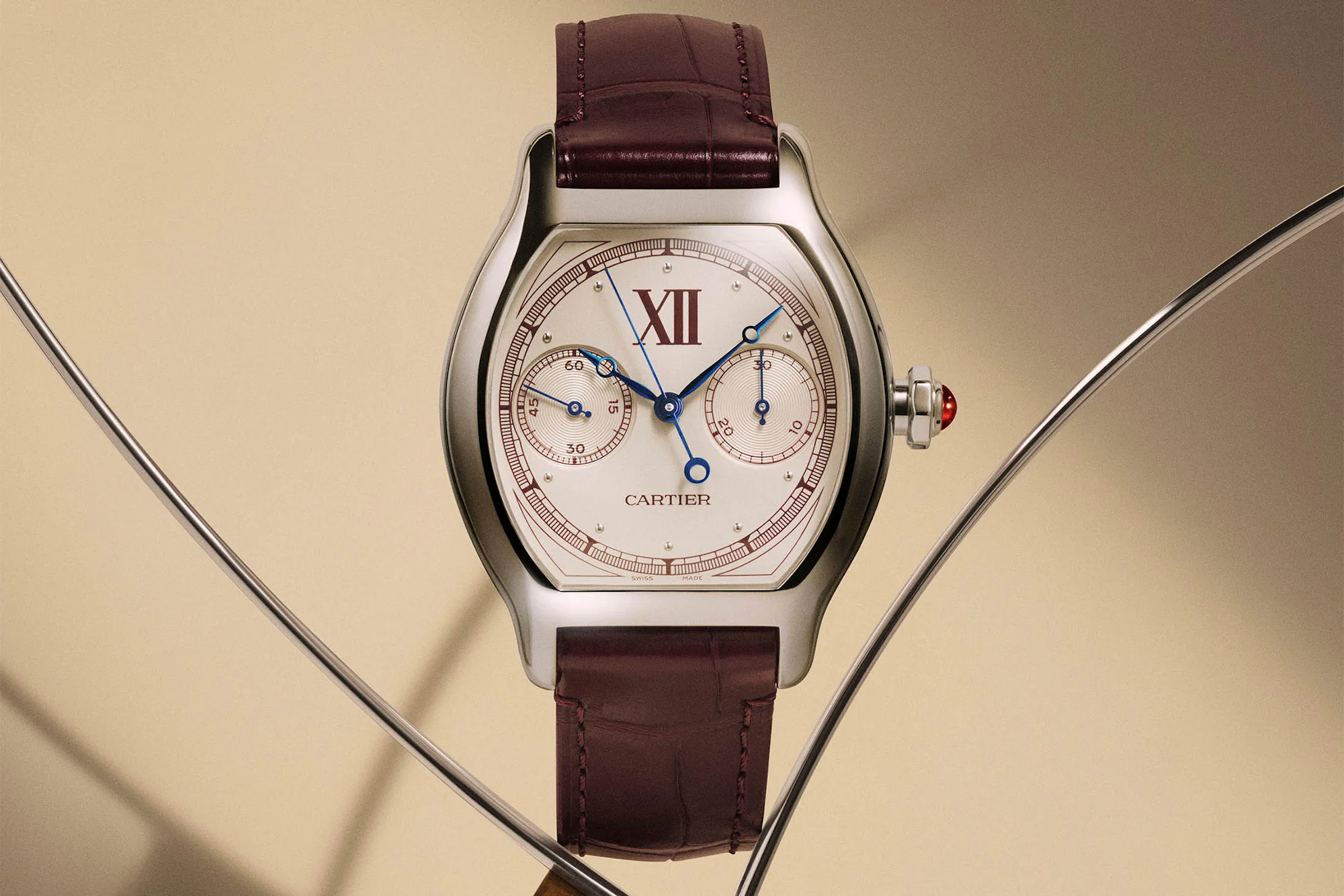
Tortue Chronographe Monopoussoir with oversized “XII”.
At the same time, Cartier has also grown in standing among watch enthusiasts and collectors, with prices for models on the secondary market gaining 8.6% in a year, according to WatchCharts.com‘s Cartier index. Auction results for vintage pieces have performed even better, with total sales of Cartier in 2025 hitting about $523 million, according to Everywatch.com, representing an impressive 43% increase from the year before.
The momentum continues as, just last month, at a record-breaking auction in Hong Kong, Sotheby’s sold a rare Cartier London Crash from 1987, believed to be just one of three examples, for $2 million, the highest price ever paid at auction for a Cartier wristwatch.
To be sure, Cartier executives haven’t confirmed that the analyst estimates are correct, but they do acknowledge the brand’s strength in both the primary and secondary markets in recent years. At a roundtable discussion at Watches and Wonders in Geneva, Chief Executive Officer Louis Ferla and long-time head of image, heritage, and style, Pierre Rainero, both said the Maison is constantly in dialogue with clients while monitoring market developments that inform its design and production decisions. That’s not to say that Cartier is reactive to short-term market shifts. It’s making decisions that it expects to play out over decades with the goal of creating icons, not fleeting trends.
“It’s in the DNA of the Maison. We are jewelers, we are watchmakers, but we are merchants as well,” said Ferla, who took over the top job at Cartier in September, 2024, after a successful seven-year run as CEO at fellow Richemont brand Vacheron Constantin that saw the celebrated Geneva watchmaker top $1 billion in sales for the first time.

“We have always been trying to understand what the needs of the market are, and to be sometimes ahead, to be innovative, and to be ahead of the demand. That’s why a lot of our products have become iconic,” Ferla adds.
Indeed, in a Morgan Stanley report ranking the few truly iconic models in Swiss watches, Cartier holds the two top spots, with the oldest models that the bank analysts deem to have become icons. They are the Cartier Santos, a model born more than 120 years ago, and the Cartier Tank, over a century old as well.
With an estimated 2% growth in production to about 695,000 watches in 2025, “Cartier is widely regarded as owning some of the most iconic designs in both watches and jewelry. This has allowed the Maison, with a deep archive from which it can reinterpret and refine longstanding creations,” Morgan Stanley analysts write in the most recent ‘Swisswatchers’ report on the state of the industry. Increasingly being engaged by younger consumers and Gen Z, Cartier’s “new launches typically serve a dual purpose – reinforcing the brand’s horological credibility while also supporting its core commercial offering,” the analysts say.
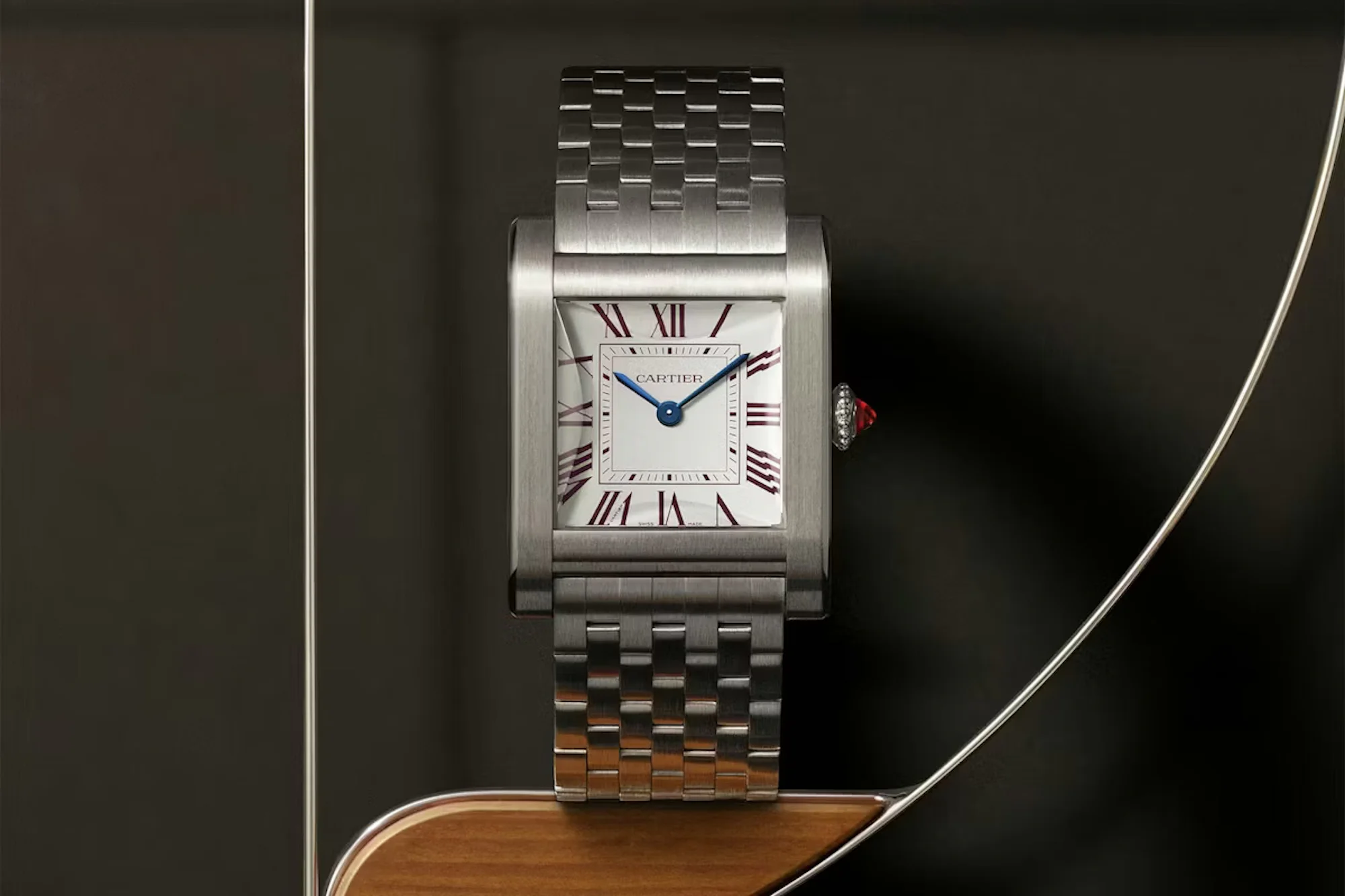
Tank Normale.
Despite Cartier’s successes and solid positioning, its CEO, Ferla, is frank about the barrage of external factors currently pressuring the Swiss watch industry. He cites record gold prices, inflation, currency shifts, and the ripple effects of the COVID-19 pandemic, as well as wars in Ukraine and the Middle East, which have raised watchmakers’ costs and the bottom line.
“In the last few years, it’s not like it has been a walk in the park,” he says.
Not unlike its (only) larger competitor, Rolex, however, Cartier has weathered the challenges better than most. Its deep catalog of established, well-known models is the kind of product that the market embraces in uncertain times.
“When there is instability, what clients are looking for are icons. Because it’s reassuring, because you are getting good residual value that is verified,” says Ferla. And ” Cartier is definitely answering that question,” he adds.

(L to R) Tank Normale, Tank Cintrée, Cloche de Cartier.
At Watches and Wonders 2026, among the brand’s new watch releases was a fresh version of the Santos Dumont in precious metal (platinum or yellow gold), paired with a newly designed, intricate, and elegant bracelet. It was a classic Cartier release, upscaling, upgrading, and refining an already well-established and proven model line.
But it also brought back a model that it had previously discontinued just 14 years earlier, with the return of the Roadster.
Some saw the return of the automotive-inspired timepiece, with a redesigned, thinner case and now available in two sizes, as a curious choice. With concentric, speedometer-like circles on the dial and a bulbous bump on the crown side of the case to suggest the tail-fin lights on a 1950s era car, the curvy Roadster was always a bit of an anomaly in the Cartier line-up. Particularly when compared to the clean and straightforward lines of the Santos or the Tank, which have made Cartier’s design language so recognizable.

Cartier Roadster
Rainero said the return of the Roadster was notable for the fact that it was the first time it had resurrected a model that had been born in the 2000s (2001 to be exact), but that the sporty, updated, and refined Roadster would certainly serve as an alternative to the other elegant sport watch in the current Cartier lineup, the Santos.
In filling that perceived need, and given the choice between designing a new model and reviving and improving an existing model from the back catalog, Cartier will most often choose to update a model from its back catalog. That’s because the shape and design have already been proven as worthy of the brand.

Both executives said they see their own roles and those of the 10,000 Cartier employees as stewards of the Cartier brand, making long-term decisions and choices with the nurturing, protection, and upkeep of the Maison as their top priority.
Ferla quotes a saying he says sums up the responsibility that comes with guiding Cartier, “You have shade today because a long time ago somebody planted trees.” Indeed, with the rich and well-established design language that is the brand, the current generation is benefiting from the choices made by their predecessors.
“It’s very important to enjoy the moment, but also to ensure that you have that sense of responsibility with what you do, that it’s also going to procure some shade,” says Ferla.
And that is why, Rainero says, “we still plant trees.”