
Happy Friday, Ballers. The air’s getting warmer, the NBA Conference Finals are already providing extraordinarily compelling viewing (even if your team’s already been bounced), and you’ve only got another month and change to set up your 4th of July plans. Don’t sweat it, however. To paraphrase Dieter from Sprockets, now is the time on Hodinkee when we look at what’s selling where.
Scorekeeping last week’s picks: the Movado Cronoplan is still available from The Time Curator, the Patek Beta 21 sold for $26,750, the Hamilton auction closes tomorrow, so you’ve still got time on it if you’re interested, and the Zenith Time Command for 460 GBP. Onto the show.
Strays
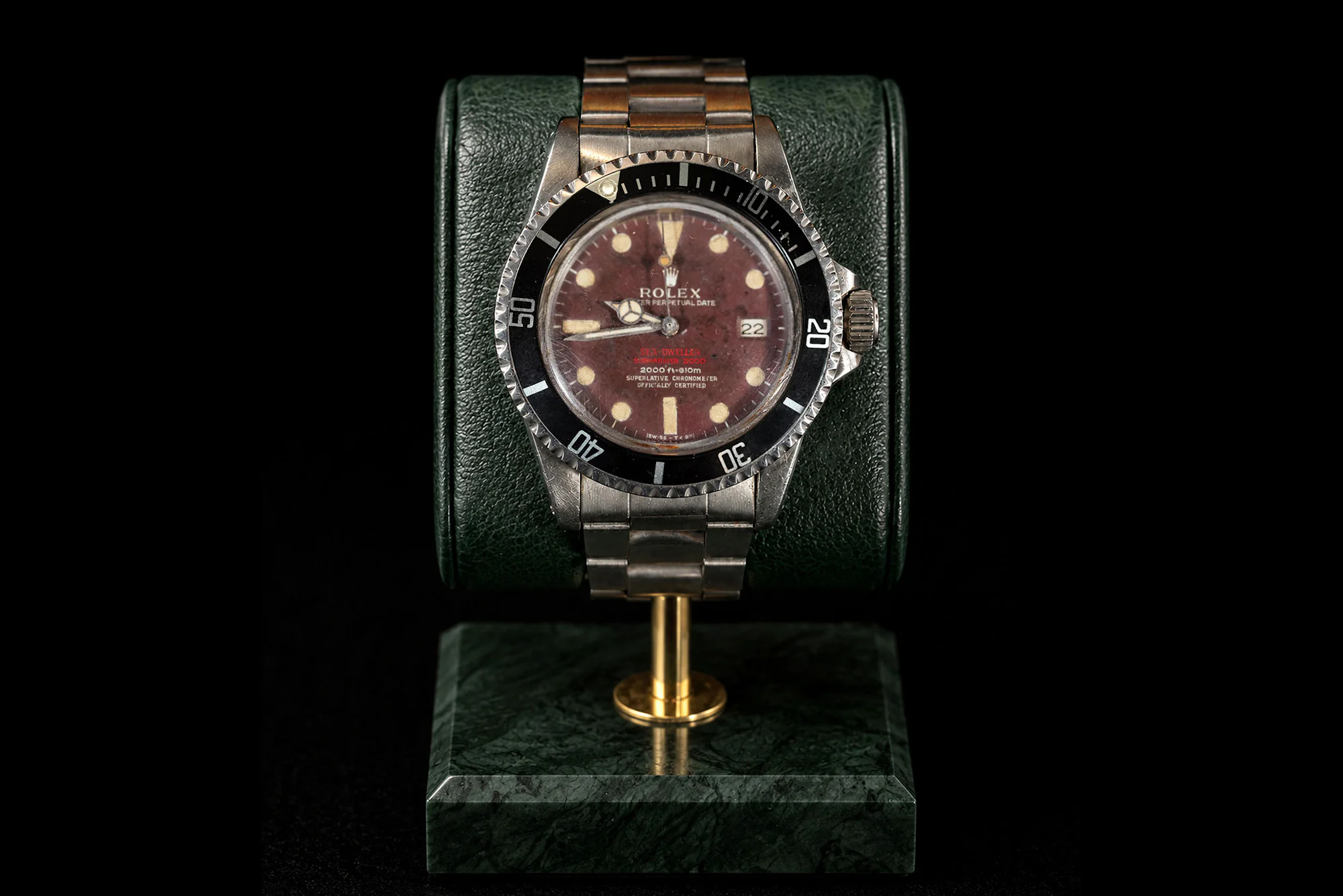
I’m certainly not alone in finding vintage Boucheron watches charming and worth more attention, and if you need further convincing, this Reflet makes an awfully compelling case. If you look closely at this Enicar Mantagraph, you’ll notice there’s no Swiss marking on the dial, and that, though the watch comes in its original Enicar box, the guarantee card is for a Seiko. This would all seem strange and potentially nefarious were it not for the fact that the Enicar Mantagraph is essentially a rebranded Seiko 7016, a movement well worth your time. Speaking of vintage flyback chronographs, here’s a Longines 13ZN monopusher with a dial that seems designed by time and circumstance to test where you fall on the ‘one man’s tropical is another man’s damaged’ spectrum, and if that one’s not enough, here’s a Double-Red Rolex Sea Dweller likely to be just as divisive. Finally, here’s a 14k gold Universal Geneve Tri-Compax on a 14k gold brick-link bracelet, about which I can’t think of anything to add.
Omega Marine Chronometer Ref 398.0836
One of my major failures as a watch appreciator is that I don’t think much about quartz movements. It’s not that I think little of them, and more that I really don’t think about quartz movements at all. Quartz, as a category, isn’t something I’ve really thought about in terms of development, quality, or anything. Because I got into watches through and alongside watchmakers, I very early on learned that no matter how cool a watch looked, if it had 1 jewel (looking at you, vintage Cimier Sport chronographs), I’d be risking significant ire from watchmakers if I wanted the thing serviced.
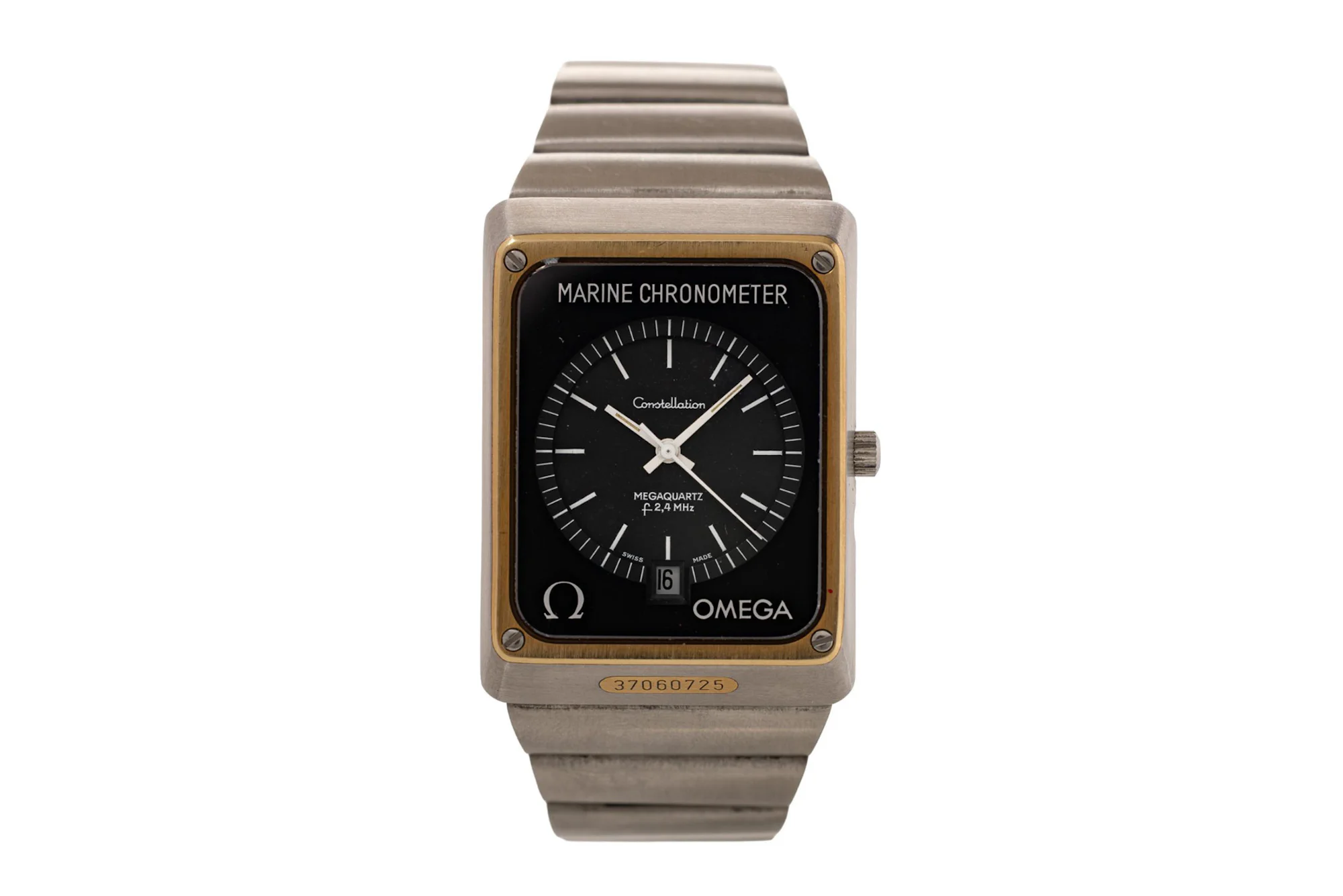
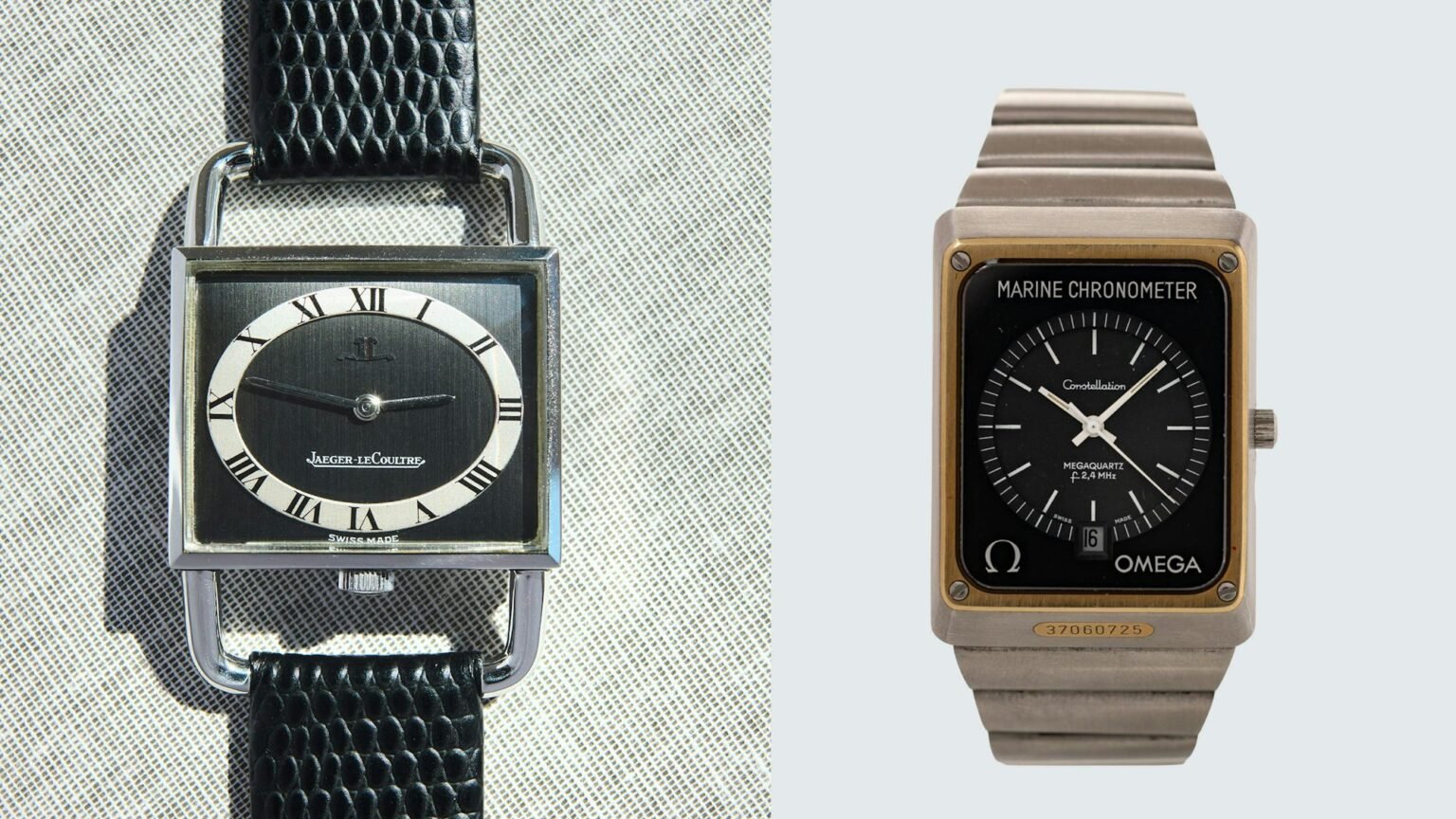
And just like mechanical movements, there are whole realms of difference among quartz movements. Obviously, everybody else already understands this, and I’m just slow, but in case you, Baller, also think in binary terms regarding quartz movements, let us consider this Omega Marine Chronometer together.
Introduced in 1974, the Omega Marine Chronometer was “the first quartz wristwatch ever to be awarded certified status as a marine chronometer.” Such a distinction came with a price—the watch was five times the price of a Speedmaster at the time (meaning it was also a fair bit more expensive than any Rolex sport watch of that era). If you know your quartz, you know that they function by vibrations and, like mechanical watches, more vibrations generally mean greater accuracy.
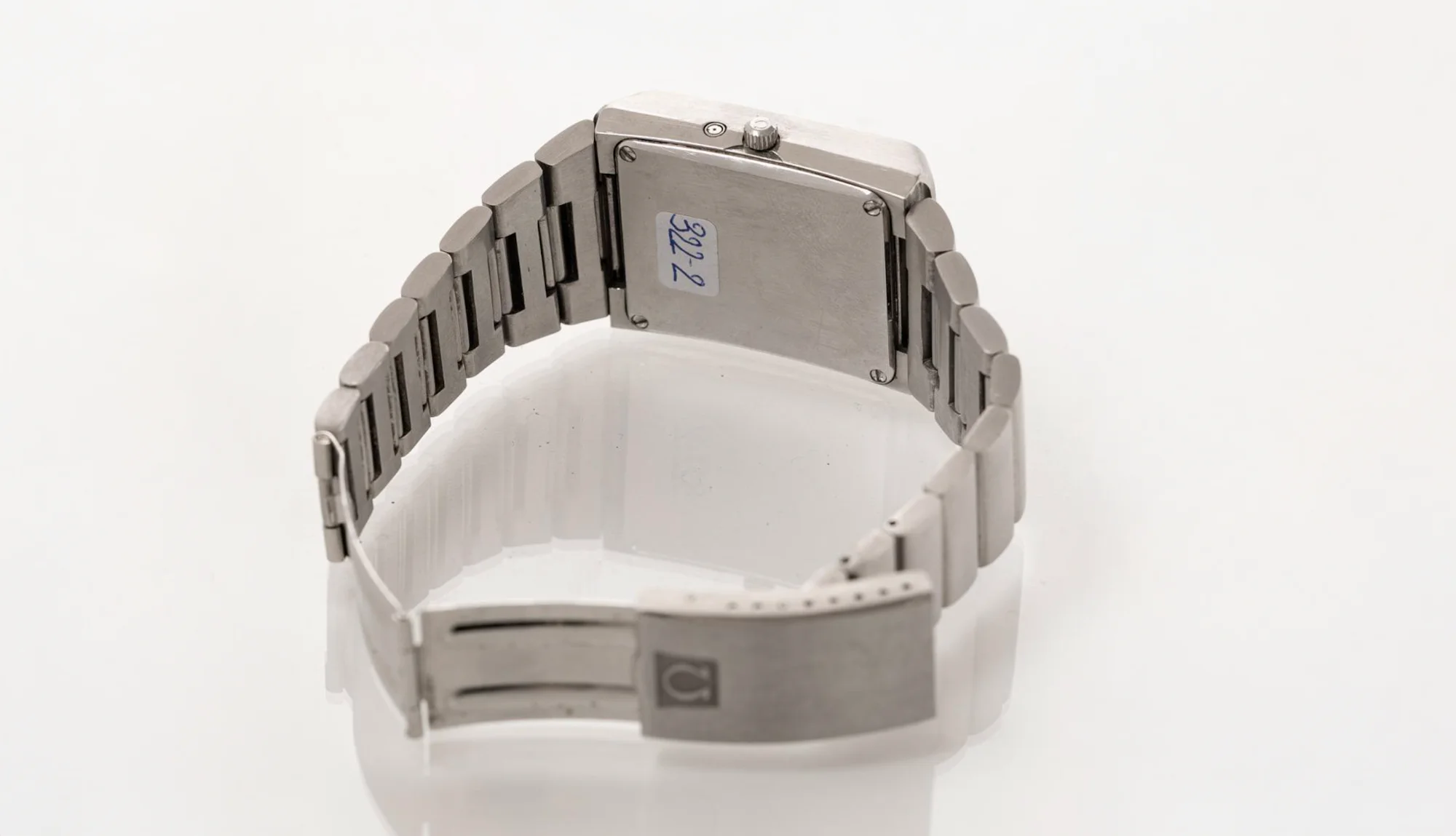
And man, did Omega go for it with the Cal 1511 powering this watch. Calling it a megaquartz movement, Omega developed a movement that vibrated at 2,359,296 Hz (science-splainer: hertz is the measurement of how frequently something vibrates). As a frame of reference, modern quartz watches are generally 32,768 Hz; the Citizen 0100, the most accurate movement I’m aware of, vibrates at 8,388,608Hz, or 256 times more than a standard quartz. The Beta 21 movement in last week’s Patek? 8,192Hz.
This example looks to be in great shape, with its case retaining its original brushing, the original gold plaque featuring the movement’s serial number, and a fairly clean dial and hands. Sadly, this doesn’t come with its original observatory papers—which were included with these models—but you can’t have everything. Somehow, with no bids at the time of writing, this watch will be auctioned on the 27th. And if this watch doesn’t quite ring your quartz bell, here’s a great Jaeger-LeCoultre Masterquartz from the same period that’s worth a gander.
As if all that weren’t enough, the Omega Marine Chronometer features a pusher on the side which allows the wearer to adjust the time by a single second (chronometry or bust!), and the movement also features independent adjustment of the hour hand, so you could change time zones without giving up accuracy.
Zenith 2000 Cal 135
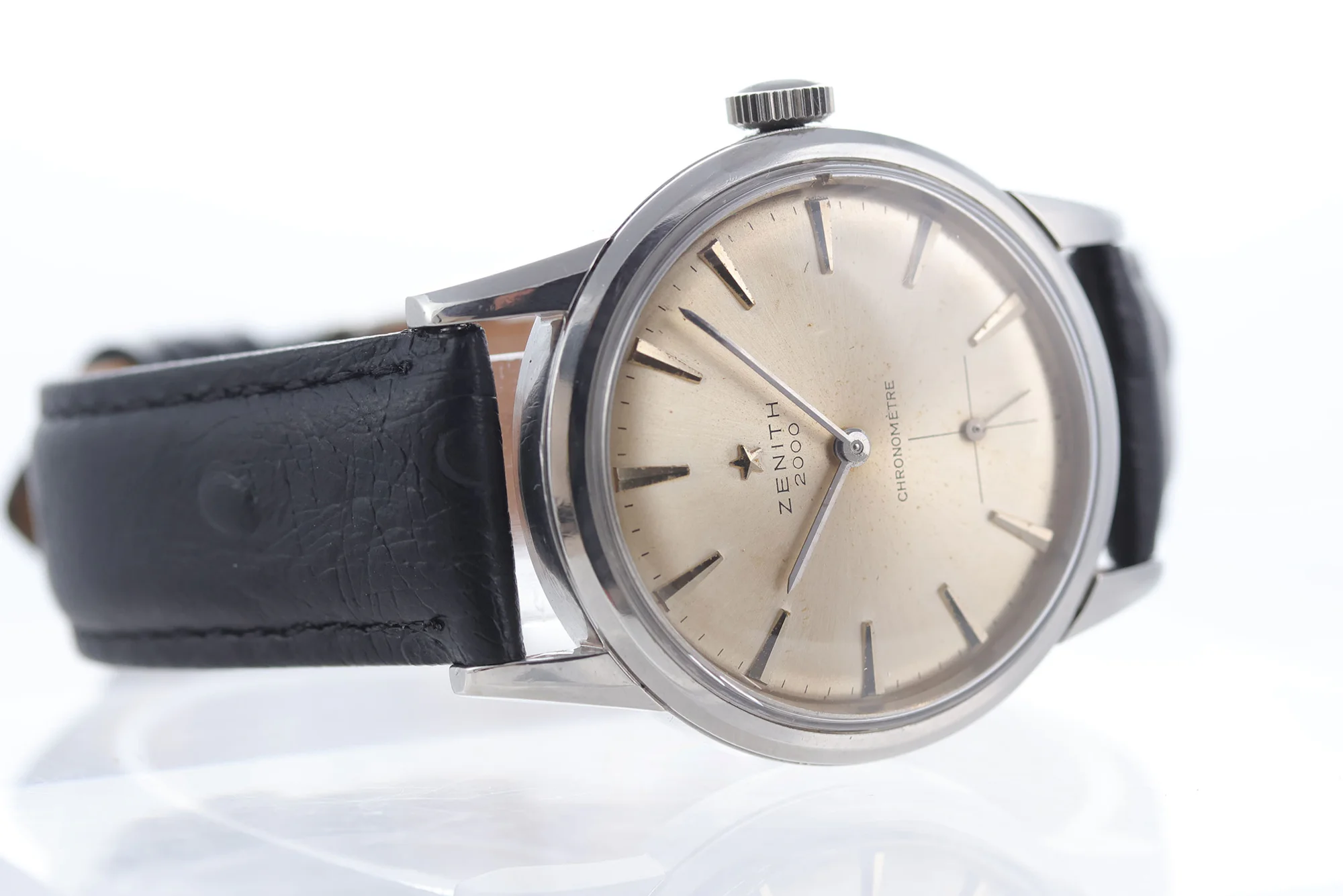
My perpetual weak spot is mid-century steel watches with the most routine steel dials imaginable, 34-36mm. The allure of such watches is that they must balance extraordinarily minor-seeming details just about flawlessly: indices on the dial, shape of the hands, width of the bezel, angle and treatment of the lugs, even the size of the crown. Such models are so plentiful that, if you’re willing, you can go a long, long time digging through various options, trying to nail down what ‘perfect’ means to you.
All of which is to say that this watch was right in the sweet spot for me, even before addressing the engine powering the watch. On offer from Sterling Vault, this Zenith 2000 features the venerable caliber 135, which not only is a movement you’re almost certainly familiar with, but which was worth it to Zenith to resuscitate because it won “five consecutive first prizes for chronometry…from 1950 to 1954, certified by the Neuchâtel Observatory.”
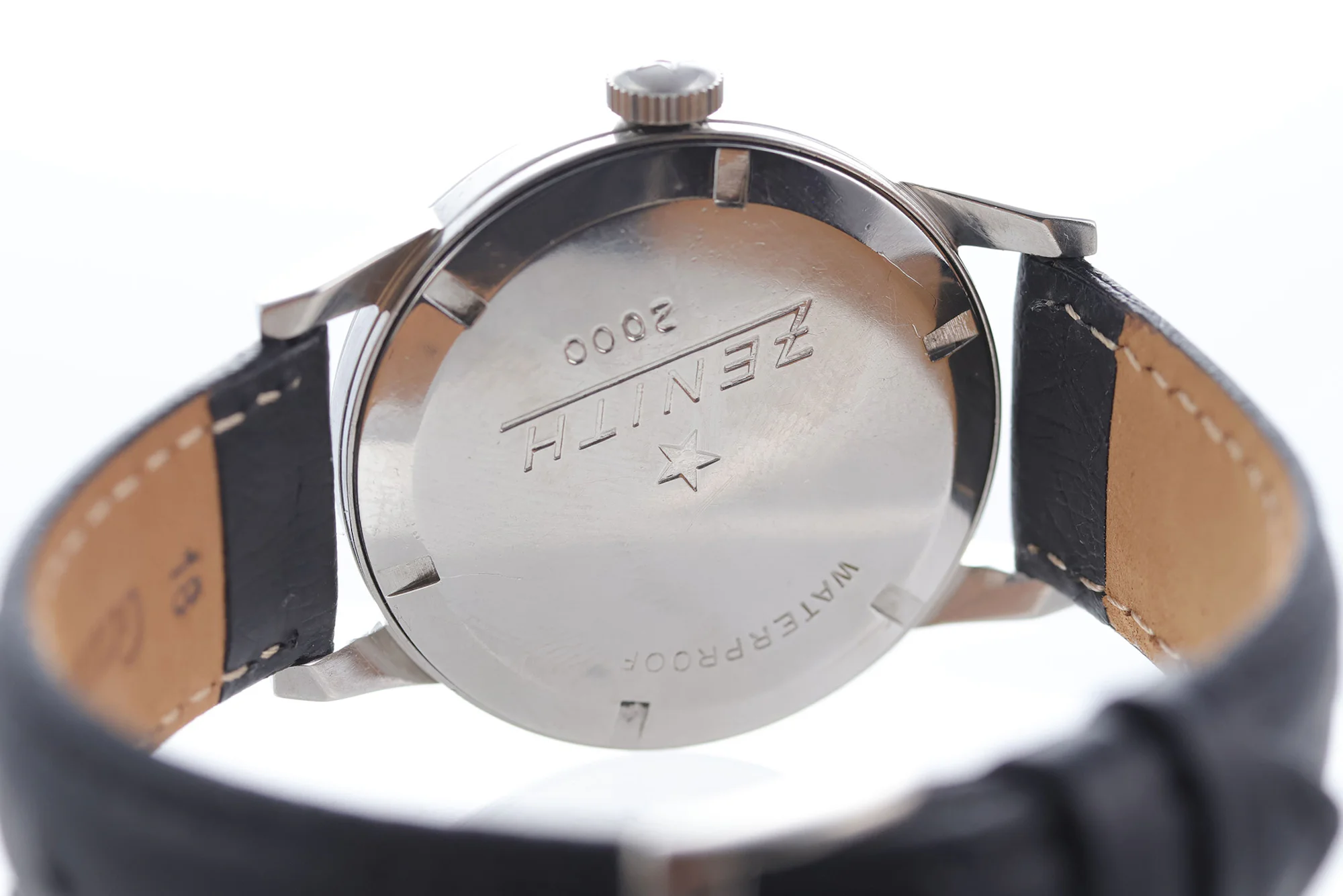
Not that you’d know such horological firepower was beneath the dial just by looking at this watch, and it’s this part I like most about these types of watches. I’m Midwestern, and we’re anti-flash on principle. I don’t know the origin of the phrase “if you know, you know,” but it’s the most Midwestern claim I can think of.
And this Zenith 2000 is a pure IYKYK watch. Sure, it’s chronometer-rated, and I’d bet you could enter a lot of rooms without anyone realizing what was on your wrist. Plus, the example genuinely looks excellent: the case is great, the crown’s original, and while the dial’s got spotting, it’s not enough to detract from the overall presentation. That it comes with its original box and a Zenith-signed buckle seems like gravy. Currently with no bids at the time of writing, this watch will sell on the 28th of May.
Marvin Ocean Chief
Watches offer strange lessons in ontology, the study of being, existence, and reality. The first instance of this, for me, was in learning about Poor Man Heuers, the watches made by Heuer but rebadged for other companies. There are, of course, plenty of other examples—Squales come to mind—but what we have today is far more narrow and, at least to me, curious and interesting.
A riddle I’ve yet to solve has to do with what I’ve accidentally ended up thinking of as The Great Concavity. I don’t mean the book; instead, I’m talking about the bezels on the early Breitling SuperOcean 1004 and Gruen Ocean Chief. Certainly, there was some logic at work in designing a bezel that is lower where it meets the crystal than its terminal edge, but I’ve never been able to understand the reasoning. Of course, my lack of understanding hasn’t prevented me from enjoying such early divers—they’re great fun, wear well, and look excellent.
But still: that bezel.
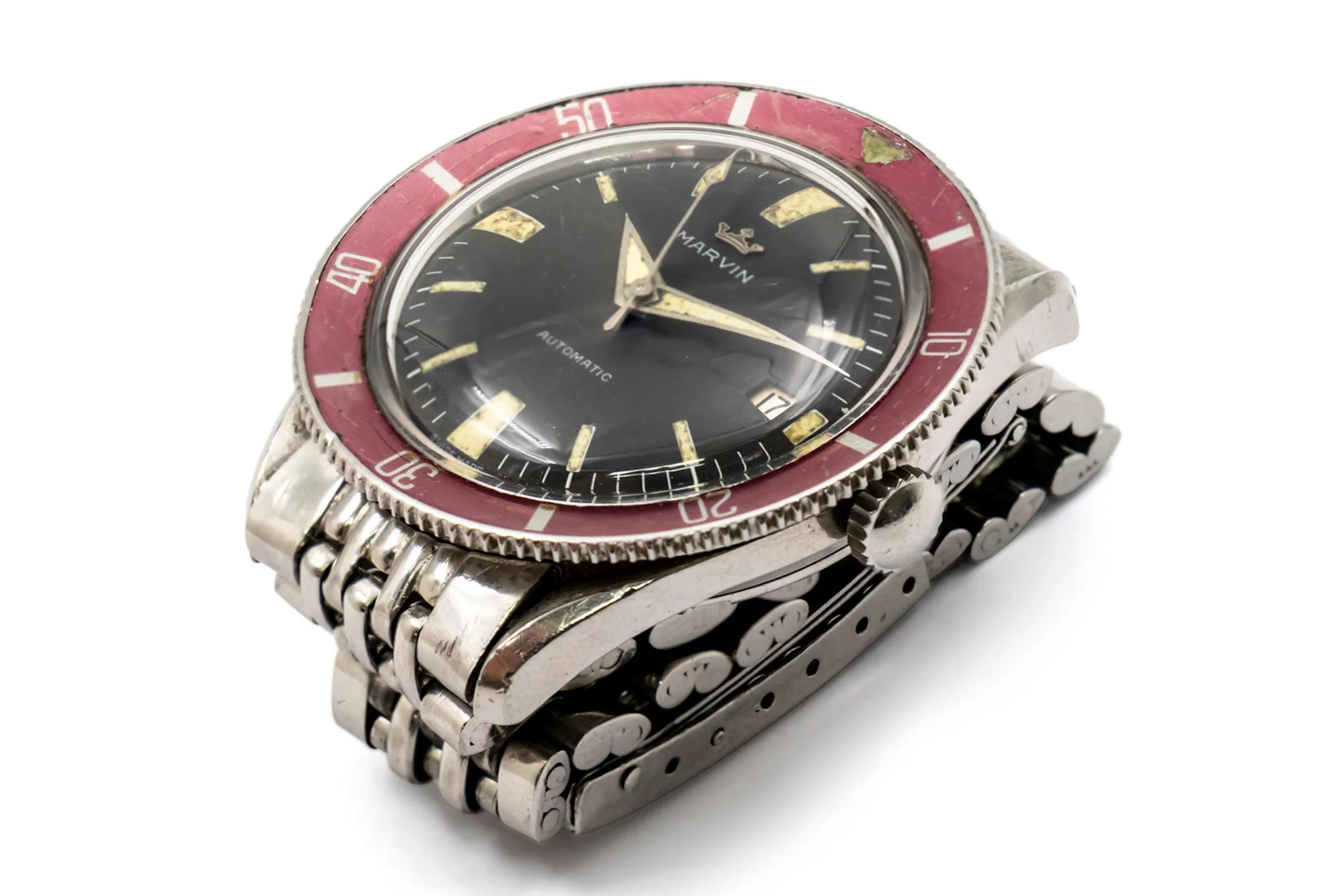
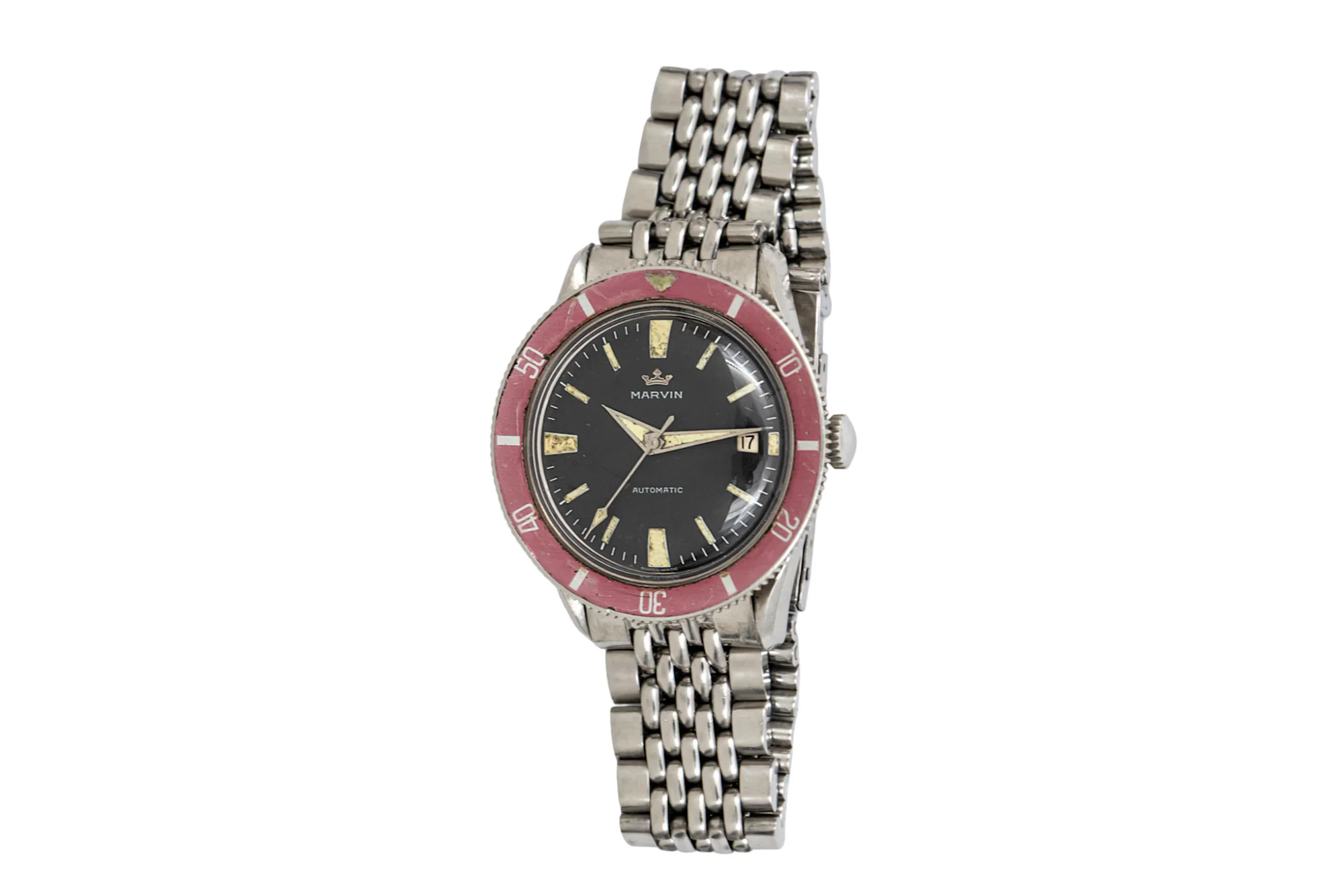
Another model from The Great Concavity is this Marvin “Ocean Chief.” The watch, in fact, isn’t an Ocean Chief at all, but its case—made by Huguenin Fréres—is identical to the one used by Gruen, hence the nickname (I’ve seen debate/discussion about whether the earliest Brietling 1004 cases were identical to the Gruen as well). The example on offer looks to be in decent vintage shape: the lume has darkened, and the case has its share of dings, but it looks right, like something that’s been used and enjoyed. It’s also huge for its time, at 39mm, though it wears flawlessly. Bid up to $190 at the time of writing. The auction commences on the 26th.
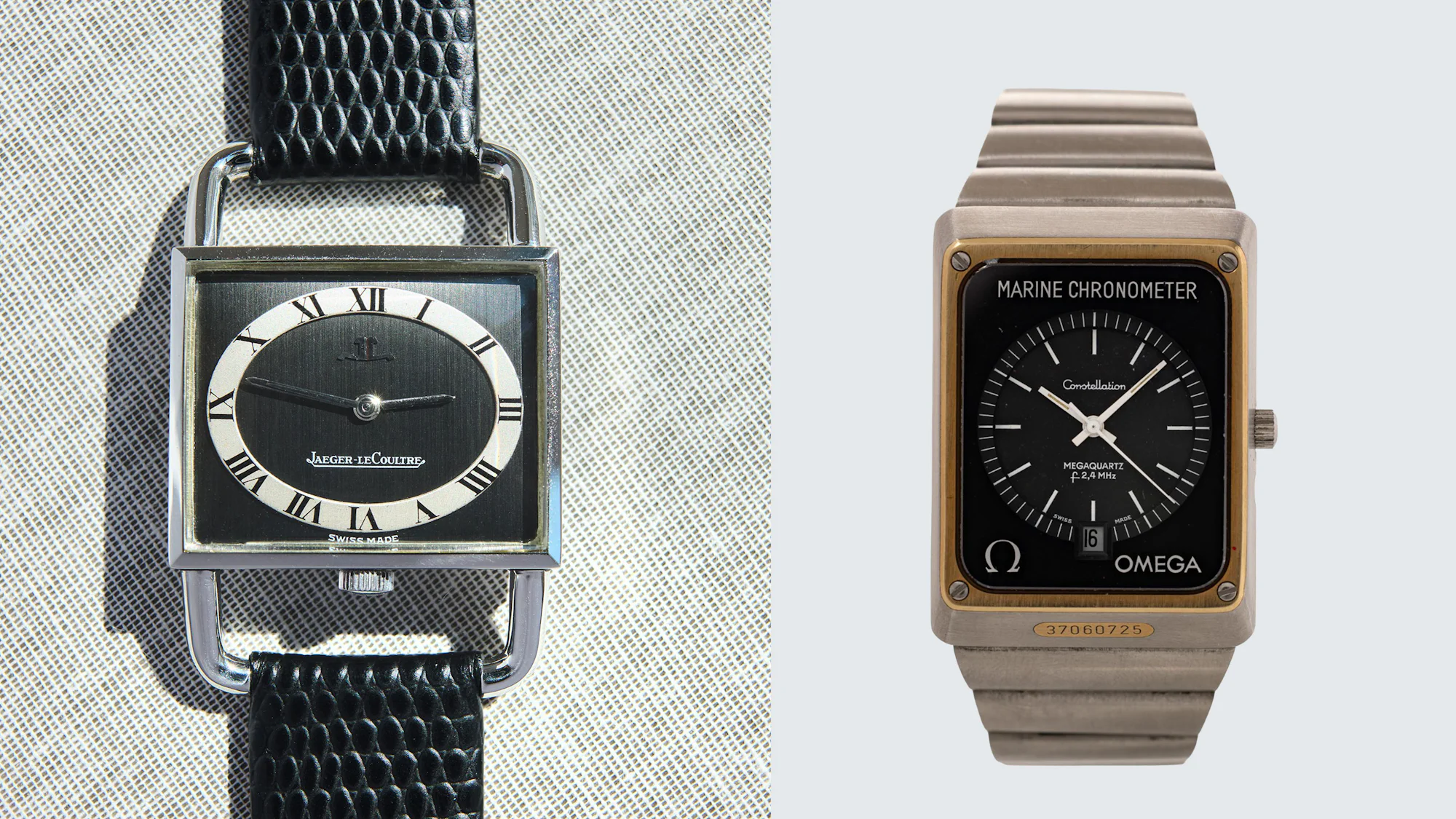
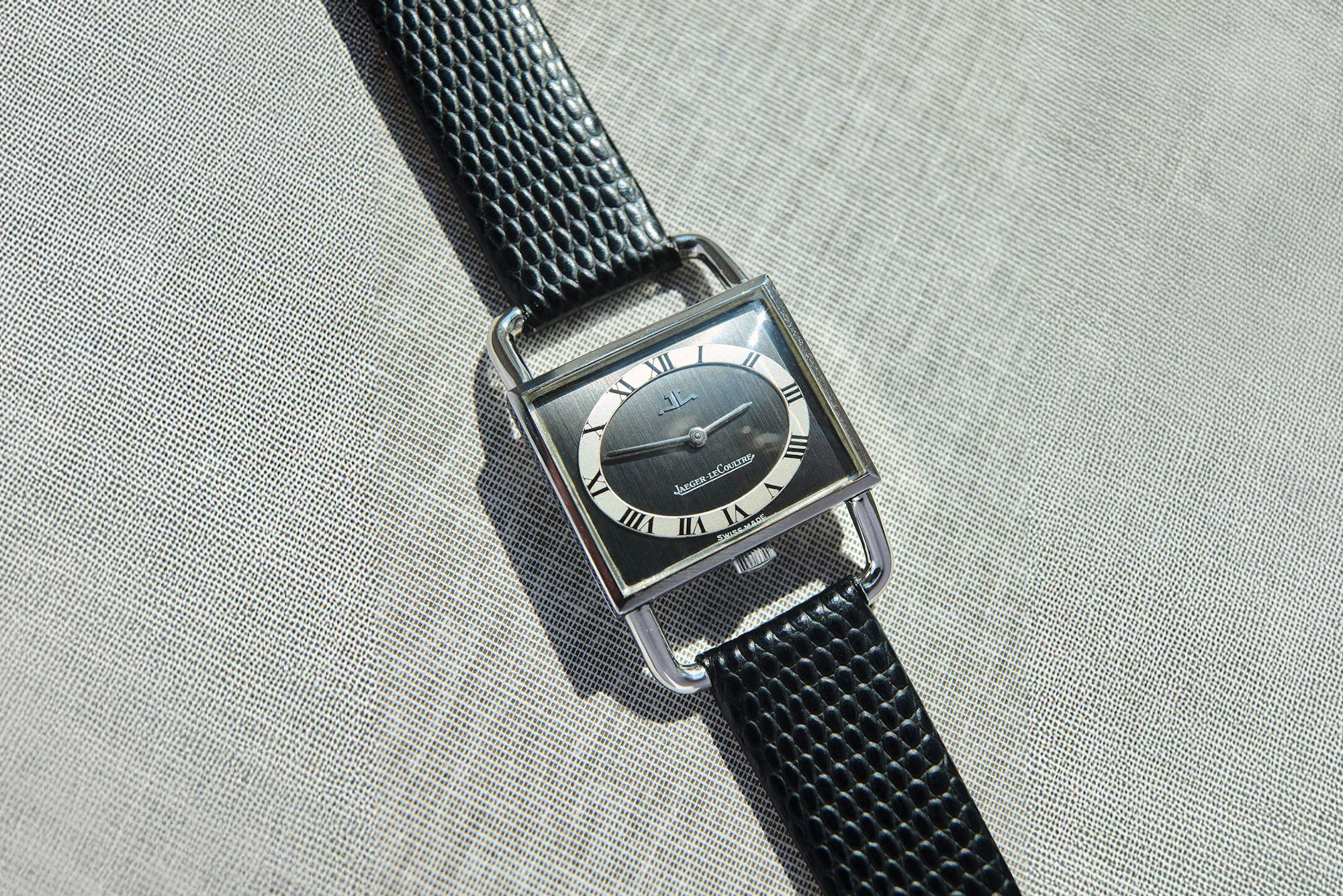
Jaeger-LeCoultre Étrier
Even now, years and years into paying attention to watches, I don’t hide my screen from my wife, but I try to minimize how frequently she can look over and see that I am, yet again, staring at watches on my phone. I’m not embarrassed, and my wife’s as accommodating and understanding as anyone could hope for, but she’s also not sick like the rest of us, obsessed with esoterica, her heart staying civilian-steady while I go bananas over something.
All of this is what makes it so fun when she looks over and asks, “What’s that?” as she did when she spotted me ogling this JLC Étrier.
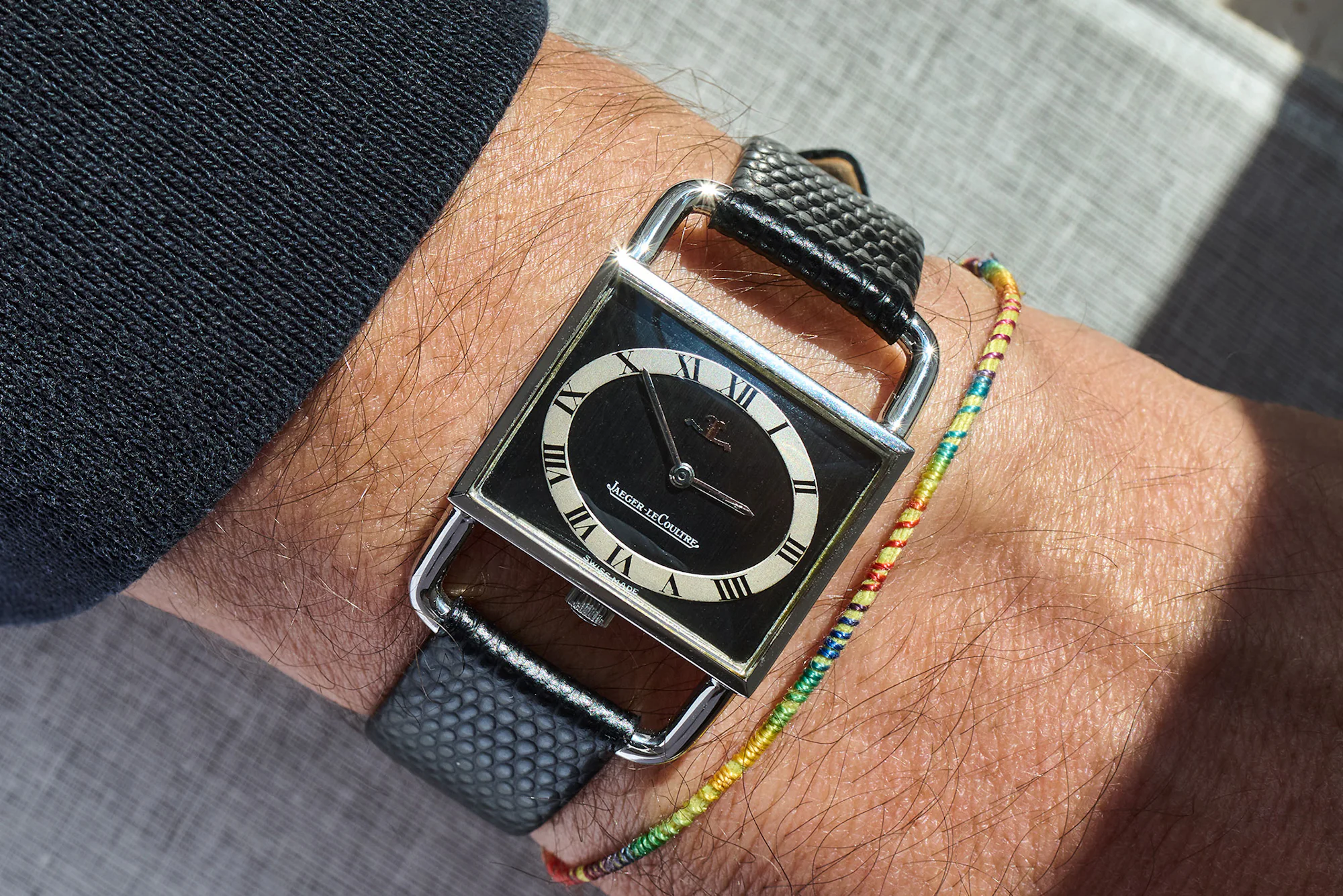
You’ve seen this watch, or some version of this watch, plenty of times before. In production from the 1930s until the ’70s, Étrier (translated to ‘yoke’ in English) refers, according to someone who knows a whole lot about LeCoultre, to the lug shape. Perhaps, like me, you’d mistakenly thought of these watches as LeCoultre Hermès watches this whole time—the link above’s got you covered on vanquishing that confusion as well.
The example, available for €3,500 from Rare Birds, is not only lovely but also decently sized. If it seems a little silly to claim a 28.5mm watch is ‘decently sized,’ most examples of this model are under 20mm. Given that it’s an over-50-year-old dress watch, the Étrier from Rare Birds seems in fantastic shape, with a clean, dynamic dial and a case that appears to have been well cared for.