
From the imposing astronomical clocks of Tudor England to the exquisite pendant watches of Victorian Britain, timekeeping has long been a symbol of power, prestige, and technological marvel within Europe’s royal courts. This new series explores the fascinating evolution of clocks and watches crafted specifically for royalty, tracing how these intricate masterpieces reflected the tastes, ambitions, and innovations of monarchs. Through the lens of craftsmanship, artistry, and historical significance, we reveal how these royal timepieces marked the passage of dynasties and empires.
Louis XIV (1638–1715), the ‘Sun King’, was not only a patron of the arts but also an avid collector of scientific instruments, clocks, and watches. His interest reflected both his fascination with astronomy and mechanics, and his desire to project royal magnificence through technological marvels.
Louis XIV ascended to the throne of France as a child, inheriting the crown at just four years old after the death of his father, Louis XIII. His early years were shaped by regency under his mother, Anne of Austria, and the powerful guidance of Cardinal Mazarin, who navigated the kingdom through internal rebellions and European conflicts.
Emerging from this formative period, Louis assumed full control of the kingdom at the age of 23, determined to consolidate royal authority and establish himself as the embodiment of absolute monarchy. His rise to power was not just a succession of events, but the deliberate forging of a king whose reign would define France for generations.
Louis reigned over France for more than seven decades, shaping not only the destiny of his kingdom but the very image of monarchy in Europe. He designated the palace of Versailles the seat of the French court in 1682. From the dazzling halls of the palace to the battlefields of Europe, his rule embodied absolute power, artistic grandeur, and a relentless drive to centralise authority.
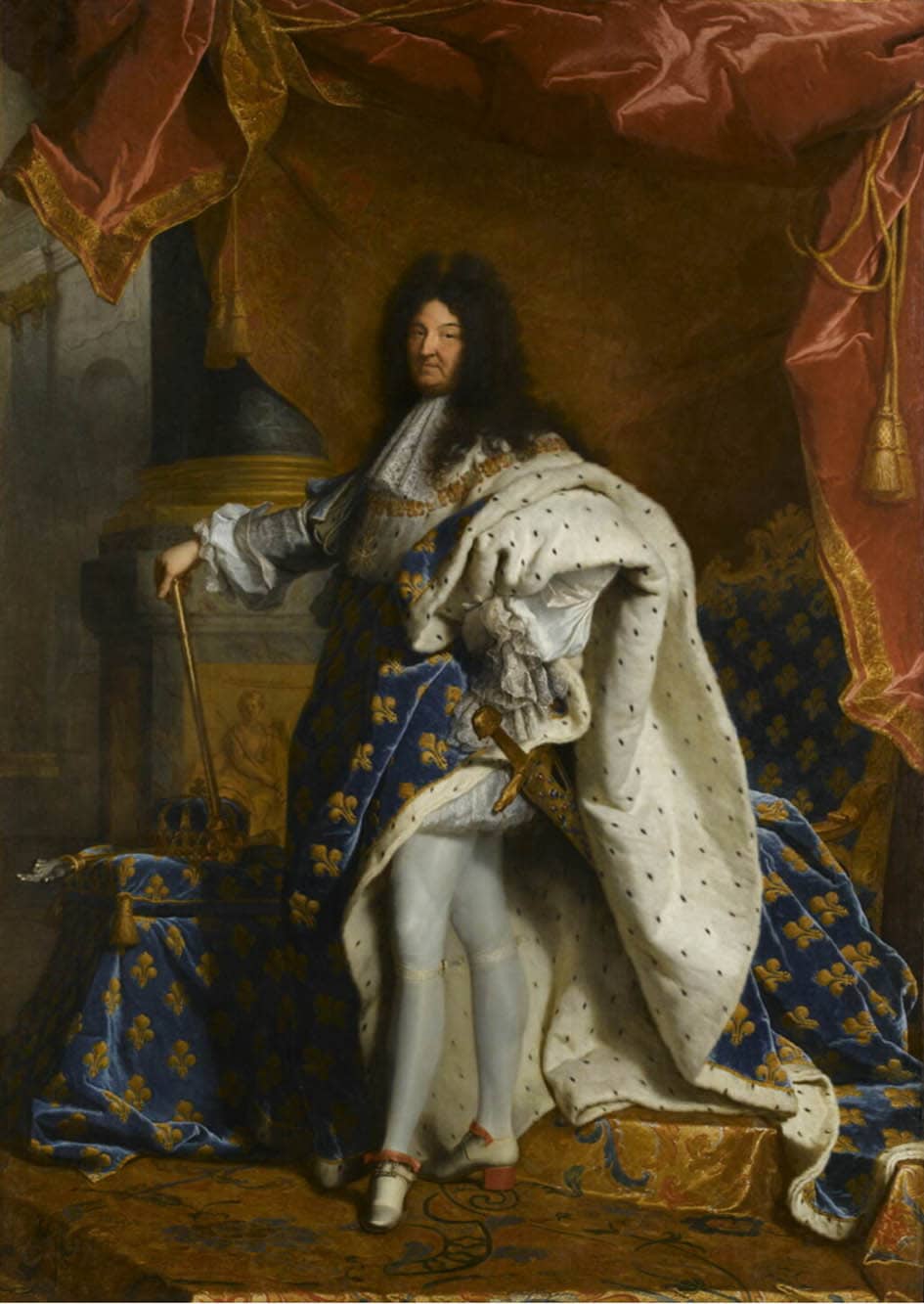
Louis XIV (1638-1715), Roi de France, Hyacinthe Rigaud, École de France, c.1701. Musée du Louvre
A patron of the arts and sciences, he turned his court into a stage where politics, spectacle, and symbolism merged — with himself always at the centre. To understand Louis XIV is to understand the ambitions, brilliance, and contradictions of 17th-century France.
A Royal Court of Science and Innovation
Louis XIV’s court at Versailles was more than a stage for pomp and ceremony, it was a hub of intellectual curiosity and technological marvels. The ‘Sun King’ surrounded himself with the finest minds of his era, from astronomers and mathematicians to master clockmakers, reflecting his ambition to position France at the forefront of science and innovation.
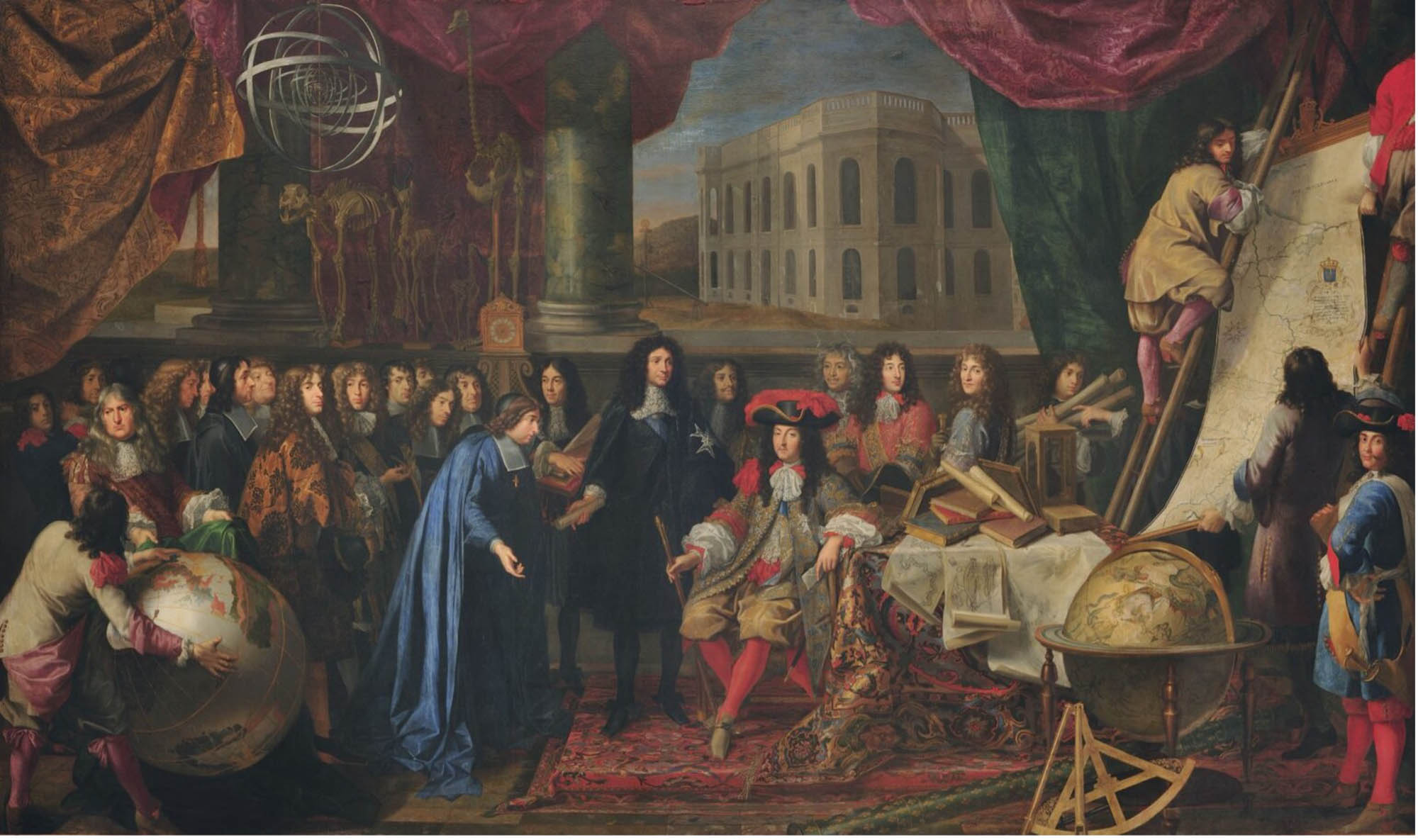
Establishment of the ‘Academie des sciences’ and foundation of the ‘Observatoire’ by Henri Testelin, 1673
For Louis XIV, science was a tool to strengthen his power and prestige. Astronomy supported navigation, trade, and maritime dominance, while the establishment of the Royal Academy of Sciences (1666) and the Paris Observatory (1667) attracted leading European scientists to serve the French state (above). Note the clock at the back of the painting with Christiaan Huygens (inventor of the pendulum) standing in front of it.
The Academy’s expertise helped transform Versailles into a symbol of royal grandeur, from its lavishly engineered gardens and fountains to its exotic menagerie, which showcased power, served diplomatic purposes, and provided material for scientific study.
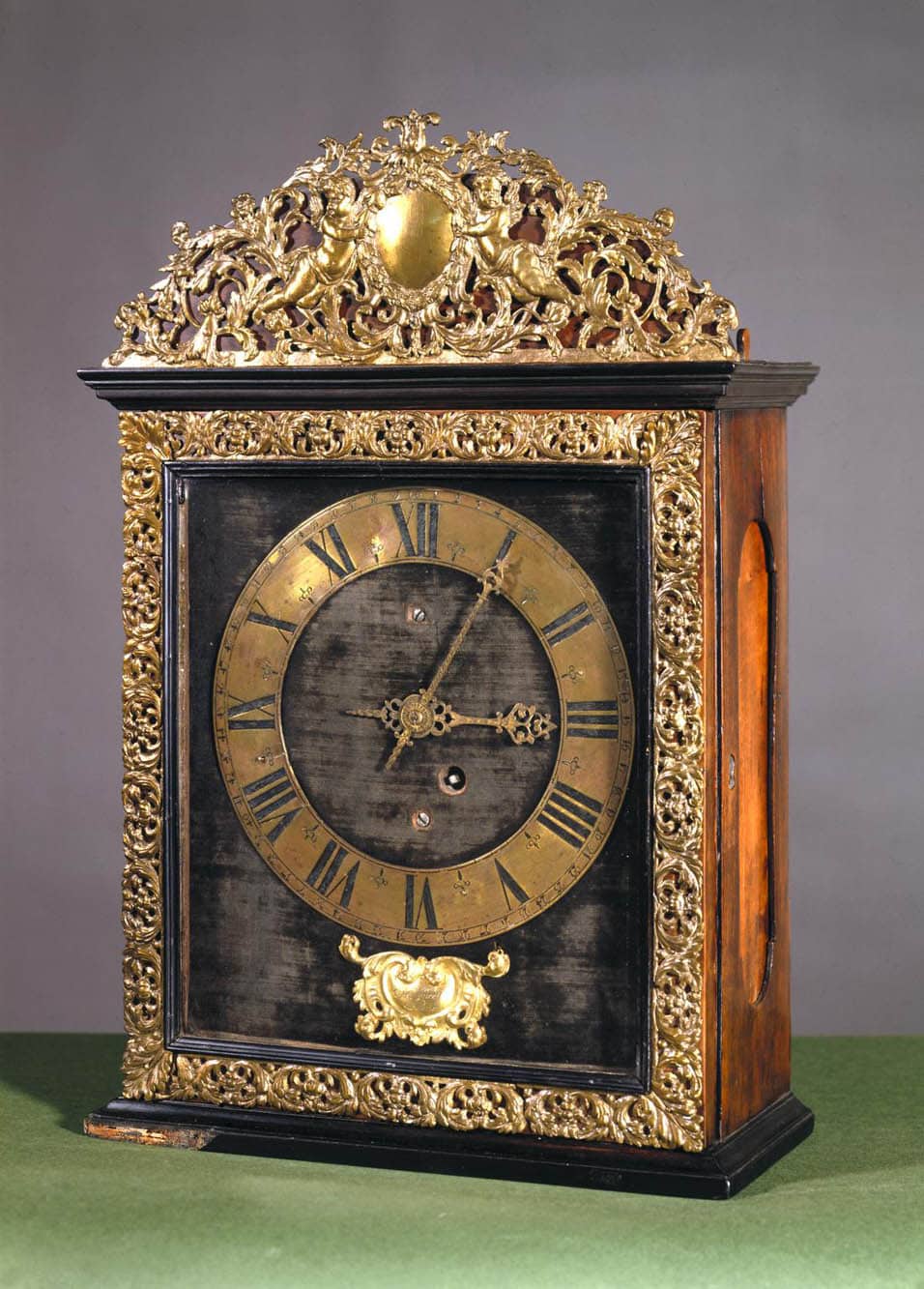
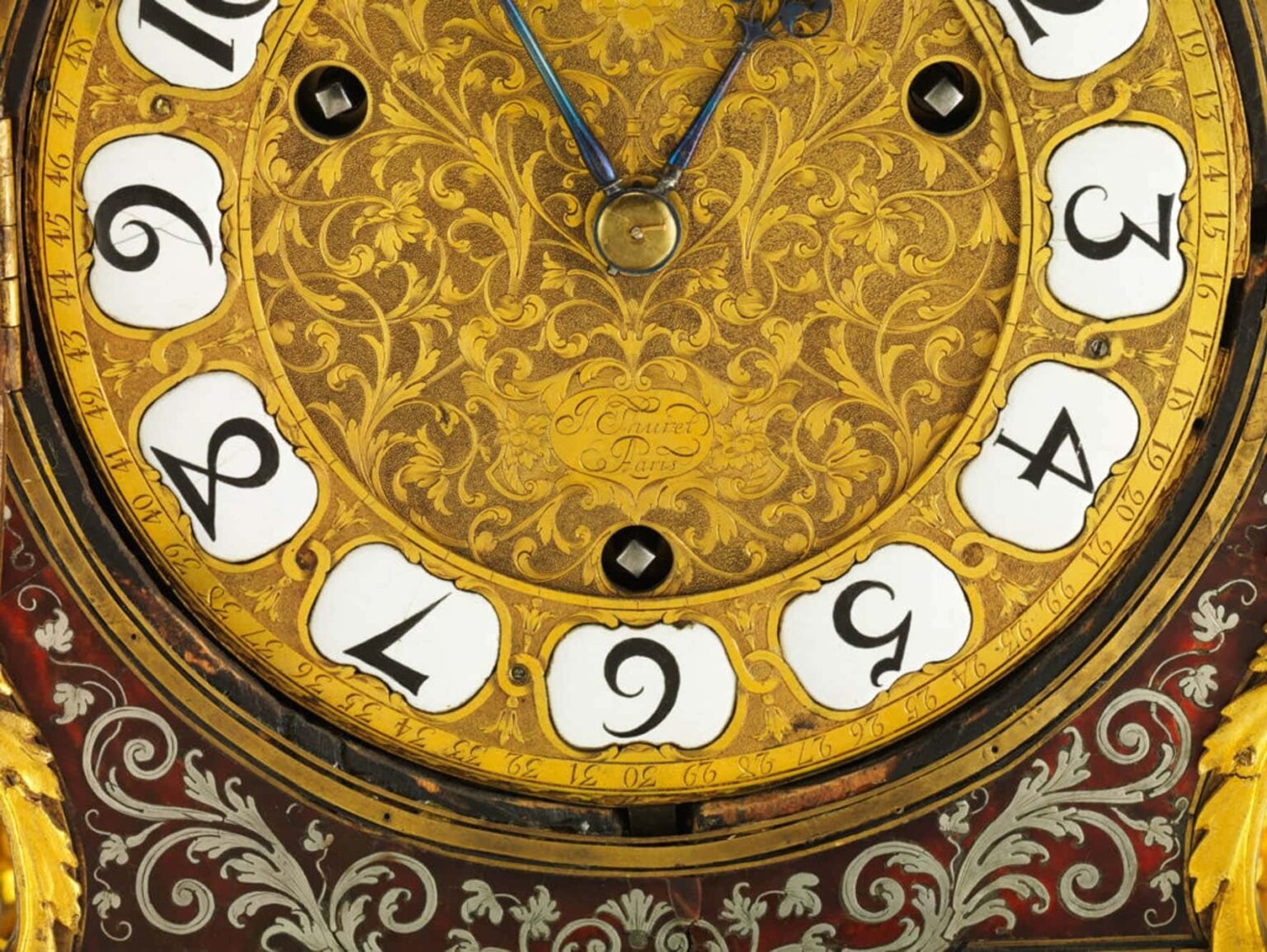
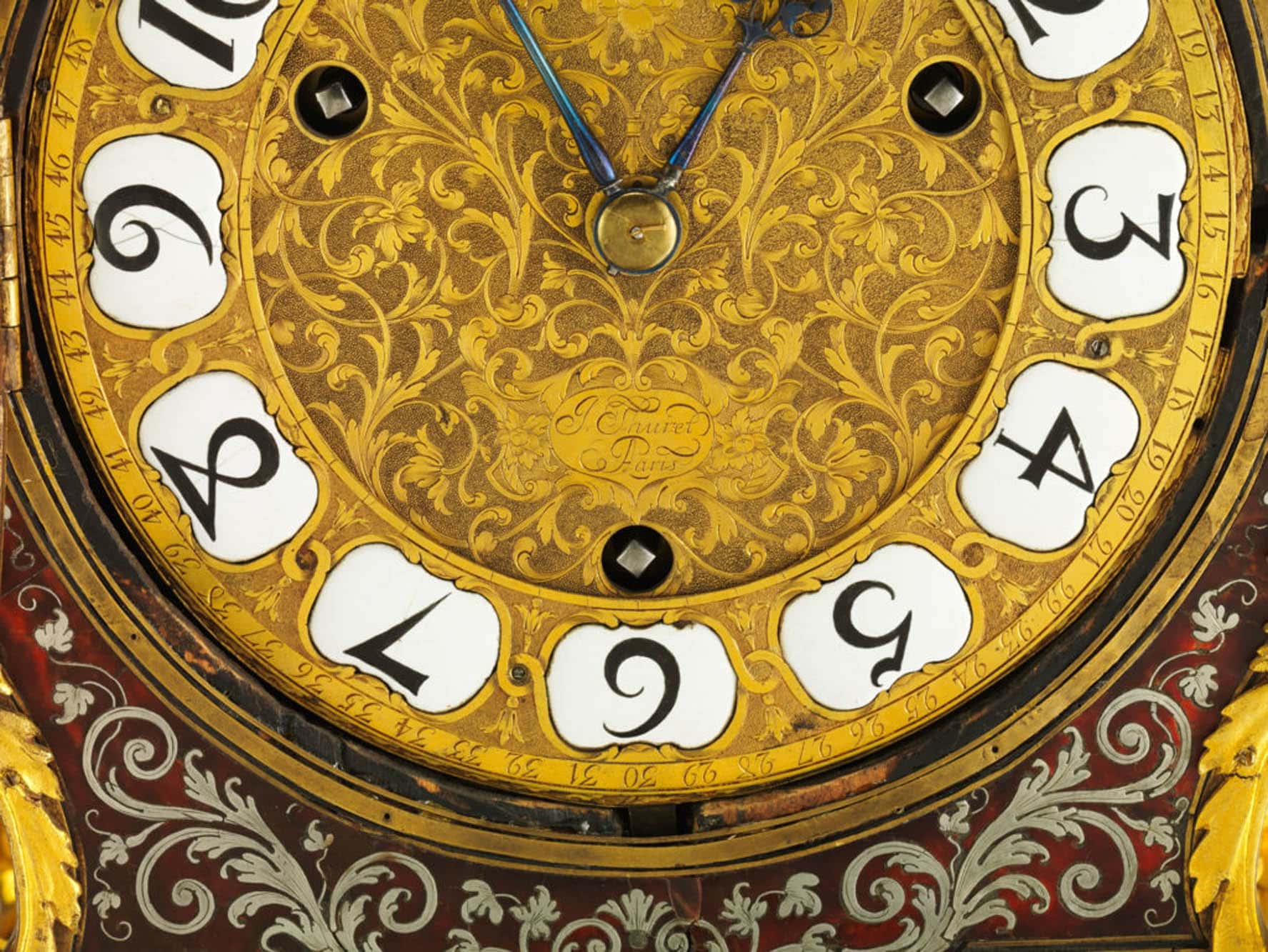
His goal was to attract some of the best and brightest scientific minds in Europe to work directly for the French state and enhance France’s scientific reputation. Prominent French clockmaker and mechanic, Isaac Thuret, widely regarded as one of the most skilled artisans of his time was the official clockmaker to the king, producing ornate and highly accurate clocks for Versailles and other royal residences. He helped implement Christiaan Huygens’ pendulum clock design, translating the scientific principle into practical, reliable mechanisms, evident in the above image.
Symbols of Royal Prestige
André-Charles Boulle (1642–1732) was not just a craftsman, but a key figure in Louis XIV’s strategy of glorifying the monarchy through art and design, making his work inseparable from the image of the Sun King’s court. Boulle’s creations such as this magnificent wardrobe incorporating a clock, below, projected the King’s grandeur and taste for luxury, reinforcing Versailles as a stage for political authority and cultural dominance.
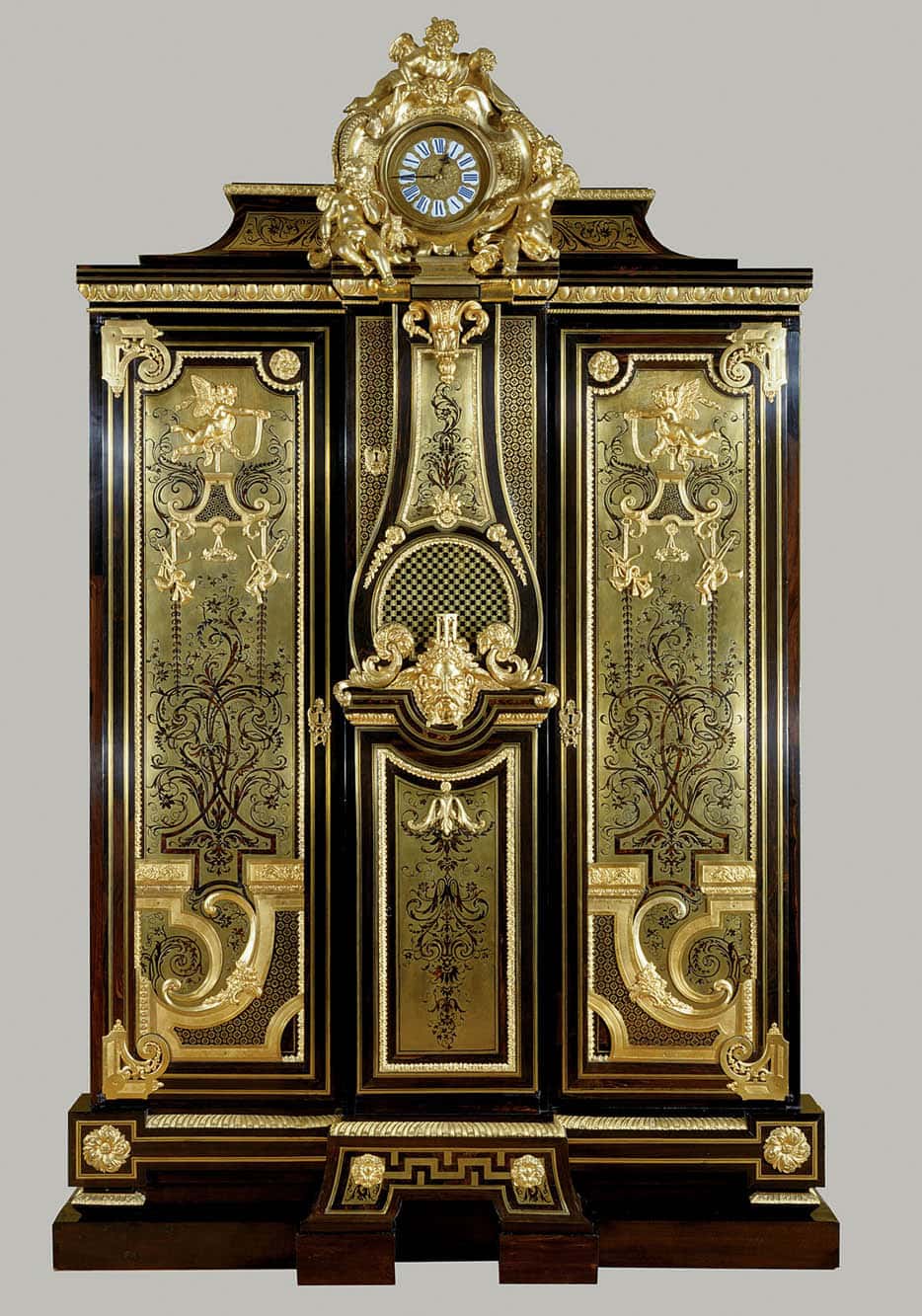
Wardrobe and clock, attributed to André Charles Boulle, movement by Pierre Gaudron, c.1715 © The Trustees of the Wallace Collection
Boulle was a renowned French cabinetmaker and decorative artist, widely regarded as the master of marquetry. He is especially famous for creating elaborate furniture and decorative objects using Boulle marquetry, a technique combining tortoiseshell, brass, and sometimes pewter to produce intricate patterns.
Appointed ‘Premier ébéniste du Roi’ (First Cabinetmaker to the King), Boulle’s work was central to furnishing Versailles, the symbol of Louis XIV’s absolute monarchy. He elevated furniture and decorative arts to courtly spectacle, blending artistic mastery with technological ingenuity in clocks, desks, cabinets, and other luxury items.
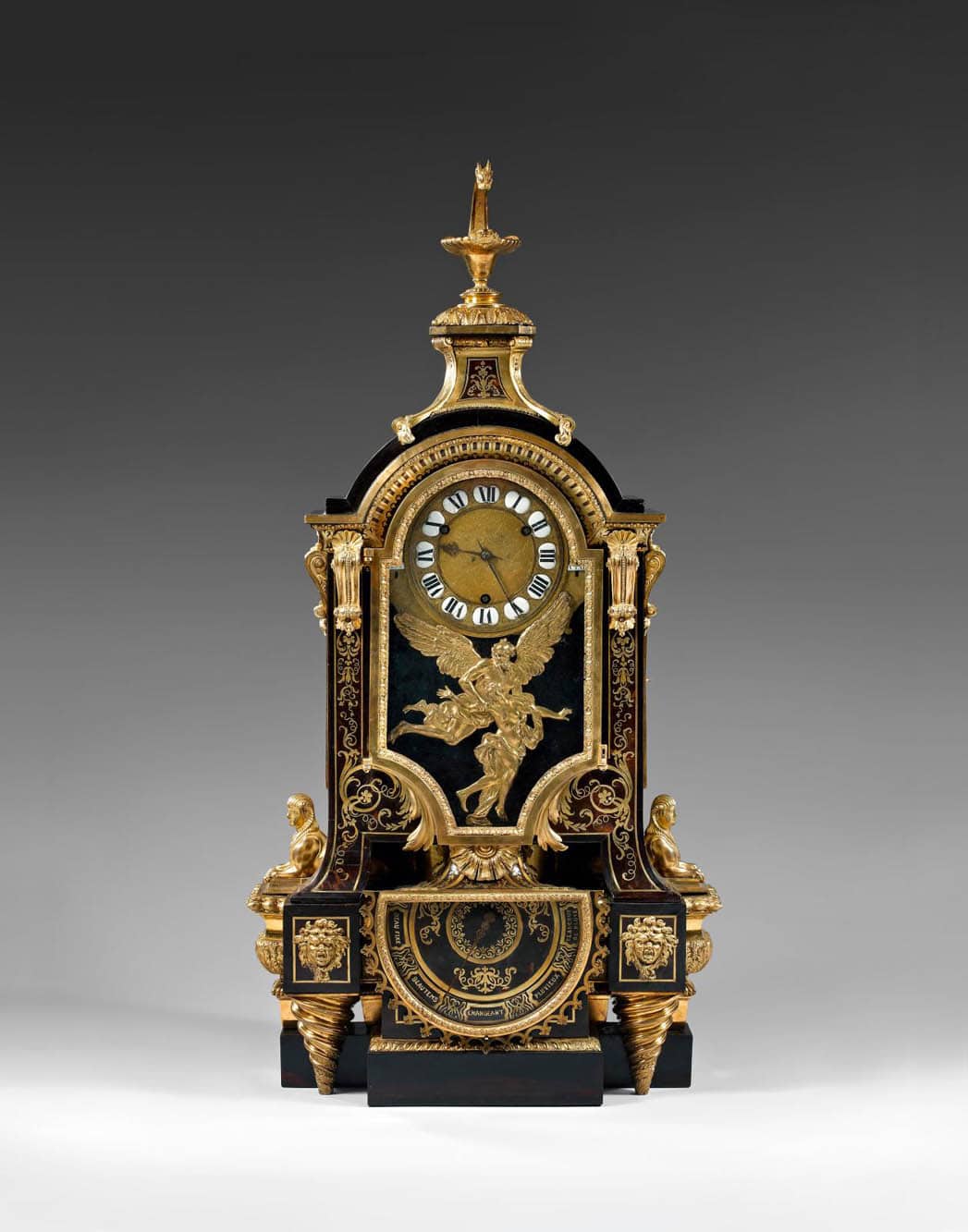
Boulle often worked with leading clockmakers Isaac Thuret and Pierre Gaudron to create ornate clocks, combining mechanical precision with stunning visual design, as is the case with the splendid example above.
The King’s Day was timed to the minute to allow the officers in his service to plan their own work accordingly. From morning to evening his day ran like clockwork, to a schedule that was just as strictly ordered as life in the Court.
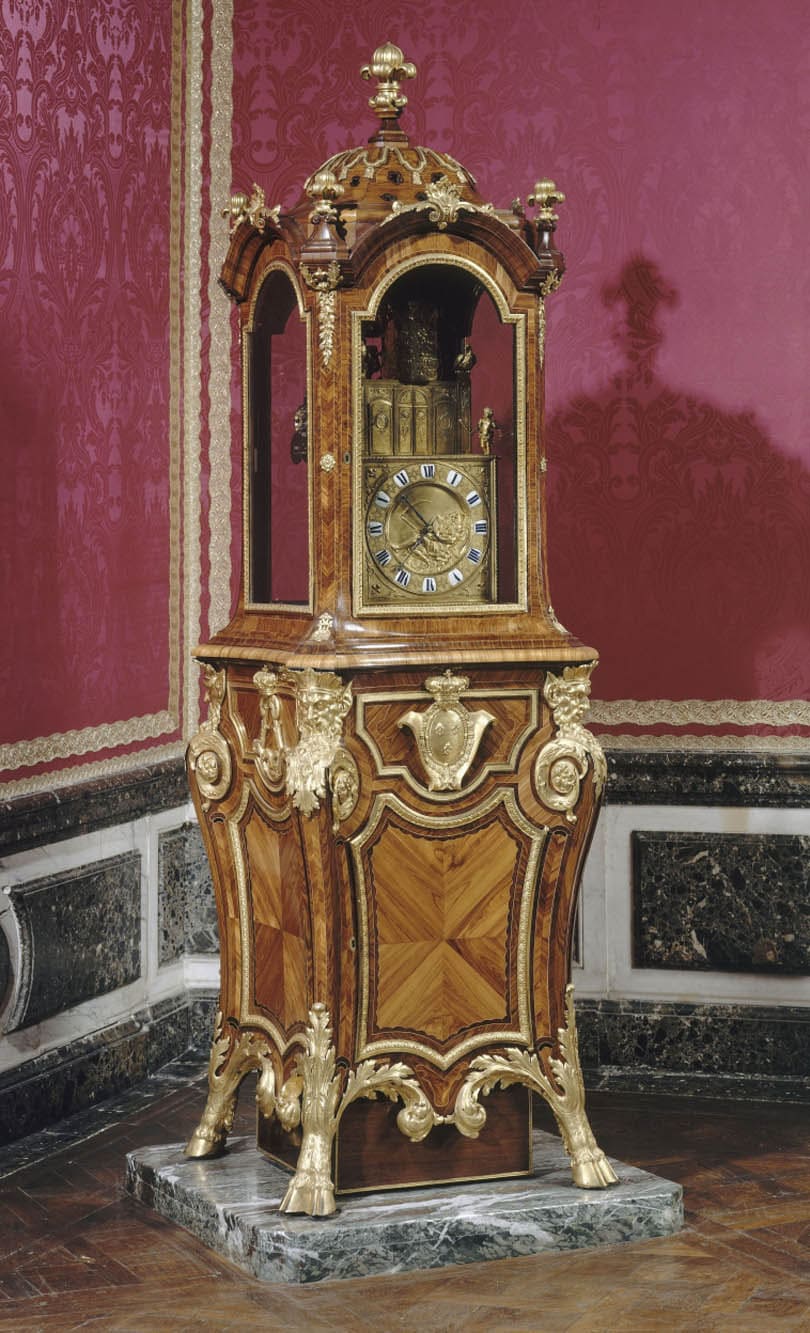
This impressive automaton clock was made by Antoine Morand and presented to Louis XIV in 1706. It was placed in the Salon de Mercure (Salon of Mercury) at the palace of Versailles, where it still resides today. On each hour strike, the clock performed a miniature spectacle with figures of Louis XIV and Fame descending from a cloud to appear before the viewer. Its design allowed viewers to peer through the case via glass panels, revealing the intricate clockwork and automaton mechanism at work (as seen below).
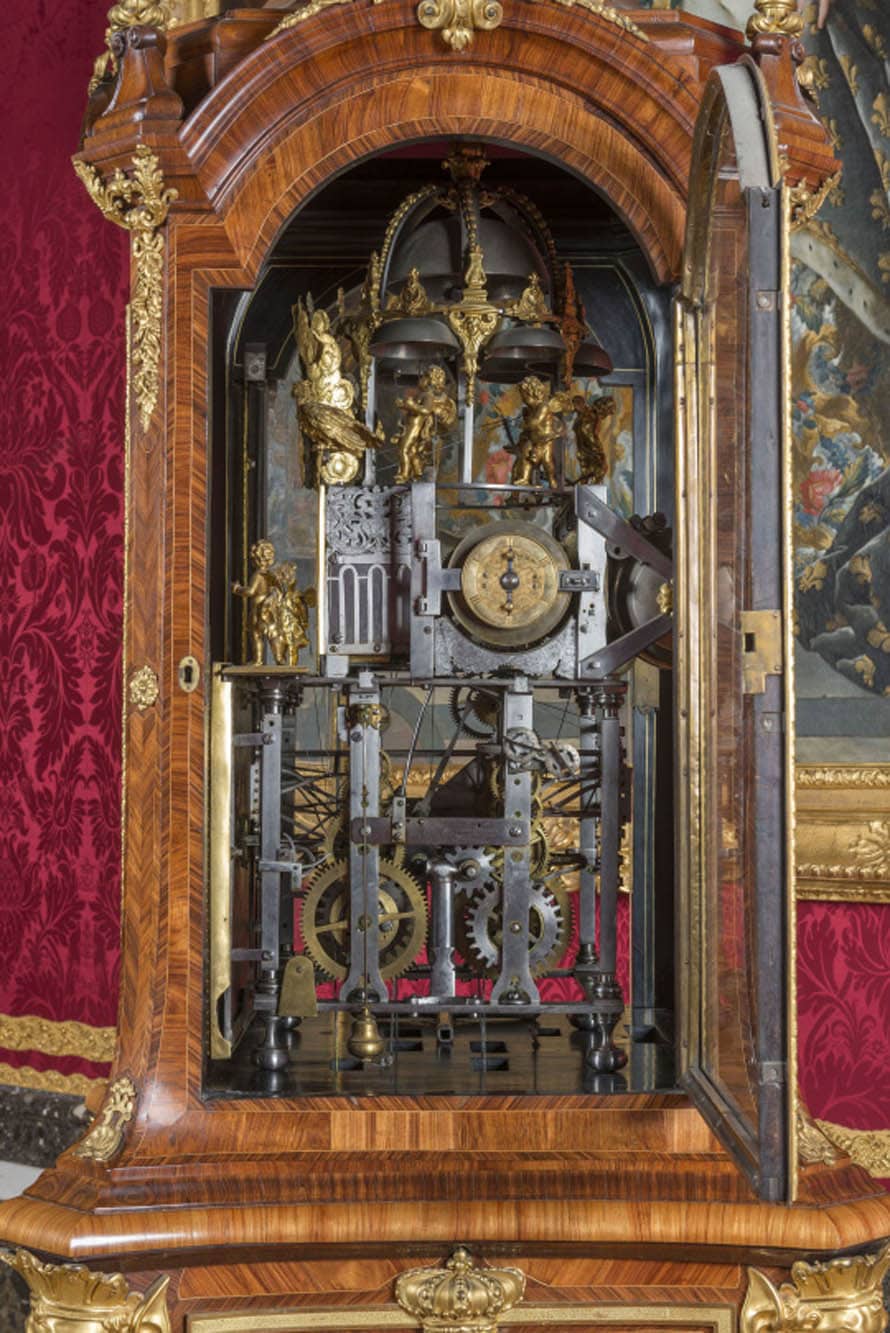
Movement of the automaton clock made for Louis XIV’s grandson, Antoine Morand, c.1706, Palace of Versailles. Public Domian
This automaton was not merely a timepiece, it was a symbol of royal authority and grandeur, marrying technological ingenuity with dynastic propaganda, presenting Louis XIV as a timeless, glorified monarch greeted by Fame herself. Blending engineering precision with staged movement, the clock exemplified how Louis deployed technology as a form of royal spectacle. It epitomised the era’s fusion of science, art, and sovereign imagery, hallmarks of the Sun King’s reign and the culture of Versailles. This extraordinary automaton clock remains a vivid illustration of how timekeeping, spectacle, and symbolism intertwined at the heart of Louis XIV’s court.
A Lasting Legacy of Opulence and Power
When Louis XIV died on the 1st of September 1715 at Versailles, the event marked the end of a reign that had lasted an astonishing 72 years, the longest of any monarch in European history. He was succeeded by his great-grandson, Louis XV, who was just five years old when he came to the throne. This meant that again a regency was required. This important role was given to Philippe II, Duke of Orléans, who became Regent of France until Louis XV came of age.
Louis XV expanded on Louis XIV’s support of the Académie des Sciences and personally supported projects in astronomy, geography, and medicine, encouraging innovation useful for navigation, trade, and the military. He commissioned the ‘Passemant Astronomical Clock’ (below), a marvel that embodied both scientific precision and artistic grandeur.
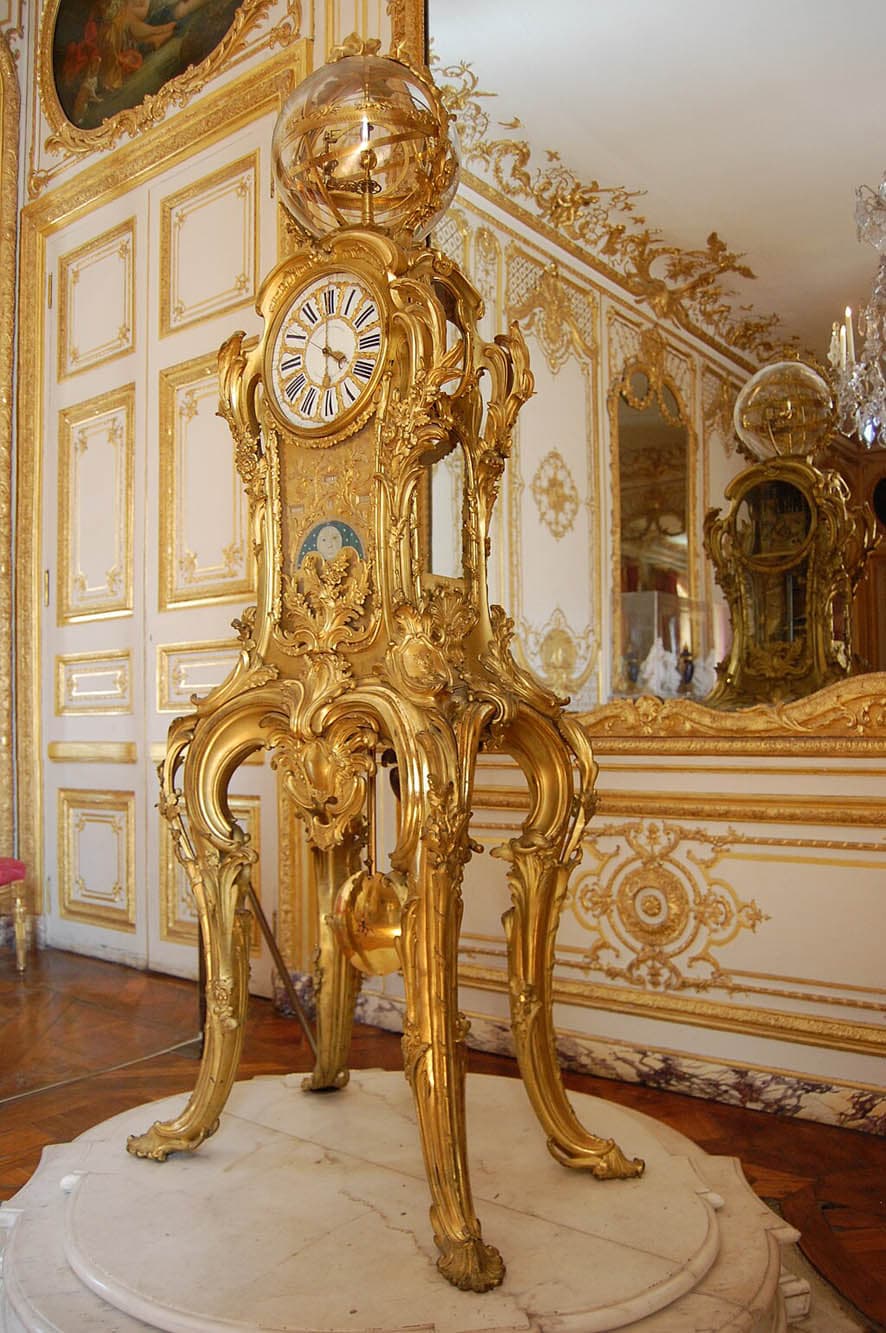
The clock, designed by the mechanical engineer Claude-Siméon Passemant, took around 30 years to build. The mechanism was made by clockmaker Louis Dauthiau and the creation of the cabinet in gilt bronze to Jacques Caffieri. After being examined and approved by the French Royal Academy of Science in 1749 and installed in the Palace of Versailles in 1754, the clock was immediately recognised as an extraordinary item.
In my opinion, one of the most extraordinary timepieces in the palace of Versailles is the Clock of the Creation of the World (below), also by Claude-Siméon Passemant. I was fortunate to see this exceptional masterpiece clock when it was on show at the recent Versailles: Science and Splendour exhibition at the Science Museum in South Kensington, London.
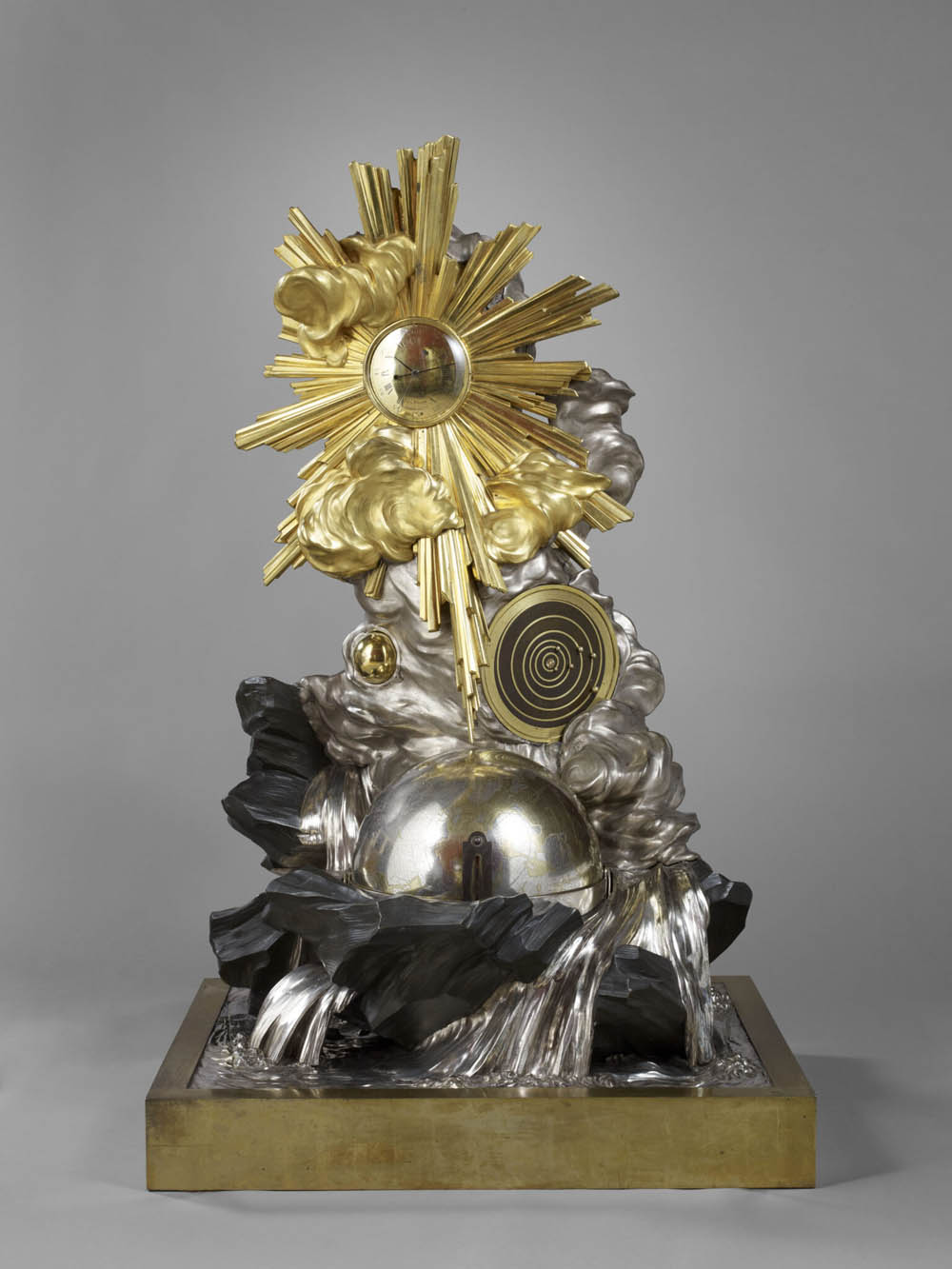
The Pendule de la Création du Monde presented to Louis XV (also in 1754), was one of the most complex pieces of horological engineering of its time. This fantastic astronomical clock embodies the fusion of scientific curiosity and royal grandeur, showcasing Versailles’ brilliance through its mechanical marvels. It was intended to impress with its scale, originality and complexity.
Although Louis XVI continued to passionately support new technologies, such as balloon flight (see below), mechanical innovations and improvements in navigation, it was an age when the population were increasingly questioning the monarchy.
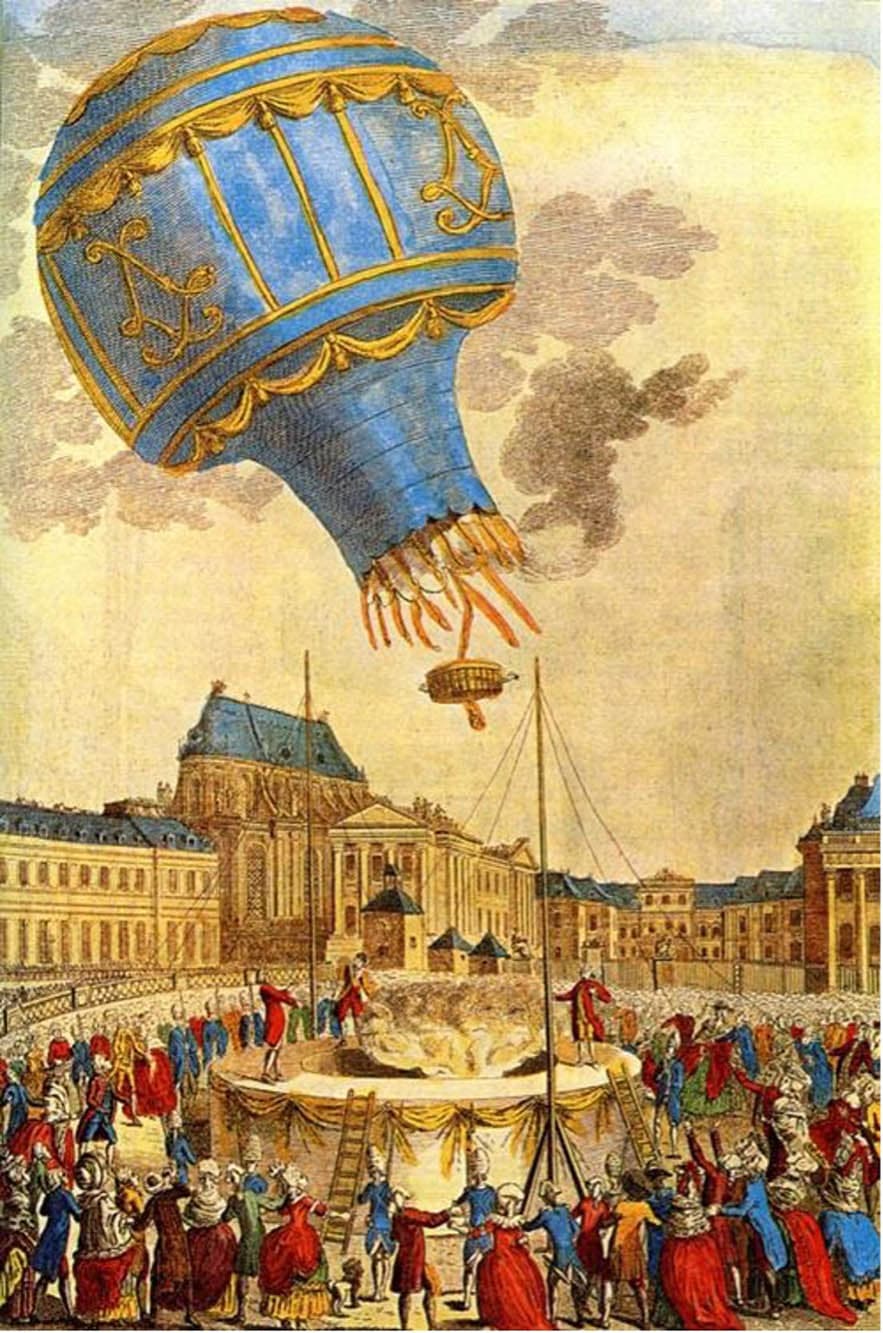
First hot air balloon with passengers, 1783, Palace of Versailles
This was the first time passengers were on board a balloon flight – they were a sheep, a duck and a rooster. The balloon stayed in the air for a grand total of 15 minutes before crashing back to the ground. Lavish events and maintaining the splendour of the Palace of Versailles resulted in significant financial problems for the kingdom. This culminated in the outbreak of the French Revolution in 1789, which began in part due to the ongoing financial crisis and popular discontent with his rule.
Facing growing public pressure, Louis XVI and his queen, Marie-Antoinette, moved from the Palace of Versailles to Paris in 1789. They never returned as the monarchy was officially abolished in 1792. He was convicted of high treason and condemned to death being executed by guillotine in Paris on the 21st of January 1793.
Louis XIV’s legacy is that of the Sun King, who embodied absolute monarchy and transformed France into Europe’s cultural, scientific, political, and military powerhouse. He left behind Versailles as a lasting symbol of royal grandeur, while his relentless wars and extravagance also burdened France with heavy debts and laid strains that his successors struggled to manage.
The post A Majestic Journey Through Clocks & Watches Made for Royalty: The ‘Sun King’ Louis XIV’s Clocks at Versailles and the Rhythm of Absolute Power appeared first on Worn & Wound.