
The Schaffhausen-based H. Moser & Cie. made quite an unconventional splash this year at Watches & Wonders, with its completely out-of-left-field collaboration with Reebok for the Streamliner “Pump,” a watch-and-sneaker release that only this brand could somehow manage to pull off. But there was a release that kind of slipped under the radar earlier in the year that I think offers a really excellent combination of Moser’s strengths in one watch, which warrants a closer look.
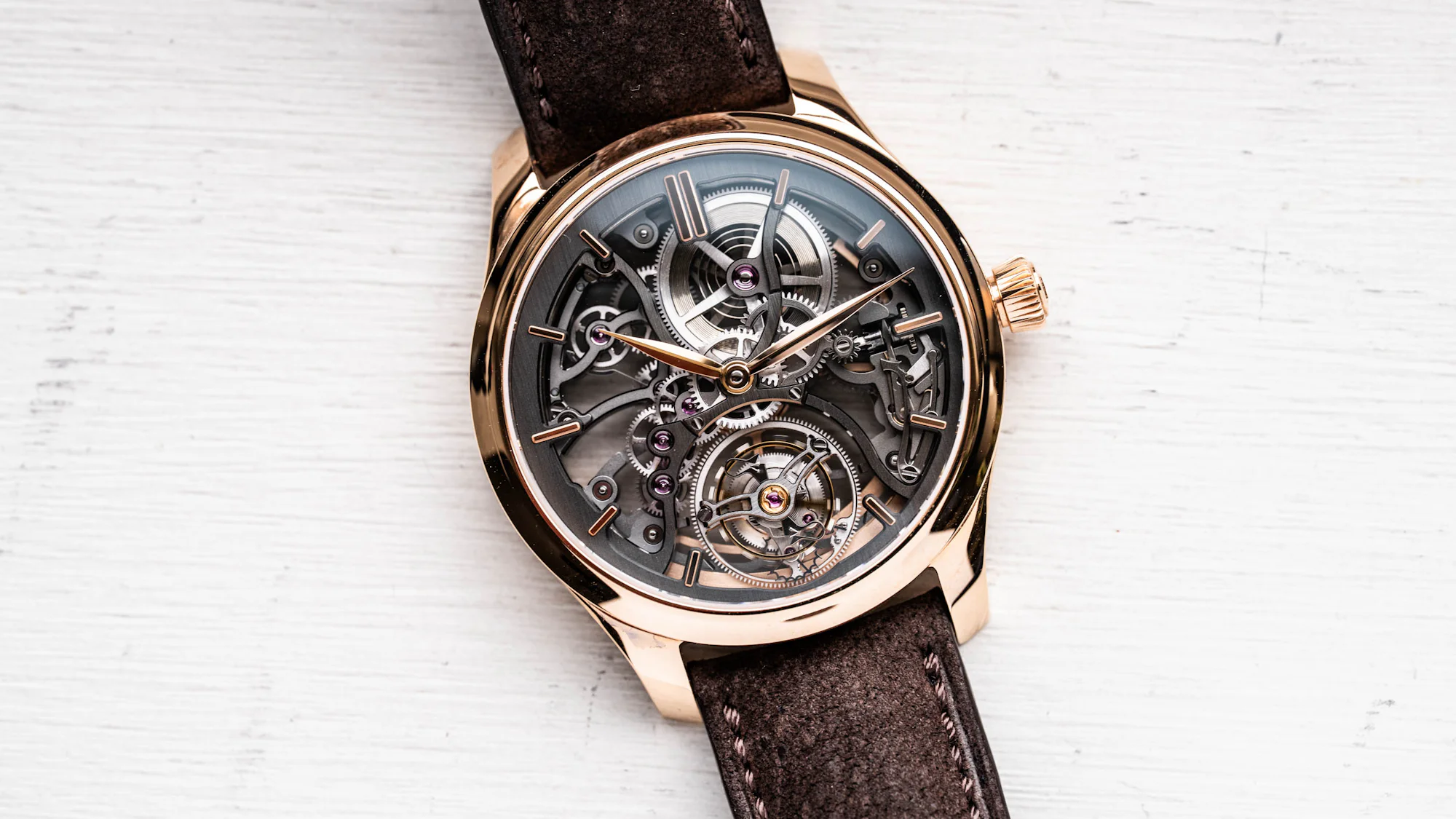
I’m talking about the Endeavour Tourbillon Skeleton launched at the end of January, and it’s been a watch I’ve wanted to see in person since the announcement went live. On paper, it seems like a simple enough concept: take the skeletonized flying tourbillon movement Caliber HMC-814 introduced back in 2024 for the integrated bracelet Streamliner collection, and pair it with one of Moser’s more classic and conservative Endeavour silhouettes. For me, that skeletonized flying tourbillon caliber has remained one of my favorite architectures that the brand has ever come out with, and I think the extra bit of elegance gained with the Endeavour case makes it stand out on its own.
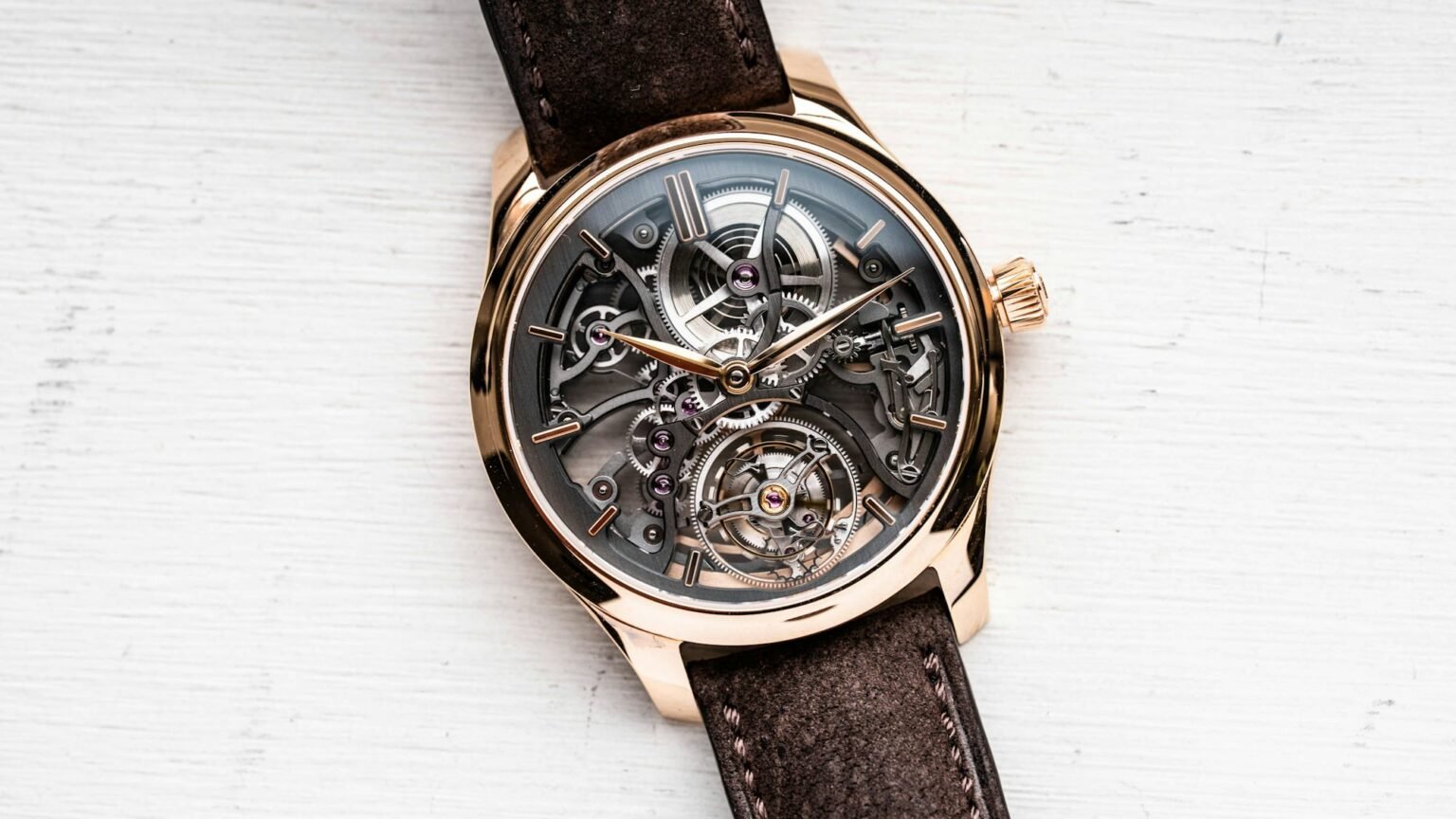
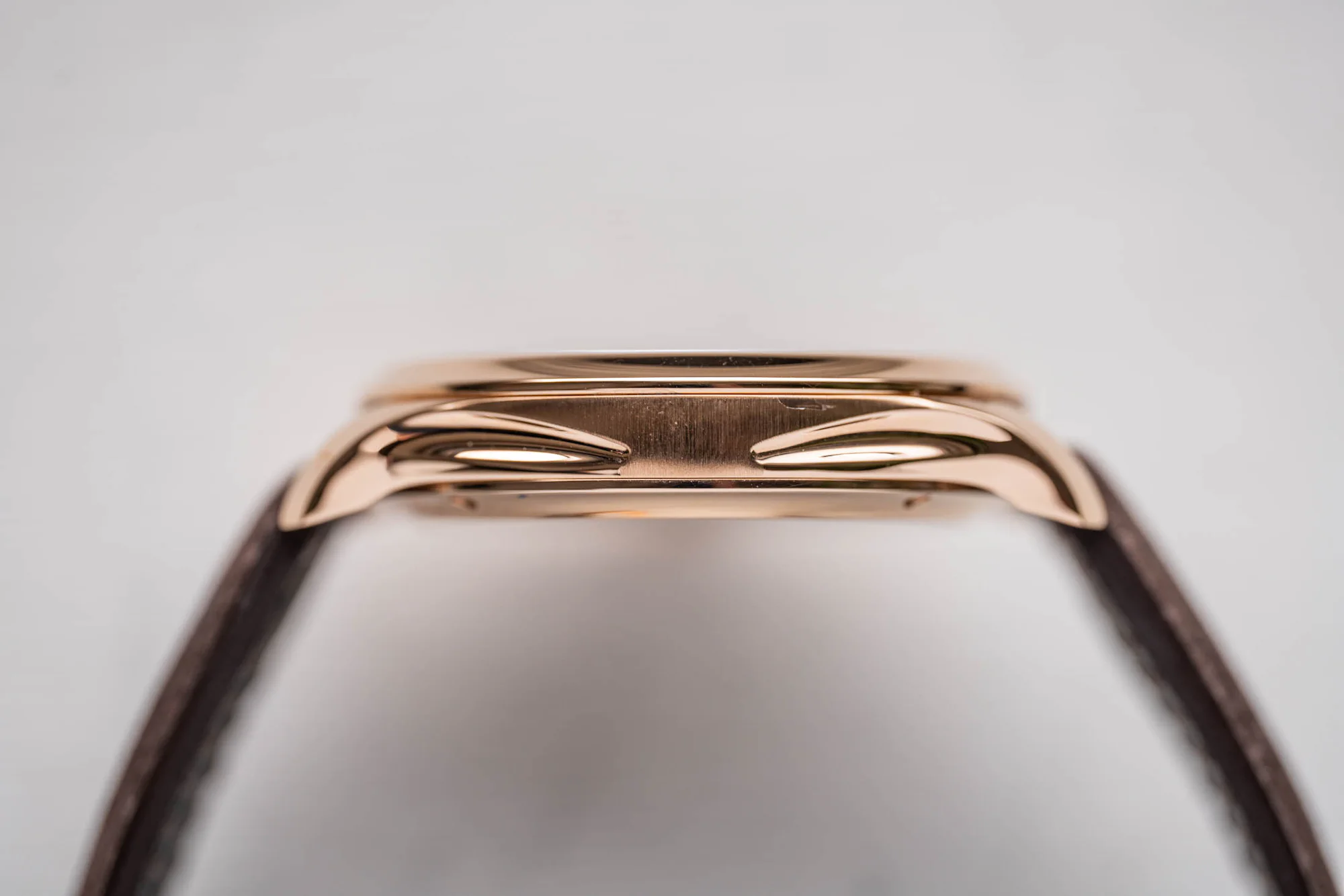
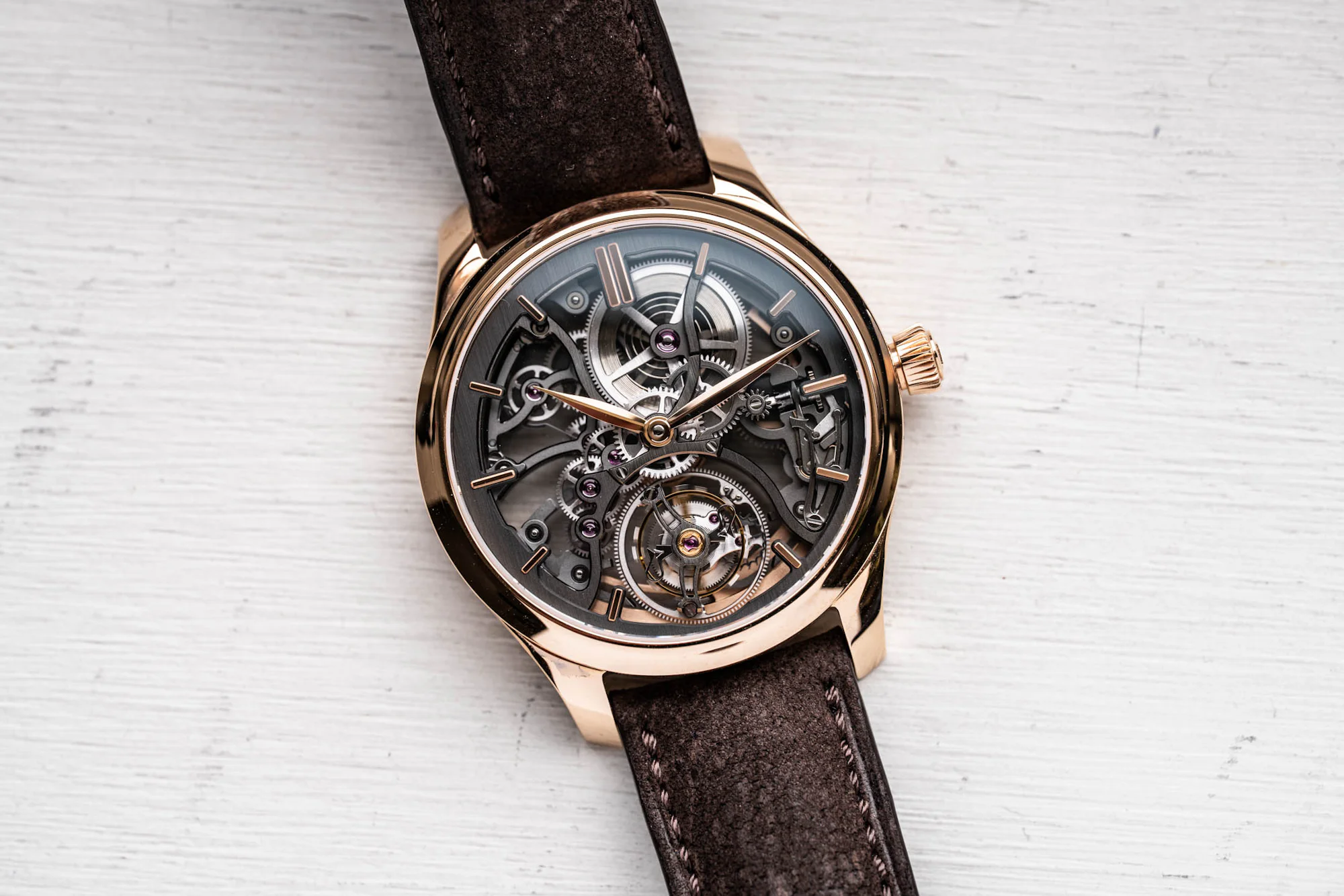
That 40mm Endeavour case, in 5N red gold, should feel very familiar to those who like Moser’s designs. It is a twist on a dressier silhouette that looks simple from the top down, but at any other angle, the Endeavour has many interesting little design touches, from the concave bezel to the distinctive sculpting of the case flanks. They do well to show off the case finishing, where the polishing of the sweeping, rounded indents on the sides of the case contrasts with the otherwise vertical brushing. At 10.7mm tall, this is not a particularly thick watch, but those interruptions to the side of the case also act as a visual trick to slim it down on the wrist. No slab sides to be found here. Moser continues to love including a signed crown, though the distinct serifed style of the “M” on it feels a bit at odds with the otherwise lack of text on the dial side. It’s something I noticed with a few Endeavour Concept watches, and it remains the same here. But that’s certainly picking extreme nits.
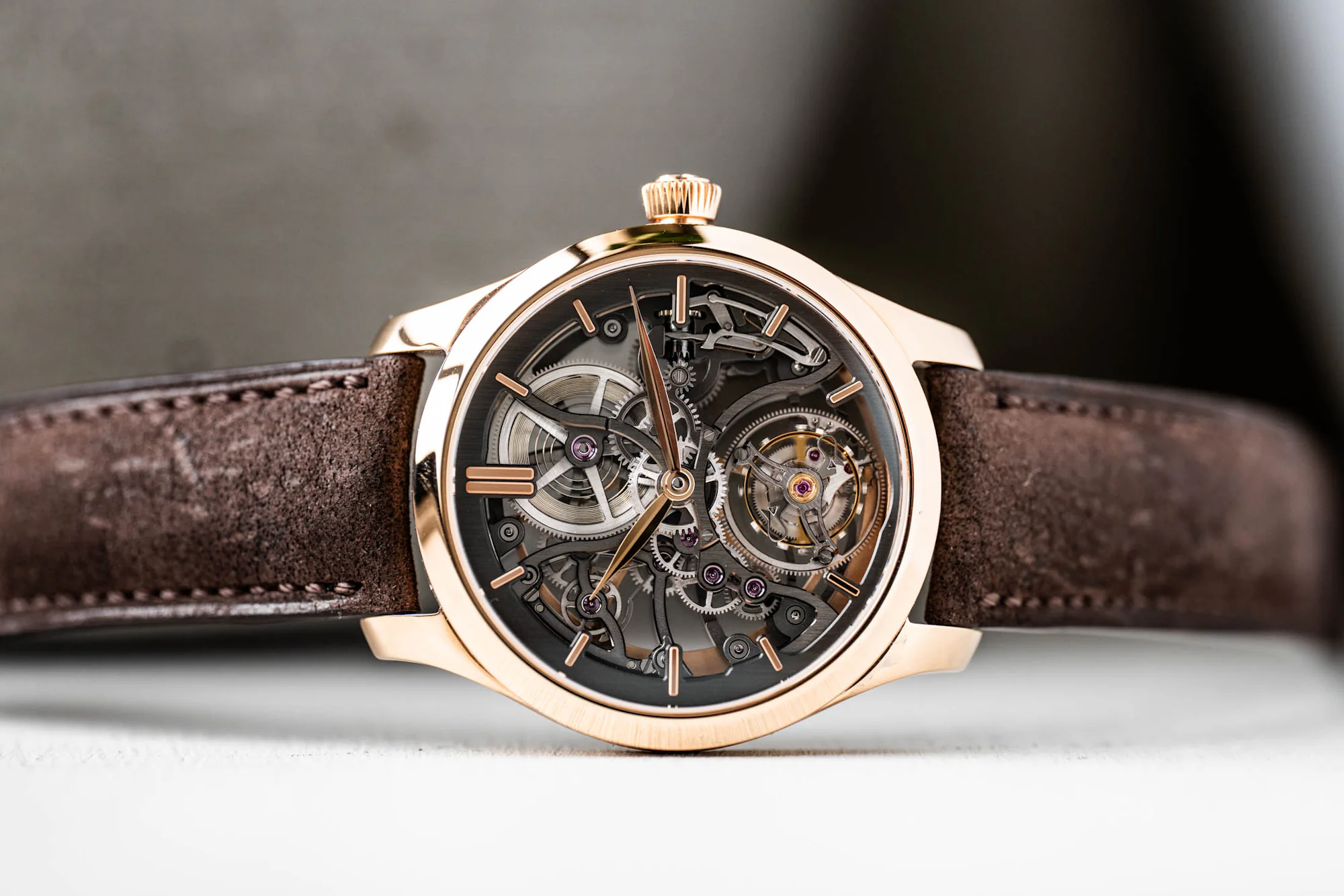
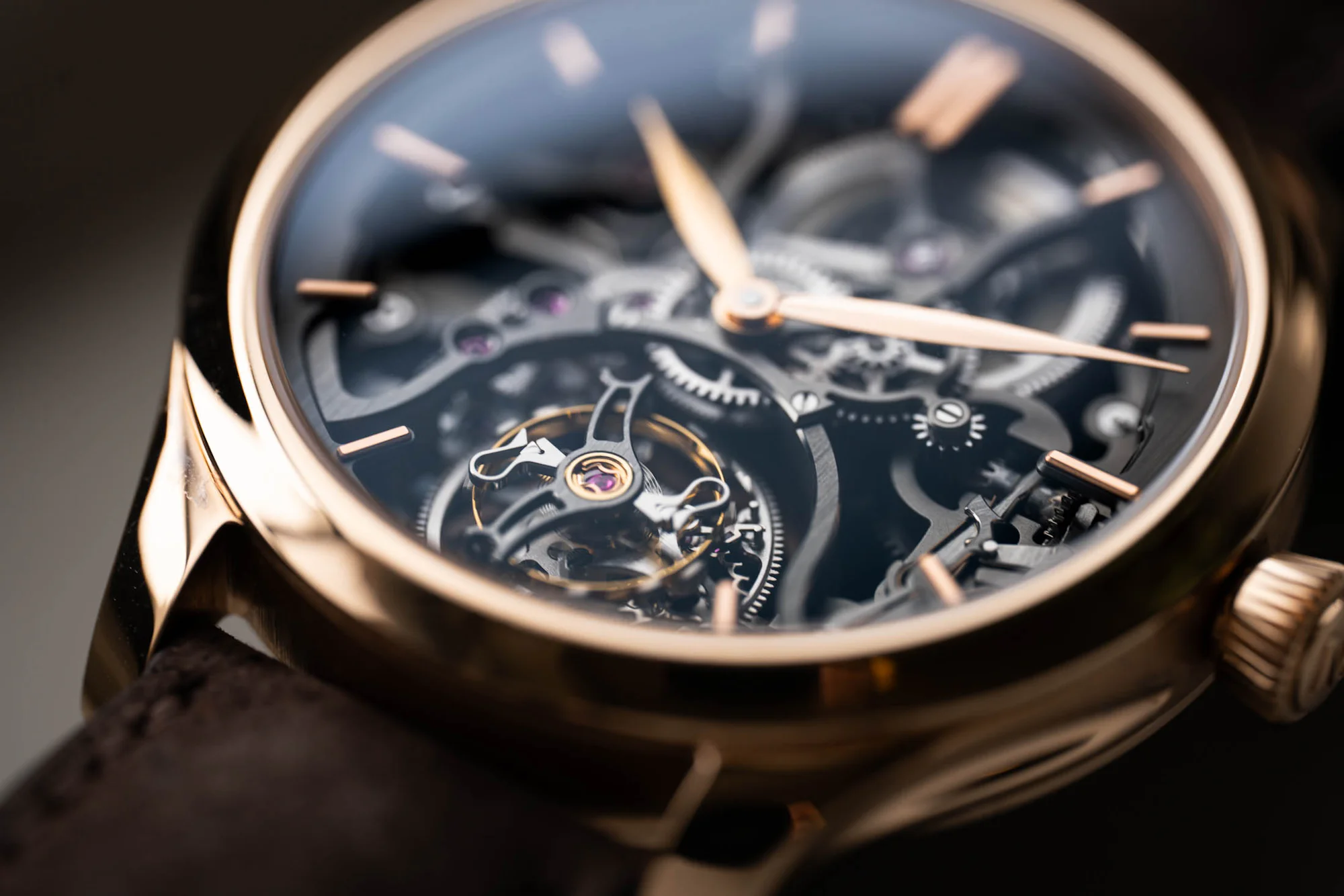
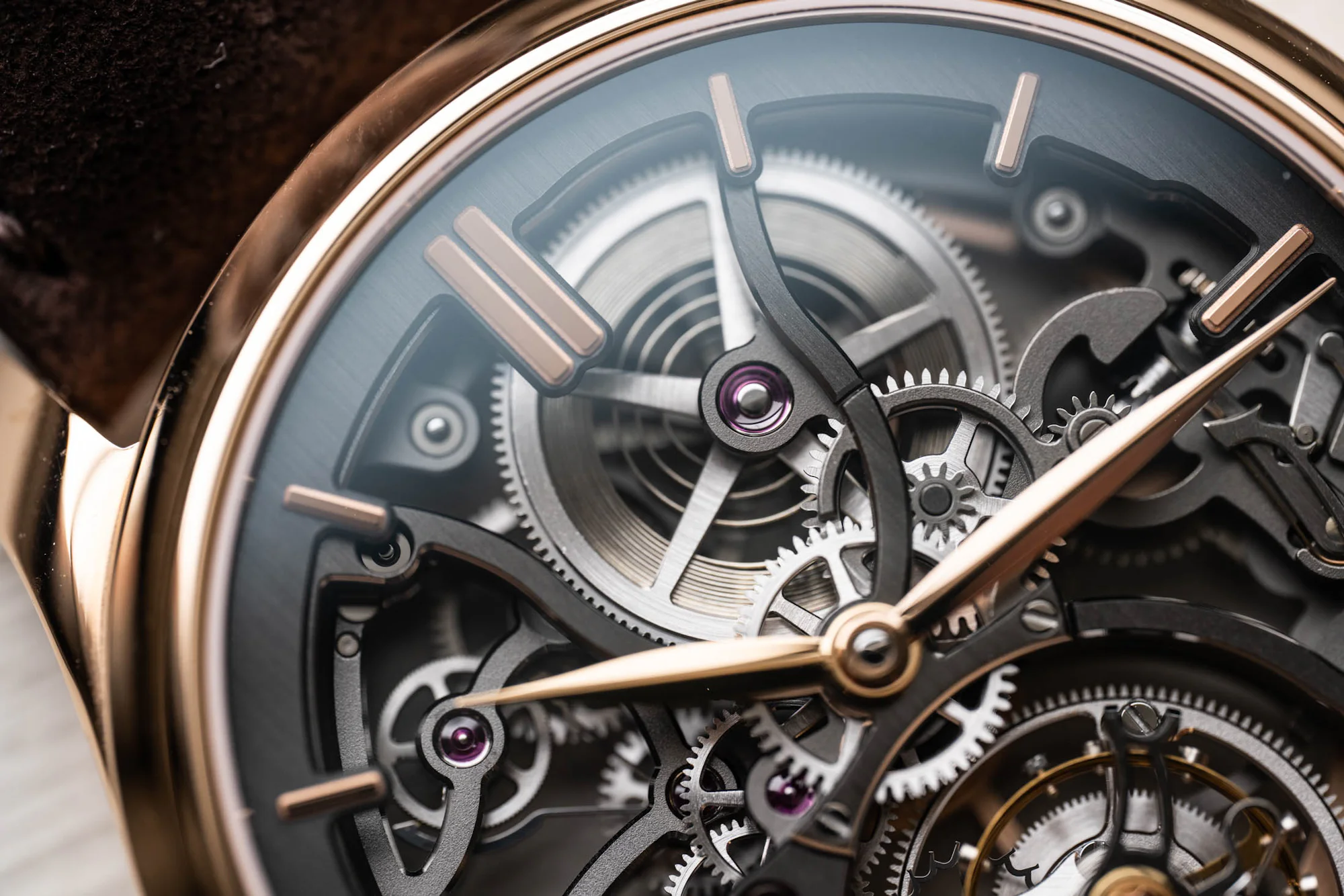
The dial (or really lack thereof) is what gets me excited here and feels new compared to Moser’s past skeletonized efforts. Now, it’s not Moser’s first skeletonized Endeavour – but I do believe it’s the first one where the handstack of the leaf hands sits in the center, rather than an offset subdial. A vertically brushed anthracite ring surrounds the open dial layout, where the applied red gold markers sit and pair well with the simple two-hand look. The HMC-814 shows off its thin, sweeping anthracite bridges, framing the one-minute flying tourbillon at six o’clock.
The skeletonization here is done immensely well, with a bridge design that maintains a curious symmetry in its lines, all while showing off the transfer of energy from the oversized, skeletonized barrel (its mainspring acting as a visual power reserve indicator of sorts), through the gear train, and to the tourbillon itself. The tourbillon itself, while not equipped with the more unique cylindrical hairspring, has the brand’s signature double hairspring instead, allowing for an overall slimmer package.
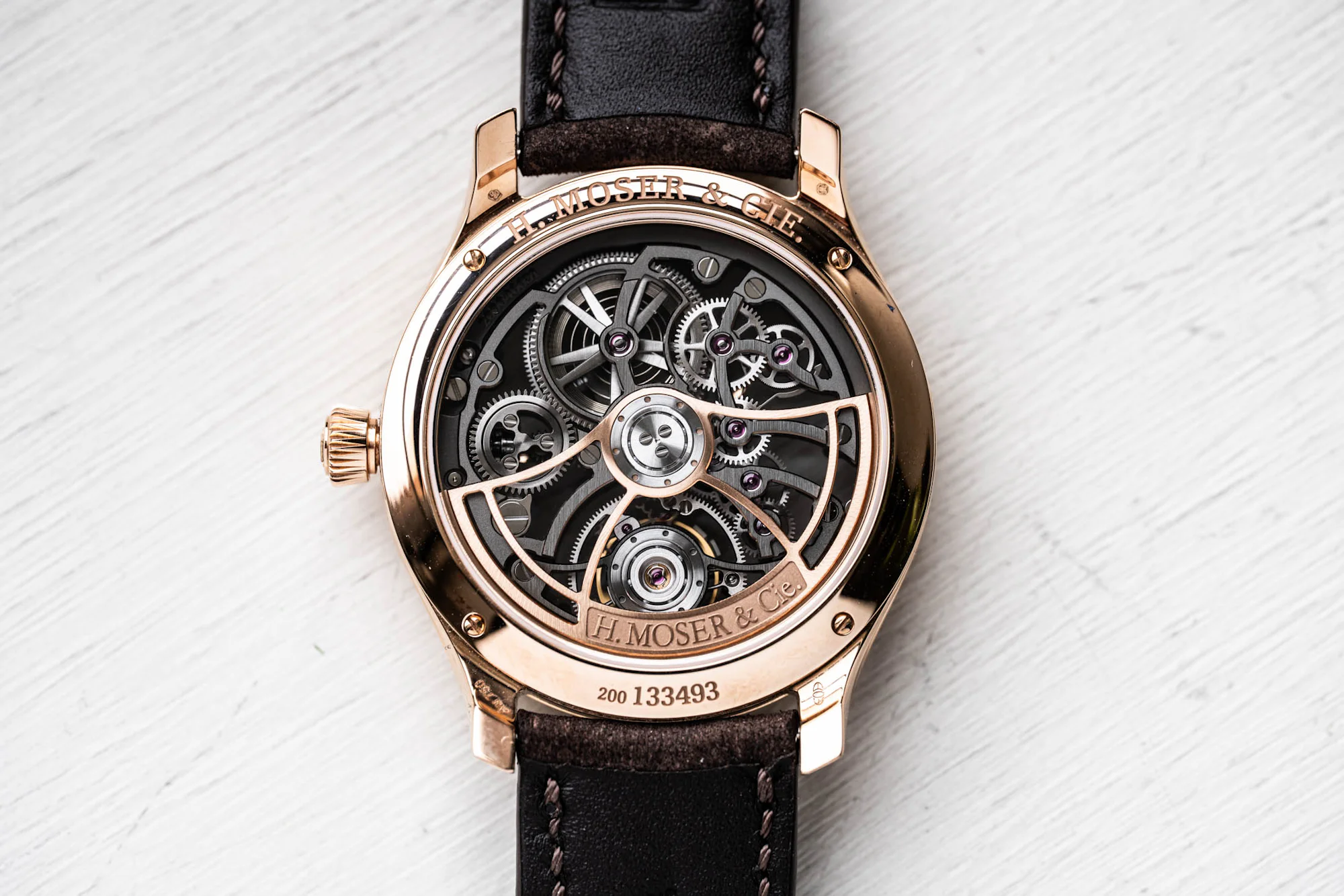
Though the front of the watch leaves no mystery about the caliber’s architecture, the back continues to offer a similar experience, this time with the skeletonized gold winding rotor swinging. That rotor, through a bidirectional pawl winding system, maintains the caliber’s 72 hours of power reserve as the tourbillon beats at a frequency of 21,600 VpH. Anglage is plentiful on the bridges of the HMC-814, though the contrast between the polishing of the facets and the vertical brushing elsewhere is a bit minimized due to the anthracite PVD of the caliber. Those looking for internal angles will be disappointed, but I think any additional finishing complexity would surely add to the $99,600 price tag of this Endeavour Tourbillon Skeleton.
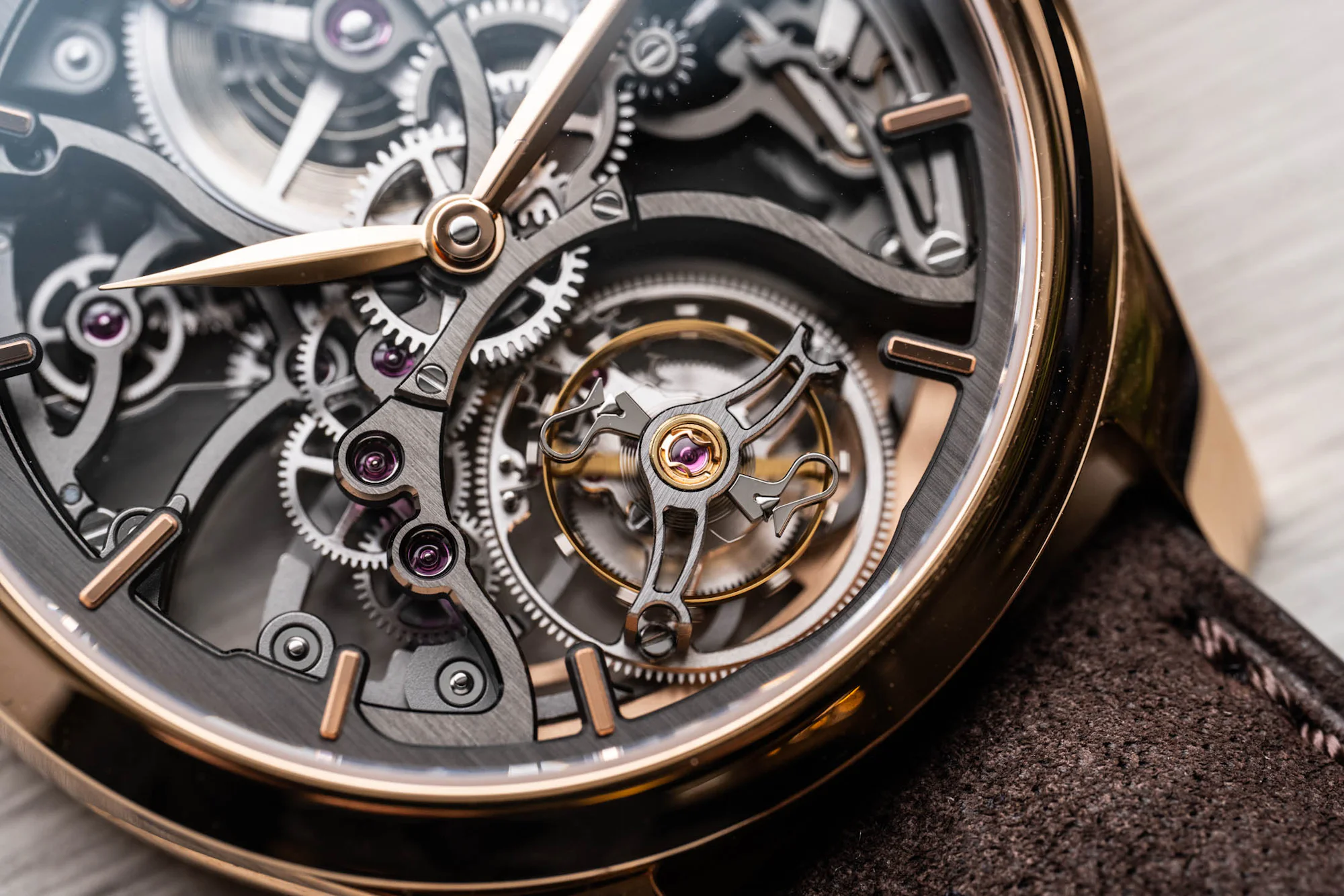
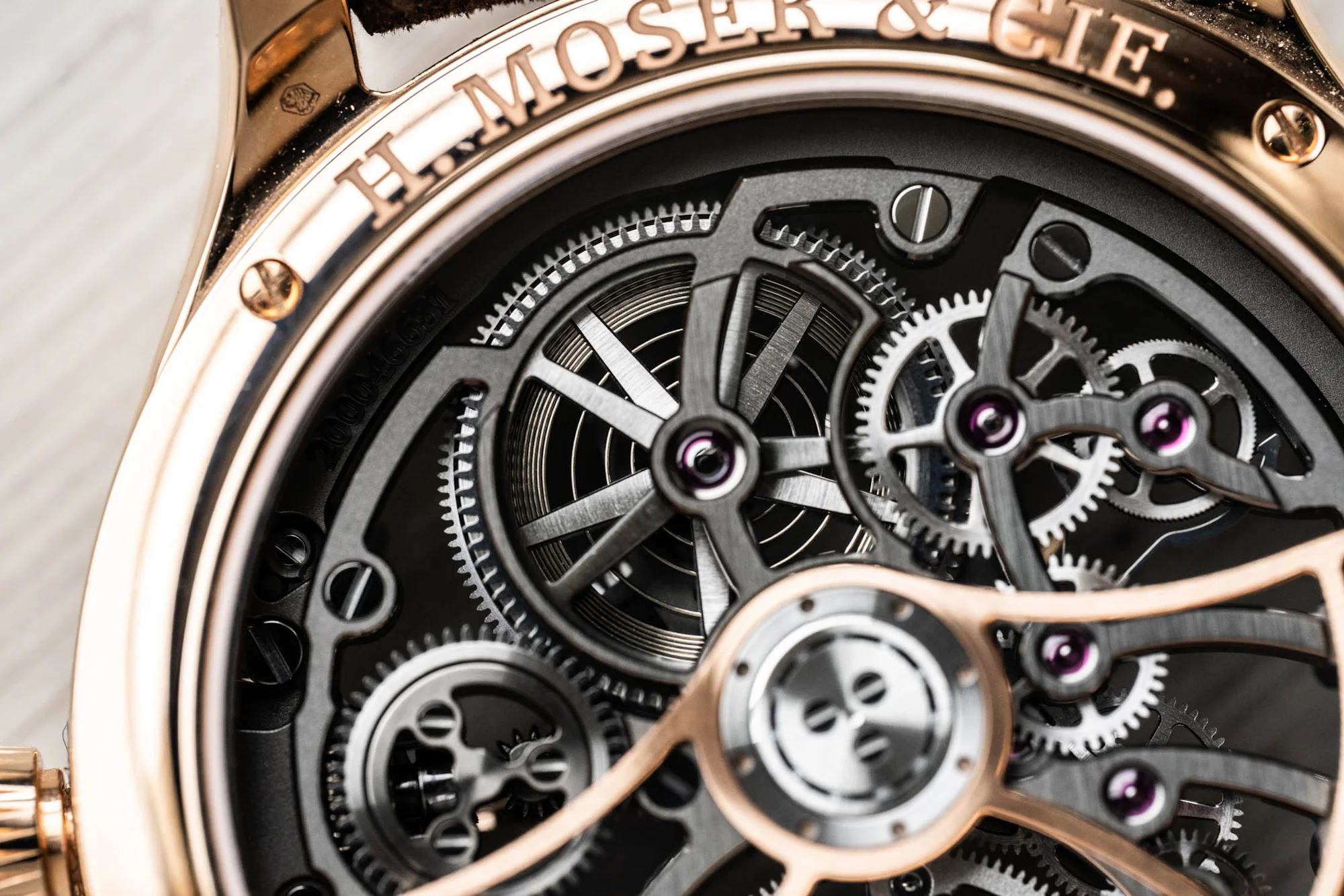
But what the Endeavour Tourbillon Skeleton aims to do, and I think it successfully achieves, is to offer one of the brand’s best new movements in a more elegant, subtle package compared to the Streamliner. Even in red gold, the pairing of a nubuck alligator strap gives a more gentle approach compared to the bracelet-clad steel Streamliner Tourbillon Skeleton, and I actually think the contrasting red gold to anthracite look helps frame the openworked dial better. Yes, a white metal variation of this Endeavour would certainly be even quieter, but I’m willing to bet it’s something in the brand’s pipeline.
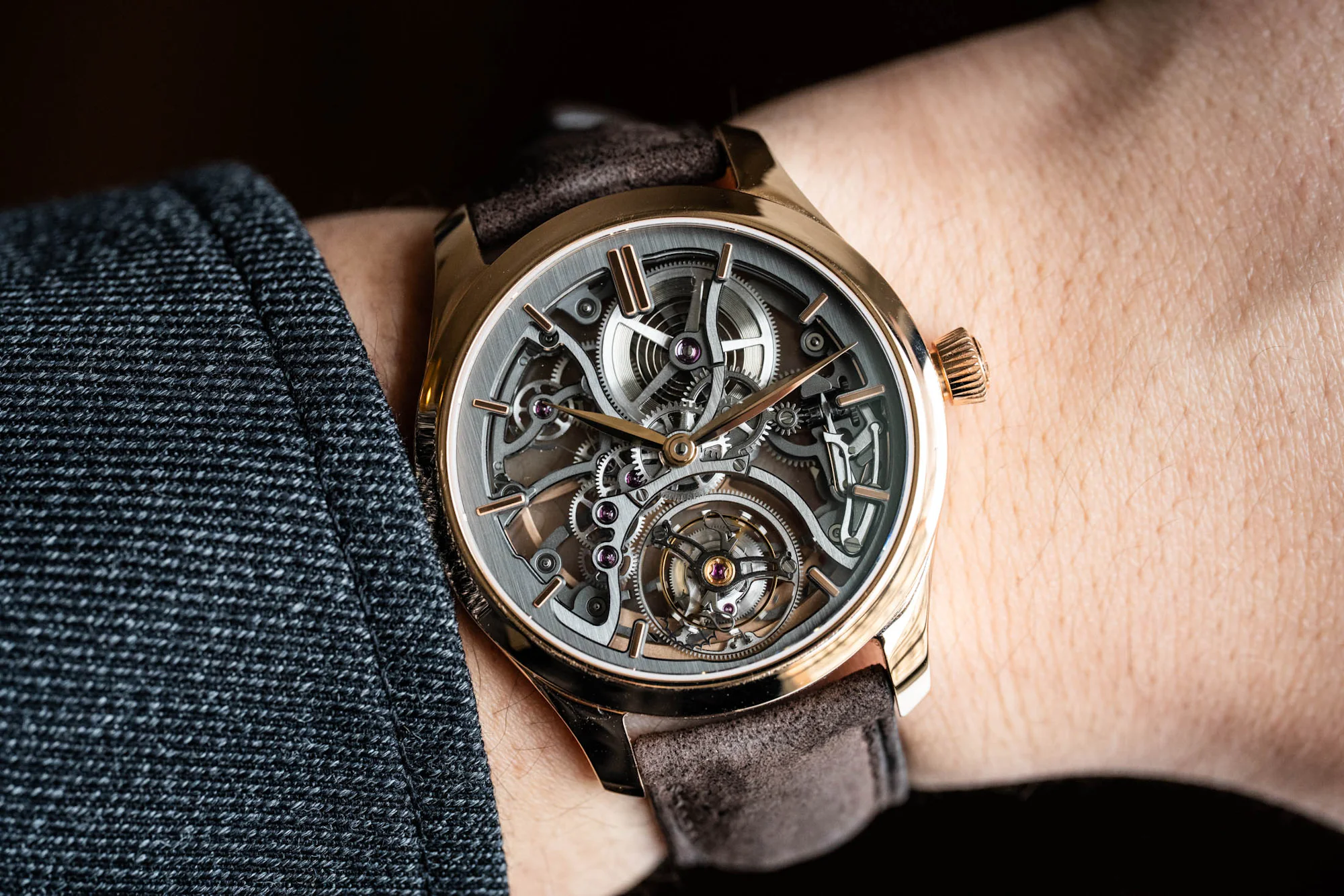
On the wrist, the watch is unsurprisingly eye-catching, but what I didn’t expect was how different it would look in various lights. After all, there is only so much I thought an anthracite-coated movement could shift, but the depth of the architecture here comes into play and creates many layers of shadows depending on the angle that light hits the dial. Add the subtle warmth of those hands and hour markers, and you have an incredibly balanced look that tempers the mechanical aggression of so many skeletonized components. When I initially saw this watch in renders, I was a bit wary that the architecture would be too open. After all, even with skeletonized calibers, I do not want to see my pale wrist whenever I check the time. Yes, there are still sections where it’s a bit too open for my liking (notably the area to the left of the gear train), but this is a purely personal preference. Perhaps someone with a bit more wrist hair would like to show that off with more gusto and add another texture to the look of the watch.
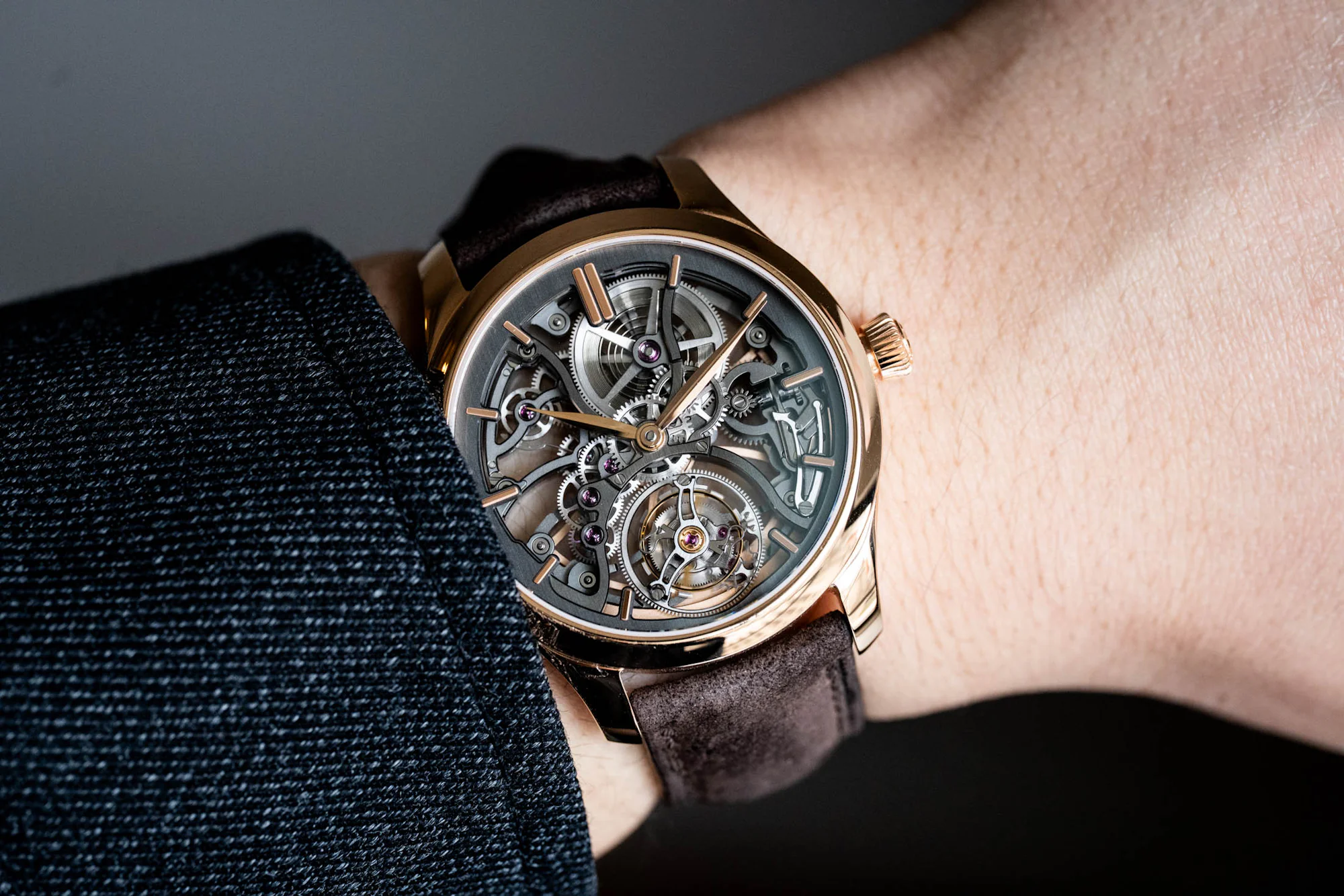
The dimensions wear nicely on my small wrist, as you can see from wrist shots, and that’s certainly thanks to the Endeavour case’s short, downturned lugs. Some brands double down on sharp lines and angles when it comes to highlighting the industrial magic of its calibers through skeletonization, but Moser shines here because of the softness it has managed to achieve, without compromising on its showcasing of great mechanical design. Add the additional grace of the Endeavour case this time around, and it’s an unashamedly Moser effort in haute horlogerie.