
The watches of the Vietnam War era have long held a fascination for collectors and enthusiasts of both vintage watches and militaria in general. Many of these watches — some of them officially military-issued to troops, divers, pilots, and other service members; others purchased at PX stores on military posts — are long discontinued, and in some cases exceedingly rare. But nearly all of them live on in some fashion in the current watch market, which continues to be dominated by nostalgia for vintage designs. Read on to learn more about the watches actually worn during the Vietnam War and how you can still rock their signature style today.
[toc-section heading=”A Brief History of Military Watches”]

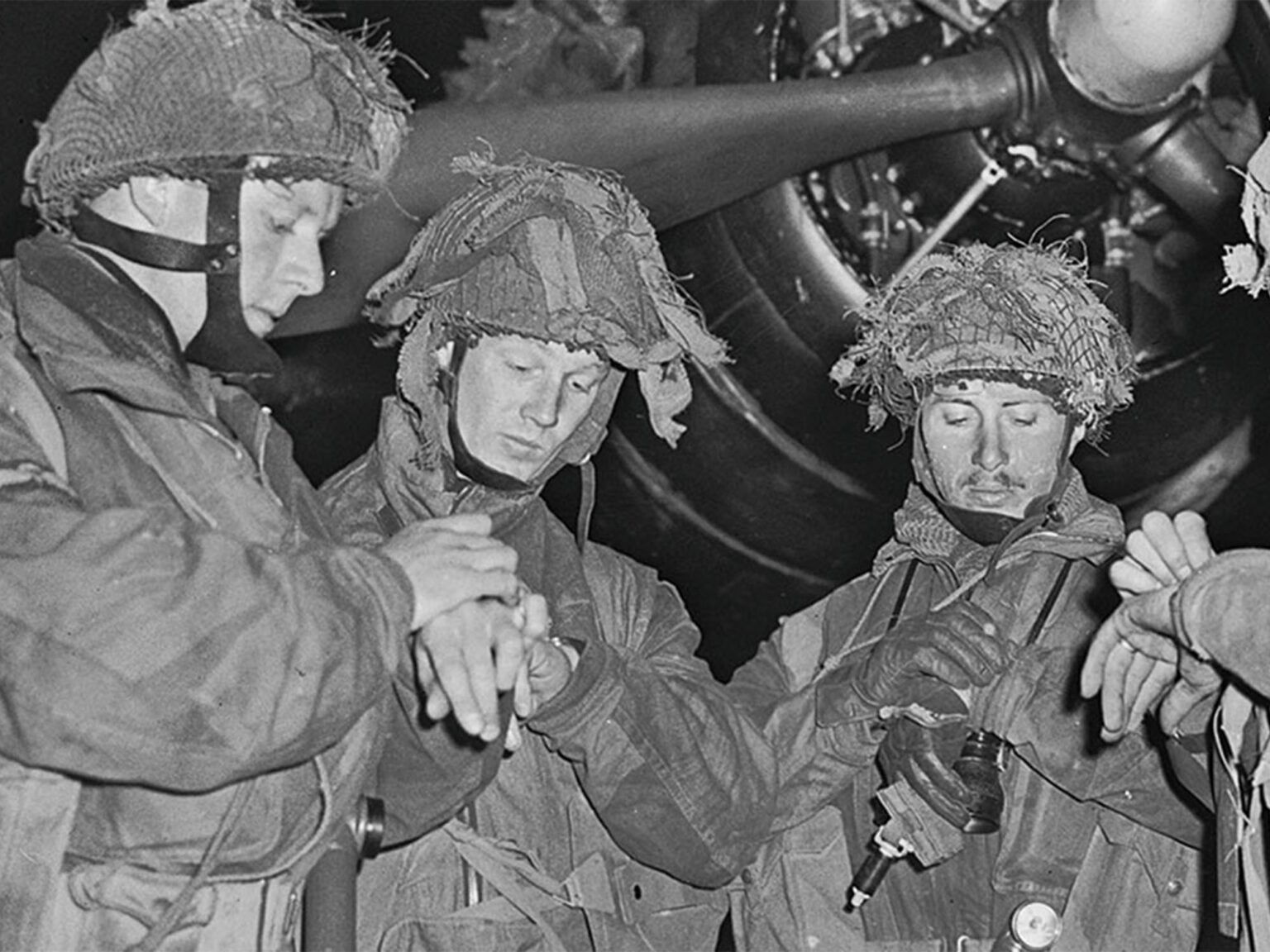
Men’s wristwatches are essentially a military invention that migrated into mainstream culture. While women had been wearing timepieces on bracelets since the middle of the 19th Century, gentlemen in the early 20th Century still strongly preferred pocketwatches in social settings. With the onset of World War I, however, a more utilitarian timekeeping option was necessary for young men pressed into military service on battlefields. A pocket watch was wildly impractical for a soldier who needed both hands in combat situations, such as checking the time and distance of artillery fire while also loading a rifle. At first, watchmakers met these demands in a rather makeshift way, by re-engineering pocketwatch cases with soldered strips of wire to connect them to straps of leather or canvas for wrist wear. These were the first “trench watches,” and they heralded the arrival of the more purpose-built timepieces during World War II.

Among the earliest and most legendary examples of these “MIL-SPEC” (military specification) watches were the so-called Dirty Dozen, consisting of 12 watches from 12 different watchmaking firms, issued to British servicemen during the last two years of World War II and made in very limited numbers (Longines model from 1945 pictured above). The Dirty Dozen, explored in much more detail here, were intended to be the “perfect soldiers’ watch” and each one shared the same key elements as demanded by the U.K. Ministry of Defence: black dial with Arabic numerals; small seconds at 6 o’clock; railroad-style minute track; luminous hour and minute hands and indexes; a proven precise, hand-wound, 15-jewel movement, preferably regulated to chronometer standards; a shock-resistant, water-resistant case with shatterproof plexiglass crystal; and a waterproof, easy-grip crown for use with gloves.

Over in the United States, watchmakers like Lancaster, PA-based Hamilton and New York-based Bulova were also making watches for the war effort that adhered to military specifications. Hamilton, which had been one of those firms supplying re-engineered pocket watches to armed forces in the First World War, ceased all civilian production for a time in the ‘40s to focus on mass production of timekeepers for American military units, including marine chronometers for the Navy and wristwatches for Army troops. These watches were made of chrome-plated base metals, measured around 34 mm in diameter, used luminous radium paint on their dials for nighttime legibility, and housed Hamilton’s manually wound, 17-jewel Caliber 987 movements.

Bulova, founded by Bohemian immigrant Joseph Bulova (above), also took its patriotic duties as one of the few American-based watch companies seriously. By 1941, many of its male employees had joined the armed forces, while female employees took over much of the watchmaking work at the factory. Throughout the war years, the company contracted with the United States government to produce instruments that would aid the war effort — altimeters, variometers, range-finding telescopes for artillery, time fuses for explosives, and (of course) wristwatches to be issued as official gear for American troops. From this national necessity came one of Bulova’s most influential inventions: the so-called “Hack” Watch, which got its name from its special feature, a lock-down mechanism for the running seconds that allowed for perfect synchronization, or hacking, of multiple watches in the planning of a mission.
[toc-section heading=”The Vietnam War: A New Generation of MIL-SPEC Watches”]

Illustration: PBS Learning Media
The origins of the Vietnam War reach all the way back to 1946 and the original French Indochina War that ultimately led to the division of the country of Vietnam along the 17th parallel into North (Democratic Republic of Vietnam) and South (Republic of Vietnam). The North was recognized and supported by Communist China and the Soviet Union, while the South had the support of the United States and other Western powers. In those tense days of the ideological Cold War between the U.S. and U.S.S.R., the once-regional conflict escalated into a proxy war between those two great powers, claiming hundreds of thousands of casualties before the eventual withdrawal of U.S. troops in 1973. Once again, as in the wars that had preceded it, the Vietnam conflict spurred the production of wristwatches for use in military combat missions and logistics.

Photo: U.S. Army
The United States officially entered the Vietnam War in March 1965. Several years earlier, in 1962, its Department of Defense had established an official set of criteria, called MIL-W-3818B, for what were now being referred to as “general purpose” watches for the military. Contracts were awarded to watchmakers that could meet these criteria, which included an accuracy between +/- 30 seconds per day, a hacking seconds function, a steel case that was sufficiently resistant to water and magnetism, and a hand-wound mechanical movement with no less than 17 jewels. Just two years later came the new, superseding MIL-W-43674 specs, which allowed for other case materials, and movements that didn’t include hacking seconds, a consolation that enabled quicker production of more disposable servicemen’s watches as the war and the nation’s commitment to it escalated. Only a relative handful of watch companies produced military-issue timepieces under these criteria, while some other companies made watches that were sold at PX stores on military bases and became popular options for the era’s soldiers, sailors, and airmen. We take a look at the major ones below, and reveal their modern equivalents that you can still acquire at retail, whether you’re active-duty military, a veteran, or a civilian.
The Watches Worn in Vietnam
[toc-section heading=”Bulova MIL-W-3818A (Modern Equivalent: Bulova Hack Watch)”]
The Bulova MIL-W-381A traced some of its design inspiration to the A17 navigation watch that was issued to Green Berets and Special Forces in World War II. The use of a somewhat ornate cathedral handset, a throwback to earlier watch designs, marks the model as a transitional style of field watch. Its 32mm steel case contained the 17-jewel, manually wound Caliber 10BNCH. This model was produced for military use only until 1962, when the DOD’s criteria changed and Benrus (see below) took over the military contract.

The modern version of the Hack Watch, part of Bulova’s historically inspired Military collection, is today a go-to option for many enthusiasts seeking a no-nonsense field watch at a very reasonable price. It features a vintage-look military-time dial with an inner 24-hour ring, large Arabic numerals, luminous cathedral hands, and a boxy crown. It’s powered by an automatic movement, a Japanese-made Miyota 8250, which has a 42-hour power reserve and (of course) the hacking seconds function that gave the model its name. The steel case measures a more contemporary 38mm in diameter, and comes mounted on either a leather or fabric NATO strap. Bulova makes the Hack watch in several colorways and materials, including one with a gray-coated steel case and another with a blue dial.
[toc-section heading=”Benrus DTU-2AP (Modern Equivalent: Benrus DTU Shield)”]
Benrus, an American watch company founded in 1921, secured the first contract to produce watches for military members under the new MIL-W-3818B specs. The model was, in fact, the only watch submitted for testing that met all the rigorous criteria; competitors for the contract include Longines-Wittnauer, Mathey-Tissot, and the previous go-to brand, Bulova. The watch proved to be a template for many field watches to come, with its black dial, Arabic numerals, 24-hour track, and the use of spring bars instead of fixed lugs so that its 34mm sandblasted steel case could attach to different types of straps. The case had a single-piece design and housed the hand-wound ETA Caliber 2370, equipped with the all-important hacking seconds.

Benrus, now making watches in Switzerland, relaunched in 2020 after a long hiatus and since its revival has focused squarely on releasing modern versions of the military-issue watches that made it a favorite, particularly during the Vietnam era. The DTU Shield takes its cues from the DTU-2A/P watches issued to servicemen during the conflict, sporting a light silver dial with 12-hour and 24-hour scales, sword hands and hour markers with aged-effect “Old Radium” lume, and a double-domed sapphire crystal. The 38mm case is made of sandblasted 316L stainless steel, with a screw-down crown for 100 meters of water resistance, and is mounted on a rugged fabric strap, The automatic Swiss-made ETA 2892, with a 42-hour power reserve, beats inside.
[toc-section heading=”Hamilton GG-W-113 (Modern equivalent: Hamilton Khaki Field Mechanical)”]
Hamilton was not the only contractor to make watches to meet the military’s GG-W-113 specs that were rolled out in 1967 — others included Benrus and Marathon, the latter still an official Army supplier today — but its model, known to collectors as the “GI Watch,” might be the most emblematic of the style. Produced all the way up through the late 1980s, the watch’s 34mm steel case had a “parkerized” finish that made it more durable and corrosion-resistant. Its matte dial with the dual scales for 12-hour and 24-hour time used tritium for the luminous coating on the hands and markers. The movement inside was a 17-jewel ETA 2750 (renamed the Hamilton Caliber 649 in this model), with manual winding, hacking seconds and a 36-hour power reserve.

Hamilton’s history of making military timepieces is long and distinguished, and today’s sprawling Khaki Field collection is an extension of that history. The most direct inspiration for this family of general-purpose, military-inspired watches is the 1960s model worn by troops during the Vietnam War, which were built according to strict specifications by the U.S. Defense Department. Khaki Field watches today are available in a wide range of colorways, and with quartz, manually wound mechanical, or self-winding mechanical movements. The Khaki Field Mechanical, the model most true to its historic predecessor, combines the classically retro 12/24-hour dial with a period-accurate 38mm case and a nylon NATO strap of the type that soldiers would have worn in the field during wartime. The manually winding Caliber H-50 beats inside, storing a lengthy 80-hour power reserve.
[toc-section heading=”Tornek-Rayville TR 900 (Modern Equivalent: Tornek-Rayville TR 660)”]
Tornek-Rayville, the “American” maker of the TR 900 watch worn by U.S. Navy divers on recon missions to Vietnam’s Mekong Delta, is actually a cleverly disguised and very historic Swiss company: Blancpain. To summarize a long story that is more thoroughly told here, Blancpain wanted to offer its Fifty Fathoms dive watches to American forces and thus secure itself a lucrative U.S. military contract, but “Buy American” laws at the time disqualified the company as a supplier. A Blancpain distributor named Allen Tornek hit upon the idea of rebranding the Blancpain watches under the name “Tornek-Rayville” (his surname plus a phonetic anagram of “Villeret,” where Blancpain was headquartered) and adding just enough American parts to qualify under the law. Made from 1964 to 1966, and distinguished by a disk-shaped moisture indicator on the dial (along with luminous elements made from a mildly radioactive substance called promethium, which led the military to dispose of many of them after they were returned from service members), these watches are extremely rare today.

The “Tornek Rayville” branding, which Blancpain abandoned back in the 1960s, has made a comeback courtesy of watch entrepreneur Bill Yao, who had previously founded the tool-watch brand MKII. In 2010, Yao acquired the brand name and launched the new version of Tornek-Rayville — unconnected to Blancpain and with a heavy emphasis on a reissued version of the most legendary model, the aforementioned TR-900. The modern watch was dubbed the TR-660, and for collectors it offers a dose of Fifty Fathoms DNA at a far more accessible price point than you’re going to see from Blancpain these days. The watch has a 40mm case in bead-blasted stainless steel (14.7mm thick), with a screw-down crown and a unidirectional dive-scale bezel. The 200-meter water resistance is respectable, and more than double that of the 1960s model that inspired it. The sapphire crystal over the dial is double-domed and antireflective, and the screw-down crown has a double-gasket design for extra security. The movement inside is not Swiss-made but Japanese: the automatic TMI NH38 from Seiko, which includes a hacking seconds function and a 41-hour power reserve.
[toc-section heading=”Glycine Airman (Modern equivalent: Glycine Airman GMT)”]
Glycine was founded in 1914 in Switzerland but its most famous watch didn’t make its debut until 1953: the aviation-styled Airman, which was worn by U.S. military pilots during the Vietnam War and featured the very first rotating 24-hour GMT bezel to track two time zones. (Rolex’s legendary GMT-Master, which debuted one year later, introduced the more common, bicolor version of this innovative design.) The watch had a 36mm steel case, considered somewhat large for the time in the service of legibility but modest by today’s standards, and it contained a movement from A. Schild, whose hacking seconds function required up to a full minute for a user to synchronize the time zones on his watch.

The Airman is still Glycine’s flagship collection and still offers quite the value proposition for a Swiss-made watch with an automatic GMT function. The dial is extra-legible, with wide luminous hands, large geometric indexes, an understated 3 o’clock date window, and a 24-hour ring on the flange. The steel bezel of the 44mm case is engraved with the emblematic 24-hour scale of the Airman series, allowing for a view of multiple time zones. The Swiss-made automatic movement is visible behind a sapphire exhibition back. Glycine, now owned by Invicta, offers multiple variations in size and movement, including a 42mm model powered by a quartz movement and the 40mm “The Chief” models, which hew even closer to the size and design of the ‘50s originals.
[toc-section heading=”Seiko 6105 “Captain Willard” (Modern equivalent: Seiko Prospex SRPB237)”]
Most watch aficionados recognize the Seiko 6105 as iconic because it was prominently featured in one of the most famous movies about the Vietnam War, 1979’s Apocalypse Now. Actor Martin Sheen wore the watch in his lead role as Captain Benjamin Willard in the film, leading enthusiasts to give that particular reference the nickname “Captain Willard.” Apocalypse Now was a work of fiction, albeit a very impactful one, but the “Captain Willard” was known to be worn by military divers during Vietnam, who were no doubt impressed by its 150-meter water resistance, eye-catching cushion-shaped case, and bidirectional bezel with dive-time scale.

While Seiko has long since discontinued the “Captain Willard” Ref. 6105, the Japanese company has never entirely abandoned the emblematic design for its dive watches. The most recent iteration, which finds a home in Seiko’s Prospex family of tough tool watches for land, sea, and air, is the SRB237. This up-to-date version, aka the ‘1970 Diver’s Modern Re-Interpretation,” has a 42.3mm version of the unusual cushion-shaped case which is water-resistant to 200 meters and features an unusually placed screw-down crown at 4:30. Its ratcheting dive-scale bezel rotates in one direction, its dial features a distinctive handset, a 3 o’clock date display, and luminous coating via Seiko’s proprietary LumiBrite compound. The watch is equipped with Seiko’s automatic 6R35 caliber that provides hacking seconds, delivers a 70-hour power reserve, and possesses a strong reputation for ruggedness. While this model has since technically been discontinued, the SPB317 remains as a slightly smaller alternative.
[toc-section heading=”Zodiac Sea Wolf (Modern equivalent: Zodiac Super Sea Wolf)”]
Zodiac launched its first Sea Wolf dive watch in 1953, placing it in the same historical company as other pioneering dive watches debuting in that seminal year, like the much more famous Rolex Submariner and the previously mentioned Blancpain Fifty Fathoms (which morphed into the Tornek-Rayville TR 900 for its stint with U.S. forces in Vietnam). Like those early divers, the Sea Wolf had a unidirectional rotating bezel with a 60-minute dive scale; probably unbeknownst to many, the Sea Wolf was the first to highlight the first 15 minutes on the bezel’s scale, a feature now ubiquitous on many modern dive watches. Distinguishing the original Sea Wolf’s dial were large, triangular markers at 12, 3, 6, and 9 o’clock with their respective numerals inside. It was sold at military PX stores and represented a relative bargain compared to Rolex’s more luxurious Submariner, so it became a popular non-military-issue choice for Navy SEALs, sailors, and other operators who needed a reliable waterproof watch.

Zodiac launched its first Sea Wolf dive watch in 1953, placing it in the same historical company as other pioneering dive watches debuting in that seminal year, like the much more famous Rolex Submariner and the previously mentioned Blancpain Fifty Fathoms (which morphed into the Tornek-Rayville TR 900 for its stint with U.S. forces in Vietnam). Like those early divers, the Sea Wolf had a unidirectional rotating bezel with a 60-minute dive scale; probably unbeknownst to many, the Sea Wolf was the first to highlight the first 15 minutes on the bezel’s scale, a feature now ubiquitous on many modern dive watches. Distinguishing the original Sea Wolf’s dial were large, triangular markers at 12, 3, 6, and 9 o’clock with their respective numerals inside. It was sold at military PX stores and represented a relative bargain compared to Rolex’s more luxurious Submariner, so it became a popular non-military-issue choice for Navy SEALs, sailors, and other operators who needed a reliable waterproof watch.