

Welcome to the first installment of a new monthly column called Spotted. Here, I’ll break down the latest themes I’m seeing in the horological landscape. While trends are inherently fleeting, the observations we’ll look at in this series may stay or go away – only time will tell if these are fads or in fact historical markers of this era of watchmaking. In addition to spying and identifying the overarching patterns taking shape in watch design, I’ll help us bring them down to earth in our own collections and on our wrists.
For our inaugural edition of Spotted, it feels important to distill some key observations from Watches and Wonders. Here, we have one of the largest sample sizes of new releases all hitting the market at once, and there are a few themes that struck me across the whopping 66 brands who participated in this year’s event.
The first concept I want to look at isn’t super straightforward to articulate, so stick with me here – I’m going to start by succinctly naming it “complex superlatives.” Complexity in watchmaking can take many forms from actual horological complications that allow watches to perform functions beyond basic timekeeping to more subtle complexities like intricate finishings, record breaking feats, or material innovations. The examples that stuck out of this somewhat amorphous idea come from Jaeger-LeCoultre and its Gyrotourbillon Stratosphere Triple-Axis Tourbillon in contrast with Ulysse Nardin’s new Super Freak.

Jaeger-LeCoultre expands on its Hybris series, consisting of the Hybris Mechanica, fusing high complications, and Hybris Artistica, combining high complications with rare artistic handcrafts. The new Hyrbis Inventiva has evolved from internal discussions hypothesizing the invention of “impossible” complications, then bringing them to life. For the first edition, we have a triple-axis tourbillon covering 98% of all possible positions and targeting an unprecedented level of precision all in just 189 components weighing just 0.78 grams.
On the other end of the spectrum, we have the Ulysse Nardin Super Freak, whose self-appointed claim to fame is, “the most complicated time-only watch in the world.” This model is a pure flex, taking a watch’s most basic functionality and seeing how crazy the mechanics can get just to simply tell the time. Here, you have an astounding 511 components giving us not only standard hours and minutes but also (for the first time ever in the Freak) a seconds display, thanks to the world’s smallest gimbal system measuring just 4.8mm (and patented of course).

There’s such a fine line between true micromechanical nerdery and a good marketing angle. Whenever I hear a brand giving a watch a superlative, my spidey senses lock in and I wonder, was this pursuit out of an unabashed curiosity in pushing the limits or just a catchy headline? Perhaps it’s a silly question because it’s one that will never be answered, but when it comes to collecting, the importance ultimately feels subjective: do you like a watch because of what it stands for or because it just looks good on your wrist? Or perhaps more important still, which will better withstand the test of time: the significance of a superlative or simply a good design?
Moving on, we look at the growing prevalence of alternative display formats. More specifically, we’re going to home in on watches lacking a traditional crown. Some brands have been experimenting with this for decades. Take the previously mentioned Ulysse Nardin Freak – part of this model’s trademark DNA is the notable absence of a crown with winding and setting handled directly through the bezel and caseback. Ressence has also adopted the anti-crown approach in its unique signature design, which features a lever on the caseback for manual winding and setting. This past month, through Watches and Wonders and adjacent launch events, we see this approach infiltrating other brands who have not traditionally omitted a crown from their designs.
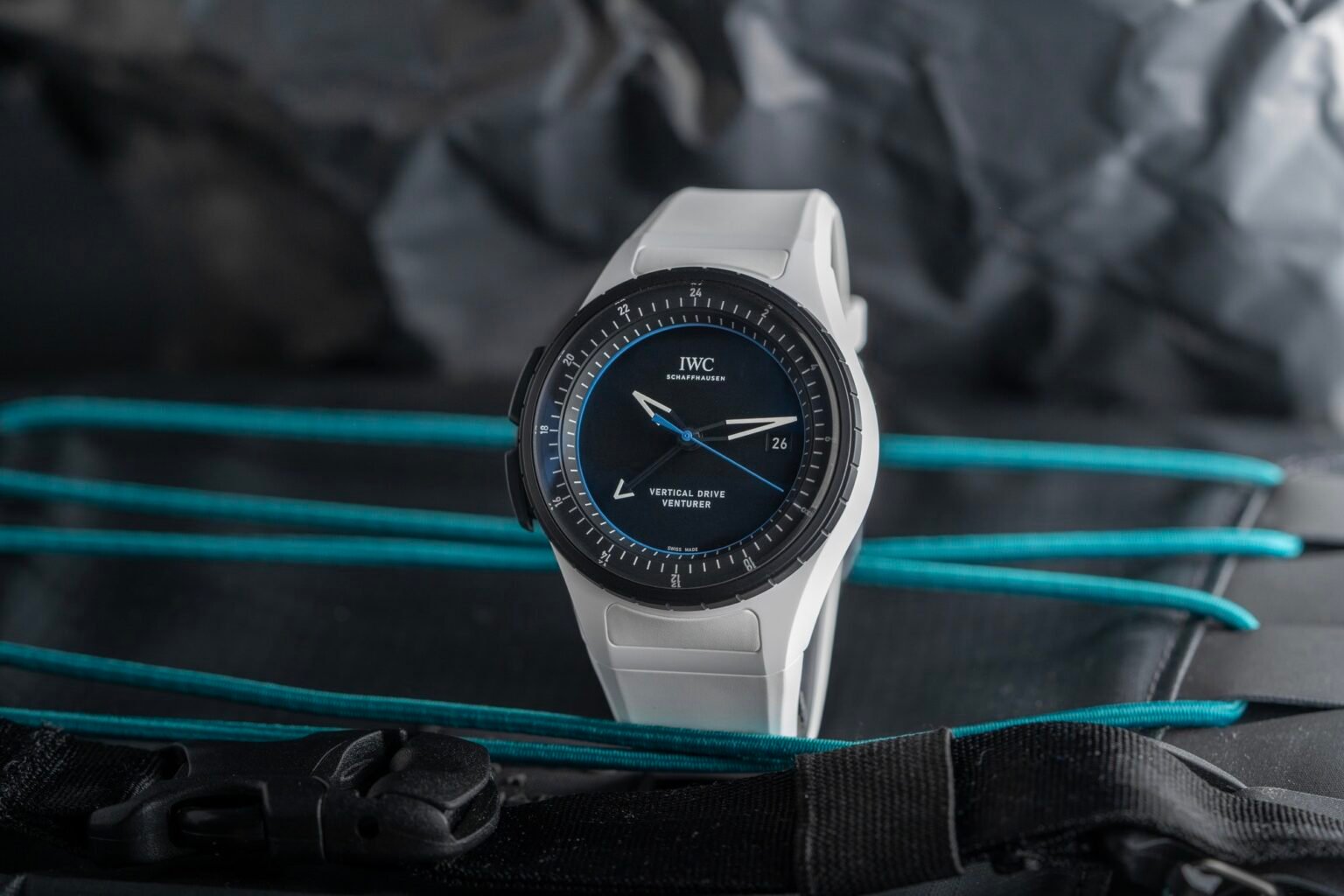
Two examples come to mind, the first is IWC’s Pilot’s Venturer Vertical Drive. For this model, the Maison teamed up with VAST (an American aerospace company) who has qualified the design to meet the unique demands of human spaceflight and timekeeping in space. Here, eliminating the crown serves an express purpose: to enable operation while wearing thick, pressurized space suit gloves. Instead, the composition features a “rocker switch” or lever on the side of the case that allows you to switch between different functions (winding, setting time, and adjusting time zones) coupled with a patent-pending rotating bezel system called the “vertical drive” for winding and setting.

In addition, there’s a Watches and Wonders adjacent release worth noting: Minerva’s aptly named “The Unveiled Crownless.” This time-only dress watch removes the crown for enhanced symmetry and instead uses a fluted bezel to control all the functions. In three of these four examples, we see winding and setting transferred to the bezel from brands anchoring three very different sectors of the industry: Ulysse Nardin, IWC, and Minerva. In addition, we see three out of four of these examples executed in highly futuristic designs: the Freak, the Ressence Orbital Convex System (ROCS), and the Pilot’s Venturer Vertical Drive.

Bringing it down to the wrist, I think the absence of a crown undoubtedly results in a clean and comfortable end product. While the layout is certainly different from the traditional wristwatch archetype, eliminating the crown isn’t overly jarring or too much of a departure from the norm. It’s perhaps too early to tell how this technology and design approach will continue to take shape or become more and more commonplace – I know I’ll certainly be keeping an eye out.
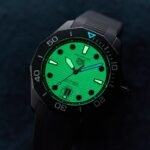
Rounding things out, I think lume is starting to have a major moment. The most significant example here once again comes from IWC, who presented its previously experimental Ceralume technology into a series production model: the Big Pilot Perpetual Calendar Ceralume. You may recall the Maison introducing its Ceralume concept back in 2024 on the wrist of Lewis Hamilton at the Monaco Grand Prix with a one-off edition. Two years later, the brand seems to have perfected the technology in time for a limited edition series composed of the proprietary ceramic compound infused with Super-LumiNova pigments.


However, even in smaller doses, we’re seeing more attention, care, and playfulness in how brands are utilizing lume. We have Alpina’s new Startimer Pilot Automatic, whose numerals are not just applied with lume in the traditional sense but rather made from a solid luminous material. The three-dimensional hour markers made from the “puffy” lume allow for an improved and longer lasting glow in addition to just looking quite unique and cool. Then we have Norqain’s next installment in its “Enjoy Life” series with the Freedom Chrono “Sprinkles” special edition. Here, we have a mix of both blue and green lume to further enhance the colorful sprinkle concept without compromising legibility in lowlight conditions.
Over the course of many factory tours over the years, only two come to memory who revealed their lume workshops and only one offered a hands-on experience where we got to try out the application process of depositing lume on a set of watch hands. In my humble opinion, this technology is overlooked more than it should be, and I think brands could be doing a lot more with lume from both practical and aesthetic perspectives. If this is an area where brands are deepening research, development, and application, I’m fully onboard.
The post Spotted: The Key Design Themes from Watches and Wonders appeared first on Worn & Wound.