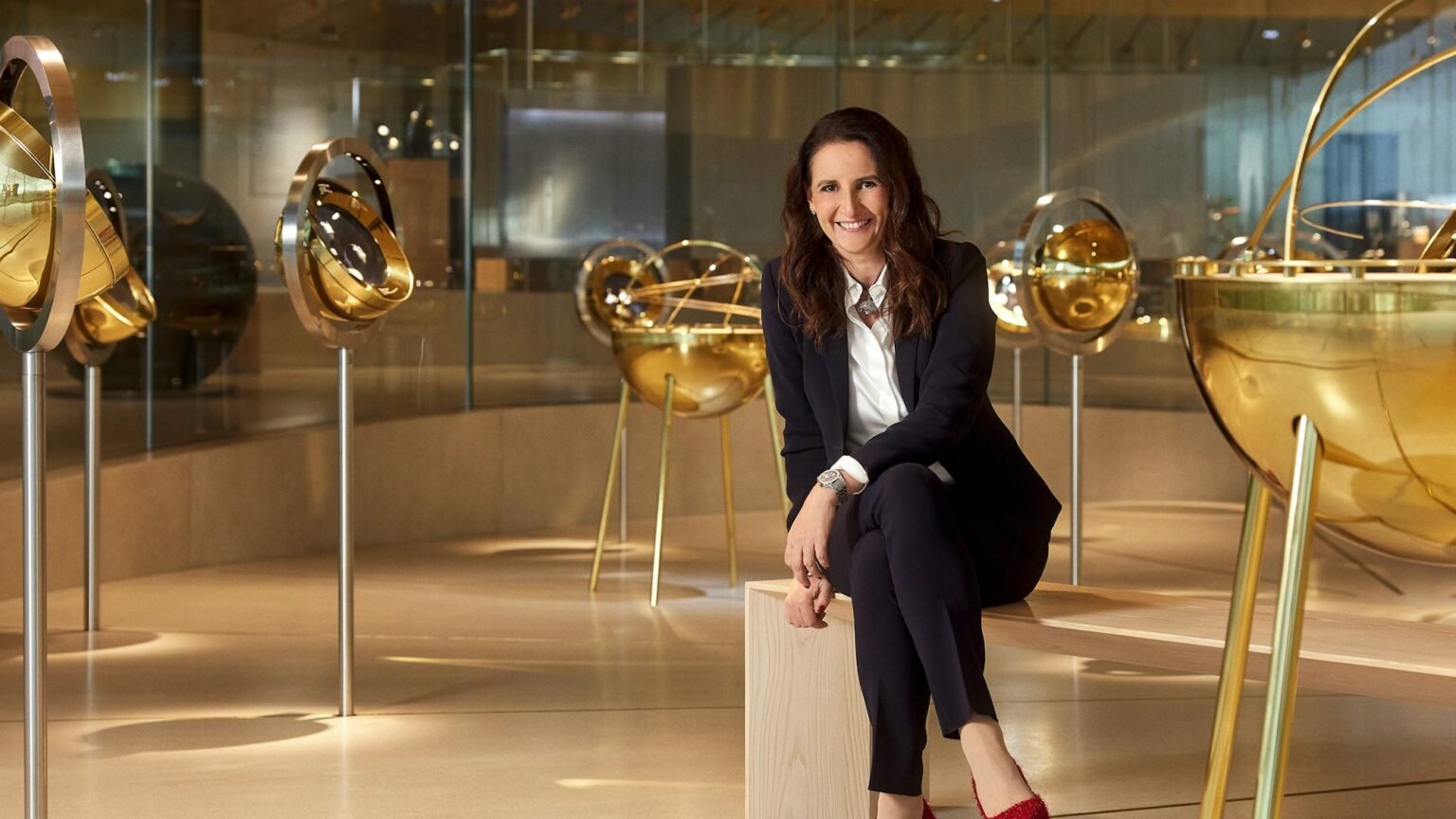


Early last month, AP gathered global journalists in Andermatt, Switzerland, for the AP Social Club, an immersive annual gathering. Watch writers like me are taken through the novelties of the early part of the year and have casual, largely informal conversations with brand executives like Lucas Raggi (Chief Industrial Officer of Audemars Piguet), Giulio Papi (AP’s Watch Conception Director), and others. We also had a chance to publish one of the first “Hands-On” stories with the new Neo Frame Jumping Hour and the 38mm Royal Oak Chronograph.

While Andy Hoffman spoke with AP’s CEO, Ilaria Resta, in a conversation published just last December, the launch of a whole new collection was enough to warrant another interview when the brand offered.
There has been a lot of news since that podcast episode was recorded at Dubai Watch Week. Audemars Piguet bought its historic Grande Complication ‘Grosse Pièce’ for a record-breaking $7,736,000 at Sotheby’s at the end of last year, and it was proudly on display at APSC Andermatt. Then they surprised us again this year with an incredibly complicated pocket watch (which Resta told me, by the time of launch, had enough interest to more than fill their 8 orders at over $2 million each).
They also launched the first new collection since 2020, the Neo Frame. The RD program, which has produced some of the brand’s most impressive watches, has been retooled for what they’re calling “Fab Labs.” These smaller-scale workshops are meant to be more reactive and adaptable, with materials research and development, horology, and more things taking center stage. To that end, the brand showed off a full carbon fiber 38mm Royal Oak Concept Tourbillon prototype (from bridge to case, plus a bracelet, which, to my knowledge, has never been done before on a Concept), a camo gold Royal Oak they first showed two years ago (that nearly everyone there told me they desperately hope goes into production), robotic testing capabilities, and more.


But that doesn’t mean everything has been smooth sailing—the Neo Frame was divisive, to say the least. Resta seems far more welcoming to constructive criticism than many CEOs. In fact, the night before the kickoff, Resta approached me at our welcome dinner and asked what I thought about the Neo Frame. I told her that I hadn’t seen the watch yet, but I was a bit unsure about the sizing, which she took in stride. The next day, she welcomed us all with remarks lasting about 10 minutes and then held a 15-minute interview with the U.S. press before our one-on-one interview.
“Performance can not disassociate from purpose. And the purpose of Audemars Piguet is to remain a family-owned company.”
Ilaria Resta, CEO of Audemars Piguet
Resta reiterated and expanded on a few topics mentioned in her interview with Andy Hoffman, including 10% year-over-year growth in 2025, 11% of buyers being Gen Z, and women representing the brand’s fastest-growing segment in 2025, a fact she attributed to not putting women in a box. Instead, the brand has decided to highlight complications, materials, and innovation, no matter who the customers are. Part of that is ergonomics, represented by making complications easier to manage. Finally, she spoke of three pillars for the brand moving forward: manufacturing excellence, a cross-generational approach to their customer base, and radical openness.
For the latter, Resta pointed to engaging customers in new ways, helping break down barriers to access (which customers have frequently mentioned as a pain point), and enticing a new generation into watchmaking (either as customers or potential professionals). In that spirit of radical openness, I had the U.S.-exclusive one-on-one interview with Resta, which we’re sharing with you in its entirety now. This interview has been edited for clarity.
The Interview with Ilaria Resta, CEO of Audemars Piguet
Mark Kauzlarich: I found it very interesting that the first thing you said in your morning remarks was, “Performance can not disassociate from purpose. And the purpose of Audemars Piguet is to remain a family-owned company.” Why was reaffirming that independence so important to emphasize? Have there been offers to buy AP, or is it something broader about the market that prompted that statement?
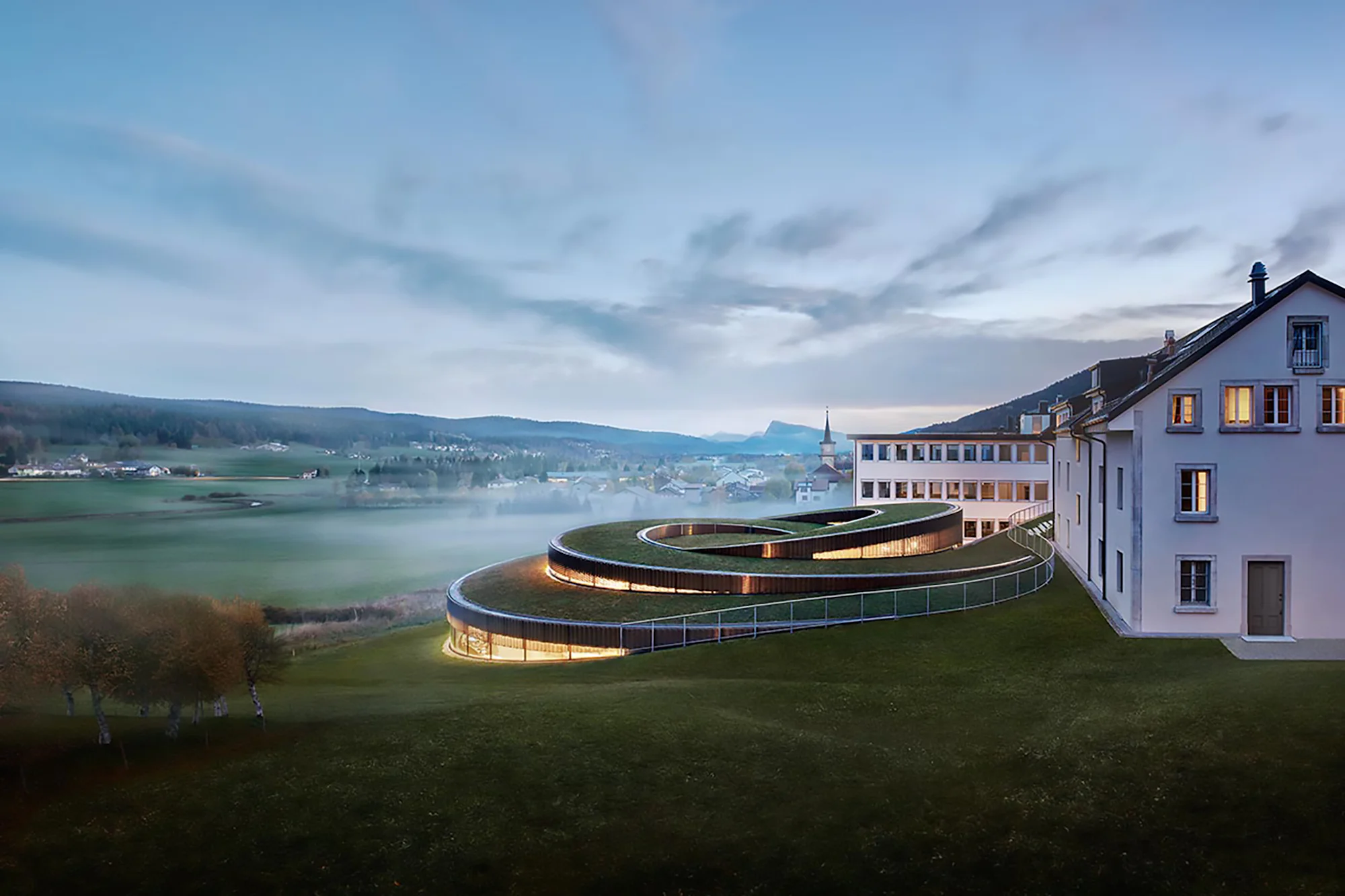
Photo courtesy Audemars Piguet.
Ilaria Resta: No, the intent was that, when you look at the performance of a company, the value creation depends on the governance of the company and the intent and the mission of the company. As we are a privately owned company and want to remain private in the long term, what matters to us is creating solid foundations to remain independent in the future, which means organic, steady growthrather than spikes and valleys. Because of spikes and valleys, you don’t just try to manage a company well, but it also means investing in the very, very, very long term.
I’ll give you an example. We have just been completing the work—my executive team and I—on the vision and plan for 2040. You can’t do that easily in other companies. That vision 2040 requires certain investments and choices, especially on the industrial side, because it takes years to build manufacturing capacity or to decide which region you want to enter. And that’s the reason the company exists. And if the purpose is like it is independence, then you can afford to make choices that financially make sense in the short term, not even in the midterm, but it makes a lot of sense when you look at the long, long term.
M.K.: At the same time, we’ve discussed how adaptability is important. The “Fab Lab,” which I’ve heard a bit about, is meant to offer opportunities for adaptability. How do you balance adaptability in that sense, while also keeping a long-term view in a space where it’s often the case that if you try to adapt quickly to a trend, you risk missing that trend?

Printed and patterned ceramics that were tested for AP cases, showing new manufacturing capabilities that may make their way into products developed through the brand’s Fab Lab.
I.R.: I think you need to develop muscles that are agile and broad enough to pivot. I give you one specific example. The strategies are a guardrail, right? They tell you pretty much which direction you take on the road, and the vision is the direction. I know that we want to be independent. Within those guardrails, you need to buy for yourself and develop for yourself certain capabilities to pivot and change.
For example, if we said that one strategy is complications—increasing the number of complications, launching new complications, elevating watchmaking—in order to adjust, we should develop more watchmakers; form and train more watchmakers able to do any type of complication. So if, for one reason or another, we need to do more pocket watches and fewer grand comps, we have the flexibility to do that. If you don’t train people to do that, you’re stuck and can’t adjust. You cannot train a watchmaker in a span of weeks or months.
M.K.: That leads me actually in two directions that I wanted to talk about. One was you mention the watchmaking and watchmaking talent. It’s something that I hear a lot of concerns about from a lot of CEOs is the schools, the point of a lot of the watchmaking schools right now are to train people to be sort of industrial components in the process. Earlier today you mentioned a school that you have—École de Savoir-faire—which I know Hermès has for leather craft, but hadn’t heard of before at AP. Is this a new program?

A view of the Hôtel des Horlogers and part of the Audemars Piguet campus, including the Musée Atelier Audemars Piguet, in Le Brassus. Photo by Mark Kauzlarich for Hodinkee
I.R.: We’ve always trained and coached people, but the École de Savoir-faire fair is actually investing even more in additional savoir-faire, like the engraving, for example, or the sertissage [gem-setting], or the decoration. We are now producing our ceramics in-house. So we are trying to really cover a much broader set of metiers that we didn’t cover before.
What we’re also doing is exchanging, much more, watchmakers from the client service department to the manufacturer and vice versa. Why? Because the client service watchmakers see watches that we never see [Resta chuckles]. Some watches have been done in a single unit, of which we were aware, but we never disassembled them since they were made, and we can learn and discover things.

The “Grosse Pièce,” on display at the AP Social Club in Andermatt.
We just bought “The Grosse Pièce.” That is a huge thing for us, just to look at it, and something very few have seen. A watchmaker who has done that repairs these types of watches and moves through the manufacturing side brings a wealth of knowledge, expertise, and ideas that are very precious. So our view of not being specialized means we need to spend more time in trainingand coaching people, because there is a moment of transition that is highly efficient, but then we regain creativity, new solutions, and competence, and so we can move people faster between one department and another.
M.K.: So this is ongoing. Are there some changes that have happened over the years, where you’ve seen increased demand for these more complicated watches, where you’ve put more time investment in the training of young watchmakers that are coming in or—
I.R.: I think it’s dual; we offer more watches, and then it’s “chicken and egg.” There are people asking for those, but in reality, in most cases, we launch something people were not even asking for, then they get enticed by this launch, that’s what I expect from the pocket watch. Nobody asked, “Give us a complicated pocket watch.” But I mean, maybe there were people interested. Now that we’ve done it, we launched it, and we presented it, I just got bombarded by text of people saying, “I can’t believe it, I want to have it one. I say, “Yes, but I just launched it.”

The Audemars Piguet “150th Heritage” with Universal Calendar caseback.
M.K.: I mentioned in my story that I have asked for a couple of years if AP would ever take on the commission of one of these complicated pocket watches. The answer was not a no, but “I don’t know. We’ll see.” All of a sudden, you release it, and it feels like a different way to say, “We’re doing this because we want to do this, and then we prove the demand after it.”
I.R.: Yes, exactly. We do watches because we believe there are great watches. In fact, actually, we did one for our own museum because we believe so much in that and because it’ll be in the lineage of all the complicated the pocket watches. It sits very nicely after the “Grosse Pièce.”
M.K.: Another thing that you mentioned this morning is suppliers. You talked about your independence, but suppliers are still important and under a lot of pressure. We’ve seen that, especially when things go up and down, I think brands can maybe adapt a little more easily. You became the majority shareholder of Inhotech, a Swiss micromechanics company, and, to my understanding, what they were providing for the brand wasn’t that hugely essential. So why purchase the company? And why make it available to competitors?

A view of the Vallée de Joux, which is increasingly filling with modern facilities for suppliers. Photo by Mark Kauzlarich for Hodinkee.
I.R.: Let me say that there is no brand in the market—that I know of—that can survive without suppliers. Even the unusual brand that you would say, “No, we’re totally independent,” they’re not. So I think we all need to be very long-term focused and aware that if a perfect storm happens to our suppliers, this industry is in deep, deep, deep trouble. Also, don’t forget that independent brands and small brands keep this industry alive with more interest and excitement. So we all need each other. I don’t see any of the others as competitors, but it’s in our hands.
Why? The reason the suppliers are in the situation they are in is that we’ve been, frankly, a bit irresponsible in how we manage demand and supply. We saw the increase [in demand]. We asked suppliers to invest in people, invest in machines, and we passed orders that were over the top, and in some cases, these suppliers don’t even have contracts signed with brands. It is a handshake kind of deal—a very small industry. And all of a sudden, they saw orders canceled, and I’m referring to what suppliers told us.

A presentation at Dubois Dépraz, which is known for chronograph modules, including that used on the AP caliber 3126/3840 until the introduction of the in-house caliber 4401.
Orders canceled, then no visibility on orders for multiple months. Dark. You don’t know whether the orders will come; what do you do in the meantime? So they held on to the people, and they held until they realized these orders are not coming. Why? Because there is stock everywhere. There is wholesale stock in trade that, by the way, many of the brands were not even aware of, because we don’t control the entire chain. Sometimes you find yourself sitting on years of stock with zero visibility. These suppliers didn’t even know when, or if, the orders would start, so they kicked off their programs to reduce time-to-work. In some cases, they needed to fire people, and then cash ends.
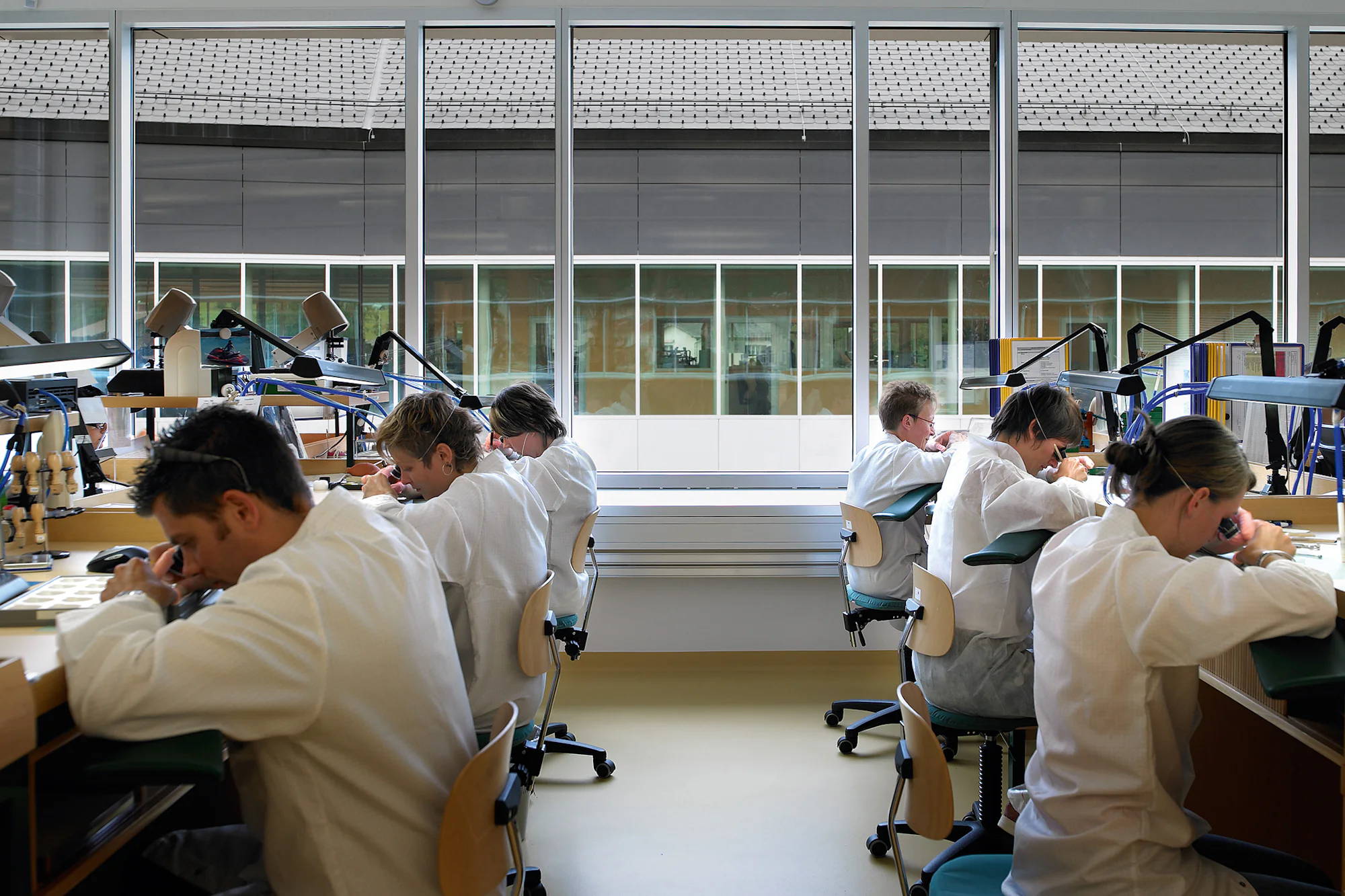
Workers in AP’s manufacturing facility. Photo courtesy Audemars Piguet.
This is a very simple story, tragic but simple. If we don’t give visibility to suppliers, if we don’t hold the promises, they can’t operate. So this is one reason why I believe once this is all over, we have to learn some lessons. We all put pressure on the suppliers. We were penalizing the suppliers who didn’t deliver on time and in full the requests that we had. And then after they ended up with a huge machine and lots of people. We are not a big player capable of, nor is our strategy, to support every supplier. We can’t. But I think in the case of Inhotech or a few others, there is a responsibility from the industry to support and avoid losing critical suppliers who are so specialized that there is an alternative in the market.
M.K.: You’re not the only company to have done this, but it’s also not the first time AP has stepped in to support or buy a supplier. I think back to Renaud et Papi, which had a great impact when it was founded, but after six years, it took a majority investment from AP. Is there something about AP in general, though, that makes it a brand that is willing to do that and then also allow that supplier to continue to work on the open market?
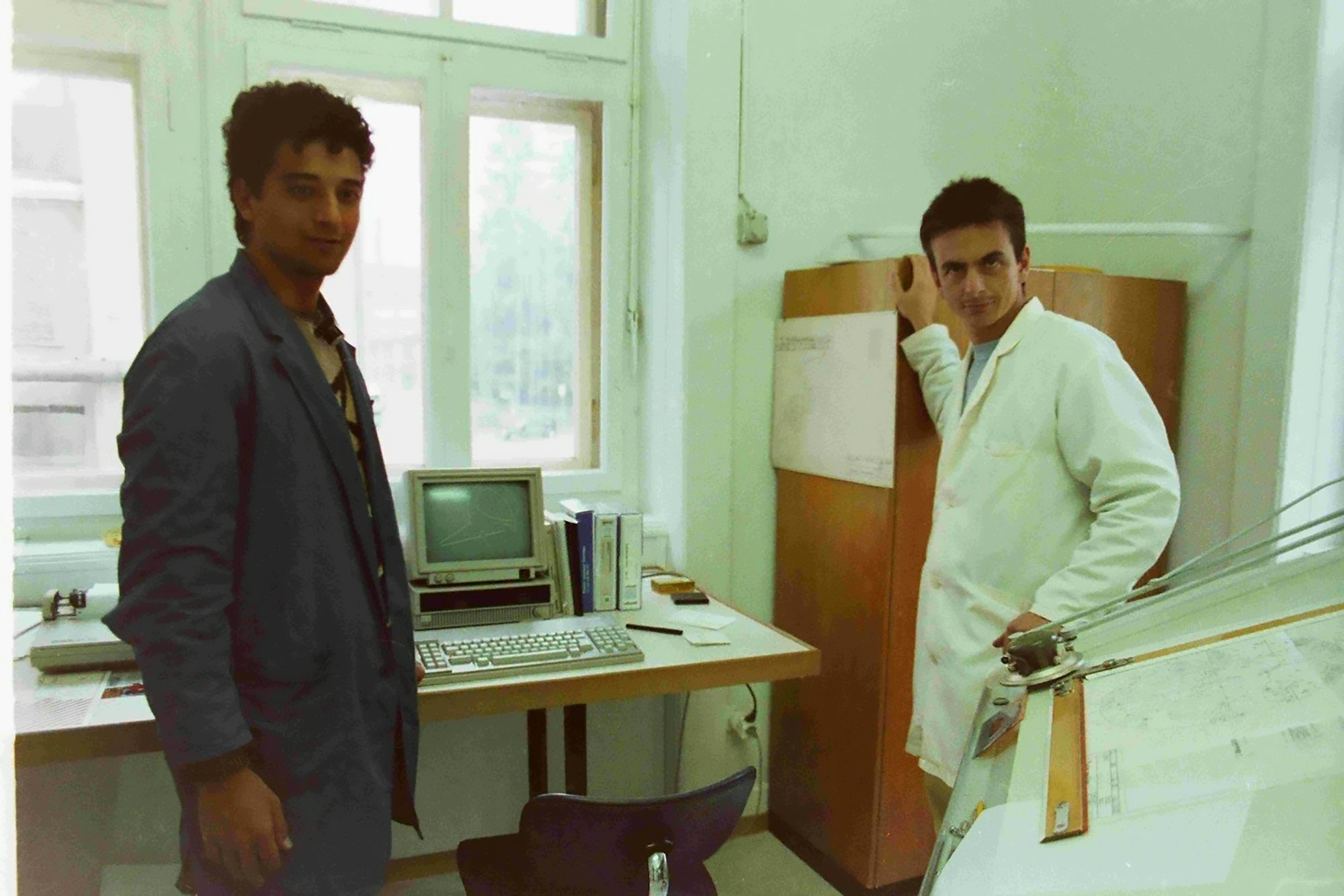
Giulio Papi and Dominique Renaud, who were AP watchmakers, and decided to establish a specialized research and development department that focused on computerized designs and CNC machines. Renaud & Papi was founded in 1986 and in 1992, Audemars Piguet purchased 52% of the company to secure their expertise in high-complication movements. The company became APRP and, most recently Audemars Piguet Le Locle. Photo courtesy Dominique Renaud.
I.R.: I am not talking about me [and my decisions or direction], but I can say that the ethos that has been incredibly strong at AP for years, many, many years. And the conversations I know, and I’ve seen, and I’ve had myself with other people [at AP] are all conversations about we are here for the better good of the industry. We wouldn’t be here without the suppliers, and we’re going to support them. And this genuine interest has been there at AP for decades, and I’m extremely proud to work for a company like that because I’ve rarely seen that. So there is a genuine interest, but the point is we are not big enough to save the world. So we need to ensure that we don’t repeat the catastrophe of 30 to 40 years ago. Actually, 50 years now,—time flies—and I was born during the quartz crisis. So that’s what we need to avoid.
It’s part of the ethos. That’s why I say purpose and performance is going hand in hand. We could grow 10, 15% again this year. Easy. We have the demand. Is it right? No, because we will not invest in innovation, first of all, because there are limited resources we have in certain competencies. I cannot put everybody on full-on manufacturing. If what we’re saying is, “We want to invest in new development and new complications,” then continue with what’s happening to the suppliers, where we charge [and push] them like crazy [then switch manufacturing], then all of a sudden we will not need them anymore.

The new Openworked Royal Oak Perpetual Calendar in titanium and bulk metallic glass.
M.K.: Supply and demand lead to something else you said this morning, which is radical openness versus exclusivity. I think this is a good opportunity to discuss how you communicate availability as a brand. Someone in our comments recently said they couldn’t believe you couldn’t just walk in and get a perpetual calendar, which I’d think is a bit silly, since your production of these pieces is certainly quite limited. I think communication about access to pieces could be better. But I think some people would like to understand where the total production is, the demand, and why you can’t or wouldn’t want to do what you just said and go all out to produce all the most in-demand or complicated models.
I.R.: Let’s do an oversimplification of the volumes because, give or take, we are in the 50,000 range of watches we produce. If you add more or less, 10%, you’re [in the range]. If you take the average across models—I don’t take the specific model—we have between four and ten times the demand. So you can imagine that we can’t serve 10 times the demand. Can we increase the production to serve them? No, even if we want it, we don’t have the watchmakers, we don’t have the capabilities, and we will need to do with machines what we do todayby hand, and if we do it. Even if we try to do it by machine, we cannot do it. So it is not even possible. So that is an industrial choice, but also we are forced not to. We cannot increase the production. That’s a fact.

The recently-released Audemars Piguet Double Balancier in Bleu Nuit, Nuage 50 ceramic, one of the hottest models for the brand.
Will there be—if we sell one and have demand for four—three people disappointed? Yes, they will be disappointed, but we will explain, and we need to explain to them and accompany them in the process. What we are trying to do now is to ensure that we open new doors to the newcomer, to the first purchaser. It is something we do intentionally to reduce frustration and bring in younger people, new people. Otherwise, it’s the same old type of people. But that’s the reality of the manufacturing choice we make. When you explain that—when people can visit us—they see it’s not an artificially enforced limitation, but a limitation that comes from a choice and the quality they understand.
If you take the average across models, we have between 4 and 10 times the demand. So you can imagine that we can’t serve 10 times the demand. … What we are trying to do now is to ensure that we open new doors to the newcomer, to the first purchaser.
Ilaria Resta, CEO of Audemars Piguet
M.K.: Which brings up community engagement. Everybody at AP seems quite excited about being at Watches and Wonders. But, by my understanding, since you announced a lot of novelties here, you’re joining the fair and not going to introduce much there. That’s not what most brands would do. Why, then, are you so excited about being there?
I.R.: I’m excited. I saw the power of the exhibitions we’ve done for the 150-year anniversary. These exhibitions are about the discovery of the story of Audemars Piguet and the story of watchmaking, plus some of the presentation you saw here. Were you excited to see the exhibitions and see all the things [from the museum]? Are you going to buy any of them? No. But are you excited when you go to the Louvre, and you look at the exhibition of the pictures there? That’s the way I see watchmaking. Watchmaking is so much entertainment. There’s so much participation with something that is culturally historical and artistic. Just spending one and a half hours in that booth—understanding how the energy train works, how materials can transform and be forged by the different techniques—I think it’s exciting.
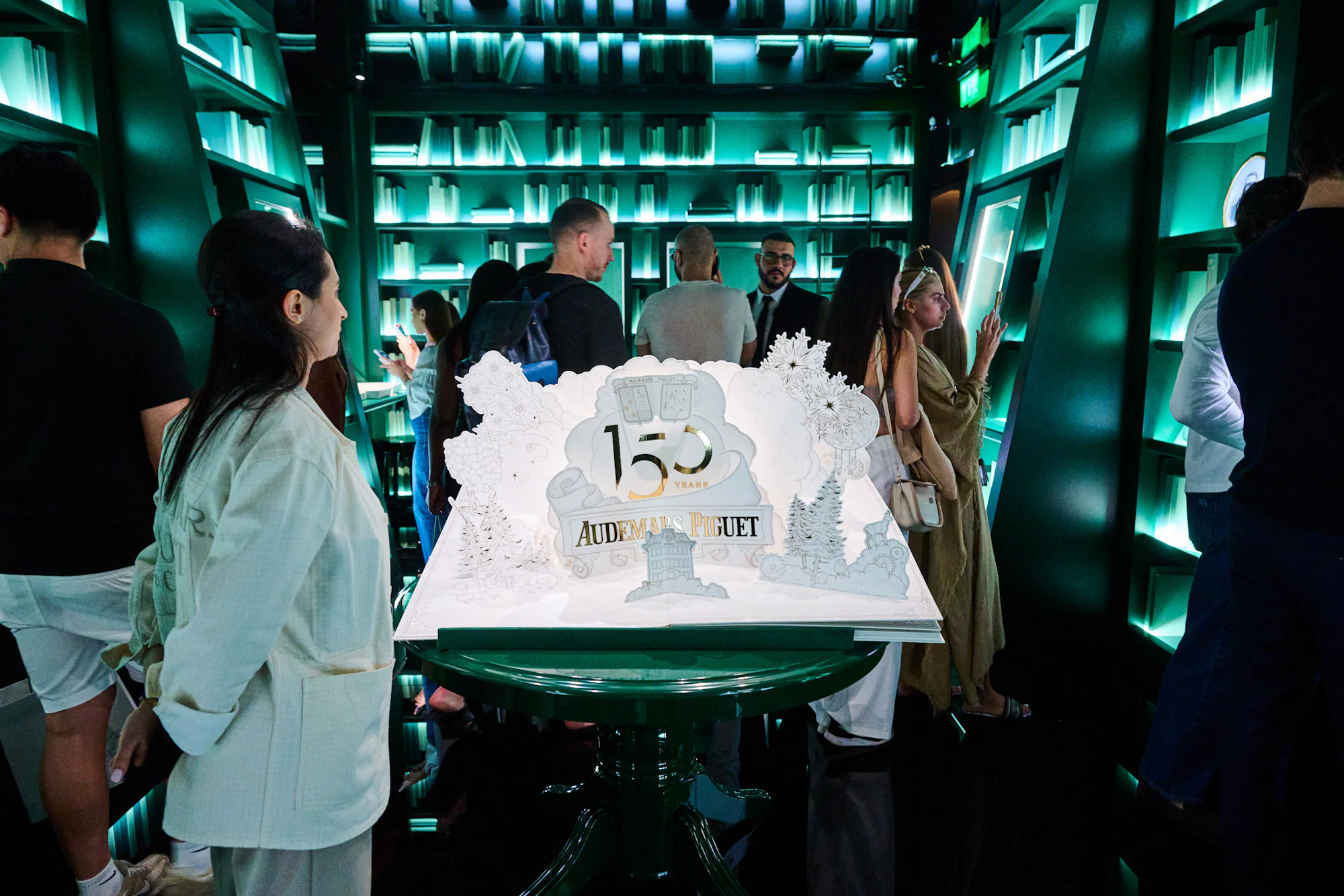
Inside the 150th Anniversary Audemars Piguet exhibition at Dubai Watch Week.
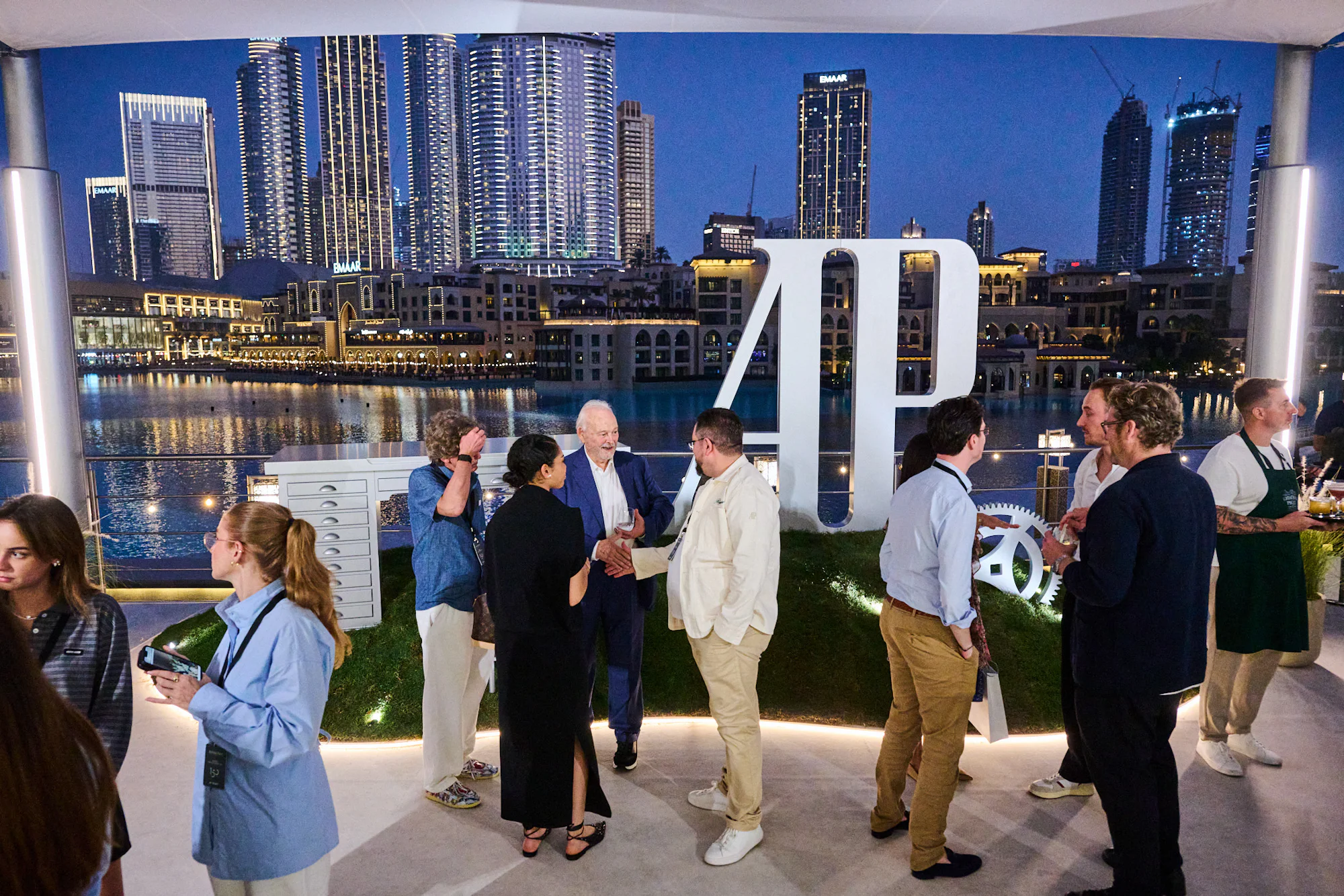
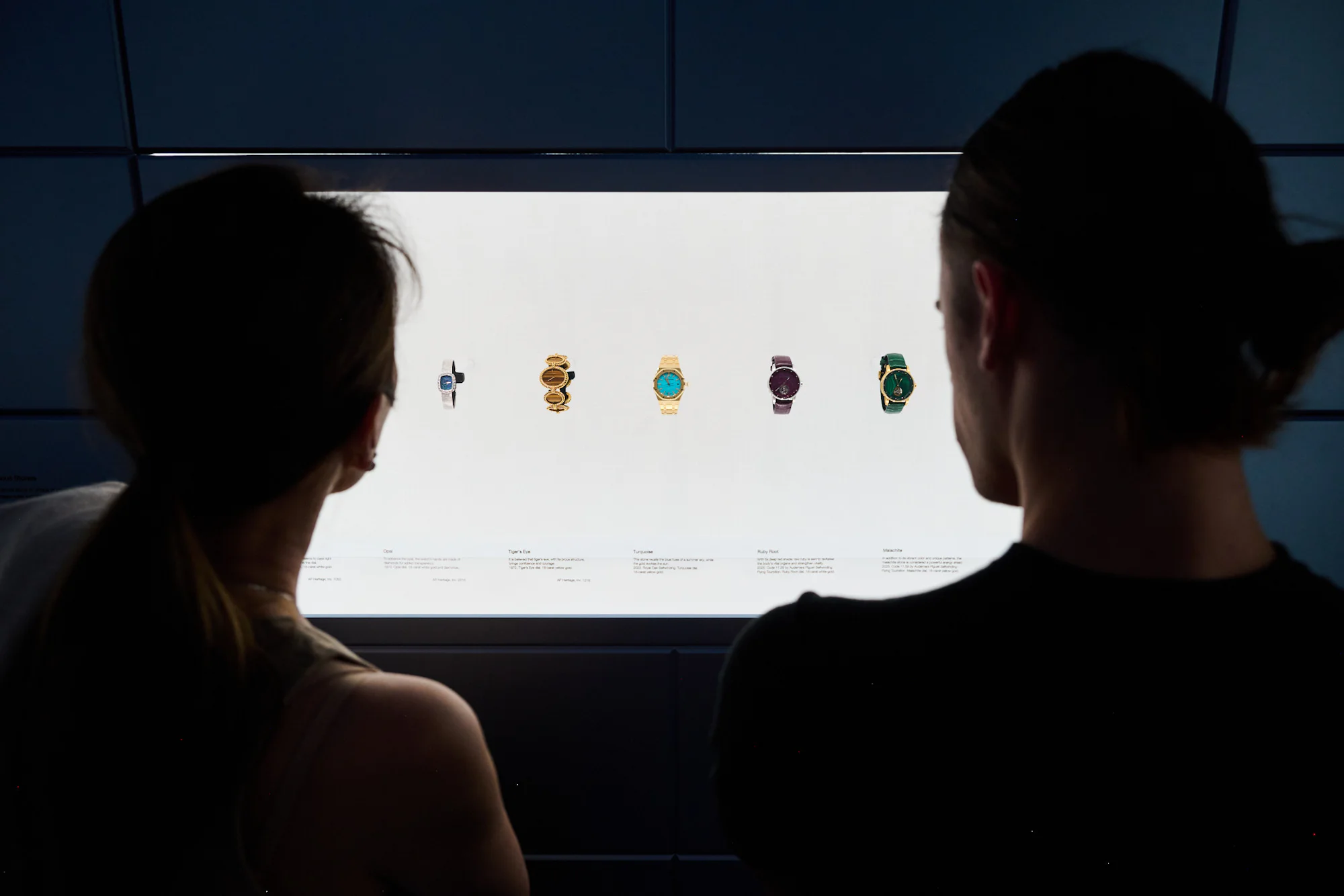
There are two worlds: those who are there to touch as an audience, people who maybe don’t even want to buy, but are entertained by that. The more we treat watchmaking as we treat art, or we treat it even in some cases, as automotive [design]. I mean, how many people dream about a Ferrari and how many people really buy a Ferrari, just to give an example. That’s my dream. That’s our dream. At Watches and Wonders. You will see an exhibition featuring wonderful pieces. You will not see the pieces where the price tag says, “Come and talk to the representative.” That’s not why we’re there.
M.K.: When we did the presentation about the pocket watch, I said, “Okay, at that price and at that number of watches for a small group of people, it’s only real for a small group of people. It’s an imaginary idea for everyone else.” But you still can look at it, study it, maybe see it behind glass or in pictures. And we get to see it as a physical object, but we don’t get to experience it the way that an owner does. But does it make it any less exciting?

I.R.: Exactly. And do you know how many people scroll through the pictures of the pocket, watch open, increase, and dream about and understand to understand how the mechanism works? That’s exactly what we’re after. I mean, that’s the passion we want to create, and that’s why we do these exhibitions. We want that pocket watch to be seen by other people.
M.K.: As our last question, let’s take a step back. With the launch of the Neo Frame today, I’ve been getting a lot of questions about the future of AP and what the company is and can be. What would you want people to create in their mind as a framework so they can imagine what AP is going to be, what it’s trying to say with its products, and who it’s trying to reach over the next few years?
I.R.: I’d like AP to be multifaceted and show all the aspects of watchmaking that belong to our story. So more complications, more artistry, our savoir-faire, more decoration, and more shapes. I want the universal AP to be multifaceted and much more complex in a positive way.
For more on Audemars Piguet, visit the brand’s website.