
It’s been a busy week, Baller, not just with a bunch of new watches being released, but with a phantom island migrating in ways you wouldn’t expect an island to, the news that Avocados reverse their sex multiple times a day and, if you’re wondering why your car gets so beat up by exposure to rain, no, it’s not just that water eventually leads to rust, but that the coating on cars can be destroyed by the electric charge raindrops arrive carrying. Also, physicists may’ve found dark matter. This is your reminder that no matter how strange you find the world, it’s always stranger than that.
Scorekeeping last week’s picks, the Hamilton Cross Country sold for $1,200, the Heuer Titanium Quartz for $340 AUD, the Movado Super Sub Sea for $4,250, the Breitling 810 for $2,750, and the Breitling 815 sells tomorrow.
Strays

Photo courtesy of Interencheres.
RAF Sector clocks were also sometimes known as Operations Room clocks, and this week you’ve got a trio to choose from—one, two, three—if you’re into extremely beautiful and historically important clocks. If you’re a horologically-inclined fan of Mos Def and Talib Kweli, here is, I kid you not, a Zenith with the branding “Black, Starr, and Frost” on the dial. For those hankering for an unworn Rolex Platinum President (ref 228236), have at it, and this Audemars Piguet 25696PT Huitieme Perpetual Calendar is such a strange 1990s watch. You can see from the pictures that it’s a modular build, given the crown and pushers don’t align, and the styling on both dial and bezel makes clear the watch’s era, too, and, yes, it’s got a snap-on caseback, and for sure that is a busy dial conveying a lot of data, but still, despite all of that, that’s an oddly charming watch. Finally, it’s another week, and yet again I find myself distracted by a 1990-2000s Cartier, this time a Cartier Santos Galbee.
Zenith De Luca

Photo courtesy of Interencheres.
Apologies if you’ve not been sucked into the Zenith De Luca wormhole. Produced from 1988-1996 and named for the Italian importers who requested Zenith design and make the watch, the De Luca is a fascinating transitional watch. It marked the beginning of Zenith’s new life—they, of course, famously provided movements for Rolex and Ebel in the early 80s, but didn’t make chronographs of their own at that time. That changed with the introduction of the De Luca, which looked remarkably similar to the Zenith A277, except that instead of being powered by the venerable 146, the first De Lucas featured a 3019 beneath the hood (which movement was then modified to become, first, the Zenith 40.0, and then the cal 400).
The De Luca came in four variants, but that’s underselling the sprawl and complexity of the watch. Over various iterations, there were at least three handset styles used (paddle, dauphine, Mercedes), three different pusher sets (screw-down, inverted, standard cap), screw-down and non-screw-down crowns, and shifting dial markings and lume plot variations. What stayed the same throughout was the 40mm steel case and rotating bezel.

Photo courtesy of Tortoise Watches.
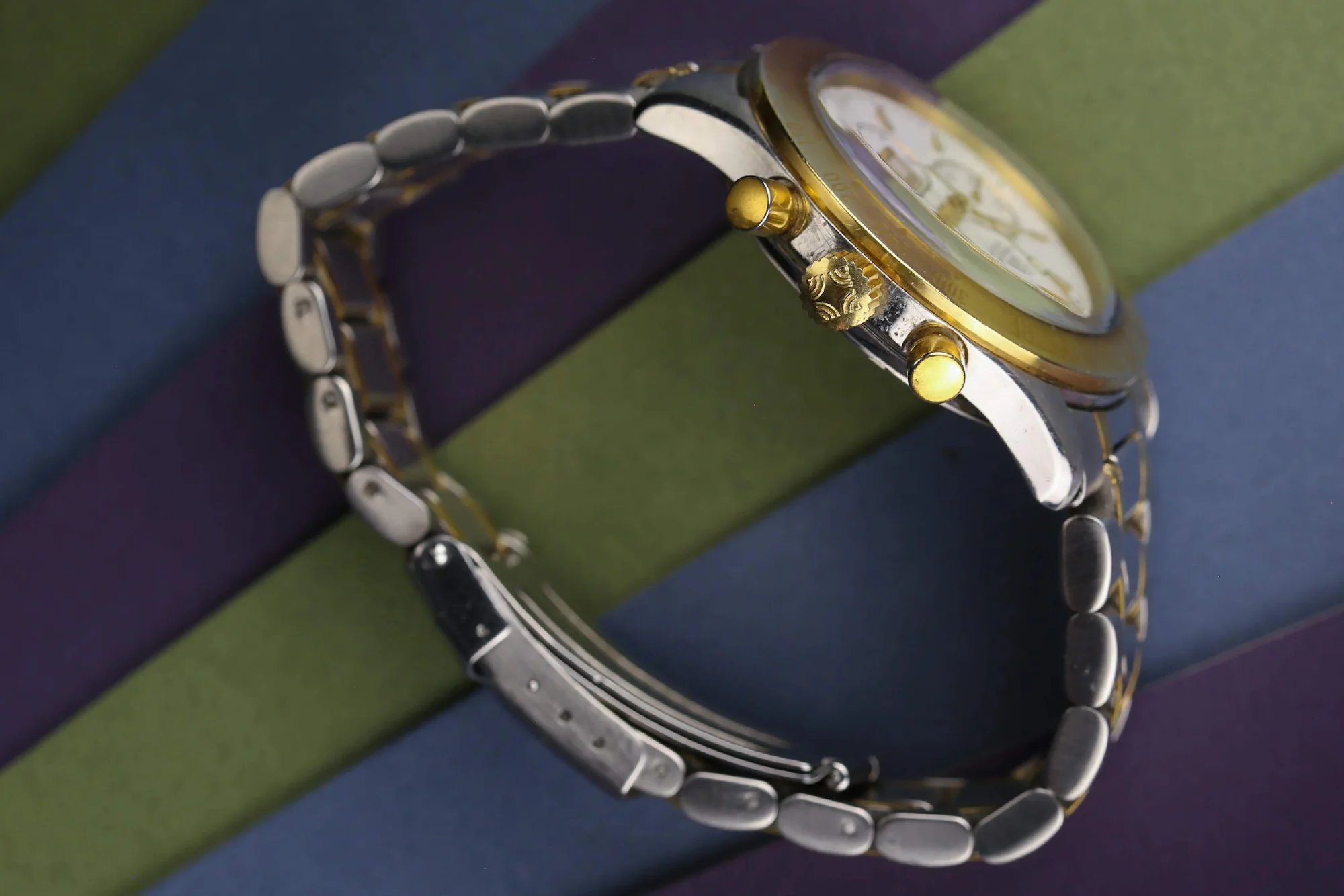
Photo courtesy of Tortoise Watches.
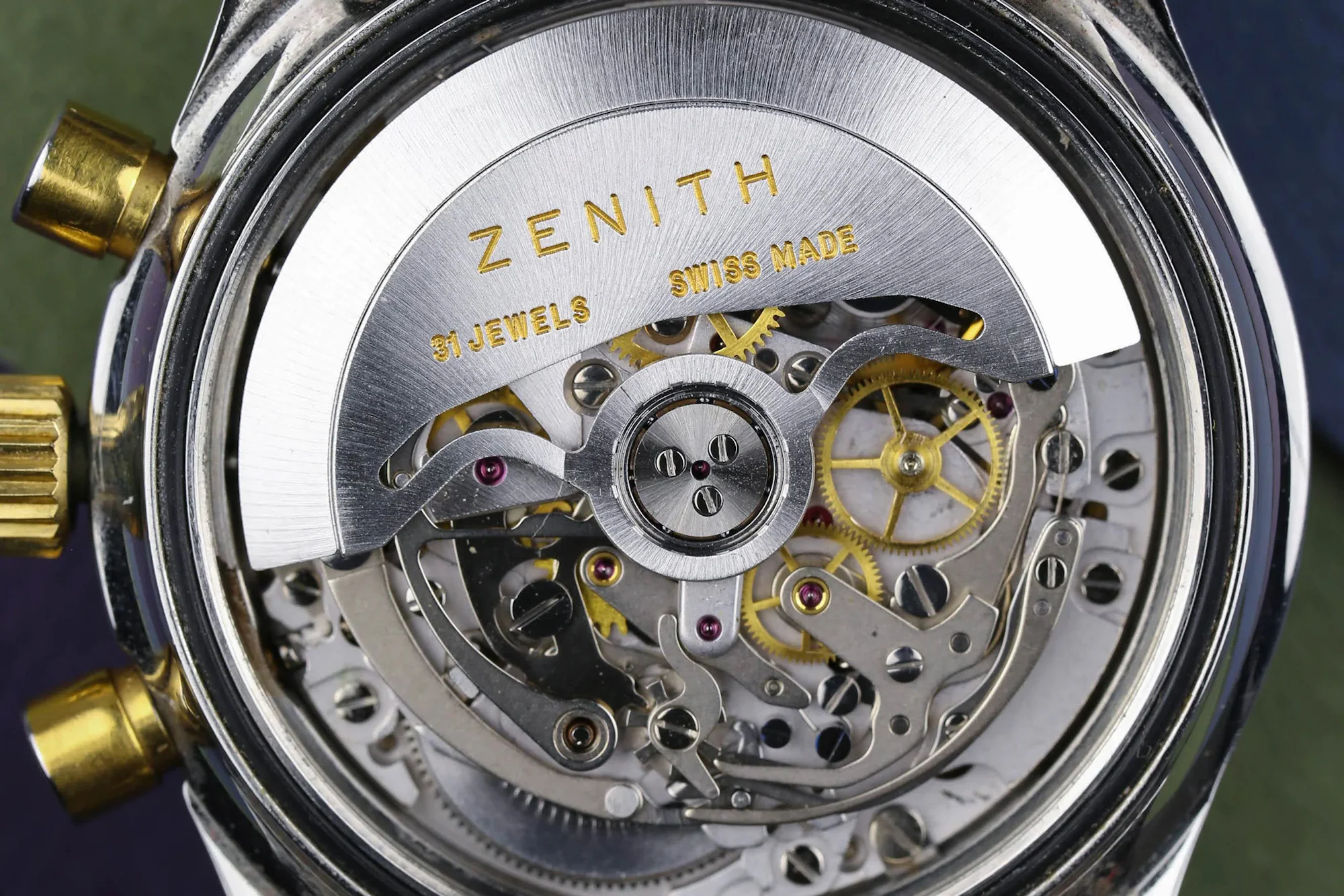
Photo courtesy of Tortoise Watches.
Over eight years, only around 6,500 De Lucas were made, and certainly it’s hard to look at them now and not see them as direct competitors to the Rolex Daytona (which direct competition got even more acute with the De Luca IIs, with their fixed tachymeter bezels). Mercifully, Zenith regained its footing, and while they’ve yet to re-release the De Luca, one can always hope (2028 will be the 40th anniversary of the watch’s introduction, after all).
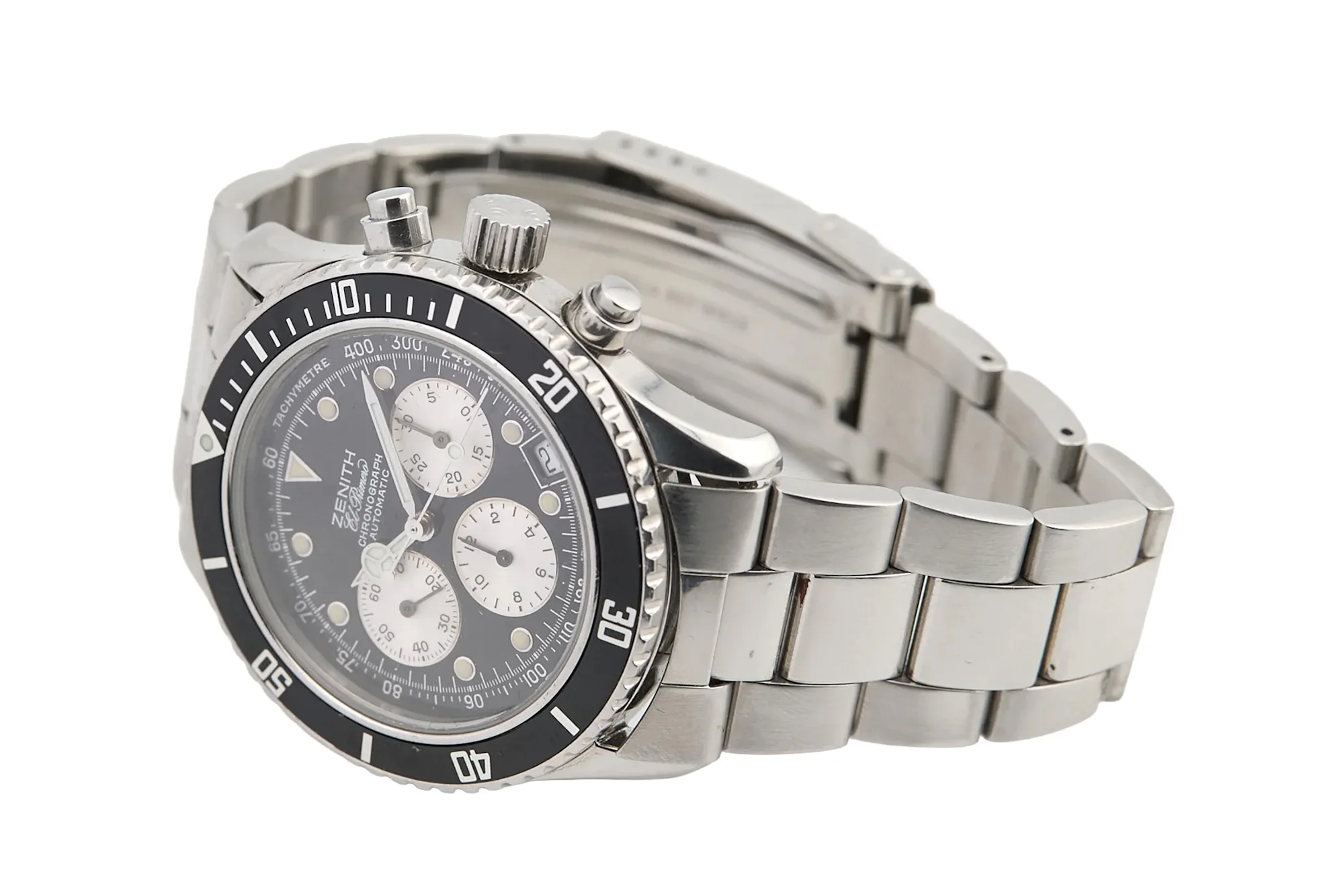
Photo courtesy of Interencheres.
This particular example—auctioning the 5th of September, in Paris, with an estimate of 3,500-4,500—looks to be a Mk 3 De Luca in very good shape indeed, coming not only with the original bracelet (with polished center links), but with box and papers as well. If one wants to pick nits, it’d be fair to note the case could be more dynamically finished, or that the 22mm lug spacing is uncommonly wide, but either is awfully minor as far as complaints go. De Lucas have not exactly flown under the radar or anything—they’ve been at least $5,000 for the last decade—but they remain not all that common, and as far as an almost pure sport chronograph, you’d be hard-pressed to find anything much more fetching in the same price range.
Patek Philippe World Timer (ref 1415), Retailed by Beyer

Photo courtesy of Schuler Auktionen.
Certainly, you saw the news in March that Patek Philippe purchased the 266-year-old Zurich-based company, Beyer. As Mark noted at the time, Beyer had been selling Pateks since 1846, and in a sort of sweet symmetry, Schuler Auktionen, a Zurich-based auction house, will be offering this co-signed 1415 World Timer in its auction in September, running from the 8th through the 11th.

Photo courtesy of Schuler Auktionen.
It’s hard to know where to begin with this watch simply because there are too many aspects that qualify as superlative. That Wenger case, for instance, with its teardrop lugs, is wearing its 80+ years awfully well, with the dial and hands looking equally excellent. I’m not sure what anyone would need to hear about the caliber 12-120 to convince them of its greatness (it was, after all, the movement used in the Patek ref 96 as of 1934), and if you’re looking for general rarity, the 1415 offers it in spades, with just over 100 examples of the model made from 1939 to 1954. There’s also the fact that the hands on many Patek Philippe 1415s were made by Lewis Cottier himself, the developer of the world time complication used in the watch; do with that data whatever you wish.
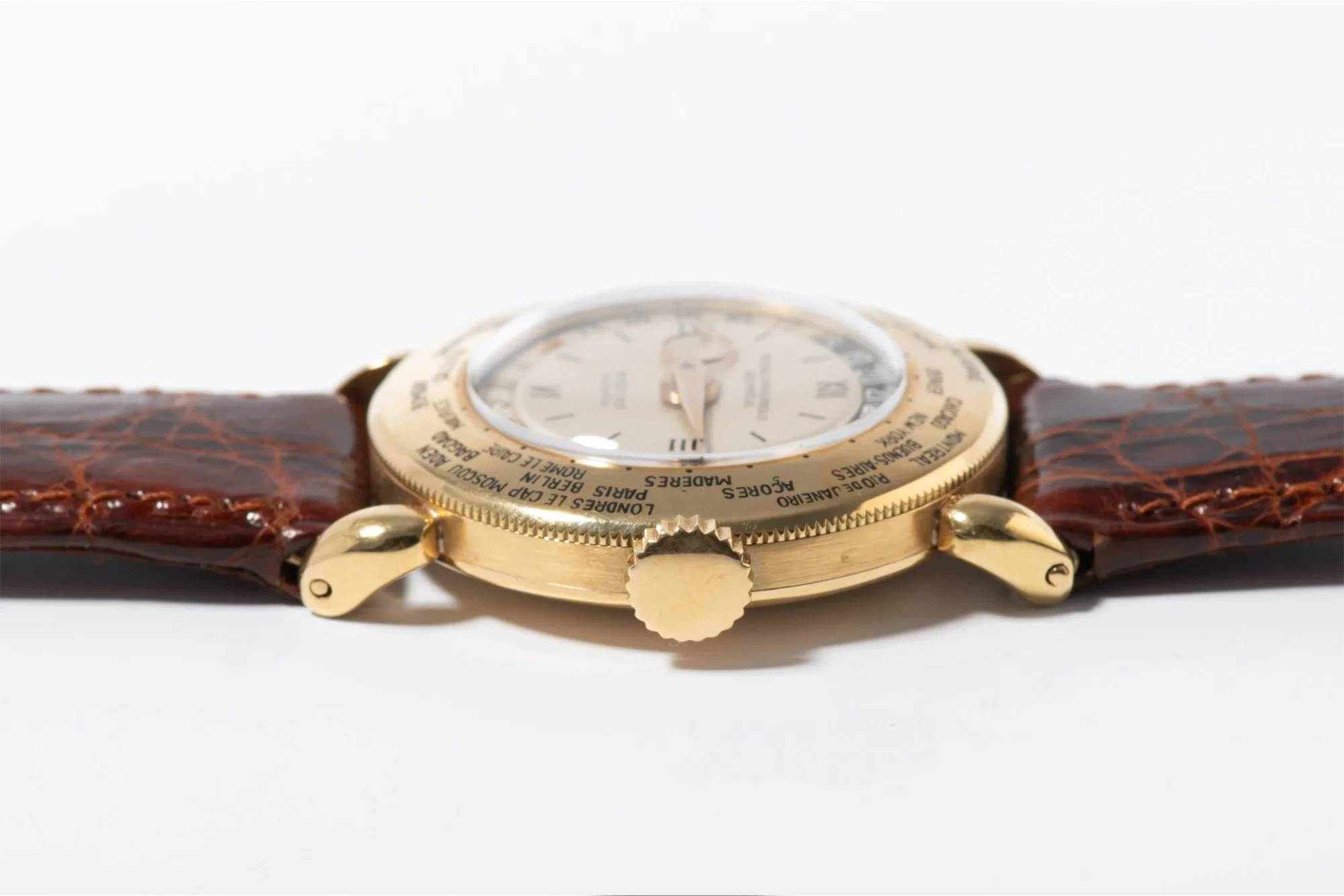
Photo courtesy of Schuler Auktionen.

Photo courtesy of Schuler Auktionen.
The watch comes with an extract from the Patek Philippe archive and, as if that’s not enough, also comes with a letter from Beyer noting the watch was sold in 1945. Incredibly, the original Beyer ledger notes the watch was schwerverkäuflich, which, for those who don’t know German, I’d strongly encourage you to hit a translator and earn your chuckle. Past this Patek, the whole Schuler catalog’s worth a gander, including this Rolex Jump Hour Prince, which is still incredibly beautiful despite being redialed.
With an estimate of CHF 150,000-300,000, the 1415 sells in Zurich next week.
Carlo Ferrara CF1997 Regulator
The upcoming Bonhams auction in Paris is veritably overflowing with goodies. There’s an Omega cushion-case monopusher chronograph, this 18k Mido Multi-Centerchrono, an extremely beautiful Ardath dual-time, a fantastic JLC Master Quartz circa 1970, and for the oddball chasers, yes, there’s not only a Spaceman but also a Tissot Research Idea 2001 with a functioning movement, which is really saying something given the watch is like 99% plastic. However, among all the other glories on offer, this Carlo Ferrara Ref MCMXCVII is the one I can’t shake.

Photo courtesy of Bonhams.
There’s not much out there about Carlo Ferrara, an Italian designer whose eponymous company seems to have gone quiet with his death in 2012. However, whatever else he left behind, he made watches, and his specialty sure seems to have been regulators, of which he made ones with central seconds and minute hands, rectangular models, and regulators with GMT and power reserve complications.
The one available at Bonhams is fairly mundane compared to those others, but a glance at the picture will show this watch offers more flash than it might originally appear. As you can likely surmise, those big vertical slices on the left and right of the dial are, in fact, tracks on which the hour and minute hands travel (here’s a Reddit post with a video showing how the hands actually move, if you don’t want to be limited to your imagination). I’ve seen the complication referred to as “dancing hands,” which I suppose works.
Regardless of what you call it, it’s a fairly curious watch, offering a lot of style and, likely, a little bit of a headache, as actually reading the time would take a bit of an adjustment. In terms of wearability, the watch has a ton going for it given its 39mm wide, a bit over 10mm thick, and is powered by a modified ETA 2892. I can’t remember ever seeing one of these in person, so if you’re the sort motivated by never entering a room without having a little extra splash, your watch awaits. Bonhams will auction this watch—with an estimate of €800-1,200—and a whole catalog of other amazements on the 8th of September.
Omega Speedmaster First Gen X-33

Photo courtesy of The Saleroom.
My potentially blasphemous opinion is that the early Speedmaster X-33s are phenomenal watches that wear extremely well, are horologically significant, and, because of how far afield they fall from the recognized Speedmaster silhouette, remain direly overlooked, especially when you factor in that they’re what astronauts wore on the Artemis II mission just this year. So much of Speedmaster collectability and appreciation has to do with the watch’s connection with NASA, which is valid and great, but it’s mind-blowing that the X-33—issued to astronauts as of 1996—isn’t afforded more respect.

Photo courtesy of The Saleroom.
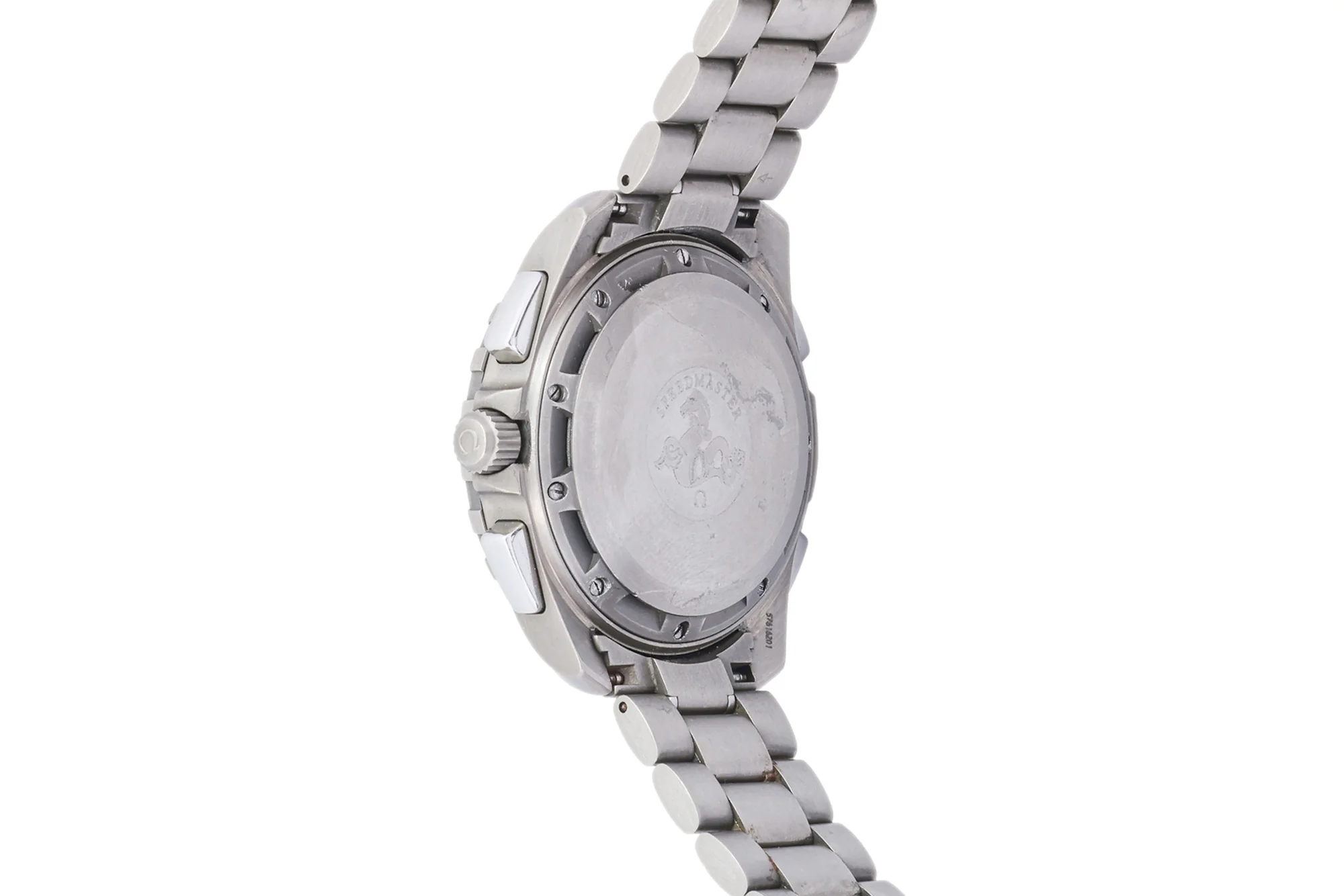
Photo courtesy of The Saleroom.
I’ll cop to a mildly overdeveloped fondness for the digital-analog Omegas from the 90s, where a black LCD beneath the hands could display the date or time, which is one of the reasons the X-33 has always done it for me (as Maile Meloy’s perfect collection of stories has it, Both Ways Is The Only Way I Want It). The X-33—this one’s a first generation, because the rotating bezel lacks a lume pip, and because it’s got the (foolishly) ridged crown—feels like a true reimagining of a Speedmaster. Those hands, for instance, are clearly echoes of what you’d find on a 2915, and on the black chapter ring, the lume is as you’d expect on a standard Speedy, with hash marks for hours and the two dots and hash mark at 12.

Photo courtesy of The Saleroom.
Plus, the case on the X-33 is glorious, truly. Both the case and bracelet are titanium, and they wear obscenely well. Every time I see an X-33, I wonder why I do not presently have an X-33. The cal 1666 can be a pain, and a full service requires sending the watch back to Omega, but those are small prices to pay for such fun watches. This example—up for auction in Singapore—doesn’t come with its box and papers, but the watch itself looks in great shape, with the titanium case retaining its sharp finish, and the listing notes it’s running and has had its functions tested. There’s a host of functions offered with the X-33, including an almost unbelievably loud alarm, but I presume for most of us things like a mission timer are merely curious add-ons.
This goes up for auction on the 6th, with an estimate of 1,600-2,400 SGD.