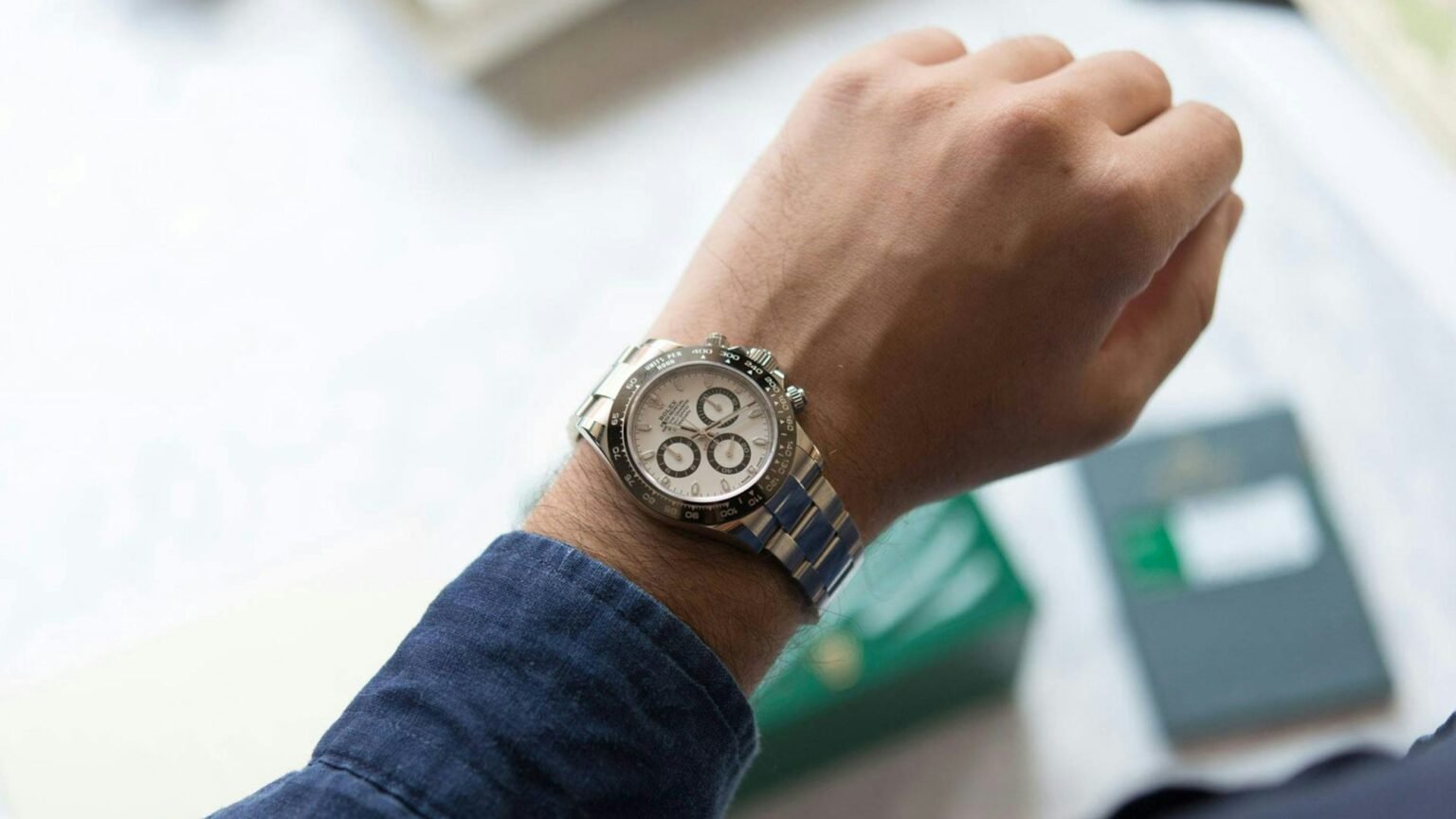


The industry-wide market fluctuations that took shape in the wake of the pandemic pushed an often-taboo conversation in the collecting community: are we collecting for investment or are we collecting for pleasure? Sure, it’s not quite that black-and-white, but certain shifts in the market and collector behavior over the past six years are undeniable. When the value of particular brands and models began to skyrocket, the secondary market showed clear signs that people were capitalizing on the opportunity to profit, and, in turn, the pure notions of “I buy what I like” or “I collect because it’s fun” began to come into question. At one end of the spectrum, many collectors were essentially becoming dealers, seizing a moment when there was a massive return on investment to be had. However, even those collectors who didn’t get fully swept away in the hype at the height of the market became acutely aware of the value their watches held and how, quite literally, in the blink of an eye, that value could change for better or worse.

“Hype moments are not inherently bad or good,” suggests Charles Tian, Founder and CEO of WatchCharts. “Some hype is expected for a healthy market—if the market is actually alive and things are happening, that means there are passionate people in the market, and you are inevitably going to get some hype. The question is how you navigate these moments in the context of your own collecting journey.”
According to WatchCharts and Morgan Stanley’s quarterly watch market report for Q1 of 2026, we’re continuing to see the positive trajectory that started in 2025 following the 2022 peak and subsequent descent. Last year was critical in marking the stabilization of the market in the first half of the year and in notching the first notable uptick since that peak three years prior. This year is proving to be crucial as well. “I would say it was a pretty significant first quarter, maybe the most significant quarter in the past few years, where we saw some really big momentum in Rolex specifically but also permeating to other brands,” affirms Tian. “When one brand, particularly an iconic brand, starts to do well, it tends to permeate the whole market—it often starts with the big three, Rolex, Patek, or AP, setting the pace, then it trickles down to other brands too.”
Perhaps some veteran collectors would still take issue with using these types of analytics to inform their collecting approach, but those younger generations just starting their collections are entering a different landscape than collectors past. “Gathering information on value and trends used to be like the Wild West,” Tien recalls. “It was not organized or centralized—it was a lot of collectors talking on forums, and it was often just a lot of speculation.” Today, WatchCharts and Morgan Stanley’s quarterly watch market reports are just two of many resources that collectors can use to educate themselves in order to inform their collecting approach in terms of buying, selling, understanding the value, and protecting their timepieces. Now more than ever, the watch market is vast and nuanced, requiring collectors to be savvy. To some degree, this does make collecting a bit less joyful and carefree than in decades past—the stakes are arguably higher in today’s collecting scene, but there are upsides too. “Without these shifts, the market probably would have stayed much smaller,” Tien points out, “and that wouldn’t be good for collectors. There would be fewer brands, fewer interesting designs, fewer options out there.”

The takeaway is that no matter what kind of collector you are—one with an unlimited budget or fixed; one interested in buying, selling, and trading or one focused on procuring what you like and keeping it in your collection forever; one devoted to a few strong prominent brands like the big three or one who prefers a wide variety of different types of brands—the market matters. “Not every collector seems to care about valuation, but maybe they should,” Tian asserts. “At the end of the day, I think everyone really wants to be a value-driven collector,” he continues. “Very few people really have unlimited funds they can put into this hobby—even if the budget is very high, there are limits. When you understand both valuations and how valuations tend to move over time historically, you can make value-driven decisions about your collection.”
Value doesn’t just come into play when making intentional choices about buying and selling within your collection. It’s also imperative when it comes to safeguarding your collection with platforms like Hodinkee Insurance. If you have questions, we’re here to help. Just send us an email at insurance@hodinkee.com. If you’re ready to start a policy, you can get a quote for your collection in just a few minutes. Click here to learn more and start an application for a free quote.