
If you’ve been around the horological block a few times, you’ll know that Seiko is a brand worth taking seriously when searching for a proper, professional-grade tool watch. The Japanese powerhouse has been forging a reputation for itself in the deep, dark trenches of the ocean since the mid-20th century. The Seiko Prospex SPB317, dubbed the “Slim Turtle” or “Turtle Origin,” reaches back into this illustrious archive, serving as a modern reimagining of the seminal 1968 reference 6105-8000. It’s a more wearable and refined version of what you’d expect a modern dive watch to be, with an overall tighter footprint, shorter lugs and a clever weight dispersion across its proportions, allowing it to sit flatter on the wrist without feeling too top-heavy. Something about the SPB317 feels more considered, as though every dimension has been trimmed back to where it needs to be without losing any of that all-important retro ’60s/’70s Seiko dive charm.
Seiko watches have a funny way of sneaking up on you and taking root in your subconscious, especially those belonging to the brand’s dive watch collection. But the sheer volume of the Prospex lineup each one an absolute master of the slow burn — can easily induce decision paralysis for even the most experienced collector. Just when you think you have your diver rotation perfectly sorted, another release drops, throwing your entire watch collection into chaos. Because the brand’s catalogue is so expansive, it can become incredibly difficult to separate a fleeting crush from one that deserves a permanent place in your collection. This is what makes the Seiko Prospex SPB317 feel like a genuine exception in a sea of familiar options.

[toc-section heading=”The Case: Refined Proportions Inspired by 1960s Seiko Divers”]
The fundamental Prospex design has remained largely unchanged for decades, fiercely protecting the iconic details that fans simply cannot get enough of. That DNA is an absolute winning formula, and nowhere is Seiko’s commitment to refinement more evident than in the SPB317. And where the standard Seiko Turtle SRPE93 comes in at 45mm wide and 13.42mm thick, this slimmer take is 4mm smaller and about 1mm thinner.

The case resurrects an elegant “cushion” geometry that harks back to long before the sweeping crown guards of the so-called “Captain Willard” seized the public’s imagination on the silver screen in Apocalypse Now. Indeed, before then, the beautifully symmetrical cushion case of the 6105-8000 was worn and enjoyed by servicemen, setting the genetic blueprint for generations of Seiko divers, from the revered 6309 to the ubiquitous SKX series with its unyielding durability. It is this ergonomic harmony that permeates each deliberate curve and contour of the SPB317’s bodywork.
The watch’s stainless steel silhouette measures 41mm diameter, which, to the uninformed, may sound rather imposing and masculine, but, like a master of optical illusion, Seiko manages to keep the watch within the boundaries of the arm rather than awkwardly overhanging it, thanks to a lug-to-lug measurement of 46.9mm. Often in the watch-collecting world, case diameter gets all the glory, but the total wingspan of the watch from top to bottom is a true indicator of how a timepiece like the Seiko SPB317 will actually wear on the wrist. A watch with a lug-to-lug measurement of 50mm or more is pushing right out to the physical boundaries of the wearer’s wrist, so the Prospex is well under that crucial limit, allowing it to anchor itself firmly in place with some give on either side.

Clocking in at a svelte 12.5mm thickness, the SPB317 undercut many of its Prospex siblings by a considerable margin with case flanks that are uniform and a flat brushing that gives the dive watch its cool, sporty edge. Furthermore, the crown is ingeniously recessed into the case at the 4 o’clock position. This is a signature Seiko design trait, historically intended to protect the crown from underwater impacts, but which in daily life serves an equally crucial purpose, preventing the crown from digging into the back of your hand. For a collector assessing the sheer wearability of a timepiece from afar, these dimensions, combined with a 200-meter water-resistant rating, promise ISO-certified features blended with the kind of slip-under-the-cuff dressiness you’d want in a watch you plan on wearing the whole week through.
[toc-section heading=”The Dial: Defining the 4:30 Date Window”]

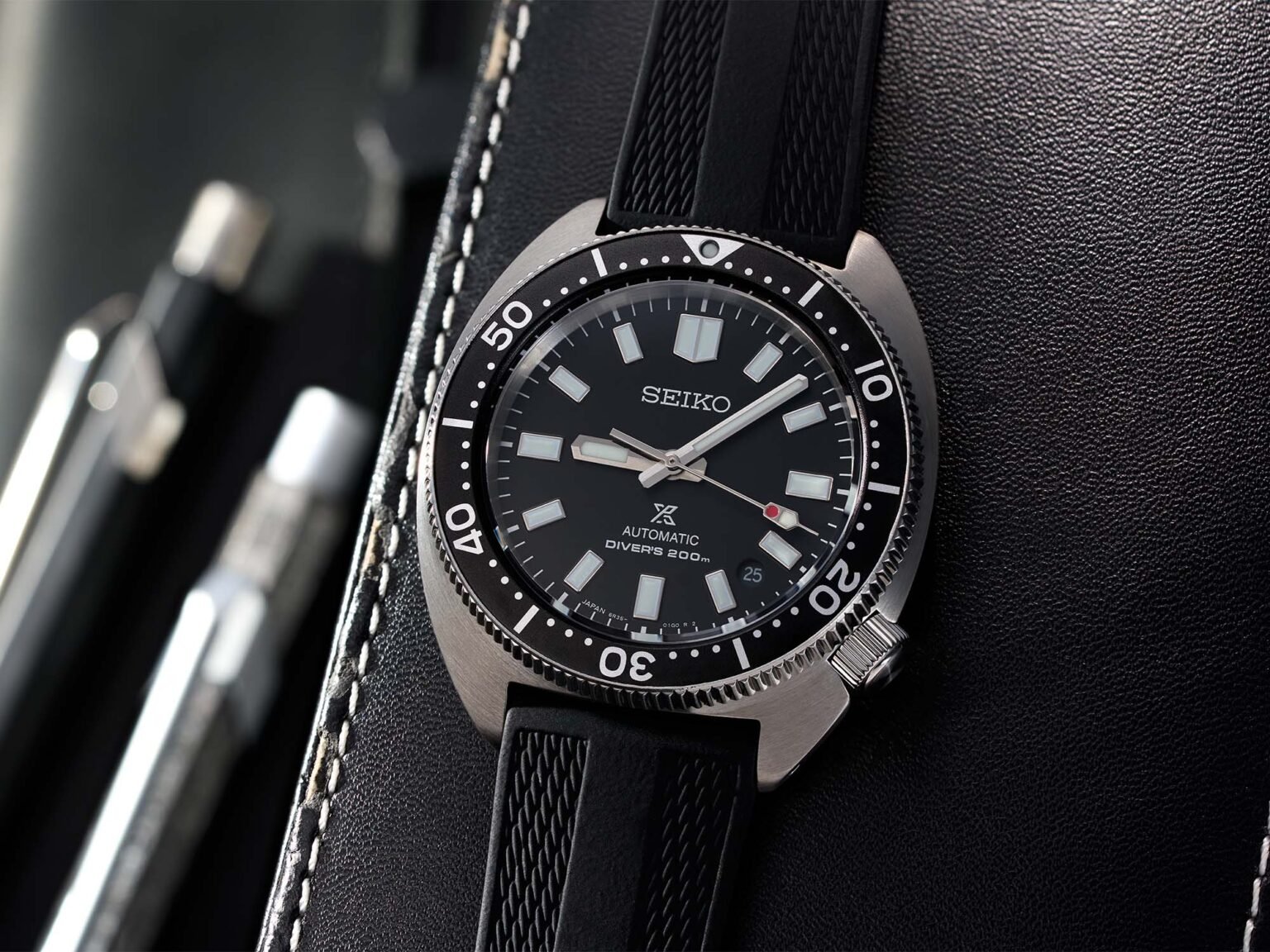
The “date or no-date” debate has always split opinions. Some collectors believe the addition of a date complication can often ruin the harmonious symmetry of a beautiful dial. Seiko’s solution on the SPB317, however, is to locate the date window at 4:30 in a discreet circular cut-out so as not to obstruct the dial too much. The date disk is well color-matched to the dark matte dial, and the printing is kept nice and subtle. It also appears to sit tightly against the underside of the dial plate, so you don’t get any distracting shadowing around it. The result is a date window that basically disappears when you’re not looking for it, letting the watch read like a clean no-date design at a glance, while still giving you the everyday usefulness of having a date when you need it.
It would be far too simplistic to just call this a black dial. Seiko bestowed the SPB317 with a heavily textured, matte charcoal canvas that seems to actively absorb the light around it. This muted canvas provides the perfect backdrop for the brilliantly executed handset and indices. The hour markers are applied, sharply defined, and generously flooded with Seiko’s proprietary LumiBrite, a luminous compound that requires no introduction to those familiar with the brand’s nocturnal legibility. The hands themselves feature a highly considered dual-finishing technique; brushed on one side and polished on the other, making sure that, no matter how ambient the lighting conditions are, at least one facet of the handset will always catch the light.

It’s likely to be the smaller, quirkier details that truly fascinate long-term enthusiasts, however. Take, for instance, the sweeping seconds hand. Rather than a standard lollipop design, Seiko has opted for the historic “stoplight” or “traffic light” configuration. Near the tip of the hand are two distinct circular plots; one filled with glowing LumiBrite and the other boldly rendered in a vibrant, cherry red. It’s only a small splash of color, but the detail gives the watch a surprising amount of personality. Then, encircling the entire dial is a unidirectional 120-click bezel that turns with a really smooth operation. The insert is aluminum rather than ceramic, keeping things feeling a bit more vintage and true to the model’s tool-watch roots. Even the font for the 10-minute markers nods back to the original 1968 reference, showing just how closely Seiko has paid attention to its own history.
[toc-section heading=”The Movement: The Pulsing Caliber 6R35″]
Watches of this pedigree deserve engines capable of matching their robust exterior, and for the SPB317, Seiko has enlisted the services of its Caliber 6R35. This automatic movement is a familiar presence within the modern Prospex family, beating at 21,600 vph and boasting a weekend-proof power reserve of 70 hours. This is a 24-jewel mechanism engineered not for delicate environments but for the unforgiving rigors of the deep. Seiko movements aren’t the most accurate you’ll find, but they still have the autonomy, stamina and reliability to accompany you when tackling ocean waves, cross country, or traveling from one country to another.

Introduced in 2019 as the direct successor to the beloved 6R15, the 6R35 was designed to be the foundational engine for Seiko’s premium mid-tier collections. To put this in simple terms, it bridges the gap between the entry-level 4R series found in affordable Seiko 5s and the luxurious, Grand-Seiko-derived 8L movements found in the brand’s top-tier professional divers. Just look at the frenzy around the modern 62MAS reinterpretations, like the hugely popular SPB143 and its dial variations. These are the watches that really helped define the modern “heritage diver” trend, and they all rely on the 6R35 to keep time. The same goes for the bold, asymmetrical “Captain Willard” reissues, like the SPB151, which have earned serious respect and a permanent spot in collectors’ watch boxes around the world.
But the real versatility of this movement extends far beyond the ocean’s depths. When Seiko finally made the momentous decision to update the cult-classic Alpinist collection by retiring the legendary SARB017, the single most significant upgrade it bestowed upon the new generation of land explorers was the 70-hour 6R35. Even the brand’s larger, more aggressive professional instruments lean on this workhorse, from the bold and robust third-generation Sumo models to the highly technical Marine Master Reduced.

If you were to unscrew the caseback of the SPB317, you’d not be met with the glittering, hand-bevelled edges or the elaborate Geneva waves of delicate haute horlogerie because the 6R35 is a machine designed for a purpose. As such, its finishing reflects exactly that. It makes up for it, however, with its core architectural elements, such as the Magic Lever System and its Spron alloys used for the mainspring and hairspring. These provide the escapement with outstanding durability.
[toc-section heading=”The Strap and Wearability: Living With It on the Wrist”]

The strap is where the Seiko SPB317 transforms from a mere diving instrument into a versatile companion. Unlike its white and gilt-dialed siblings, which are offered on stainless steel bracelets, this timepiece is delivered on Seiko’s proprietary black silicone strap. The OEM strap is supple, with unmistakable accordion ripples that allow for expansion over a thick neoprene diving suit. These features are authentic to the watch’s aquatic roots, though the metallic strap keeper could prove slightly cumbersome for some wearers. But the true joy of owning a vintage-inspired Seiko diver lies in the never-ending pursuit of aftermarket strap pairings. The SPB317 is an absolute strap monster, and this is where its remarkable wearability truly shines. Seiko has thought about equipping the cushion case with drilled lug holes to make strap changes a quick and painless ritual, so you won’t find yourself wrestling with spring bar tools and risking unsightly scratches on the lugs.
Because the watch possesses such a slim profile, it cleverly sidesteps the dreaded fabric strap bulge associated with many modern dive watches. When you thread a nylon double-pass NATO strap under a thick watch, you invariably elevate the case, causing it to sit awkwardly on the wrist, but the SPB317 has a nice trim architecture and a flat crystal that welcomes the added fabric without impairing its low center of gravity. Whether strapped to a tough, olive canvas strap for a weekend of camping or a sand-colored Tropic rubber strap, this watch is going to sit nice and flat.

[toc-section heading=”Why the Slim Turtle Ends Up Hijacking Your Rotation”]
The wearability of the Seiko Prospex SPB317 is its most compelling argument. It doesn’t dictate your wardrobe thanks to its muted dial choice (save for the pop of red), and its forgiving lug-to-lug length, guaranteeing it will sit beautifully centered on a wide variety of wrists. It offers the rugged, masculine history of military diving heritage, yet it’s delivered in inherently wearable proportions that can be matched with a plethora of straps. If you’re in the market for a well-balanced, practical diver that sits comfortably and doesn’t feel overbearing on the wrist, the Slim Turtle might just end up being the one vintage-inspired diver you keep coming back to time and time again. And all for a price of $900. Check out seiko.com for more info.