
There’s a “don’t change it if it ain’t broke” mentality in Swiss watchmaking. Progress is slow, and it often seems that there’s a general distrust of change. An example of this is in the mechanical movements that power most of our watches. Chances are, you have at least one watch with an ETA 2824 or a movement based on the 2824 in your collection. If you’re like me, you have several. For Swiss-made watches of a certain price point, they are the standard. They are “workhorses” that, while not the most feature-rich, offer reliability and serviceability. And part of the reason for that is that the design has been around, largely unchanged, since the 1970s (the 2824-2, which is the current standard, was released in the 80s).
That is, until 2013, when ETA launched 80-hour movements based on the 2824-2. First debuted in a Tissot as the Powermatic 80, ETA nearly doubled the 2824’s power reserve by slowing the escapement’s frequency from 28,800bph to 21,600bph, introducing synthetic components, and increasing the mainspring’s capacity. The biggest update to the 2824 format in a generation (though they no longer use that numbering), as ETA is part of Swatch, these movements gave the group’s catalog of brands under Omega an unexpected edge in the market, but were not available to third-party brands, thus limiting their overall impact.
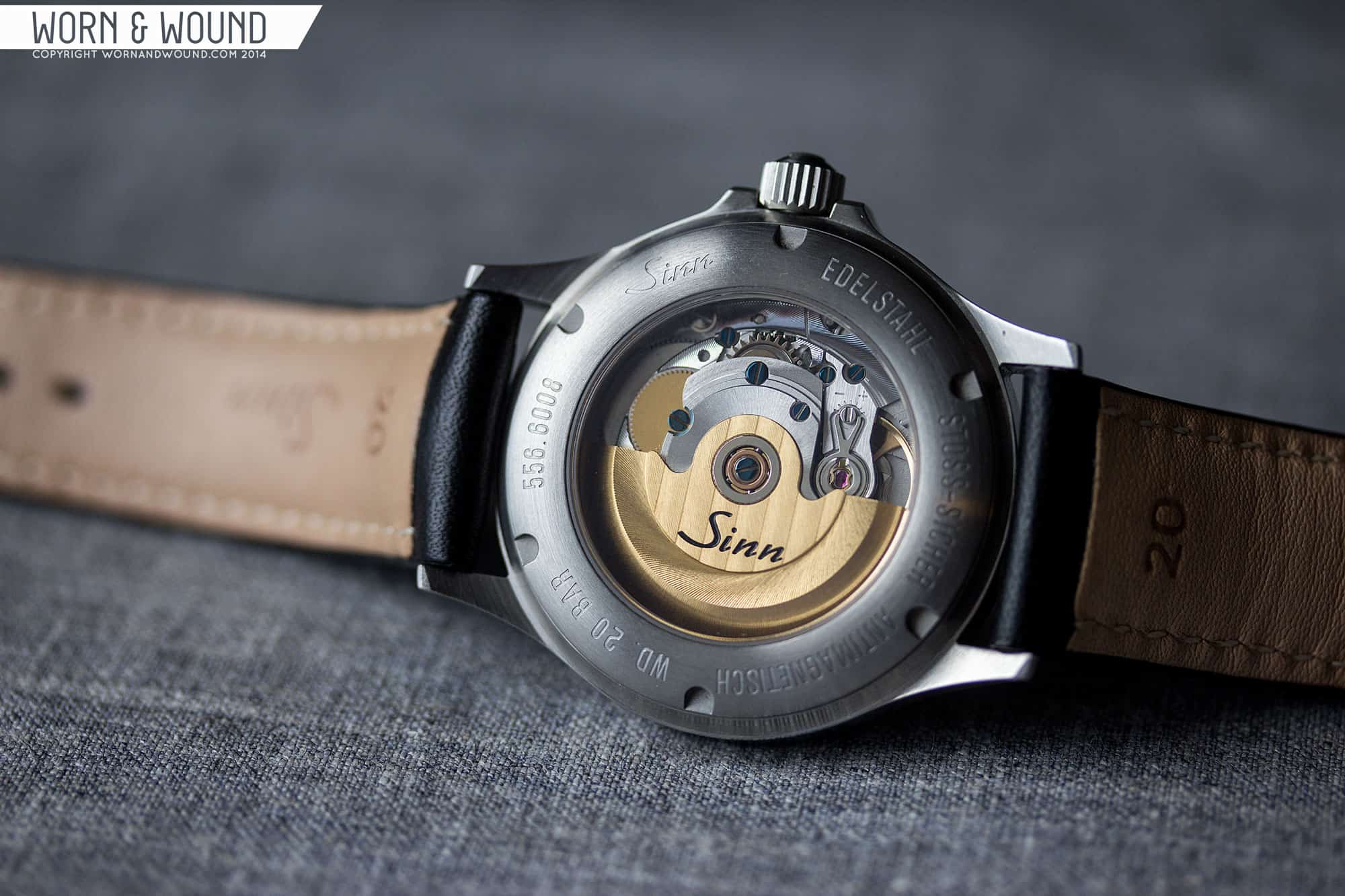
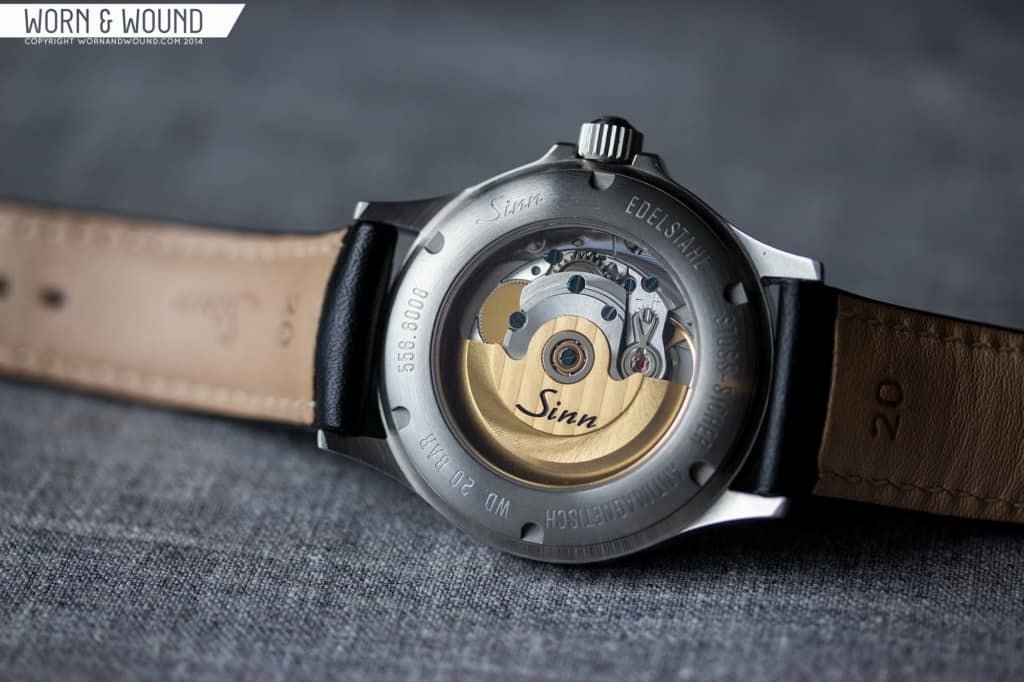
The ETA 2824 featured in a Sinn 556i
In 2003, Sellita began supplying movements to third parties as a response to Swatch’s 2002 announcement that it would seek to limit supplying outside of its own group. Based on ETA’s expired patents, Sellita’s “clones” offered alternatives that wouldn’t require brands to retool for a new movement. But, as “clones,” they also didn’t offer anything new in terms of core specs or movement design. Specifically, the SW200, their 2824 replacement, had the same frequency, power reserve, gear train, and so on. With that said, in the years since, Sellita has added a large number of available complications, giving brands variety in functionality if desired.
While the Powermatics were not available to third-party brands, in 2022, Citizen-owned La Joux Perret launched the G100. Also a drop-in replacement for the 2824, and thus an alternative to the SW200, the G100 boasted a 68-hour power reserve. As an entirely new movement from a brand with a high-end perception, and the best power reserve-to-price ratio (there are other high-power reserve movements available, such as the Schwarz Etienne MSE 311.00, but they are more expensive), the G100 saw quick uptake by brands.
Competition drives innovation, and now, in 2026, Sellita has released its response to a market seeking more power and some novelty. Quietly, Sellita launched the SW200-2 Power + format, a 65-hour version of the SW200 that’s more than just a spec upgrade; it’s nearly a new movement.

The Sellita SW200-2
Though there might have been some engineering hacks they could have taken to the SW200-1 (it got the -1 in 2008) to add a few hours, Sellita went for a larger reengineering of the movement as a whole. It looks about the same from the outside, and is still a drop-in replacement for the 2824 (and previous versions of the SW200), but has a new escapement with lower balance inertia, a new gear train, a new barrel construction, and even a new Incabloc design (shock absorber on the balance staff). Additionally, many of the components themselves are new, and while the SW200-2 can be swapped for the SW200-1, the new components cannot. The jewel count remains the same, and, more importantly, the frequency stays at 28,800 bph.
According to Sébastien Chaulmontet, Sellita’s Head of Innovation and Marketing, “ETA achieved longer power reserve partly by lowering the frequency, which we deliberately did not do… Our goal was to find the best compromise between accuracy and power reserve, and that landed us at 65 hours. We COSC-certify a lot of movements, and accuracy was a key priority throughout the development.” From a consumer perspective, there is also an aesthetic appeal to the smooth sweep of a 28,800 bph escapement.

A Sellita SW210 with custom decoration by MING
The basic three-hand SW200-2 is not alone in getting this update, as it serves as a base for many complications, ranging from sub-seconds displays to moonphases. Additionally, the manual wound SW210 line, along with its variants, has been updated. The SW210-2 has also been renamed the SW200-2 M (which is a bit confusing if you ask me). With that said, the manual version, which is fairly thin at 3.35mm, is particularly exciting given the general lack of manual movements available to third-party brands. For now, the SW200-1 remains available, as the transition will take time due to non-interchangeable parts and the newer movements costing slightly more.
While this might not seem as exciting as a new hot release, its significance should not be overlooked. Sellita has the lion’s share of the market, so it will effectively mark 65 hours as the new base standard for mechanical movements once widely adopted. While not quite a full day of extra power, the 20-ish hours could very well be the difference between a watch that dies in your watch between wears and doesn’t. It also marks a transition from a clone of the 2824 to something new. It looks the same, so the 2824 history is still there, but much of what lies inside has changed. Sellita
The post Industry News: Sellita Introduces the SW200-2 with 65 Hour Power Reserve appeared first on Worn & Wound.