According to Worn & Wound’s content management system, I’ve authored over 1,500 articles for this website. That’s a lot! A big percentage of those articles have been spent simply describing watches, and giving you my impressions and thoughts on how they succeed and fail in doing whatever it is they’re trying to do (besides keep time – that’s basically assumed going in). Over the course of 1,500 articles, I’m 100% positive that I’ve been guilty of using many of the watch writer cliches that all of us try to avoid. But it’s hard! There are only so many ways, after all, that you can communicate in writing that a particular color provides an accent on the dial, or that a bit of finishing is impressive but not mind blowing, or that the specs don’t tell the whole story of how a watch is experienced when you’re wearing it.
Over time, I’ve tried to mitigate the use of cliches by simply not writing about the things that are so obvious they fall into the realm of cliche. For example: if a watch has a red seconds hand, you can see that it has a red seconds hand in the photos. There’s no need for me to characterize the red as a “splash” or a “pop” or anything else. It’s there. You, the reader, are intelligent and can decide if you like it or not, whether it needs to be splashier or poppier. I try to give you my thoughts on the whole package, cohesively. If I have any! I have to admit, sometimes, a watch is just a watch to me. It can be a perfectly good watch, but plenty of them don’t exactly activate the muse and result in the best prose.
This has all been on my mind recently because I had the unfortunate experience of seeing a very early article I had written for Worn & Wound in my own search results while trying to find something from way, way back. I don’t mind telling you I was horrified by the writing. I think this is a pretty common experience for writers and other creative types when looking back on early work, and explains my personal desire to simply move on from project to project. I don’t particularly like to dwell. I won’t link that article here out of embarrassment. But if you filter my posts only and find yourself deep in that first pandemic summer, you’ll probably find some stuff I’d prefer to be scrubbed from the internet.
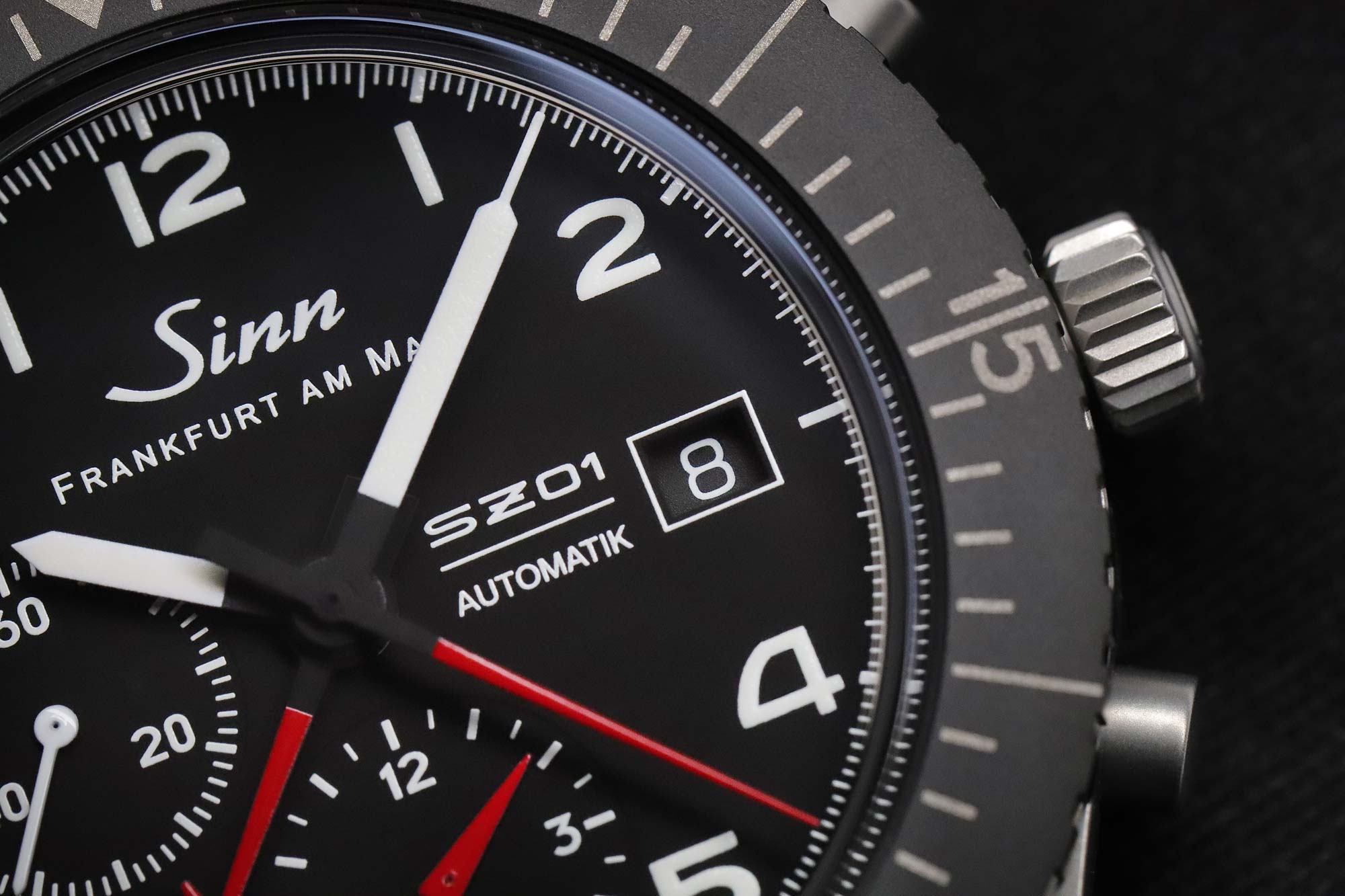
Does this red “pop” or “splash”?
Upon reflection, I decided that naming the problem would be a potential solution, or maybe something akin to an act of therapy for myself and others who might prefer to live in a world where the term “value proposition” is never again used to describe a watch retailing in the five figures. So I made a list of watch writing phrases we should retire. Then I consulted with my colleagues and expanded the list. Then I refined the list because there were just far too many, and we never miss an opportunity around here for a multi-part series.
“Pop of color”
OK, this is the most obvious one. See also, “splash of color”. This one is so pervasive, and has been mocked so frequently for so long, that I wonder if it’s now just an accepted part of the watch writing lexicon, and that I should refrain from cringing when I see it, or write it myself (as a reminder, I’m guilty, at times, of all of these – 1,500 articles is a lot and sometimes you’ve just got to churn them out).
But really, we don’t need to use it, ever. The color is there. We can acknowledge it without also giving it animation. To “splash” or “pop” implies that it occurred through some random bit of inspiration and was not a highly considered design choice. Often, we simply don’t know, but let’s give the benefit of the doubt to the designer, who may not appreciate their decisions being reduced to the equivalent of watch writing onomatopoeia.

“On wrist”
Nothing activates my editor brain more than seeing “on wrist” used to describe the simple act of having a watch on the wrist. This is simply not standard English.
Think about it. If you were writing a review of a new pair of sneakers, would you say “On foot, the new Jordans feel great.” I mean, maybe you would, but you shouldn’t! A more absurd example: “With Levi’s on leg, I really began to feel like I was channeling James Dean.”
Dropping the article or possessive pronoun looks and sounds wrong to anyone who does not read thousands of words of watch content everyday (note: this should be all of us – please read about other things). But I concede that “on wrist” has become part of the watch media lexicon. It’s a type of insider slang that is grammatically wrong, but works inside our weird little subculture. Still, you have to have a certain swagger to pull it off. It sounds natural from some of our writers, but it’s not a phrase you’re likely to find under any of my bylines.

“Future Classic”
OK, Nostradamus, please tell us more. Maybe the watch being described is truly great and will be a future classic after many years. Anything is possible. But I’d submit that in just about every context you’re actually likely to see this one used, it’s impossible to know for sure. My suggestion would be to put a hard limit on when it’s acceptable to call something a future classic. The watch should exist for, I don’t know, maybe 3-5 years before we can say it’s destined for this status. That’s when you just start to get a sense of how it’s really perceived by enthusiasts and collectors.
This same principle applies to movies as well. Many people (again, raising my hand here) have made themselves look like absolute fools for scribbling out a Letterboxd review on opening weekend for something they really loved in the moment but might not have staying power. It doesn’t make it bad (whether it’s a watch or a movie) but you need so many data points before you can assess if something is indeed set up to be a classic in a meaningful sense. And I’d submit that a watch can’t really be a classic at all until it’s been around for longer than online watch media has existed. In other words, if a watch is ten, or even twenty years old, let’s ease up on the use of “classic.” This industry has been around for centuries, that new ceramic whatever from a big conglomerate owned luxury brand needs a little more time to prove itself.
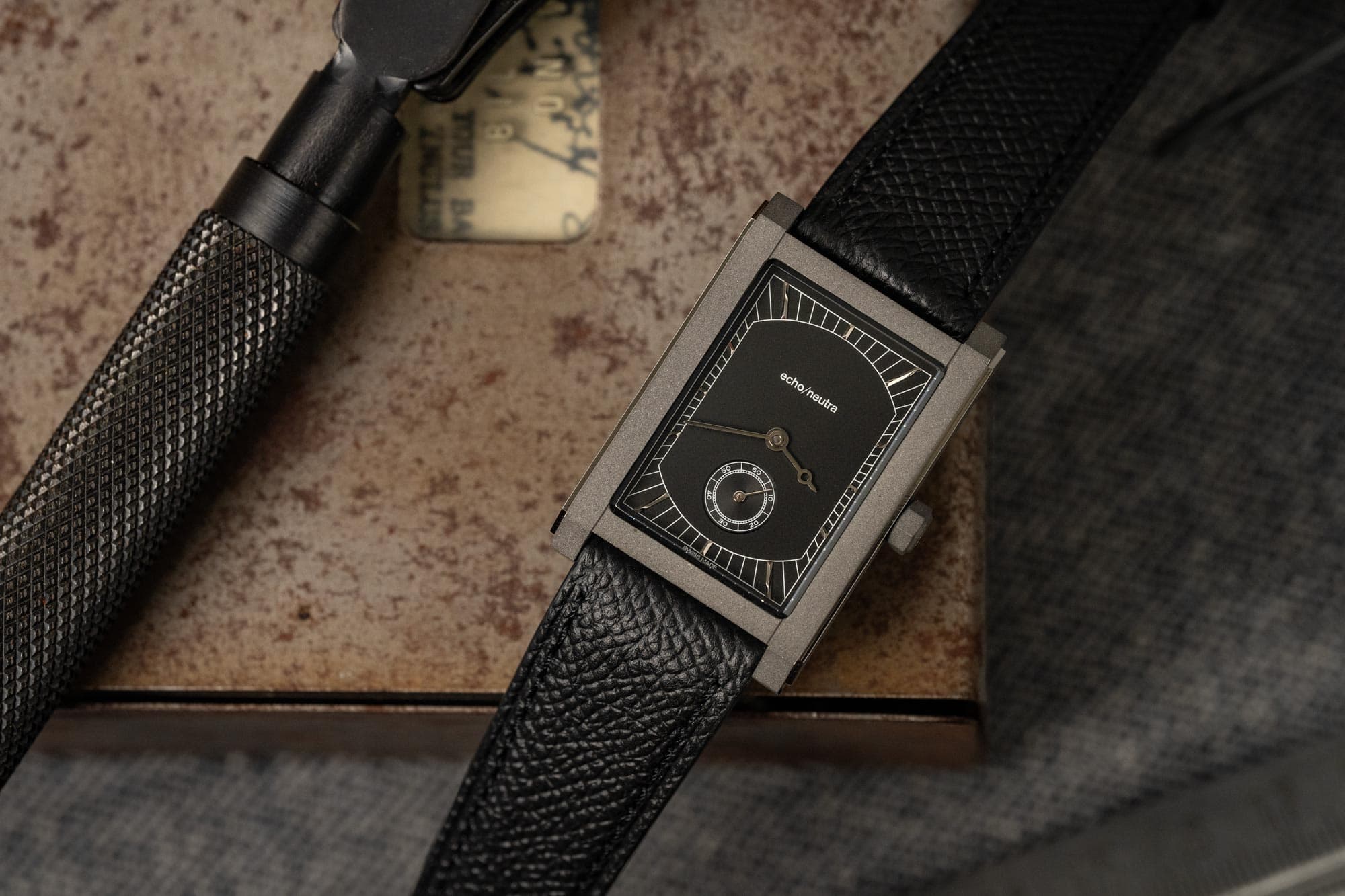
This actually might be a future classic, though.
“Wears better than the specs would suggest”
This is the one I’m probably most guilty of and I will really try to do better in 2026 and beyond. The thing is, every watch wears better than the specs would suggest to someone, and that same watch will wear far worse than the specs would suggest to someone else. And for others, it will wear exactly as the specs would suggest.
I think the opportunity here is to be a bit more deliberate in how we describe our own personal wearing experience. How does the watch actually feel and look when you check the time? Take the specs out of the equation as much as possible. After all, a watch being 41mm in diameter (or any other measurement) is not a measure of its success or failure. It’s just a single data point among many, and completely meaningless without a whole bunch of context.
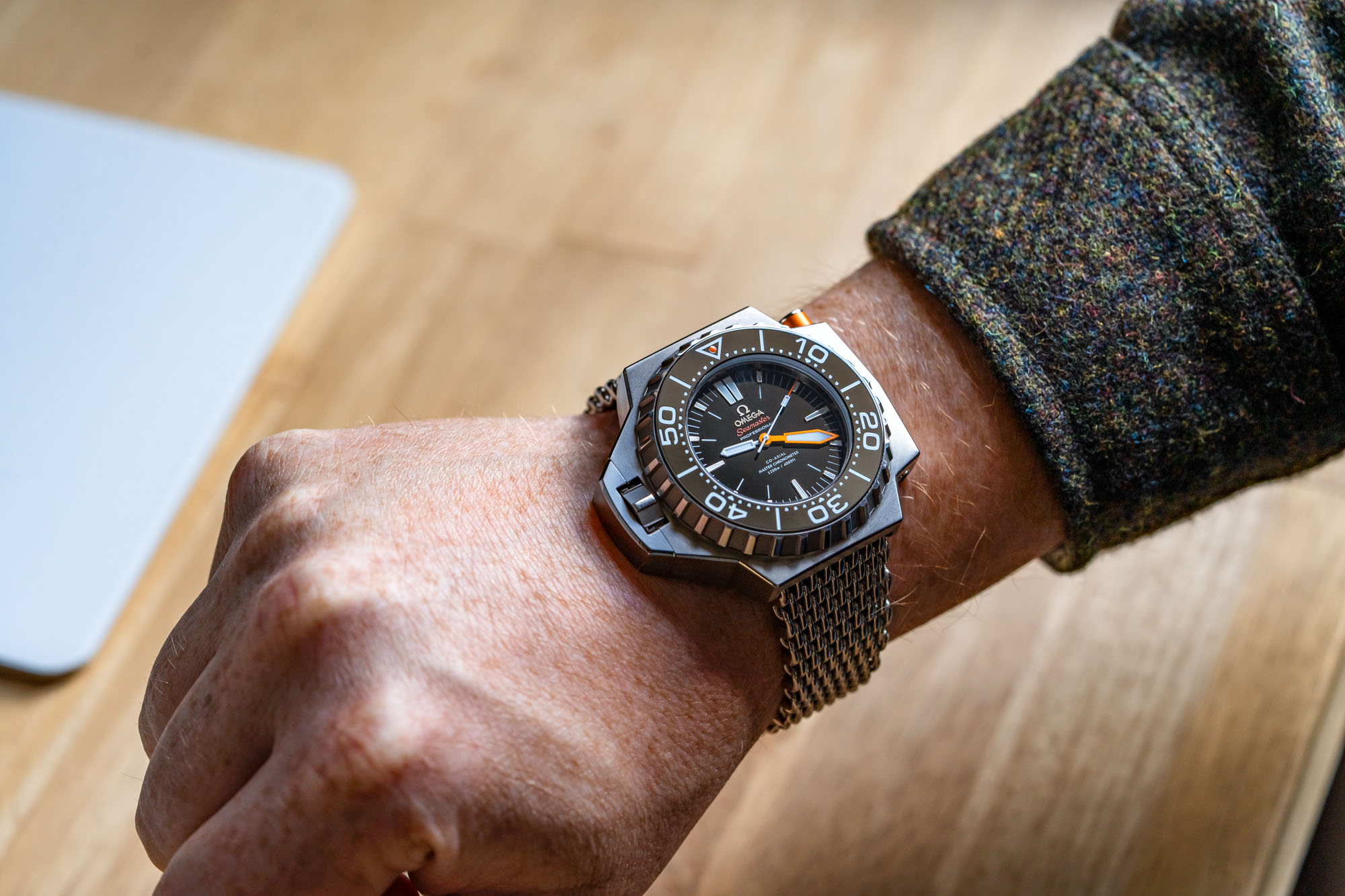
“I promise, it’s quite comfortable.”
“Beach to boardroom”
Hurl this one into the sun.
When someone writes that a watch is fit for wear “from the beach to the boardroom,” I know for certain that they are not interested in writing about the way we experience watches in the real world.
In all of human history, has anyone walked into a watch boutique and said to the sales person “You know, I have this problem. I frequently find myself on the beach, and then I need to head to the boardroom. And it’s really important to me that my watch be the perfect fit for either environment.” I can say with a certain amount of confidence that this has never happened. Not even once.

Of course it’s a wildly inane turn of phrase, but the real reason it needs to be struck from use is that what it actually means is that if this is the defining feature of the watch you’re describing, what you’re really dealing with is just an ultra generic and boring watch. And if that’s what a watch is, we should all feel comfortable just saying that. Because a watch that actually can be worn from the beach to the boardroom is a watch that is simply, what, waterproof and not terribly offensive in a business environment? Sounds like a really exciting piece of horology to me.
This is the ultimate filler line. Something that we write when we just don’t know what else to say. I’d offer that when we don’t know what to say, we should own it, and tell the reader that (in a way that’s interesting and illuminating, of course). Some watches just don’t make a strong impression and make us reach for these fillers, and that in and of itself is worth addressing. It doesn’t mean it’s a bad watch! A Submariner is an objectively great (and generic) watch that is the King of beach to boardroom watches, but let’s dig into why that is instead of giving it the beach to boardroom rubber stamp of neutrality.
The post Five Watch Writing Cliches that We Need to Retire appeared first on Worn & Wound.