


Few innovations in automobile engines have been as impactful as the turbocharger, first brought to production cars in the 1960s and popularized in the United States largely thanks to the iconic turbodiesel 1978 Mercedes-Benz 300SD. With a telltale whistle accompanying that extra boost of power, the turbocharger soon became synonymous with motorsports and performance cars of the 1980s: the Audi Quatto’s breathy flutter, the 930 Porsche 911 Turbo’s heartpounding lag, and the Ford Sierra RS Cosworth’s European rally dominance all helped propel the decade into the “golden era” of turbocharged performance.
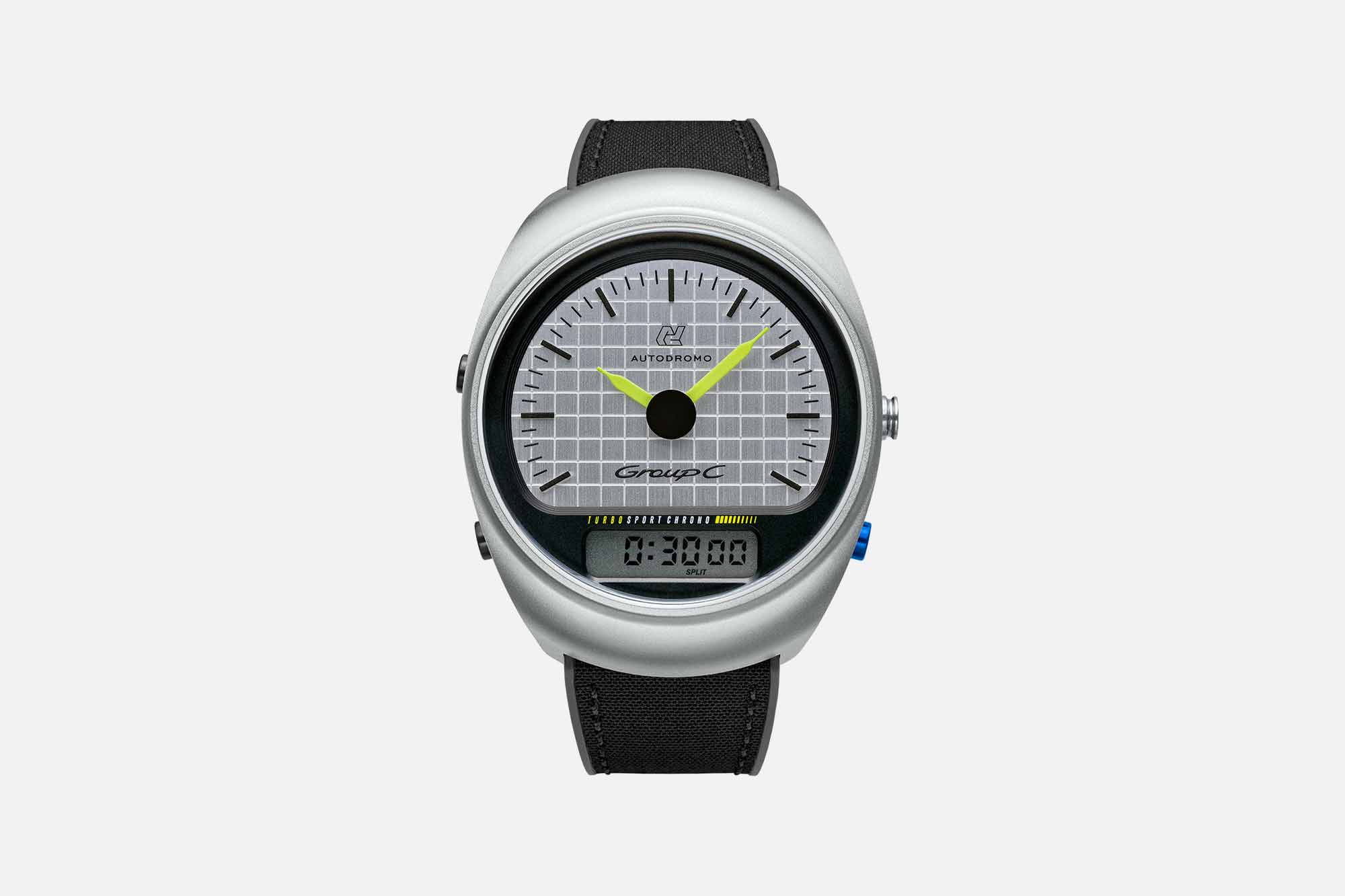
With their latest release, motorsport-inspired watchmakers Autodromo are bringing another homage to a period of automotive innovation, this time highlighting the Group C “prototype” class of sports cars from the 1980s, many of which featured bold (and sometimes dangerous) turbocharged power. The basis of this new collection is their already-successful Group C digital watch, initially released in 2023, and the new Turbo Sport models draw inspiration from the analog tachometers of turbocharged ‘80s motorsports legends to create an ani-digi design that straddles the classic and modern eras of automotive and horological design.
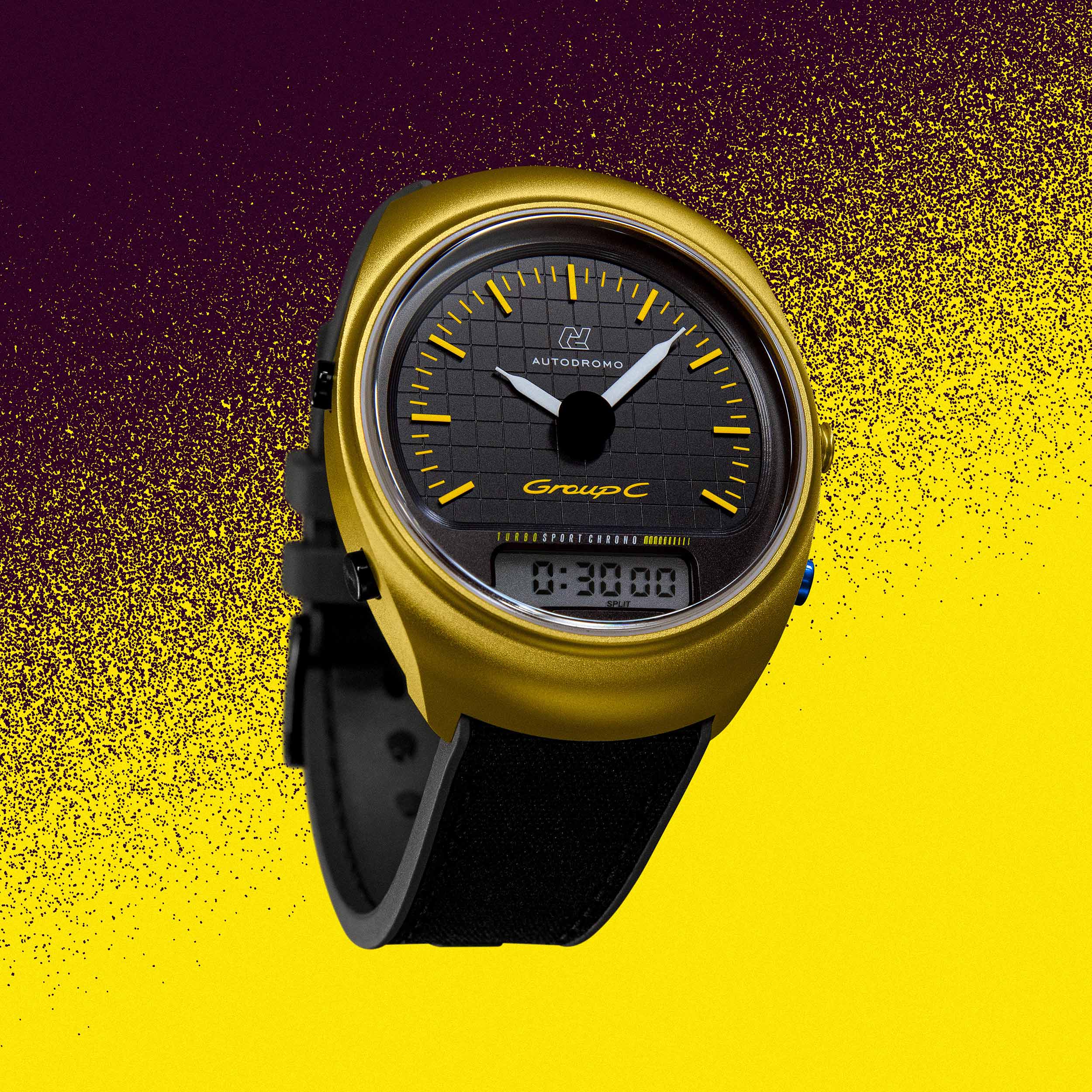

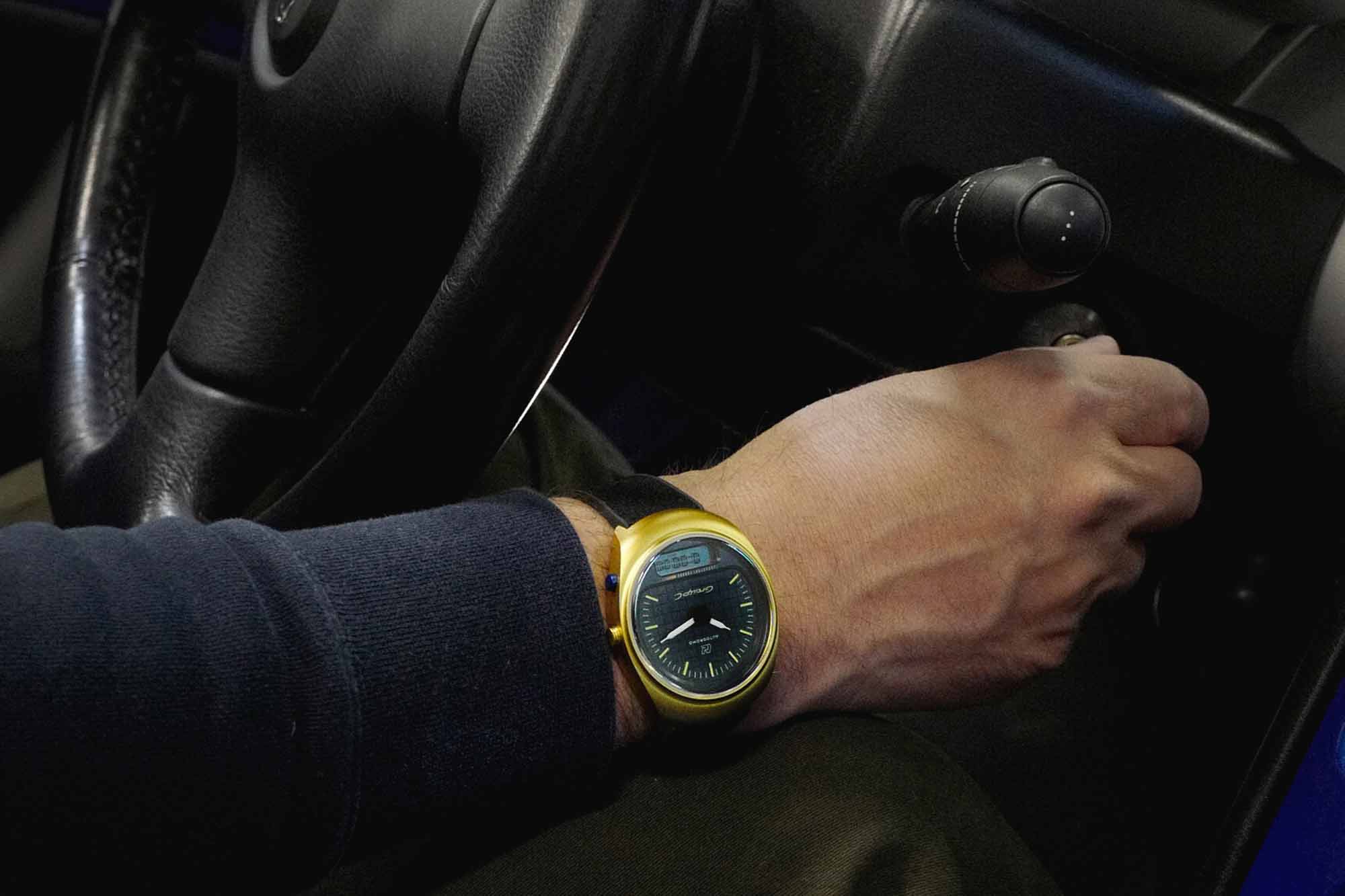
First, the dimensions: measuring in at 38.5mm in case diameter and 40mm lug-to-lug, the Group C Turbo Sport is compact, and sits fairly lightly on the wrist with a 11.4mm case thickness measurement. The case itself is anodized aluminum with a stainless steel caseback, and provides a sporty 50 meters of water resistance and a relatively breezy weight of 58 grams. The 20mm lug width allows for an FKM rubber strap with nylon inlay, which adds to that athletic appeal.
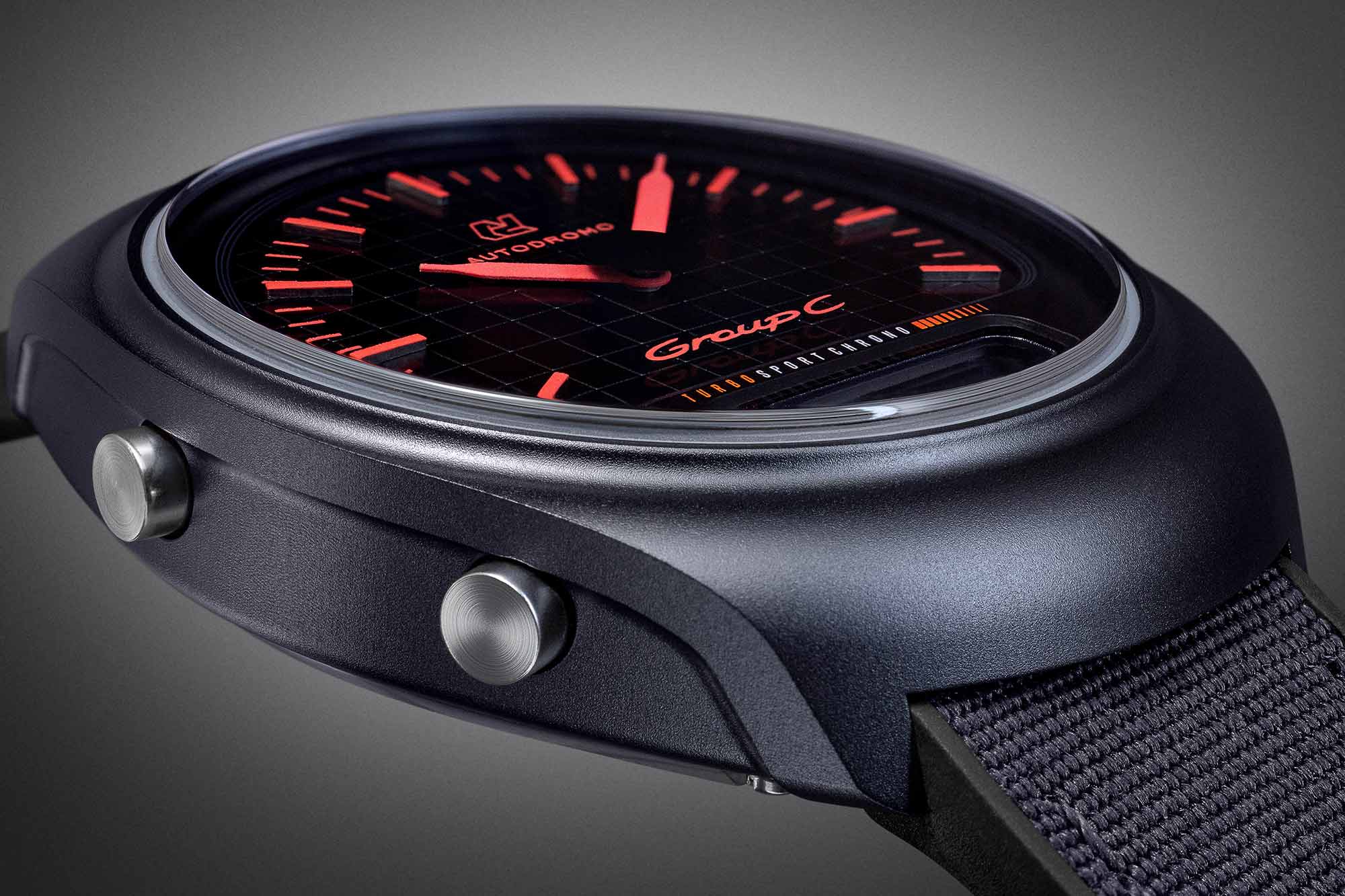
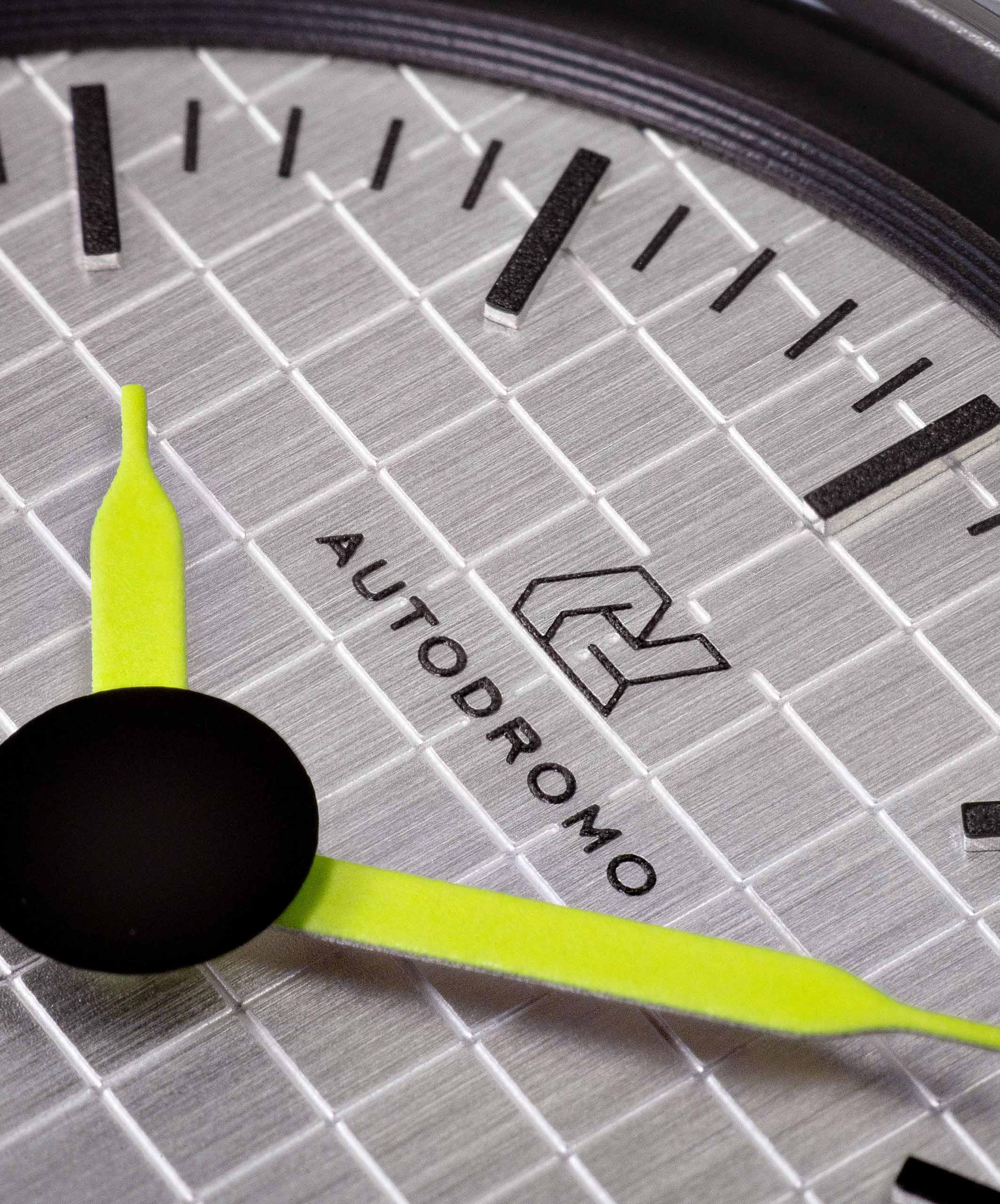
On the dial, a subtle grid pattern draws attention to the high-contrast indexes, hands, and text details, much like the late ‘80s Saab 900 Turbo’s aircraft-inspired tachometer. Three colorways further draw comparisons to similar automotive cockpits, with a “clear” silver case and gray dial dial featuring black indexes and text and neon green hands; a black case and black dial model with pink-red indexes, details, and hands; and a gold case and black dial model with yellow indexes and details, and gray hands. Each Turbo Sport model has four pushers, with the bottom-rightmost pusher differing per model: the clear/gray and gold/black models wear a blue pusher in that location, with the black/black model sporting a red one.
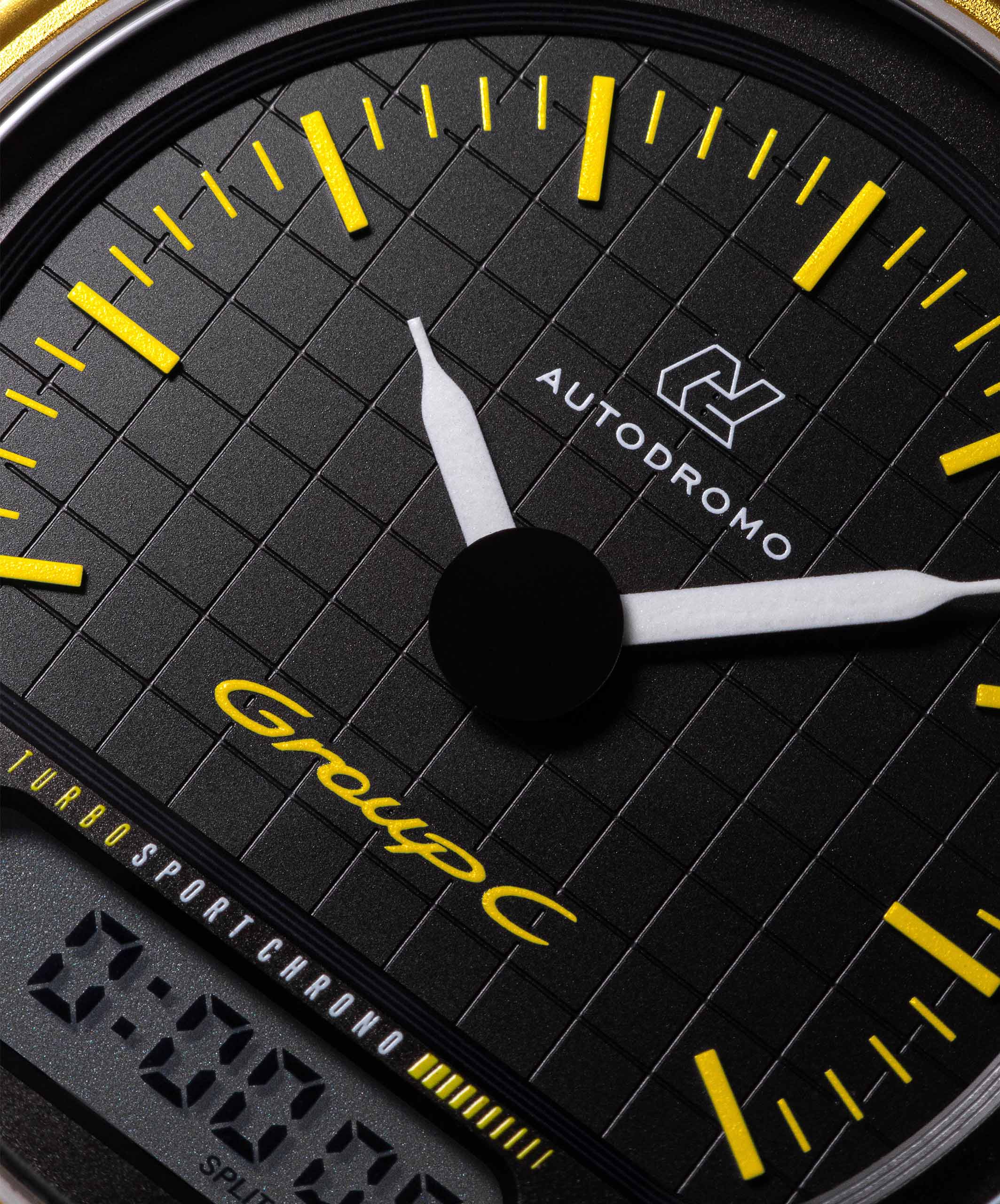
On the dial itself, the Turbo Sport goes for a tactically simple design for the analog face. The background grid pattern is appropriately ‘80s in execution, and subtle enough that it doesn’t create a “busy” distraction. The Autodromo nameplate sits below 12 o’clock with the clearly Porsche-inspired “Group C” text at 6. Taking up the bottom portion of the dial, of course, is the digital display, which is comparatively small, and calls to mind the first melding of LCD odometers and trip counters on analog automotive tachs. The combination of the analog and digital functions allows for three time zones, a daily alarm, a 1/100 chronograph function, and 12H and 24H formatting. All-in-all, it’s the expected digi-ani package with a clever motorsports twist that elevates what would otherwise be a rather utilitarian dial.
The 1980s through 1990s are often considered the golden age of marriage between analog and computer-based systems in the automotive world—particularly by nostalgic farts like myself, who remember the good old days of cassette decks and roll-up windows. Autodromo has once again managed to translate that reverence to a timekeeping format, and the Group C Turbo Sport will surely be another hit in both the automotive and microbrand-collecting communities.
The Group C Turbo Sport retails for USD $450. Autodromo