

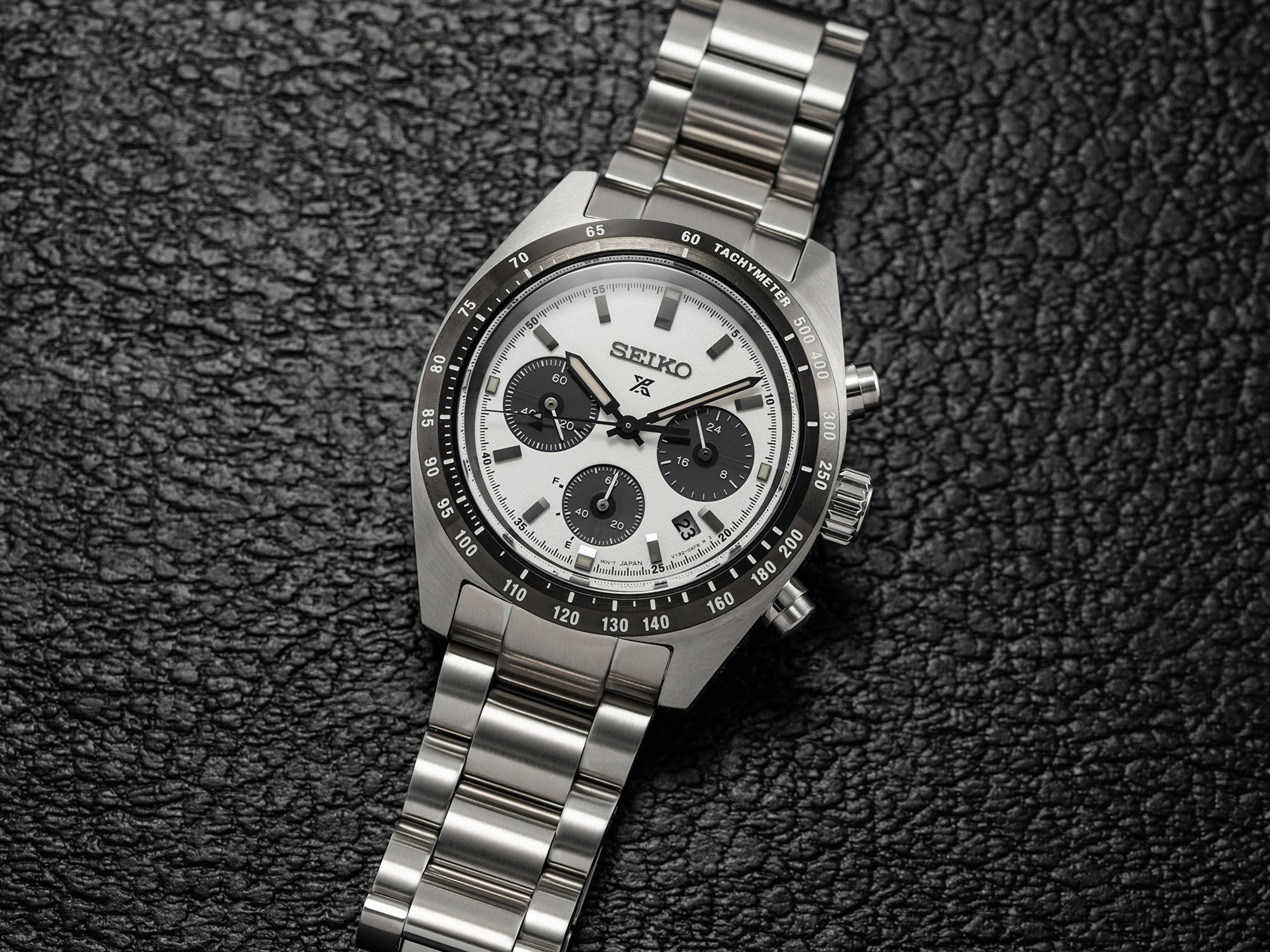
Earlier this year, Seiko replaced the immensely popular Speedtimer reference SSC813 and its iterations with a new collection called the Speedmaster SSC961. This comes just a few short years of production for the SSC813, and represents a subtle evolution for the line that seeks incremental improvements without compromising the underlying foundation. Yes, the classic panda-style colorway of black over white remains, but it’s now joined by the SSC963, with a light salmon colored dial, and the SSC965, which features a light mint-colored dial and a steel bezel. Both bring a fresh new dimension to the Speedtimer personality, and all remain well under $1,000.

This new Speedtimer collection is very much a case of “if it ain’t broke, don’t fix it” in action. It may be a new collection, but you’d be hard pressed to spot the differences at a glance. And that’s a good thing because the outgoing watch represented a compelling modern vision of the classic Speedtimer name. Seiko has a deep history when it comes to the chronograph, and while it’s represented across an array of collections today, the Speedtimer name carries a lot of weight.
Seiko’s very first automatic chronograph — the Reference 6139, which was released in 1969, along with Zenith’s El Primero, and the Caliber 11 — carried the Speedtimer label, which brought a specific focus to the watch that I always thought the others lacked. Further, the design of the watch itself was clear and concise, using just a single totalizer for the minutes rather than a host of subdials. The Speedtimer name was, and remains, quite apt.
With that in mind, it’s important to note the Speedtimer label does not apply strictly to mechanical timers, but rather to the tenets that define them. When Seiko brought the name back in 2021 (above), it did so in a very different context to what we saw in the late ‘60s and ‘70s. Sure, it would be nice to have a modern mechanical version of the 6139, but the general goals of the watch have been updated to the modern standards that we now find in references such as the SSC961.

The design goals, such as reliability, ease of use, and great value remain the same now as they were back then. And on those notes, the SSC961 delivers. Further, Seiko embraces the evolution, which is why we’re already seeing a new generation of the Speedtimer with new dial colors, and undoubtedly some efficiency tweaks under the hood when it comes to the solar-powered Caliber V192. That doesn’t have to mean more accuracy (the listed +/- 15 seconds per month remains unchanged), but in how it gathers light to convert to energy.

One feature of these watches that owners will quickly notice is the color of the subdials. These subdials are actually the windows to the solar cells, and aren’t exactly true black. Rather, they reflect a blue or purple tint when viewed in direct light, and the lines between the cells can even be seen at certain angles. With the SSC961, Seiko seems to have taken a step toward creating a truer black within these subdials to create an overall cleaner look. Again, it’s a subtle evolution that’s always improving.

The dial color itself also gets a small shift in tone, along with the lume used in the hands and at the cardinal positions on the dial. It’s a small change, but it’s now a touch warmer in nature. This could be chalked up to the different production facilities now used to manufacture these watches, but it’s worth noting for prospective buyers.

Thankfully, the wonderful form factor remains unchanged. The steel case still measures 39mm in diameter, 45.5mm from lug to lug, and 13mm in total thickness. It’s an easy watch to get along with on the wrist, and has enough heft to match its visual weight without being uncomfortable. The addition of the two new dial colors are unexpected but welcome, and bring a notable shift in the personality of the watch overall.

Functionally, the V192 offers the same feature set as the outgoing references. In addition to the timing offered by the chronograph, there is also a 24 hour hand, and a charge-status feature set within the subdial at 6 o’clock. Finally, the date remains at the not-quite 4:30 position, which will still be polarizing to many enthusiasts. Personally, I feel it suits the rest of the design just fine, and its odd position between the markers lends to the overall quirky personality of the watch.
Overall, the Seiko Speedtimer SSC961 remains an excellent value at $725, and continues to build on the brand’s legacy of robust, value-driven tools for the wrist. Oh, and it remains as handsome as ever, regardless of color choice. You can learn more at seikowatches.com