

The online watch community is a wondrous place. These days, social media like Instagram seems to bring together enthusiasts and collectors from all corners of the Earth, pulling them together in a little internet hub that somehow makes this already small, niche world even smaller. Sometimes, you’ll find yourselves chatting with and connecting with many people for many years, despite having never met them in person.
Eivind Németh, or better known as @Edthezilla on Instagram, is one of those people for me. I first connected with him on the platform a few years ago, but to this day, we still haven’t met in person. Yes, we’ve been in many of the same rooms together, commented on each other’s content online, and more. But as fate would have it, a proper chat had never been in store until now.

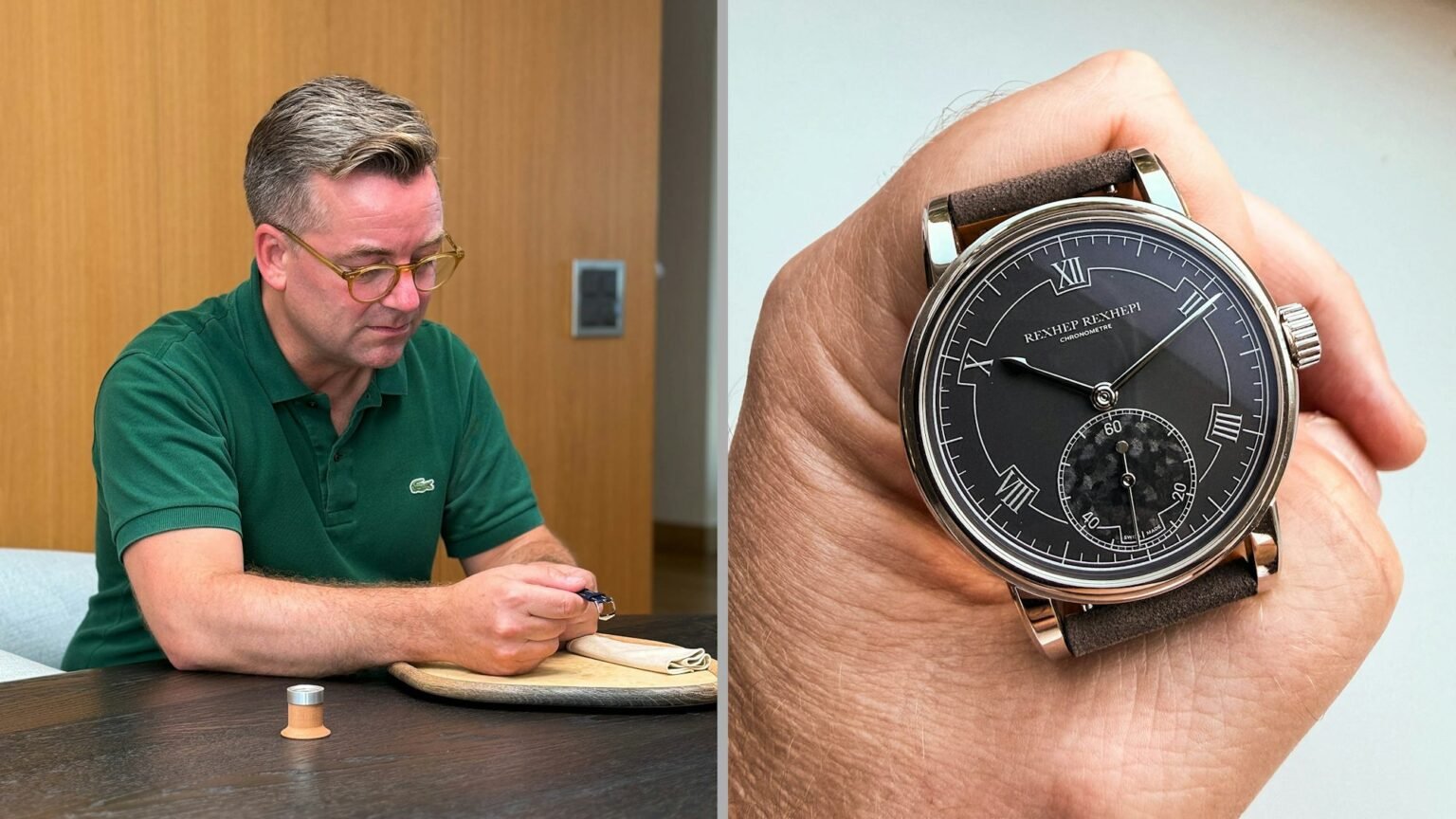
What caught a lot of attention in the online community recently was Németh’s most recent acquisition. A grail amongst grails—the Rexhep Rexhepi Chronomètre Contemporain II. Normally, that would be a dream watch for most collectors. But there was one more twist—Németh would be receiving a piece unique. Like many, it was this moment that made me ask, “Who really is Edthezilla?” So, I reached out to hopefully (and finally) know a bit more about the guy.
Here’s what I did know about Németh—he’s a collector from Norway, has been obsessed with Rexhep for longer than most, and has written about watches online for sites like Tidsonnen and Monochrome. Németh might take a more simple stance: “I’m just a typical friendly Norwegian guy, not much fuss about me.” But like most horological enthusiasts, his love of watches goes all the way back to childhood.

Németh’s story begins at around seven years old, when he received his mom’s old watch as his first ever timepiece—an old, manually wound Certina DS. Then, at the age of fourteen, Németh received a Speedmaster from his father. But not many fourteen-year-olds are getting brand new Speedmasters as gifts—this one, as it turns out, was actually purchased by his father when he was sixteen years old, and then eventually passed down to Németh during his confirmation, just as his youthful interests in space travel and everything NASA would come into the picture. “That was my first really nice mechanical watch, which I wore for many, many years. That really was the only thing I wore. I wore it skateboarding, and I wore it traveling. But nobody cared about watches back in the early nineties. You didn’t have the internet, and you didn’t have communities to go to,” he recalls.


After Németh started earning his own money, he began building a collection of watches, focusing primarily on Rolex. “Back then, it was really easy to get the Rolex Submariner. Daytonas were quite expensive, but you could actually buy one after waiting for a couple of months.” After many years of collecting Rolex and then eventually Patek Philippe, he wanted to look for something more out of the box.
Németh works in the Norwegian movie and entertainment industry, on the advertising side, and leaves plenty of other time in his life to obsess about watches, wine, and skateboarding amongst other things in his spare time. It’s these many years of horological obsession and a penchant for technical nerdiness that led him away from the classics into independents, and boy did the journey start strong.
“I got into independents purely by accident. Around 2015, I started to chat with some folks from F.P. Journe, and then I got connected to Shawn Mehta, and after a few days, I found myself sending a deposit for a watch. And two, three months later, the Chronometre Bleu was on my wrist. It was quite fast traveling from the early 2000s to the independents,” Németh happily admits. To think of getting a Journe within a few months. Times have certainly changed.

2017 marked the fateful moment when his journey to the CCII began, long before that watch was ever released. Németh first met Rexhep Rexhepi at SalonQP in London, and his story immediately resonated with him. Many are familiar with Rexhep’s story of his beginnings in Switzerland as an Albanian refugee, sent to live with his father, who was in Geneva during the outbreak of the Kosovo war. Németh draws similarities to his own family. “My mother is from Budapest, and she was a refugee way back in 1956. She had to leave her country with her parents and siblings and come to Norway.”
It was at this event at the Saatchi Gallery in London when Rexhepi showed Németh the prototype of his Akrivia AK-06, though Németh found the design too industrial and avant-garde for his tastes. “It was mostly punk, and didn’t speak too much for my language,” Németh recalls. “But he told me next year—Eivind, I’m going to show you something more interesting. This would be the watch for you.” As 2018 rolls around, the next time Németh would see Rexhepi is after the unveiling of his first Chronomètre Contemporain, though any hopes of adding one to the collection were quickly dashed when all of them were already allocated to collectors—a familiar line heard by many these days in the pursuit of collecting high-end independents. But there was hope. “The next one is going to be much better,” Rexhepi would tell Németh, promising him there would be something for him next time. “How can you be so sure that I will buy your watch?” Németh would immediately retort. “We’re going to see. We’re going to see.”

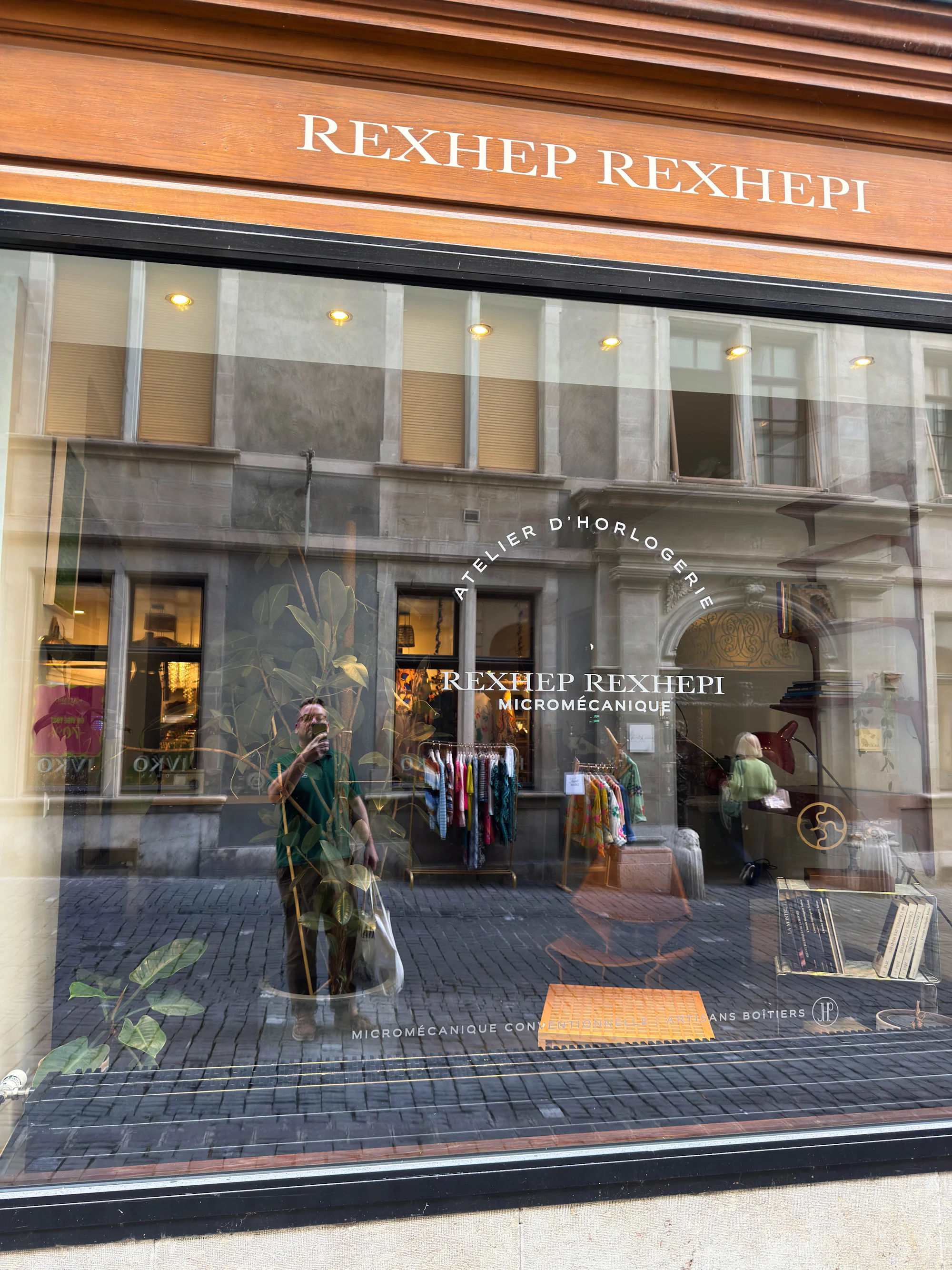


Many years of faithful waiting, and periodically popping into Old Town to visit the watchmaker and his growing team, would eventually reveal that when the time came, Németh would be getting something special. While many collectors would try to use this opportunity to impart their own creative vision on a watch, Németh wanted none of that. “I told him [Rexhepi] that you’re the artist. You’re going to tell me what I want, because your creativity is what I want.” And so that would lead to Németh’s birthday this year, when he would find himself back at the Akrivia atelier in the Old Town of Geneva, surrounded by many of the Rexhepi team, and presented to him his piece unique—a Chronométre Contemporain with a light grey grand feu enamel dial.


The rest of the watch should require no introduction. Framing that unique grey enamel dial is that JPH-stamped platinum case, a signature of the legendary late Jean-Pierre Hagmann. Of course, most collectors holding a CCII in their hands will quickly turn it around to look at one of the arguably most attractive modern calibers in production today, with all the exemplary finishing people have come to expect from the Rexhep Rexhepi name. In another subtle twist for this piece unique, Rexhepi has engraved the serial number of “E.N.” in straight-line text, as opposed to the curved layout typically seen on most Chronomètre Contemporain models.
Throughout my time chatting with Németh (it still feels weird to refer to him as such, given the entire time I’ve only known him as his internet persona), you can tell that he still finds it unreal that a watch like that is on his wrist. He tells me that it has barely left his wrist since the fateful day of delivery. That’s not entirely surprising—the CCII is a watch that many enthusiasts, if not most, could surely dream about being their only watch.

In the few short months Németh has spent with the watch, he tells me that it has gone everywhere with him. Németh has also found that such a watch has opened quite a few surprising doors and shown just how small the watch world can really be. “Suddenly, I have a DM from somebody in Hollywood, and they congratulate me on the watch—how did they even know about me? I’m just a simple guy from Norway, and you’re in Hollywood.” But that kind of faraway connection is what draws Németh to all of this in the first place. “To share the passion, to share the watch around the table, and to share it with lots of people—that’s the most fun.”