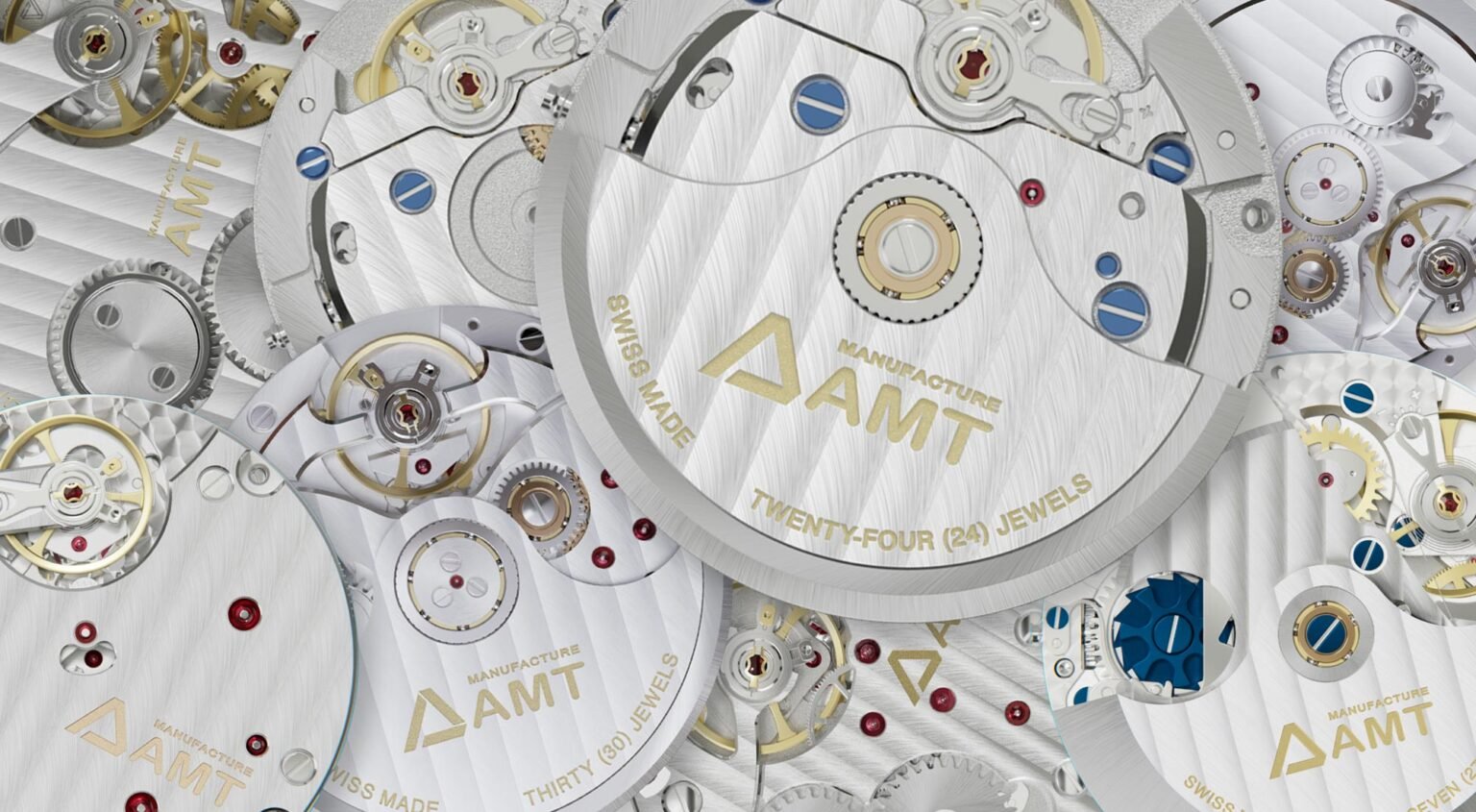


As a watch enthusiast, one should be a movement enthusiast too, right? Sure, everyone loves a handmade, ornately finished, über-high-end independent movement labored over for hundreds of hours, but I’m talking about something more industrial. The movements for the masses, so to speak. If you’ve been into this hobby for even a short time, you’ve likely seen models featuring movements from ETA, Sellita, La Joux-Perret, Soprod, Miyota, Seiko, and maybe a couple of others. Well, there is another whose name you might have bumped into here and there, poised to become a much larger player: Manufacture AMT (Advanced Mechanical Technology).
Manufacture AMT was founded in 2018 and is owned by Sellita, though it operates as a separate company. This is, admittedly, somewhat confusing, as they clearly share IP, as shown in the movements. Regardless, AMT largely does white-label development for brands and offers only a small, nonpublic catalog to third parties. The AMT5000 chronograph, used by Hanhart, Oak & Oscar, Furlan Marri, and a few others for several years, is a good example of what AMT is all about. Based on the SW500 but improved in many ways, AMT5000 variants feature column wheels and flyback functionality as standard features across automatic and manual configurations with different subdial layouts.
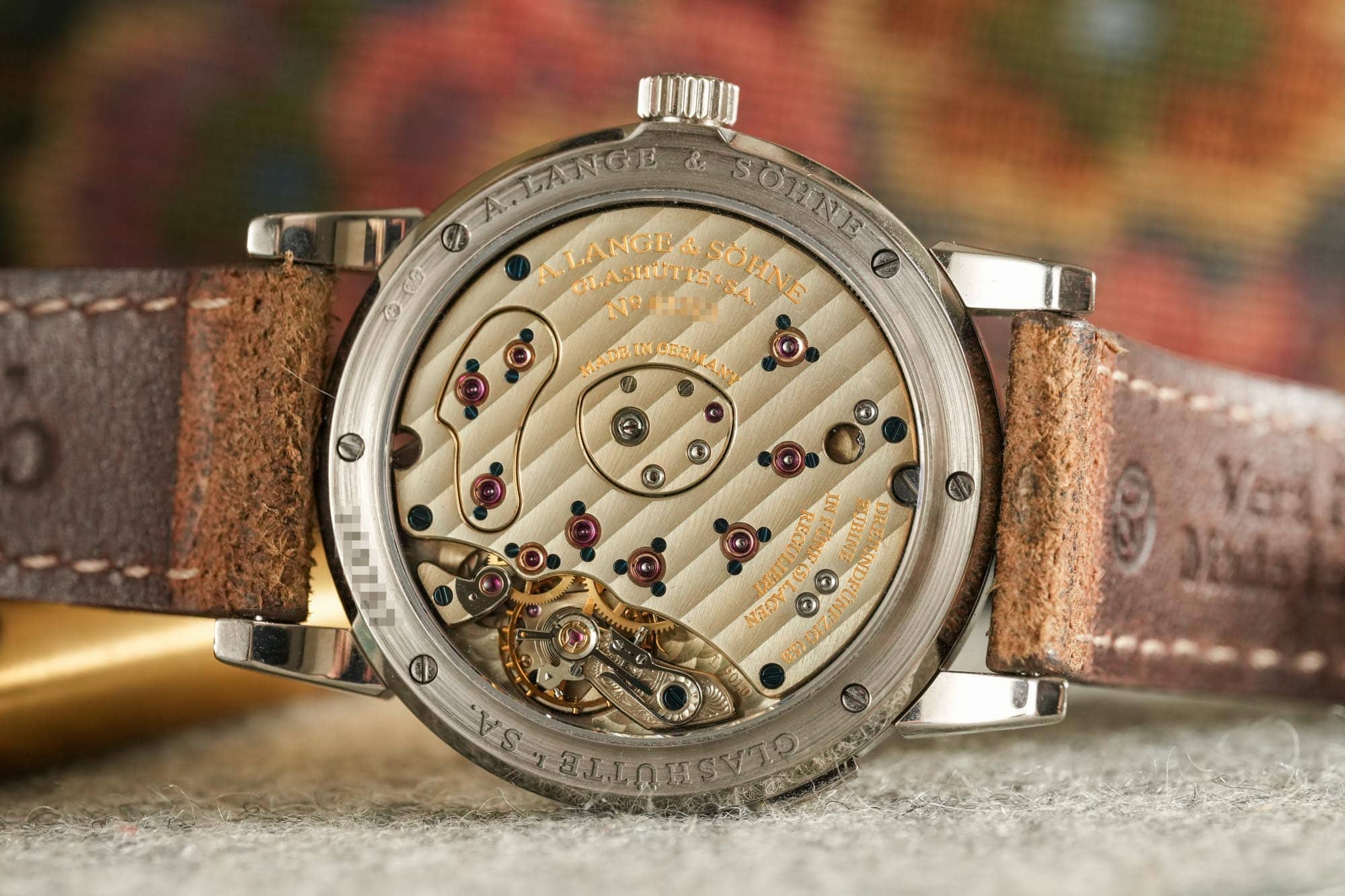
We all love a hand-finished movement, but what about the ones that power most of our watches?
As a confessed movement enthusiast, I reached out to learn more about AMT’s current offerings, which range from Sellita analogs to entirely different, impressive calibers with unique specs. These include improved versions of core Sellita calibers, some gorgeous manual models, and even one with a 10-day power reserve.
Based on my conversation with AMT, I wanted to walk you through the movements they presented, with their permission. Whether you’re a brand or a consumer, it helps to know what is available. As someone who happens to be both, I find a world of opportunity in their offerings. AMT gives independent brands access to movements that can look and perform more like proprietary calibers without requiring true in-house development.
But if you’re asking why you haven’t seen AMT movements used more often, there are two reasons. One, you might have and just didn’t know it because the watch brand gave the caliber its own name. A common, if annoying, occurrence. The other reason, which particularly affects indie brands, is that AMT has an MOQ of 1,000 pieces. The intention is to prevent brands from devaluing the movements, which we’ve seen affect Sellita, Miyota, and others.

The AMT5000 in use by Hanhart
Something I think of as the “Kickstarter” effect: when brand X sells a Sellita-powered watch at a discount for $500, it sets a precedent that another brand can’t use the same movement in a watch that’s maybe a few thousand dollars. While I understand the consumer logic (being one), it overlooks much of why a watch costs what it does and suggests brands should operate on razor-thin margins. This ends up labeling certain movements as “cheap.”
So, this high bar for entry keeps AMTs from becoming commodity movements while also giving the brands using them a more bespoke feel. It also means that, while AMT could be compelling for established independents and growing microbrands, its movements are largely out of reach for genuinely small brands.

The SW200-2 Power+
The AMT2000
Let’s kick off this little catalog sojourn with AMT’s most entry-level movement, the AMT2000. Don’t expect any exciting names. Based on the SW200-2, the AMT2000 line retains the former’s gear train, escapement, size, frequency, and 65-hour power reserve, but is otherwise unrecognizable. It also uses a different “satellite” winding system, which is more robust than the SW200’s winding system (and the ETA 2824 it is based on), using wheels instead of small pawls to transfer energy.
Visually, the automatic version features a transversal balance bridge and larger plates, allowing for greater decorative possibilities. While there is nothing wrong with the looks of SW200s, as they are based on the prolific ETA 2824 and are themselves very widely used, they are a common sight. The AMT2000 could provide an aesthetic break from the norm, along with some mechanical upgrades.

The AMT2000 automatic has a cleaner look than the SW200 as well as other improvements
Perhaps even more interesting, however, is the AMT2000M, the hand-wound version. One appealing aspect of the SW200-2 M, the AMT counterpart to the SW210-1, is that it’s pretty thin at 3.35 mm, making it a great option for smaller, thinner, and dressier watches. The downside of the SW210-1, however, is that its design allows little decoration, with only one plate covering about a third of the movement. A brand has to go all out by extensively redesigning and refinishing its movements to create something visually distinct.
The AMT2000M fixes this with completely redesigned plates that cover nearly the entire movement. The balance cock has also been redesigned with appealing curves and much greater surface area. Basically, AMT created a canvas for decoration, and it looks pretty darn good.

Even with minimal decoration, the large plates make the AMT2000-M an appealing movement
Both the AMT2000 and AMT2000M are available in skeleton configurations and with the complications found on the SW200s, including sub-seconds, moon phases, day-dates, etc. Given that several once-microbrands now do considerable volume, I think the AMT2000 is a compelling option.
The AMT3000
The AMT3000 is a more modest evolution than the AMT2000, but it is worth noting for one feature. Based on the SW300, the AMT3000 has a smaller rotor bearing, allowing a less obstructed view of the movement underneath. That’s a small but potentially attractive change, as the bearing on the SW300 really is quite huge. The AMT3000 is also available with all the complications found on the SW300.

The SW300 as used by Bravur – notice the large central rotor
The AMT5000
I briefly mentioned the AMT5000/5000M in the intro, as it’s the caliber you’re most likely to find in the wild right now, with variants featuring column wheels, flyback functionality, bidirectional winding in the automatics, smaller rotor bearings, and a patented power-consumption adjustment. This allows fine control over how much power the chronograph draws, which can be used to tune the smoothness of the hand’s motion.

The large, heat-blued column-wheel is a dead giveaway of the AMT5000
As with the SW500s, dozens of AMT5000 variations exist, but one stands out: the AMT5138. A chonker at 8.4 mm thick in automatic configuration, it features a 3-6-9 subdial layout, a date, and… a flyer GMT. Yep, this one lets you jump the hour hand independently for fast time-zone adjustment, a highly sought-after feature unavailable in any Sellita and incredibly uncommon in chronographs in general.
The AMT6000 Series
The AMT6600/6900 are higher-end, three-hand, hand-wound movements based on the AMT5000-series chronographs. Chronographs have long served as a base for three-hand movements, both in the past and today. Currently, the A11 in-house caliber used by Habring², for example, across its various lines, is based on the Valjoux 7750 architecture, as is the NH Cal. 30 family used by Naoya Hida.
The AMT6600/6900, with the 6 or 9 referring to the location of the sub-seconds, are well-sized at 4.3 mm thick and 30 mm in diameter, and feature 63-hour power reserves, a frequency of 28,800 bph, and massive bridges with larger rubies that allow for elaborate decoration. AMT has gone even further by improving and redeveloping many components, including the crown wheel, ratchet, click, and click spring.
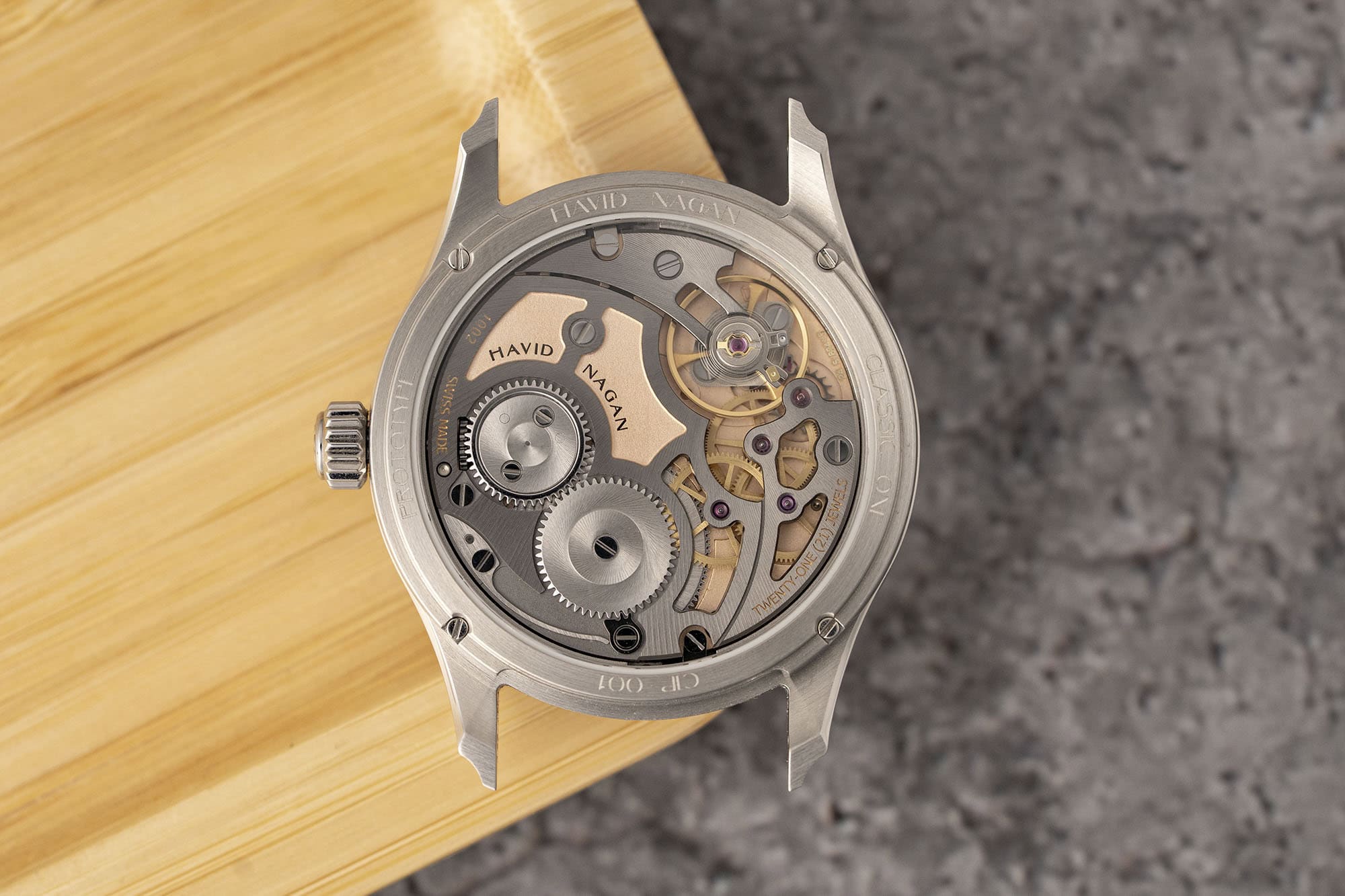


Conveniently, independent brand Havid Nagan currently produces a great example of the AMT6600. Featured in its Classic and HN02 lines, Havid Nagan’s take on the AMT6600 includes various plating colors, a contrasting baseplate, tasteful skeletonization, and interesting hammered textures. With this level of customization, the brand achieves a high-end, in-house look without the cost of developing an entire base caliber. Bremont also uses the AMT6900 as the base for its perpetual calendar GMT.
The AMT7000
This brings us to AMT’s newest calibers, the AMT7000 and AMT8000, both of which are unique and fairly exceptional. The AMT7000 is particularly interesting because it has impressive specs and a reasonable starting price. Measuring 4.6 mm thick and 30 mm in diameter, so a bit thinner but a bit wider than an SW200, it features hours, minutes, and central seconds, a quick-set date, hacking, a frequency of 28,800 bph, 30 jewels, two ball bearings, and a power reserve of 84 hours.
AMT says it’s built for 10-year service intervals. As such, every pivot point is jeweled, and it uses two bearings: one in the rotor and another that transfers power within the gear train. Additionally, the AMT7000 features two clutches in the winding system, one for automatic winding and the other for manual winding. When the rotor is winding the movement, the automatic clutch disengages the manual-winding system. When winding by hand, the manual clutch disengages the automatic-winding system. This provides a smoother, more appealing winding sensation while protecting the reversing wheels, an essential part of the automatic-winding system.

Note the transversal bridge and ball bearing to the right of the rotor
Visually, the AMT7000 is symmetrical, with the balance positioned perfectly at 12 and set in a large transversal bridge. A single large plate and a large rotor should provide ample space for decoration. Three versions of the AMT7000 will launch in January 2027: date, day/date, and caller GMT. The specs and features here speak for themselves, positioning the AMT7000 as a unique offering, particularly in GMT format, offering brands that can access it a higher-end option than the prolific SW330.
The AMT8000
Finally, there’s the beast, the AMT8000. A far more exotic movement than the others, it features four barrels for a whopping 10-day power reserve. As you would imagine, it’s not thin, measuring 6.45 mm thick, but like the AMT7000, it’s not very wide at 30 mm. Basically, it’s the size of a chronograph. Specs-wise, it features a central seconds hand, hacking, manual winding only, a quick-set date, and a frequency of 28,800 bph. A 4 Hz frequency is unusual in a high-power-reserve movement, as it consumes more energy than a lower frequency.
An interesting engineering element is that, while the movement features four barrels, three feed into a single, larger barrel that supplies the escapement. According to AMT, this lets the fourth barrel maintain optimal power for eight of the 10 days, regulating usable torque similarly to a traditional constant-force mechanism, such as a Maltese cross.

Each of those large rubies sits over a barrel, with a fourth underneath
Currently, there are two versions of the AMT8000: one with a dial-side power-reserve indicator and one without. The indicator adds 0.5 mm to the overall height. A 10-day power reserve is quite specific, making the MOQ of 1,000 somewhat daunting. Therefore, I don’t expect microbrands to adopt these anytime soon, but I am excited to see where they eventually go.
Final Thoughts
Look, maybe I’m more into movements than other people, since I do, admittedly, have both personal and professional interests. But seeing what AMT offers is extremely exciting to me. It represents creative opportunities for brands and variety for collectors. For companies with the volume to meet that substantial MOQ, AMT offers a compelling middle ground between familiar third-party movements, the enormous investment of developing an in-house caliber, and high-end movement manufacturers like Le Temps Manufacture, Chronode, Agenhor, Vaucher, and Schwarz-Etienne.
The post Can AMT Bridge the Gap Between Off-the-Shelf and In-House? appeared first on Worn & Wound.