

Cartier has always chosen to tell time a little differently. From the first Santos wristwatch in a distinct square case, to its compelling mystery clocks, the unorthodox Tank à Guichet, the counter-intuitive Santos-Dumont Rewind, and the magic of the Masse Mystérieuse, it’s a mainstream maison that has rarely approached the art of telling time by running with the pack.

Roy Davidoff (left), a vintage watch dealer and expert, and Kari Voutilainen (right), the renowned independent watchmaker, were among the panel of judges tasked with ranking the unique projects submitted for the Cartier Prize for Watchmaking Talents of Tomorrow.
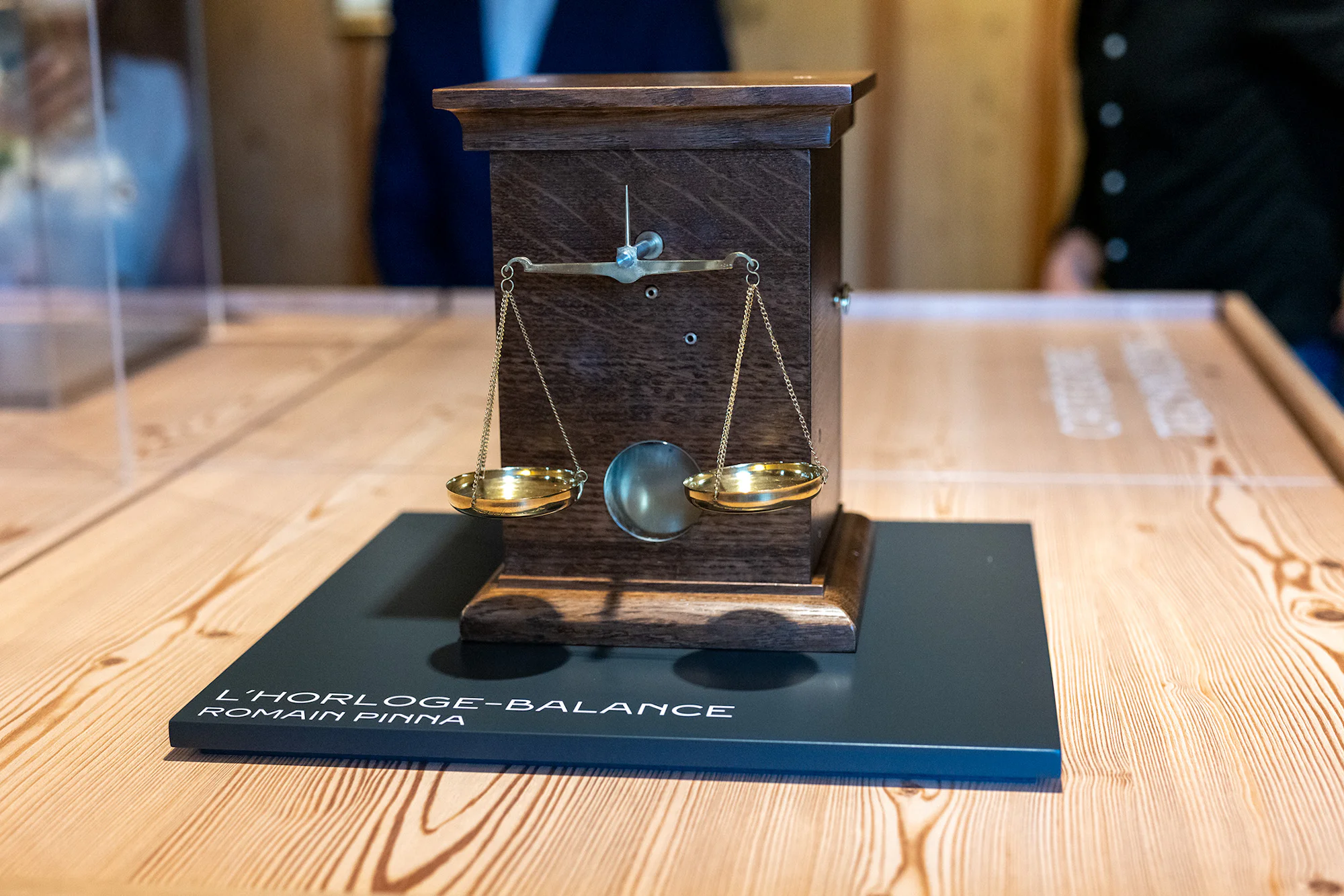
That unique sensibility is at the heart of the Cartier Prize For Watchmaking Talents of Tomorrow. It’s an accolade that’s been awarded 28 times over three decades. But Cartier has rarely spoken about the initiative that began way back in 1995. For its latest edition, we were given a glimpse into the process in which watchmaking students from Switzerland, France, and Belgium were tasked with creating a timepiece based on the motion of a pendulum and the theme of “reading and understanding time differently.”
The resulting creations from 11 finalist watchmaking students, tasked with building a piece in just 80 hours over three months, displayed both technical prowess and artistic expression, conveying bold and surprising approaches to telling time within the Cartier design language. Prizes were awarded at a ceremony in La Chaux-de-Fonds at Cartier’s Maison des Métiers d’Art in June.
“It’s a motto at Cartier. Transmission is an obsession, a positive obsession,” Karim Drici, Cartier’s Chief Operating Officer, says in an interview following the prize ceremony.
“For our people, for our workshop, for our artisan, we must secure our savoir faire, develop our people, and promote our métiers, but not in a marketing and commercial mindset, in a generous mindset,” he adds.

The jury members: (from left) Roy Davidoff, co-founder of Roy & Sacha Davidoff SA, Pascale Lepeu, Director of the Cartier Collection, independent watchmaker Kari Voutilainen, event host and MC Eléonor Picciotto, a presenter and watchmaking expert, Pascal Ravessoud, Vice-President of the Fondation de la Haute Horlogerie, and Nathalie Marielloni, Curator at the Musée international d’horlogerie.
The prizes are divided into two categories: “Apprentice Watchmakers” and “Technicians.” There were six winners in total, with three from each category. Each will be offered individual skills and technical immersion from the manufacture and will receive a Cartier watch. The first-prize winner in each category will also be offered an internship opportunity. First prize in the Apprentice category was awarded to Aymeric Peters from IATA, a watchmaking school in Namur, Belgium, for his creation Silence Choisi (Chosen Silence).

Silence Choisi by Aymeric Peters.
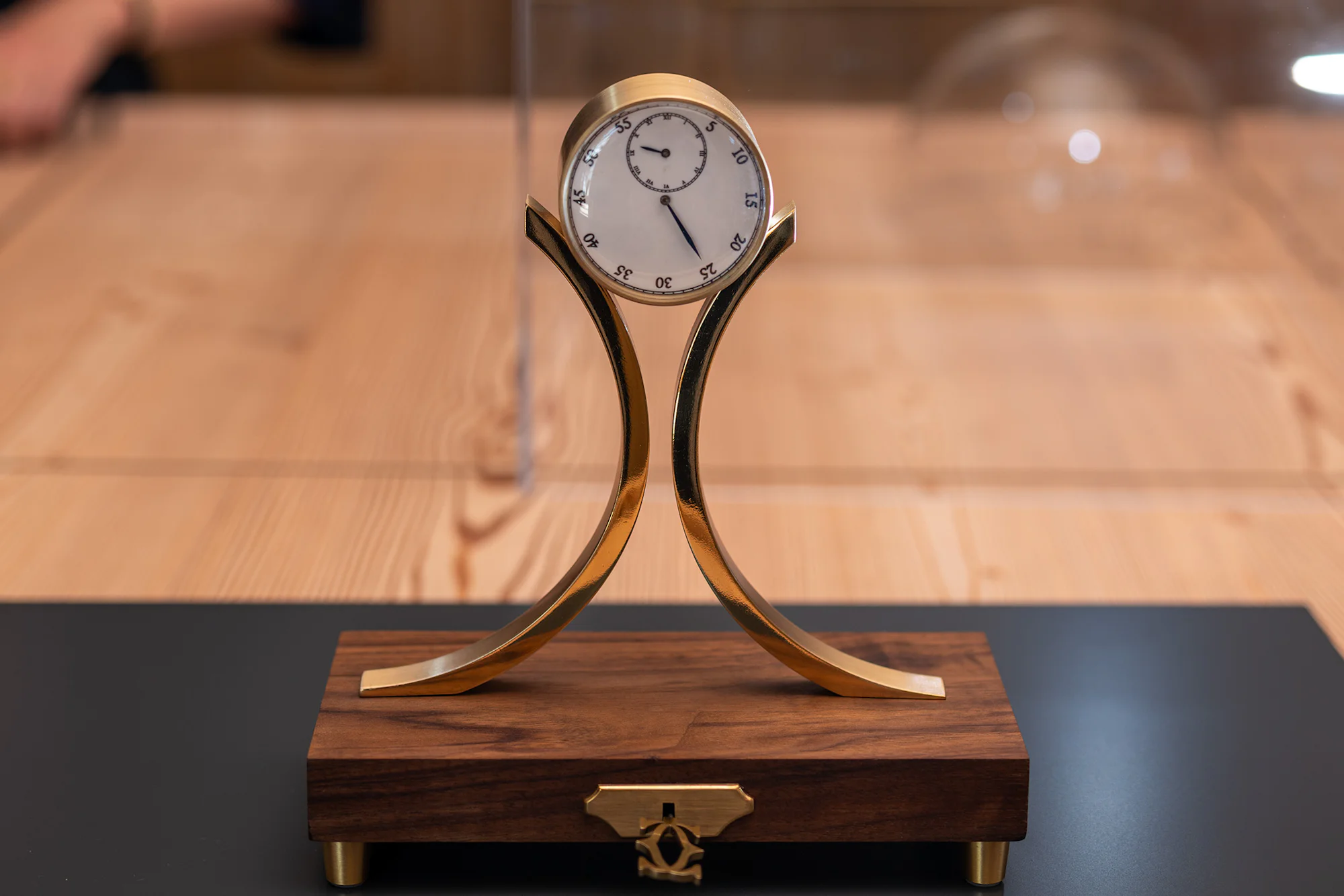
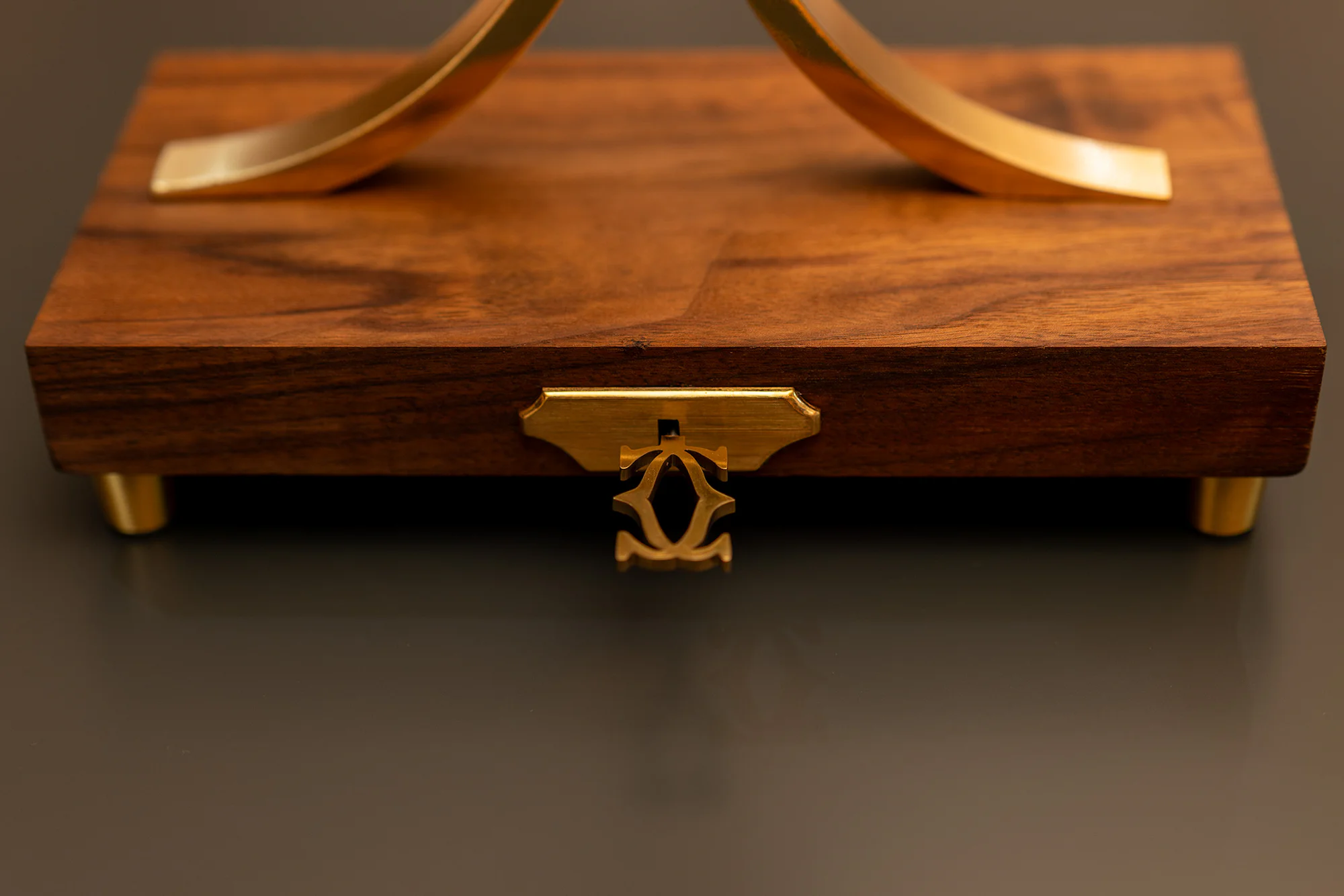
The key to stopping and starting time.
The Chosen Silence clock presents an artistic creation and technical solution to the challenge of stopping time. While certainly reminiscent of Le Temps Suspendu complication created by Geneva movement artisans Agenhor SA, Peters’ clock uses very different techniques to consider the question of controlling time. The table clock utilizes a key – artfully cut into the Cartier logo – that, when inserted into the clock base, gives the user the power to start and stop the movement.
“I think of time a lot, and it’s something that stresses me,” Peters says in an interview.
“We’re constantly being reminded that time is fleeting, that you’re going to soon be 30 or 40 years old, and that youth is fleeting. And so this leads me to my creation, where I was able to create something where I didn’t have to focus on time, and I wasn’t aware of the passing time,” he adds.

Un Instant, by Arthur Choquet, is inspired by Haussmann-style Paris buildings and the work of photographer Henri-Cartier Bresson.


In the Technicians category, first prize was awarded to Arthur Choquet, from the Lycée Jean Jaurès in Rennes, France, for his creation called Un Instant (A Moment).
The clock presents a visually arresting and intellectually stimulating tableau that pays tribute to the Haussmann-style of building design that defines much of Paris, as well as to the ideas and work of French photography giant Henri Cartier-Bresson. The creation draws from Bresson’s famous 1932 photo Behind the Gare Saint-Lazare and explores the idea of what can be captured in a moment.
Choquet, in an interview, said the work is inspired partly by his own relationship with time and the challenge of marking and capturing distinct moments.
“I don’t really see time passing, so sometimes I actually need to be in the moment in order to understand that time is indeed passing by,” he explains.
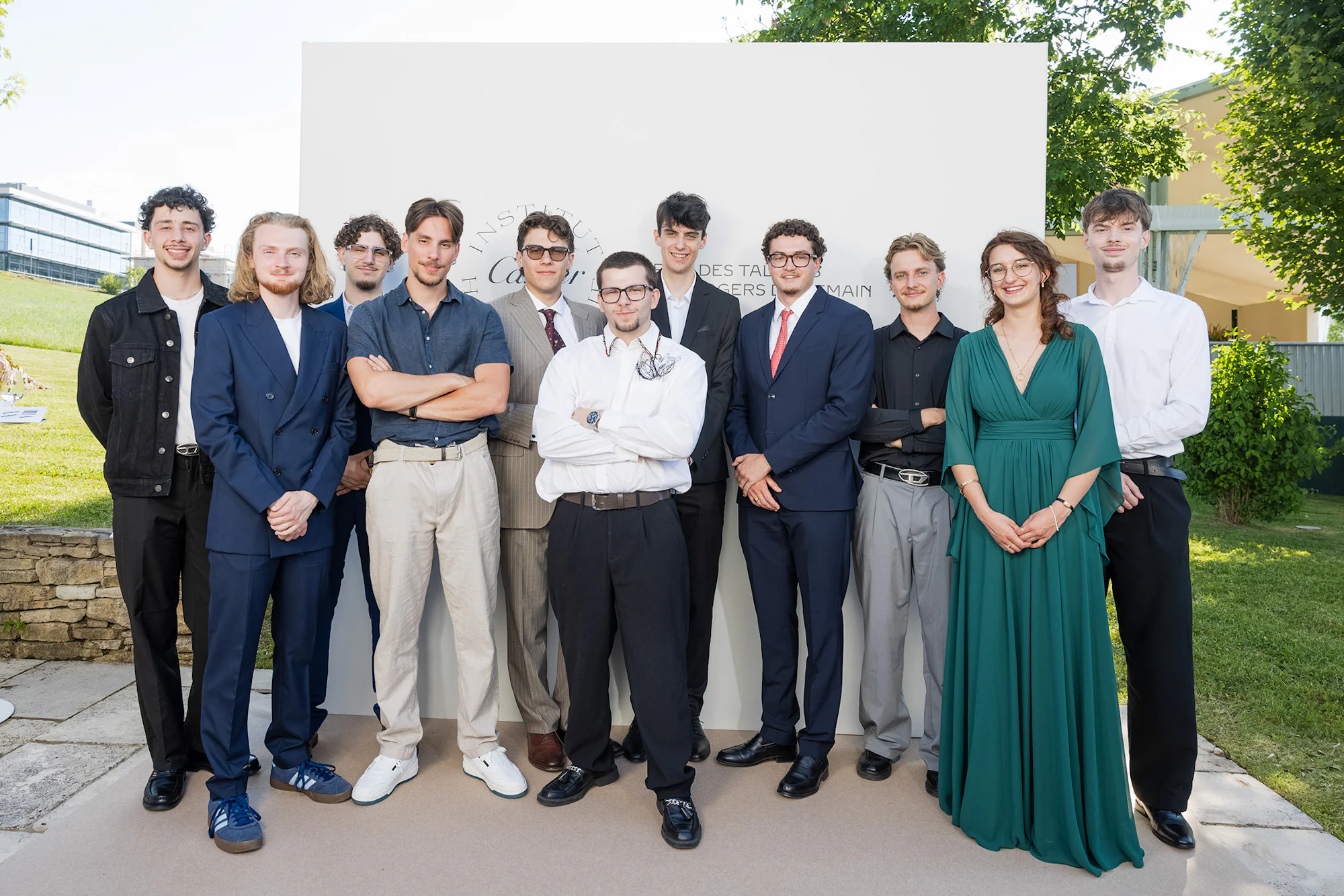
The finalists attending the prize ceremony in La Chaux-de-Fonds at Cartier’s Maison des Métiers d’Art.

Arthur Choquet won first prize in the Technicians category for Un Instant.

Aymeric Peters of Belgium won first prize in the Apprentice Watchmakers category for Silence Choisi.
Other winners in the Apprentice category included a shared second prize awarded to Layla Sluysmans from the IATA in Namur, Belgium, for Nymphéa (Nymphaea). The piece is shaped like a water lily, a plant whose bloom lasts only a few days, while Sluysmans’ clock can continue forever if maintained.
Using resin pieces for the petals, the clock opens and closes over a two-hour cycle, slowly revealing a dial and the time.
“The piece encourages the viewer to slow down in a world that moves all too quickly. Remember: time reveals itself only to those who take the time to observe it,” Sluysmans says.

Nymphéa by Layla Sluysmans reveals the time slowly as the petals of the water lily open.
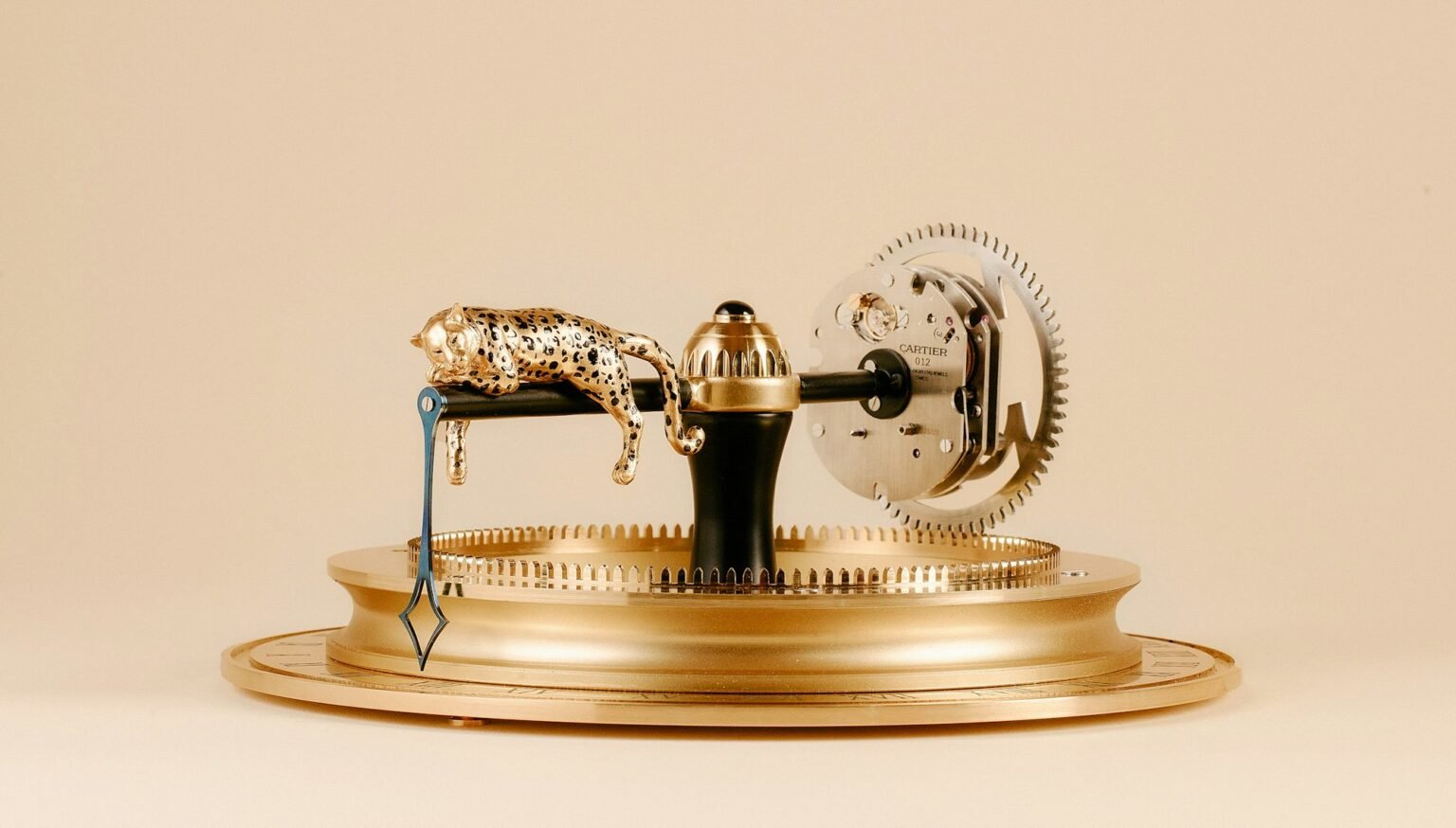
The joint second prize winner was Edouard Nicod, from the Lycée Edgar Faure in Morteau, France, with La Dualité Des Opposés (The Duality of Opposites).
Almost traditional in style at first appearance, the clock plays with the idea of balance. The hands are stationary, and the movement itself is what rotates to tell the time. “This duality is expressed through a sleeping Panthère, positioned as a counterweight. Calm and still, the panther balances the constantly moving mechanism,” says Nicod. “The whole piece relies on a delicate yet essential balance. The slightest disturbance could disrupt the harmony,” he adds.

A sleeping panther is the counter-balance to the watch movement in this unique prize winning clock by Edouard Nicod.
Second prize in the Technicians category was awarded to Adam Deroche from Lycée Diderot in Paris, France, for Médusée or Transfixed.
Evoking the myth of Medusa, who could turn people to stone with her gaze, Médusée invites the viewer to consider what would happen if time stood still. The hands are fixed at 10:10, and it is the hours and minutes that turn. Housed in ceramic, the piece combines the traditional shape of a clock while suggesting it is melting and could soon disappear.

Médusée by Adam Deroche.
Finally, third prize in the Technicians category was won by Adrien Stefenelli from the Lycée Jean Jaurès in Rennes, France, for Echo.
With no hands or dial, the clock uses a chime that sounds at set intervals to indicate the time. The chime evokes the sound of water droplets hitting the clock base.
“With this information alone, the user can enjoy the moment without worrying about what lies ahead. He or she is no longer constrained by anticipating the future,” Stefenelli says.

Echo by Adrien Stefenelli.
Cartier officials say the prize may be expanded to include more watchmaking schools in other countries in the future. There’s also talk of creating a similar prize for jewelry to encourage and develop the next generation of designers and artisans for Cartier’s biggest line of products.


For more information click here.